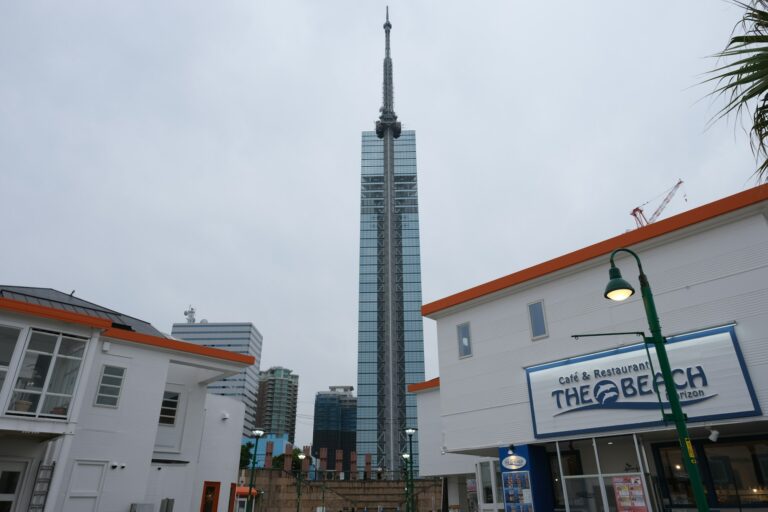
Dazaifu Tenmangu, Kushida Shrine and the Fukuoka Castle ruins are the three historic sights every first-time visitor to Fukuoka should see. Fukuoka, the largest city on the southern island of Kyushu, is an easy place to start or end a Japan trip because its airport is only minutes from downtown by subway, and its history runs much deeper than its modern skyline suggests. In a single day you can pray to Japan’s god of learning in the old government town of Dazaifu, stand beneath a towering festival float in the heart of Hakata, and walk the stone walls of a samurai castle next to one of Japan’s loveliest city parks. This guide covers what to see at each stop, opening hours, how to get around and where to stay.
1. Dazaifu Tenmangu
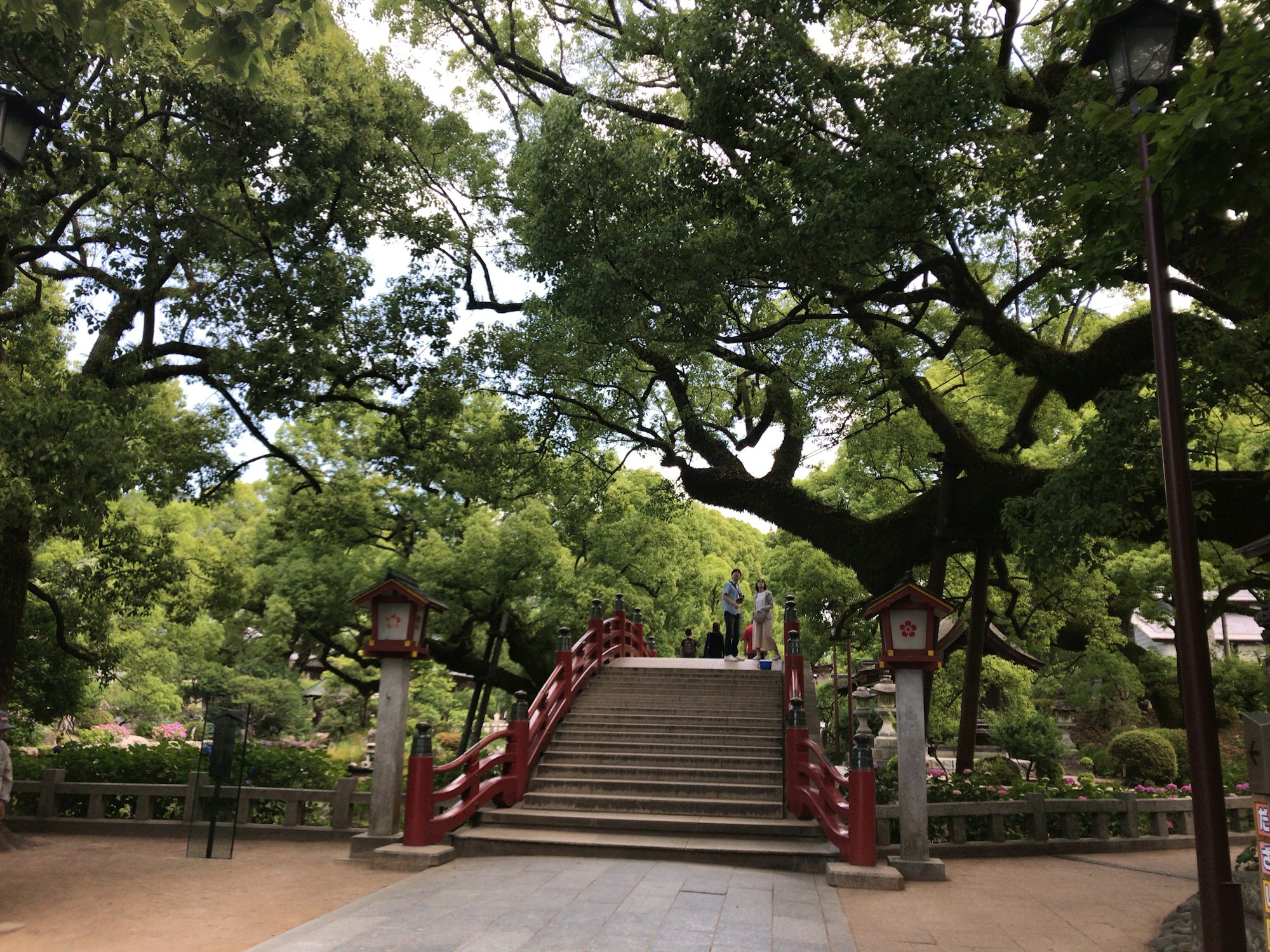
Dazaifu Tenmangu enshrines Sugawara no Michizane, a ninth-century scholar and statesman who is worshiped today as the god of learning, so you will see students and parents praying for exam success and leaving wooden ema plaques. The shrine’s main hall has just come out of its first major restoration in about 124 years, and its freshly restored roof and lacquer were unveiled in 2026. Cross the red arched bridges over Shinjiike pond, rub the bronze ox statues (said to bring wisdom), and look for the plum trees that bloom in late winter. The shrine opens at 6:00 in spring and summer and 6:30 from the autumn equinox, and closes at 18:30 to 19:30 depending on the season; there is no charge to walk the grounds. The approach street is lined with shops grilling umegae mochi, rice cakes filled with sweet red bean paste, and with a Starbucks designed by architect Kengo Kuma from about 2,000 interlocking cedar sticks. The Kyushu National Museum is a 10-minute walk away (700 yen for the collection galleries, closed Mondays).
2. Kushida Shrine
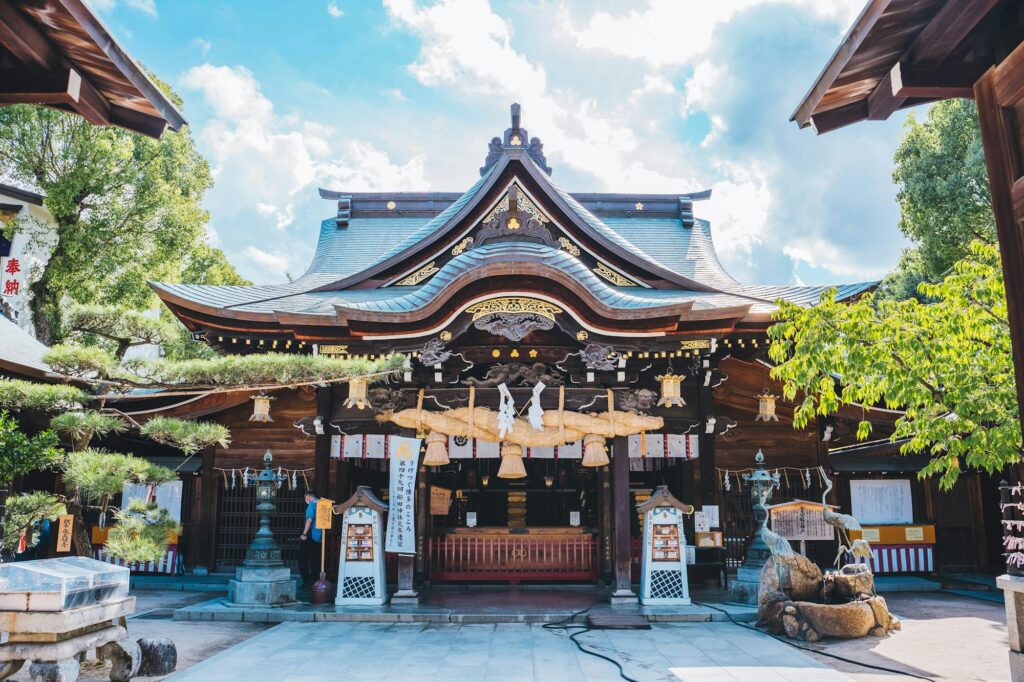
Kushida Shrine is the guardian shrine of Hakata, the old merchant half of Fukuoka, and it sits in the middle of the city just a few minutes from Canal City Hakata. It is best known as the home of the Hakata Gion Yamakasa, a festival held every July in which teams race heavy floats through the streets; the climax is a dawn race on July 15. Even if you visit at another time of year, you can see one of the festival’s spectacular decorated floats, called kazari-yamakasa, which towers over the shrine grounds and is on display all year except in June. Look for its life-size samurai and legendary figures, then step inside the quiet main hall area and the stone lanterns around it. The shrine is open from 4:00 to 22:00 every day and admission is free, so it is an easy stop on your way to dinner in Nakasu or Canal City. The nearest stations are Gion on the Airport Line (about a 10-minute walk) and Kushida-jinja-mae on the Nanakuma Line.
3. Fukuoka Castle Ruins & Ohori Park
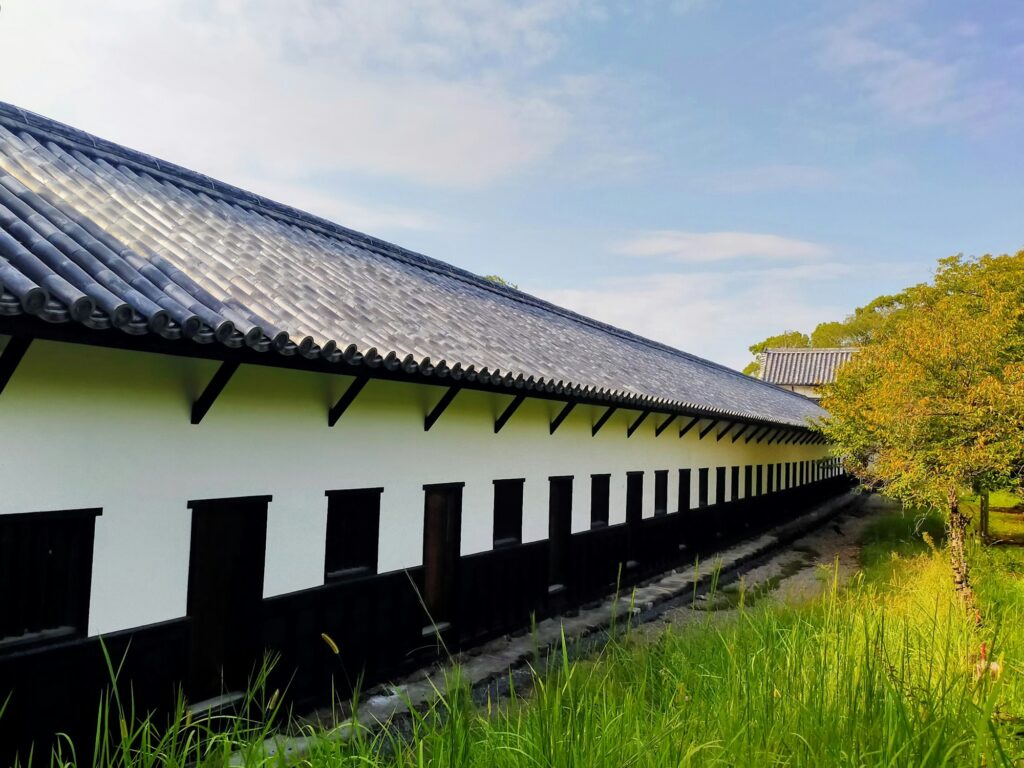
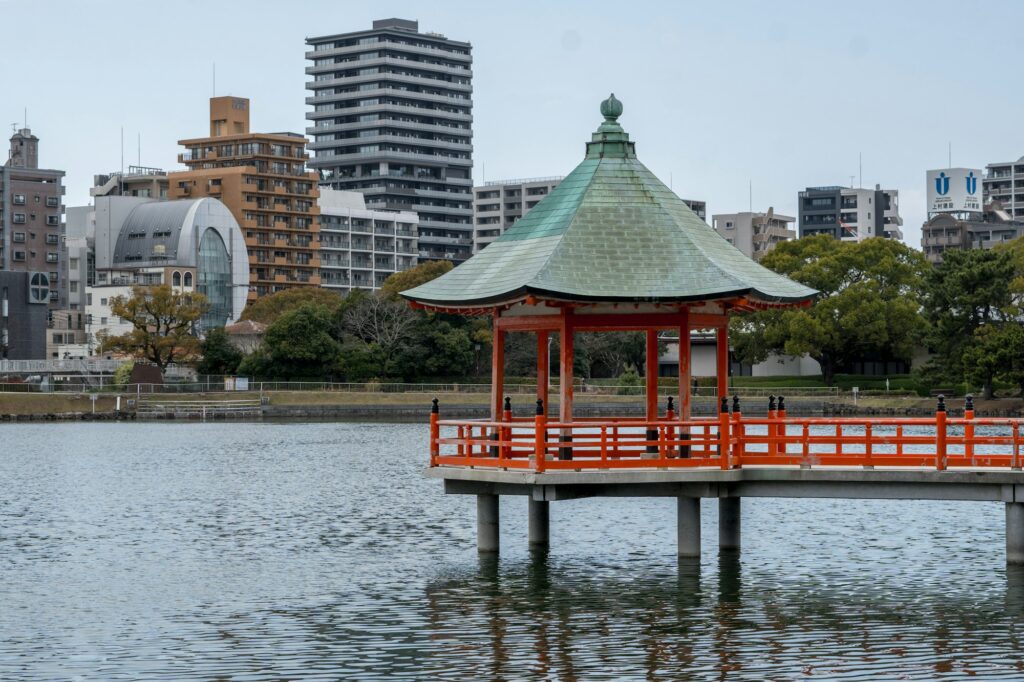
Fukuoka Castle was built in the early 1600s by the samurai lord Kuroda Nagamasa, and at its height it had about 47 turrets and more than 10 gates. Today the castle tower is long gone, but the massive stone walls, gates and a few white-walled turrets still stand in Maizuru Park, a pleasant place to walk that is famous for its cherry blossoms in spring. The Shiomi Yagura turret was carefully restored with original Edo-period pillars and roof tiles and reopened in 2025; its first floor is open 10:00 to 16:00 and closed on Mondays. Climb to the top of the old tower base for a view over the city. Right next door, Ohori Park was created in 1929 from the castle’s former outer moat: a path of about 2 km circles the lake, bridges lead to islands with the red Ukimido pavilion, and you can rent a rowboat. The Ohori Park Japanese Garden (240 yen, 9:00 to 17:00, closed Mondays) is scheduled to close for renovation from March 31, 2027. Use Ohori Koen or Akasaka Station on the Airport Line.
Where to Stay Near Tenjin & Hakata
 Where to stay: Tenjin
Hotel links in this section go to Booking.com. If you book through them, we may earn a commission at no extra cost to you.
Tenjin is the best base for this itinerary: Nishitetsu Fukuoka (Tenjin) Station is the starting point for trains to Dazaifu, the subway reaches Ohori Park in a few minutes, and the yatai food stalls are a short walk away at night. If you are arriving or leaving by Shinkansen, Hakata Station is equally convenient and is only two stops from Tenjin.
Luxury
The Ritz-Carlton, Fukuoka occupies the upper floors of a tower in Tenjin’s Daimyo district, with sweeping city views, a spa and fine dining. It is within walking distance of Nishitetsu Fukuoka (Tenjin) Station for the train to Dazaifu.
Polished luxury hotel high above central Tenjin.
Mid-Range
Hotel JAL City Fukuoka Tenjin is a reliable mid-range choice in Tenjin with modern rooms, easy access to the subway and plenty of restaurants and shops nearby.
Comfortable, modern rooms in a central location.
Budget-Friendly
APA Hotel Fukuoka Tenjin Nishi offers compact but well-equipped rooms at a lower price, on the west side of Tenjin within walking distance of the shopping streets and the subway.
APA Hotel Fukuoka Tenjin Nishi
Compact, good-value rooms near Tenjin.
Compare prices before you book
Hotels in Tenjin on Booking.com
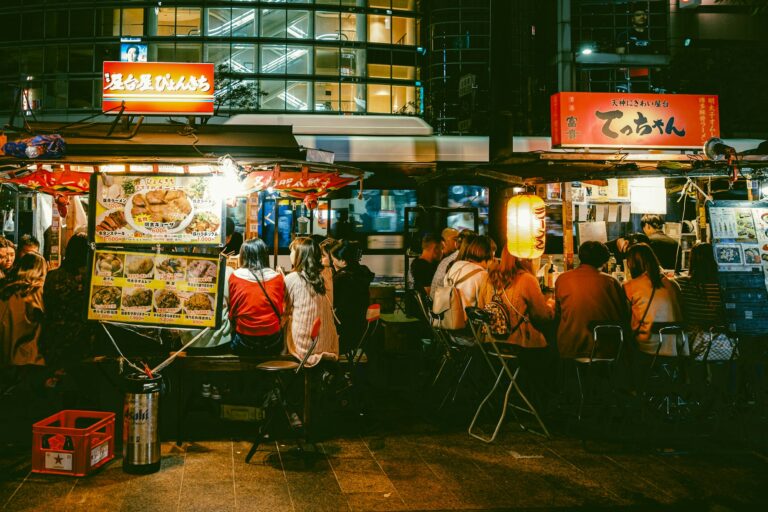
Base yourself in Tenjin for quick trains to Dazaifu, the subway to Ohori Park and evenings at the yatai food stalls.
Affiliate link — if you book through Booking.com, we may earn a commission at no extra cost to you.
Quick Tips for Visiting
- Visit Dazaifu Tenmangu early in the morning or late in the afternoon to avoid tour groups.
- Use an IC card such as Suica or Fukuoka’s Hayakaken on the subway and Nishitetsu trains instead of buying single tickets.
- The Kyushu National Museum and the Ohori Park Japanese Garden are closed on Mondays, and the Shiomi Yagura turret is closed on Mondays too.
- Kushida Shrine’s decorated Yamakasa float is on display all year except in June, so plan around that month if you want to see it.
- Pair Dazaifu with a morning in the city: the shrine town is busiest from late morning to mid-afternoon.
Getting there by train: Fukuoka’s main rail hub is Hakata Station, the western end of the Sanyo Shinkansen. Nozomi trains take about 5 hours from Tokyo, about 2.5 hours from Shin-Osaka and about 1 hour from Hiroshima. Japan Rail Pass holders can ride Hikari and Sakura trains, or Nozomi and Mizuho trains with a separate special ticket. From Fukuoka Airport, the subway reaches Hakata in about 5 minutes and Tenjin in about 11 minutes. For Dazaifu, take the Nishitetsu line from Nishitetsu Fukuoka (Tenjin) and change at Nishitetsu Futsukaichi for the short Dazaifu Line (480 yen, about 25 to 40 minutes in total). With a JR Pass, ride JR to Futsukaichi and walk about 10 minutes to Nishitetsu Futsukaichi. Read our guide to riding trains in Japan, learn how to ride the Shinkansen, and check whether the JR Pass is worth it.
Frequently Asked Questions
Is Dazaifu Tenmangu free to visit?
Yes. There is no charge to walk the grounds of Dazaifu Tenmangu. The nearby Kyushu National Museum charges 700 yen for adults for its collection galleries and is closed on Mondays.
How do I get from Fukuoka to Dazaifu?
Take the Nishitetsu line from Nishitetsu Fukuoka (Tenjin) Station and change at Nishitetsu Futsukaichi for the Dazaifu Line. The trip costs 480 yen and takes about 25 to 40 minutes. The Dazaifu Liner bus also runs from Hakata Bus Terminal in about 40 minutes.
When can you see the Yamakasa float at Kushida Shrine?
A decorated Yamakasa float is on display at Kushida Shrine all year except in June. The Hakata Gion Yamakasa festival itself takes place in the first half of July, ending with a dawn race on July 15.
Is Fukuoka Castle worth visiting?
Yes, especially combined with Ohori Park next door. The castle tower no longer exists, but the stone walls, gates and restored turrets are impressive, the park is a top cherry blossom spot in spring, and the Shiomi Yagura turret reopened in 2025 after restoration.