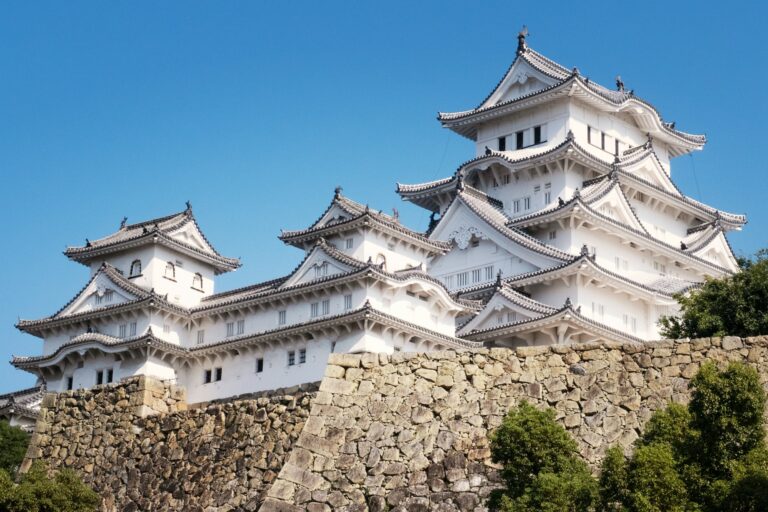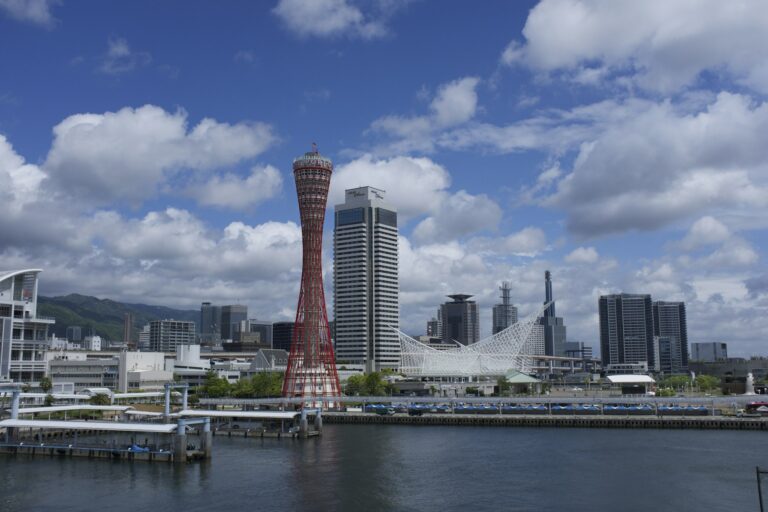
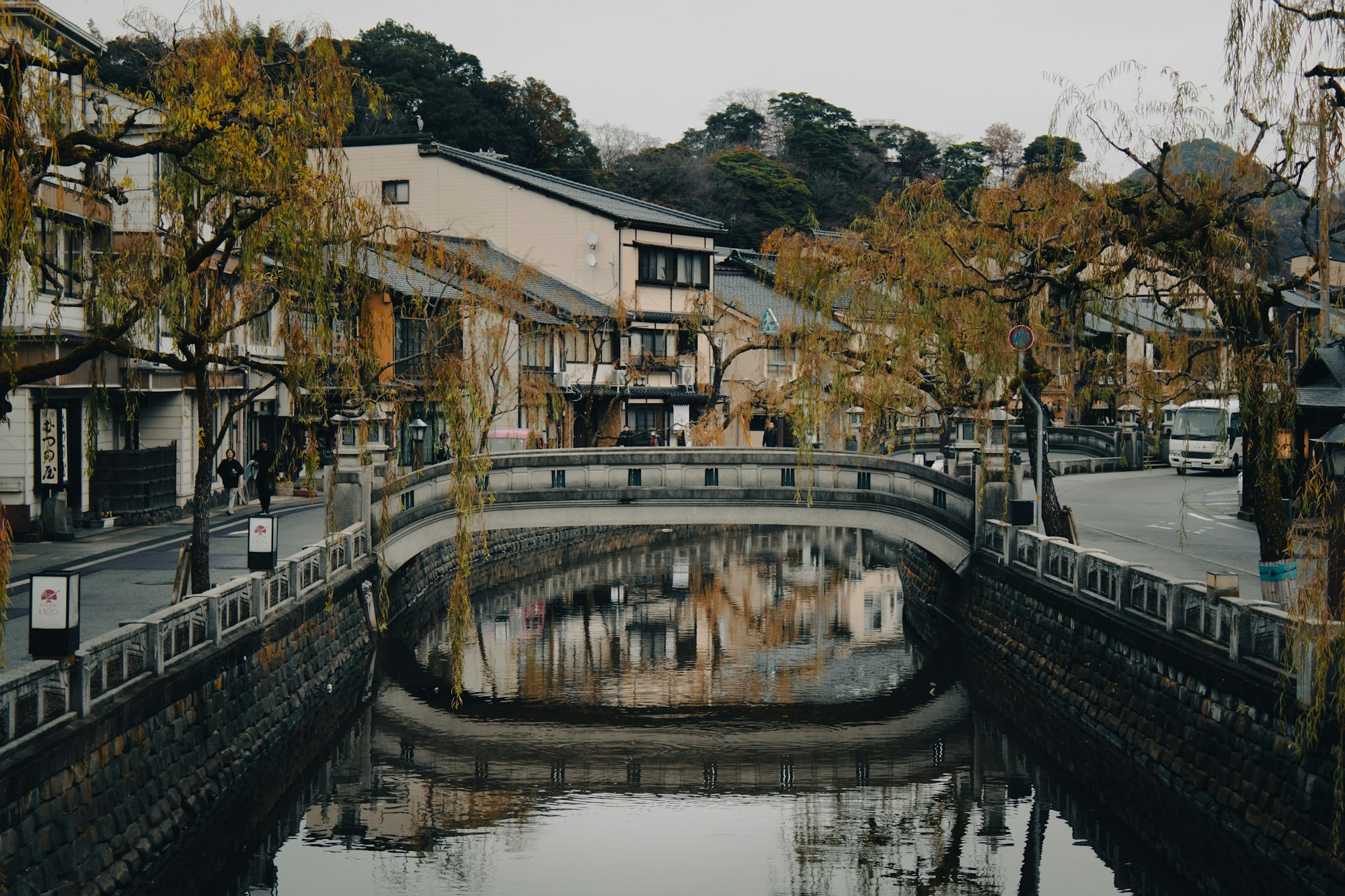
Kinosaki Onsen and Arima Onsen are two of the best hot spring towns in Japan for first-time visitors, and both are in Hyogo Prefecture, within easy reach of Osaka and Kobe. One is a willow-lined town on the Sea of Japan side where guests stroll between public baths in yukata robes; the other is a historic spa town tucked into the mountains behind Kobe. This guide covers both, plus a different kind of highlight on the coast: the Akashi Kaikyo Bridge, where you can walk inside the structure high above the sea.
1. Kinosaki Onsen
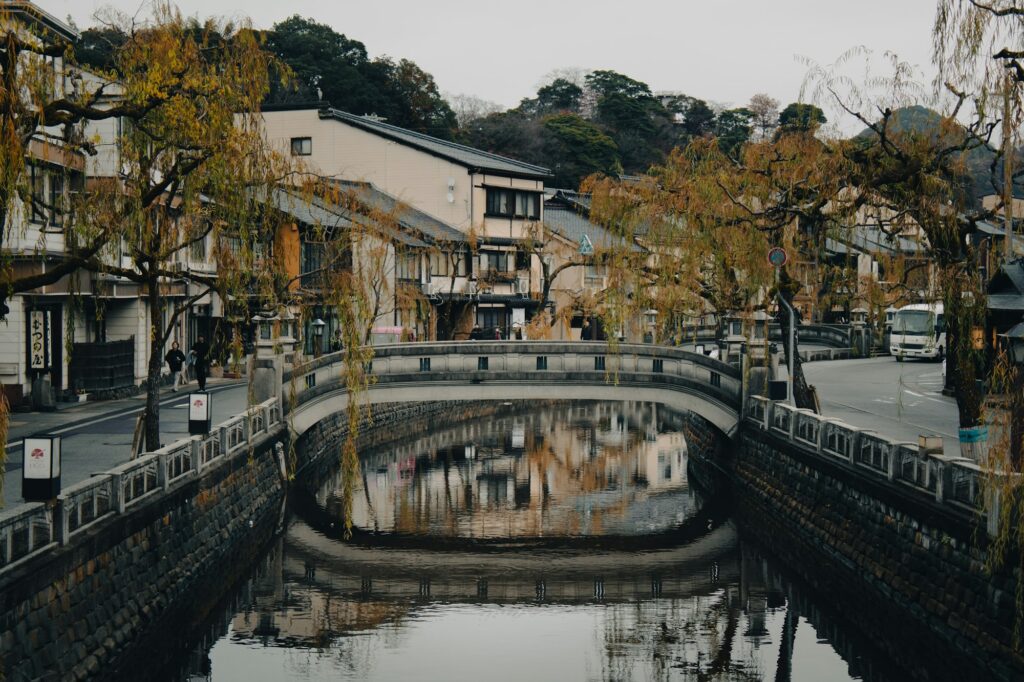
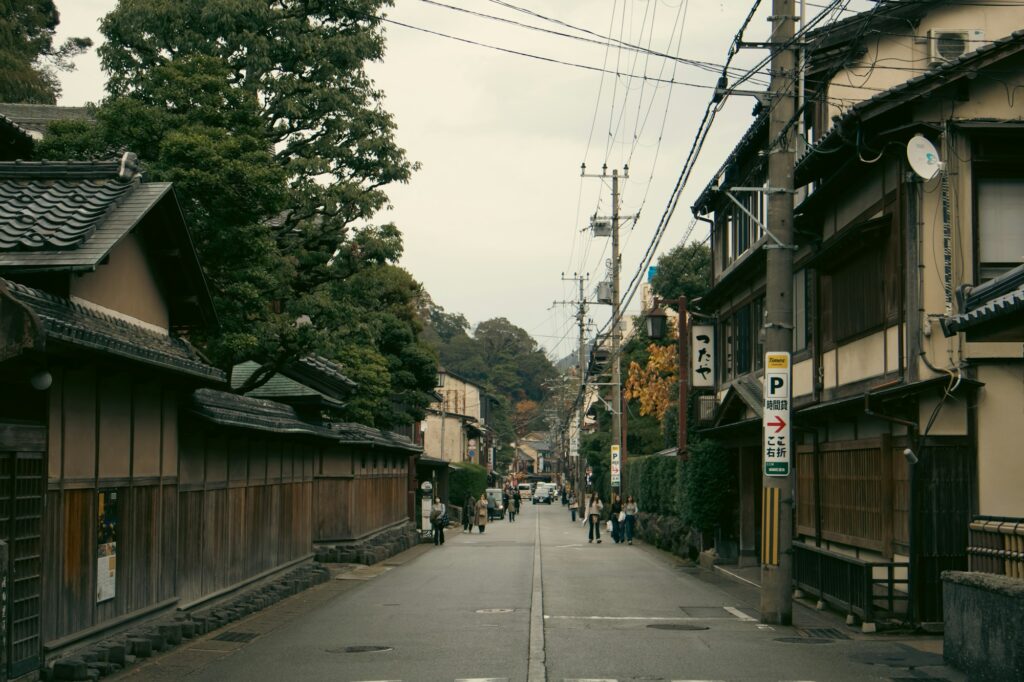
Kinosaki Onsen is a hot spring town on the Sea of Japan side of Hyogo, known for its willow-lined Otani River, stone bridges and seven public bathhouses: Kono-yu, Mandara-yu, Goshono-yu, Ichino-yu, Yanagi-yu, Jizo-yu and Satono-yu. The town credits the monk Dochi Shonin as its founder, and the classic experience is “sotoyu meguri,” walking from bath to bath in a yukata and wooden sandals. A one-day pass for the public baths costs 1,500 yen, and guests of the town’s ryokan usually receive a pass at check-in. Each bath has its own hours and closing day; for example, Ichino-yu is open from 7:00 a.m. to 11:00 p.m. and closed on Wednesdays. Note that Satono-yu has been closed since April 2024 with no reopening date announced, and Kono-yu is closed for renovation until October 30, 2026. The Kounotori limited express takes about 2 hours 40 minutes from Shin-Osaka or Osaka.
2. Arima Onsen
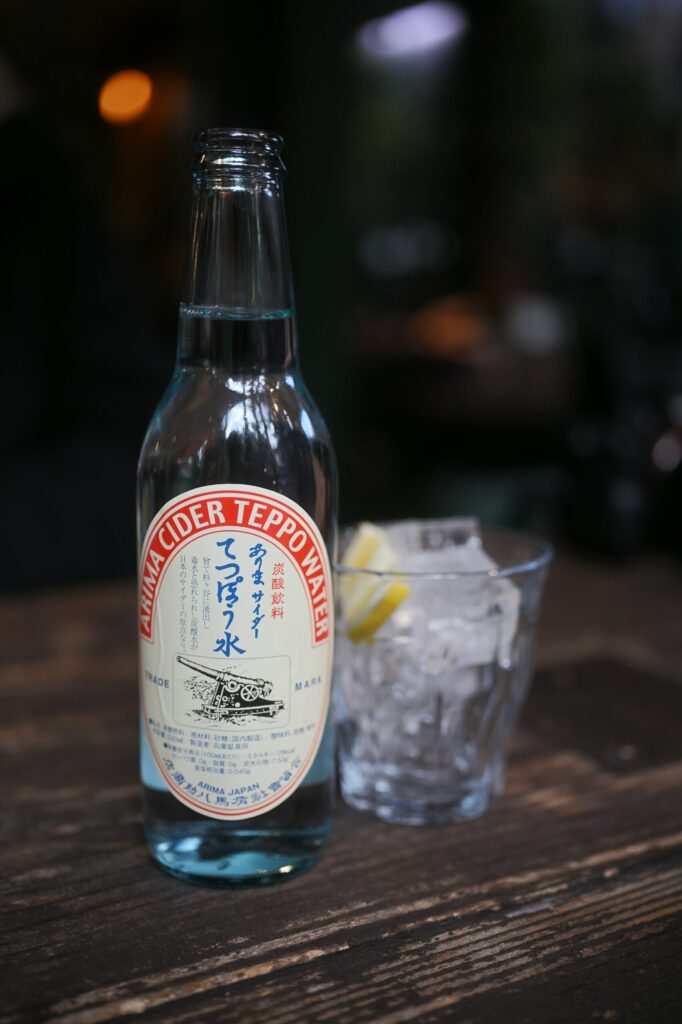
Arima Onsen is a hot spring town in the mountains just behind Kobe, famous for two very different kinds of water. Kinsen, or “gold water,” is a reddish-brown spring colored by iron, while ginsen, or “silver water,” is clear and contains radium and carbonate. You can try both at the town’s public bathhouses, Kin no Yu and Gin no Yu, which are a short walk apart, and a combination ticket covers both. Kin no Yu is open from 8:00 a.m. to 10:00 p.m., and each bath closes on two Tuesdays a month, so check before you go. Between baths, wander the narrow, sloping lanes lined with old inns and shops selling local treats such as Arima Cider, a bottled soda pictured above. From Sannomiya, take the subway to Tanigami and change to the Kobe Electric Railway for Arima Onsen, about 30 to 40 minutes, or ride an express bus in about 25 minutes, which makes Arima an easy half-day trip from Kobe.
3. Akashi Kaikyo Bridge
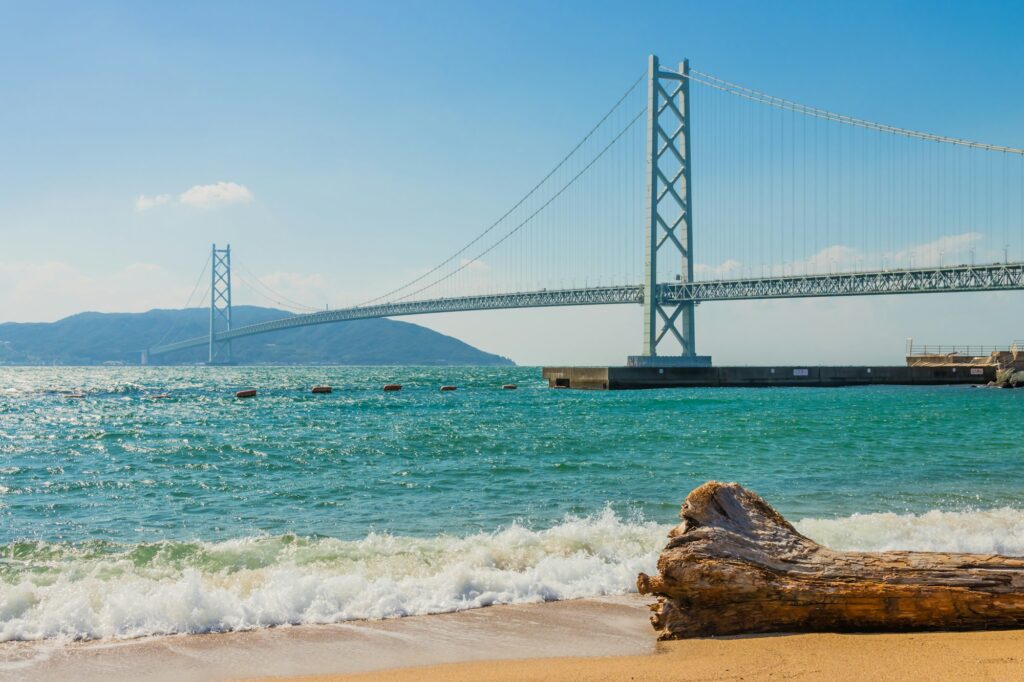
The Akashi Kaikyo Bridge links Kobe with Awaji Island across the Akashi Strait, and at 3,911 meters long, with a central span of 1,991 meters, it is one of the longest suspension bridges in the world. It opened on April 5, 1998, and the 1995 Great Hanshin earthquake, which struck during construction, actually moved the towers apart and lengthened the central span by about one meter. At the Kobe end, the Maiko Marine Promenade is a 317-meter walkway inside the bridge structure about 47 meters above the sea, with views straight down to the water. It is open from 9:00 a.m. to 6:00 p.m., with last entry 30 minutes before closing, and adult admission is 250 yen on weekdays and 300 yen on weekends. For the ultimate view, the Bridge World tour takes visitors to the top of a tower on scheduled days from spring to autumn. The bridge is a short walk from JR Maiko Station, about 25 minutes from Sannomiya.
Where to Stay Near Kinosaki & Arima Onsen
 Where to stay: Kinosaki Onsen
Hotel links in this section go to Booking.com. If you book through them, we may earn a commission at no extra cost to you.
A night in a ryokan is the best way to experience a hot spring town: you get a multi-course dinner, a yukata to wear around town and the baths at their quietest early in the morning. Kinosaki is best as an overnight trip because of the journey time, while Arima works as a day trip from Kobe or a relaxing night close to the city.
Luxury
Nishimuraya Honkan is one of Kinosaki’s most famous ryokan, serving kaiseki meals in your room and offering free pick-up from the station. In Arima, Hyoe Koyokaku is a ryokan with kinsen hot spring baths, about four minutes on foot from Arima Onsen Station.
Renowned ryokan with in-room kaiseki dinners.
Ryokan with gold-water hot spring baths near the station.
Mid-Range
Arima Grand Hotel is a large hot spring hotel with indoor and outdoor baths. In Kinosaki, Mikuniya is a well-rated ryokan about three minutes on foot from the station.
Hot spring hotel with indoor and outdoor baths.
Well-rated ryokan close to Kinosaki Onsen Station.
Budget-Friendly
Kinosaki Yamamotoya is a simpler inn about six minutes on foot from Kinosaki Onsen Station with its own hot spring bath, a good value way to stay overnight in town.
Good-value inn with a hot spring, near the station.
Compare prices before you book
Ryokan and hotels in Kinosaki Onsen on Booking.com
Stay overnight in Kinosaki to stroll between the public baths in a yukata after dark, then enjoy a quiet morning soak.
Affiliate link — if you book through Booking.com, we may earn a commission at no extra cost to you.
Quick Tips for Visiting
- Most Japanese hot springs require you to bathe naked; wash thoroughly at the shower stations before entering the bath.
- Check each Kinosaki bathhouse’s closing day, and note that some are closed for renovation in 2026.
- Book Kinosaki ryokan early for weekends and the winter crab season.
- Arima’s public baths close on alternate Tuesdays, so plan your visit around them.
- Bring a small towel to the public baths, or buy one at the counter.
Getting there by train: The Kounotori limited express runs from Shin-Osaka and Osaka to Kinosaki Onsen in about 2 hours 40 minutes and is covered by the JR Pass. For Arima, take the subway from Sannomiya to Tanigami and transfer to the Kobe Electric Railway. JR Maiko Station, for the Akashi Kaikyo Bridge, is on the JR Kobe Line west of Sannomiya. Read our guide to riding trains in Japan, learn how to ride the Shinkansen, and check whether the JR Pass is worth it.
Frequently Asked Questions
How much is the Kinosaki Onsen bath pass?
A one-day pass for Kinosaki’s public bathhouses costs 1,500 yen. Guests staying at a ryokan in town usually receive a pass at check-in.
What is the difference between kinsen and ginsen at Arima Onsen?
Kinsen, or gold water, is reddish-brown from iron. Ginsen, or silver water, is clear and contains radium and carbonate. You can try kinsen at Kin no Yu and ginsen at Gin no Yu.
Can you walk on the Akashi Kaikyo Bridge?
Yes. The Maiko Marine Promenade is a 317-meter walkway inside the bridge about 47 meters above the sea. Adult admission is 250 yen on weekdays and 300 yen on weekends.
Can you do Kinosaki Onsen as a day trip from Osaka?
It is possible, since the limited express takes about 2 hours 40 minutes each way, but an overnight stay in a ryokan is far more rewarding.