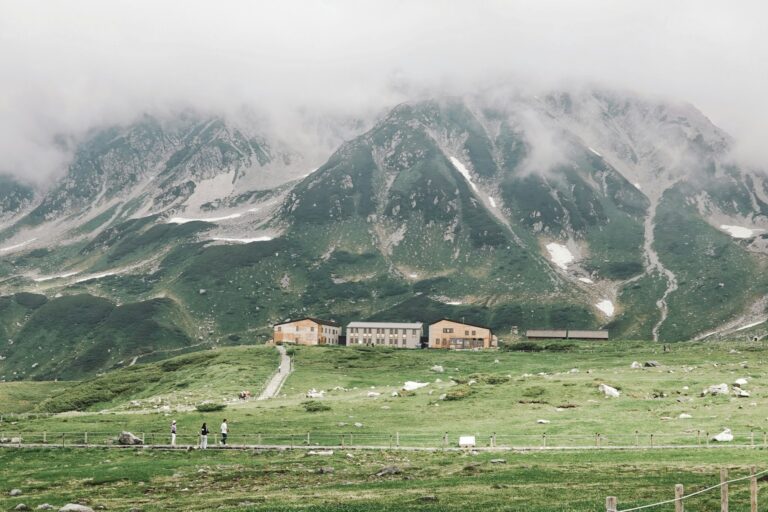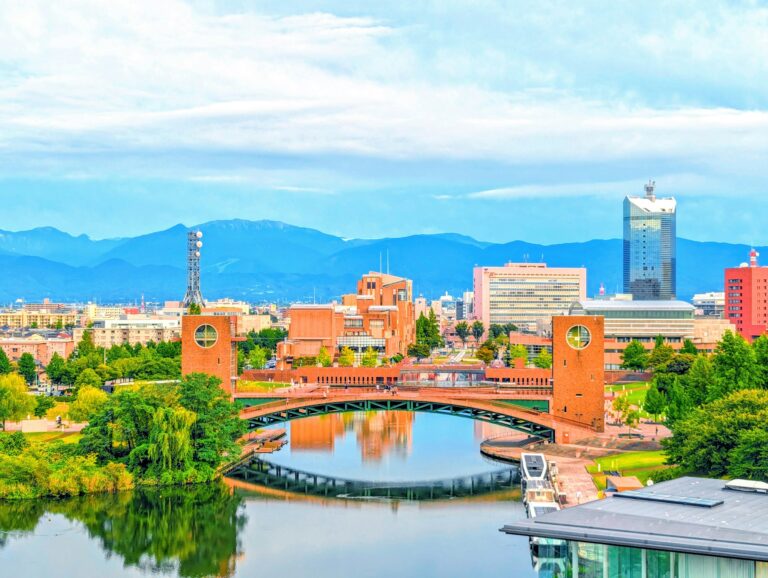
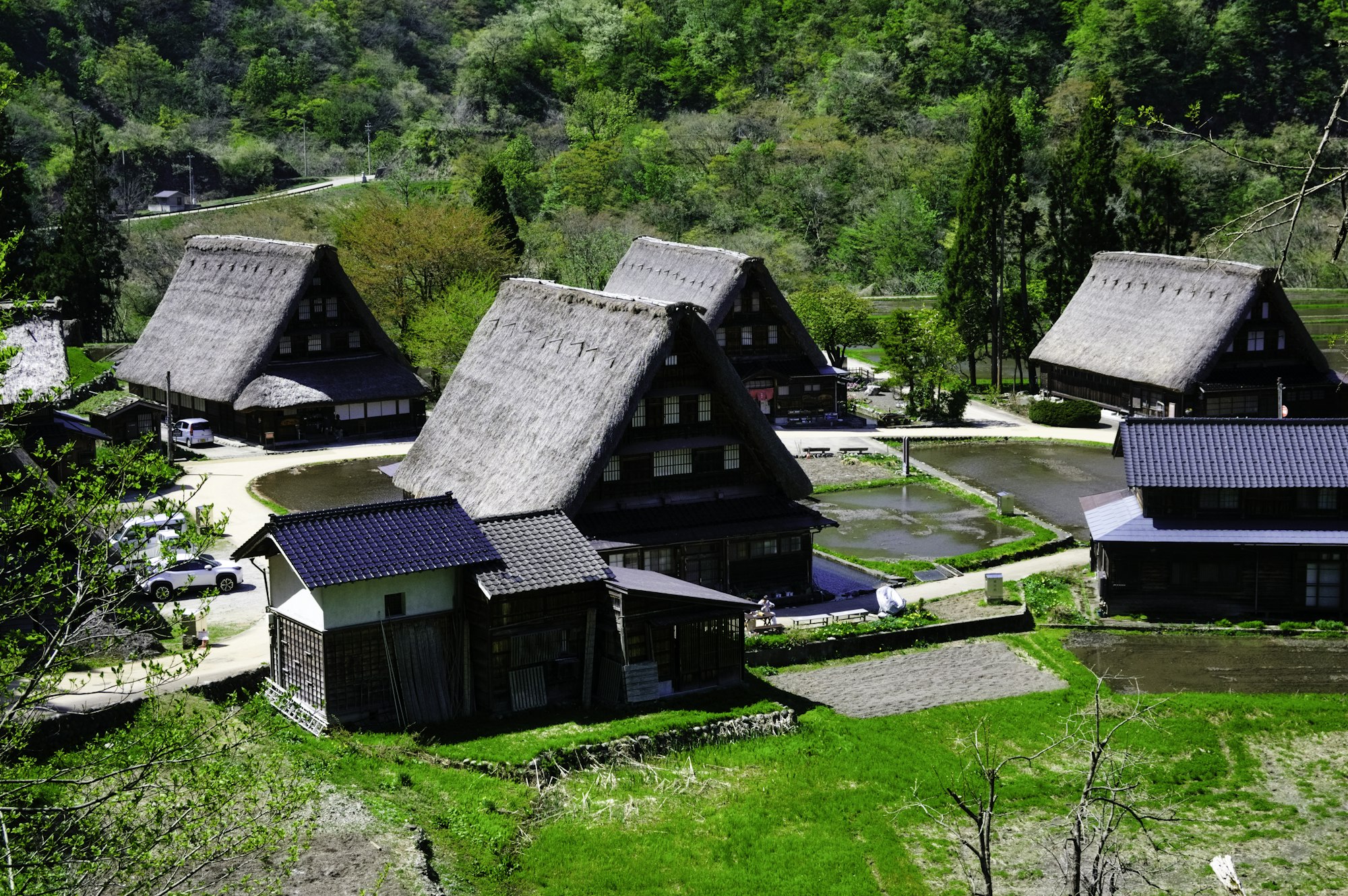
Gokayama’s thatched villages, the Amaharashi Coast and the old town of Yatsuo show a quieter, more traditional side of Toyama Prefecture than the Alpine Route, and all three are easy to reach from Takaoka and Toyama. Gokayama shares its UNESCO World Heritage listing with the better-known Shirakawa-go but sees far fewer visitors, Amaharashi frames the 3,000-meter Tateyama range across the sea, and Yatsuo hosts one of Japan’s most beautiful festivals. Takaoka, an old bronze-casting town on the Hokuriku Shinkansen, makes a convenient base for all of them. This guide covers the three highlights, how to get there by bus and train, and where to stay in Takaoka.
1. Gokayama (Ainokura and Suganuma)
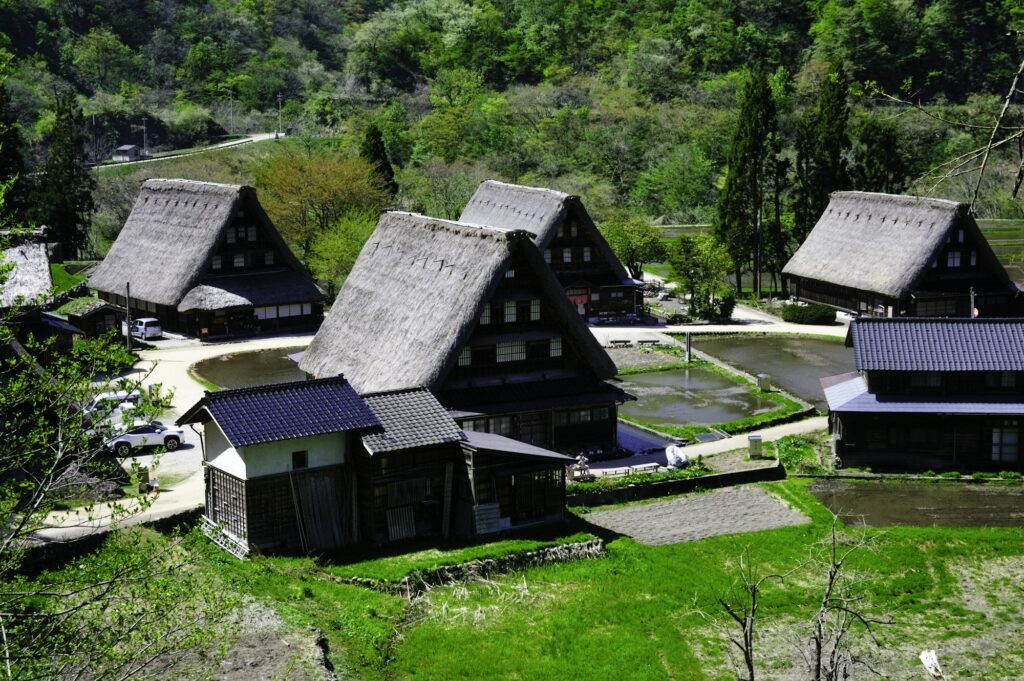
Gokayama is a remote valley of steep-roofed gassho-zukuri farmhouses, named for hands joined in prayer, and its villages of Ainokura and Suganuma were listed as a UNESCO World Heritage Site in 1995 together with Shirakawa-go. Ainokura is the larger village, with about 20 thatched houses scattered among rice paddies; its small folk museum (300 yen) shows tools and daily life from the days when villagers made paper and gunpowder ingredients. Suganuma is tiny, with nine houses on a bend of the Sho River, and you can see it in under an hour. Day visitors are asked to come between 8:30 and 17:00, and people still live in many houses, so stay on the paths. The World Heritage Bus from Takaoka and Shin-Takaoka stations reaches Ainokura in about an hour for 1,000 yen and continues to Shirakawa-go; it runs five times a day, cannot be reserved and is not covered by the JR Pass.
2. Amaharashi Coast
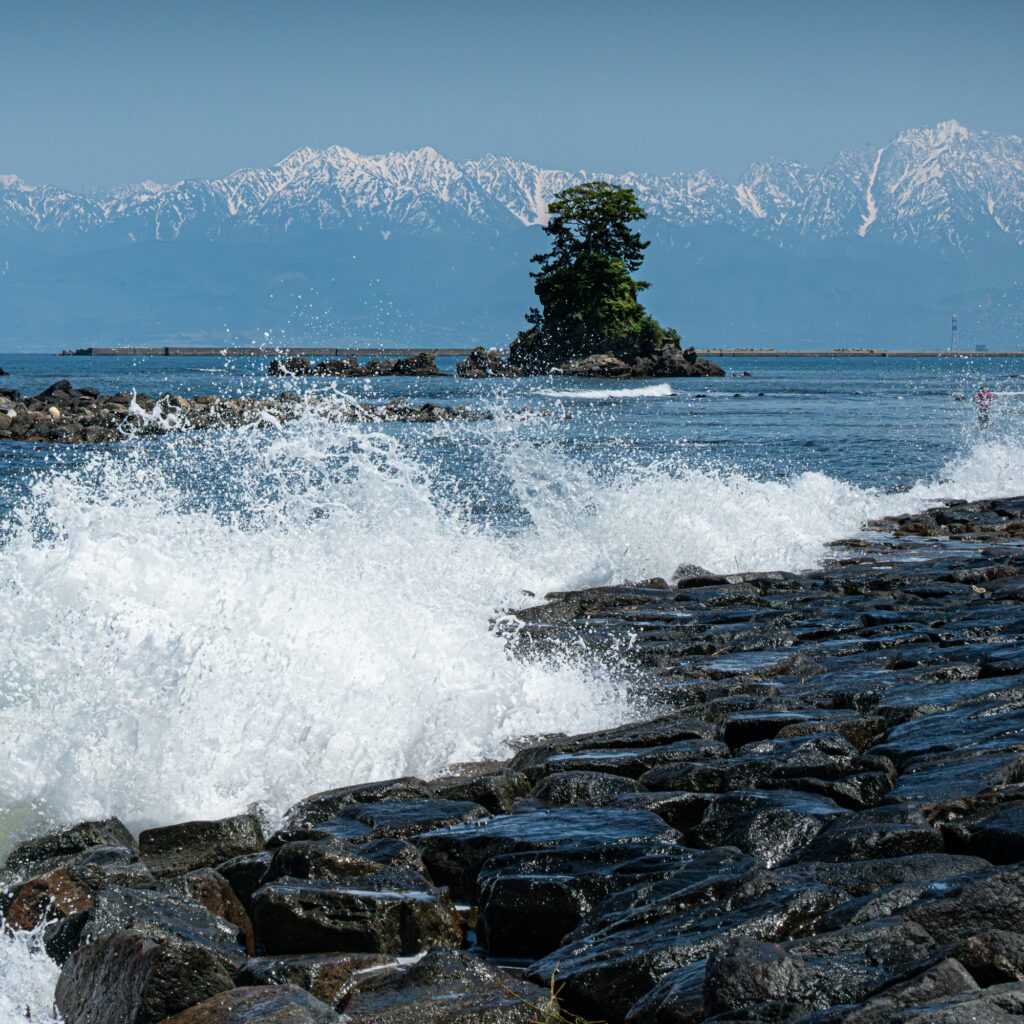
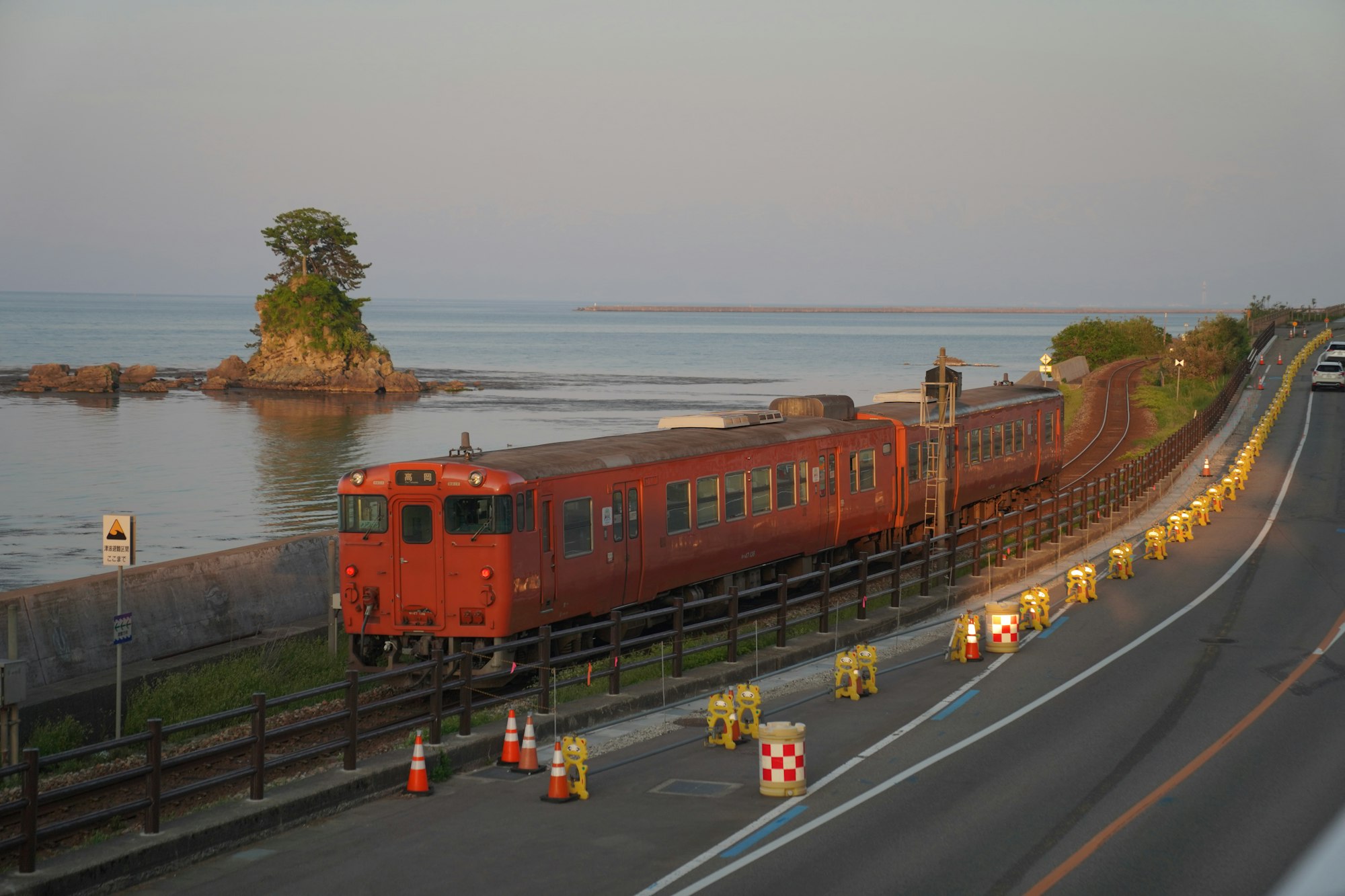
The Amaharashi Coast in Takaoka offers one of Japan’s most striking views: the snowy peaks of the Tateyama range, about 3,000 meters high, rising across Toyama Bay behind a small pine-topped islet called Onna-iwa. The name means “rain clearing,” from a legend that the warrior Minamoto no Yoshitsune sheltered from a shower under the nearby Yoshitsune-iwa rock. The mountains look biggest on clear, cold mornings from late autumn through winter, when they appear like a white folding screen and sea smoke sometimes drifts over the water. The JR Himi Line runs right along the shore, and its trains reach Amaharashi Station in about 20 minutes from Takaoka; the beach is a five-minute walk. Michi-no-eki Amaharashi, a ship-shaped roadside station with a third-floor observation deck and a café, is the best spot to wait out the weather with a coffee.
3. Yatsuo and the Owara Kaze no Bon
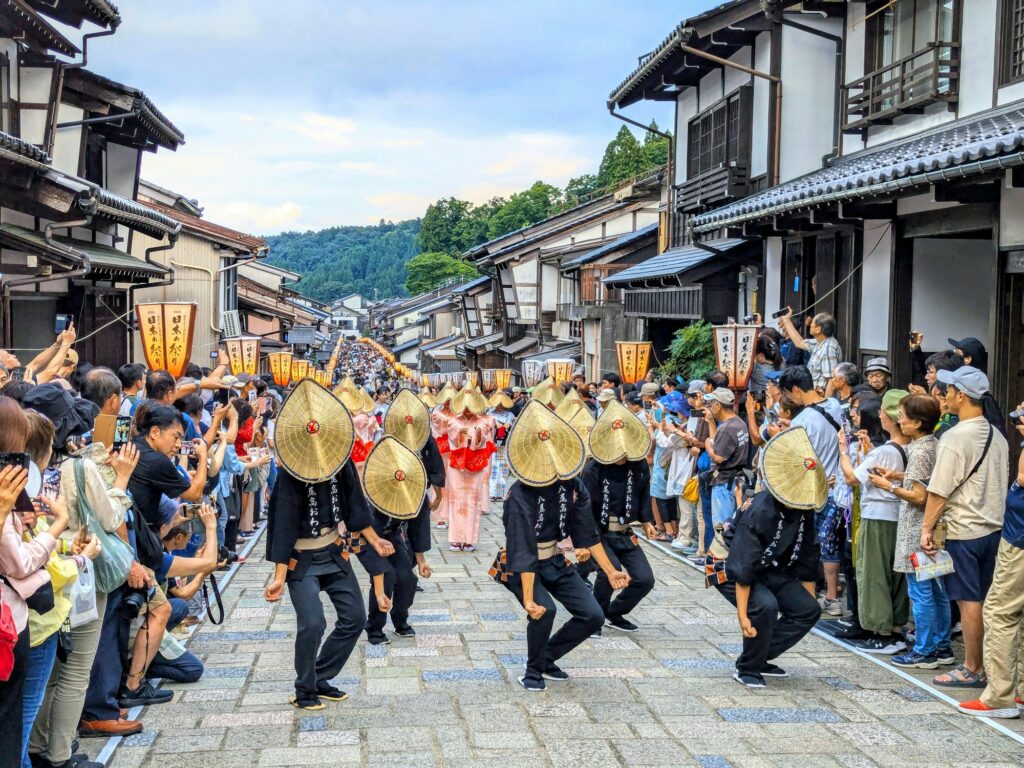
Yatsuo is a hillside town in southern Toyama City whose stone-paved main street, Suwamachi Hon-dori, is lined with white-walled, latticed houses and was chosen as one of Japan’s 100 best roads. Every year on September 1 to 3, the town hosts the Owara Kaze no Bon, a festival more than 300 years old in which dancers in straw hats pulled low over their faces move slowly through the streets to the music of shamisen and the kokyu fiddle. The evening processions, lit by paper lanterns, are hauntingly beautiful, and about 200,000 people come for the three nights, so book accommodation months ahead or plan to come and go by train. Outside festival time, Yatsuo is a peaceful place for a stroll, and the Yatsuo Owara Museum on Suwamachi explains the festival. The town is on the JR Takayama Line at Etchu-Yatsuo Station, a short ride from Toyama.
Where to Stay Near Takaoka
 Where to stay: Takaoka
Hotel links in this section go to Booking.com. If you book through them, we may earn a commission at no extra cost to you.
Takaoka is the best base for Gokayama and the Amaharashi Coast: the World Heritage Bus leaves from Takaoka and Shin-Takaoka stations, and the Himi Line starts at Takaoka Station. Hotels cluster around Takaoka Station, where you can also see Zuiryuji, a National Treasure Zen temple (500 yen), and the bronze Takaoka Great Buddha within a short walk. If you want to experience Gokayama overnight, a few family-run gassho-style farmhouse inns in Ainokura take guests by reservation.
Luxury
Hotel New Otani Takaoka is Takaoka’s leading full-service hotel, close to Takaoka Station, with French and Japanese restaurants, a coffee shop and a hearty buffet breakfast. It is the most comfortable choice in town and walking distance from Zuiryuji and the Great Buddha.
Full-service hotel with French and Japanese restaurants.
Mid-Range
Hotel Route-Inn Takaoka Ekimae is a practical hotel by Takaoka Station with a public bath, a buffet breakfast and comfortable rooms with a sofa. It is a good base for an early World Heritage Bus to Gokayama or a morning train to the Amaharashi Coast.
Hotel Route-Inn Takaoka Ekimae
Practical station hotel with a public bath and breakfast.
Budget-Friendly
APA Hotel Takaoka Ekimae is a good-value chain hotel near the station with an open-air bath and a large public bath, a rare bonus at this price. Rooms are compact, as usual for APA, but well equipped, and there is a Japanese restaurant on site.
Good-value hotel with a large public bath and open-air bath.
Compare prices before you book
Hotels in Takaoka on Booking.com
Stay in Takaoka for the World Heritage Bus to Gokayama and the coastal train to Amaharashi.
Affiliate link — if you book through Booking.com, we may earn a commission at no extra cost to you.
Quick Tips for Visiting
- Arrive early for the World Heritage Bus: seats cannot be reserved and it runs only five times a day.
- Go to the Amaharashi Coast on a clear morning in late autumn or winter for the best mountain views.
- Respect residents in Gokayama: many gassho houses are private homes, so stay on paths and keep noise down.
- Book Yatsuo accommodation far ahead if you want to see the Owara Kaze no Bon on September 1 to 3.
- In Takaoka, add Zuiryuji Temple and the Takaoka Great Buddha, both within walking distance of the station.
Getting there by train: Take the Hokuriku Shinkansen to Shin-Takaoka, about 2.5 to 3 hours from Tokyo and covered by the JR Pass, then connect to Takaoka Station on the JR Johana Line or ride the World Heritage Bus directly from Shin-Takaoka. The JR Himi Line runs from Takaoka to Amaharashi in about 20 minutes, and Yatsuo is on the JR Takayama Line from Toyama. Read our guide to riding trains in Japan, learn how to ride the Shinkansen, and check whether the JR Pass is worth it for your route.
Frequently Asked Questions
Is Gokayama worth visiting instead of Shirakawa-go?
Gokayama is smaller and much quieter than Shirakawa-go, with the same UNESCO status and thatched gassho-zukuri houses. Many travelers visit both on the World Heritage Bus.
How do you get to Gokayama?
The World Heritage Bus runs five times a day from Takaoka and Shin-Takaoka stations to Ainokura in about an hour for 1,000 yen. It cannot be reserved and is not covered by the JR Pass.
When is the best time to see the mountains from the Amaharashi Coast?
Clear, cold mornings from late autumn through winter give the best chance to see the snowy Tateyama range across Toyama Bay.
When is the Owara Kaze no Bon festival?
It is held every year on September 1 to 3 in Yatsuo, in southern Toyama City.