Mount Aso’s Kusasenri grasslands, the Daikanbo lookout and the perfect little cone of Komezuka show off one of the largest volcanic calderas in the world, a vast green bowl of farms, towns and smoking peaks in the middle of Kyushu. Aso is about an hour or more east of Kumamoto city, and it is the place to come for wide-open views, horseback rides and scenic drives. One important update first: the Nakadake crater itself is closed. The volcanic alert was raised in August 2026 and, as of mid-October 2026, stands at Level 2 with a 1-kilometer no-entry zone around the crater, so the crater road and trails are shut. The good news is that the best views of Aso were never at the crater rim. This guide covers the three highlights you can enjoy right now, how to get around the caldera, and where to stay in Aso.
1. Kusasenri-ga-hama
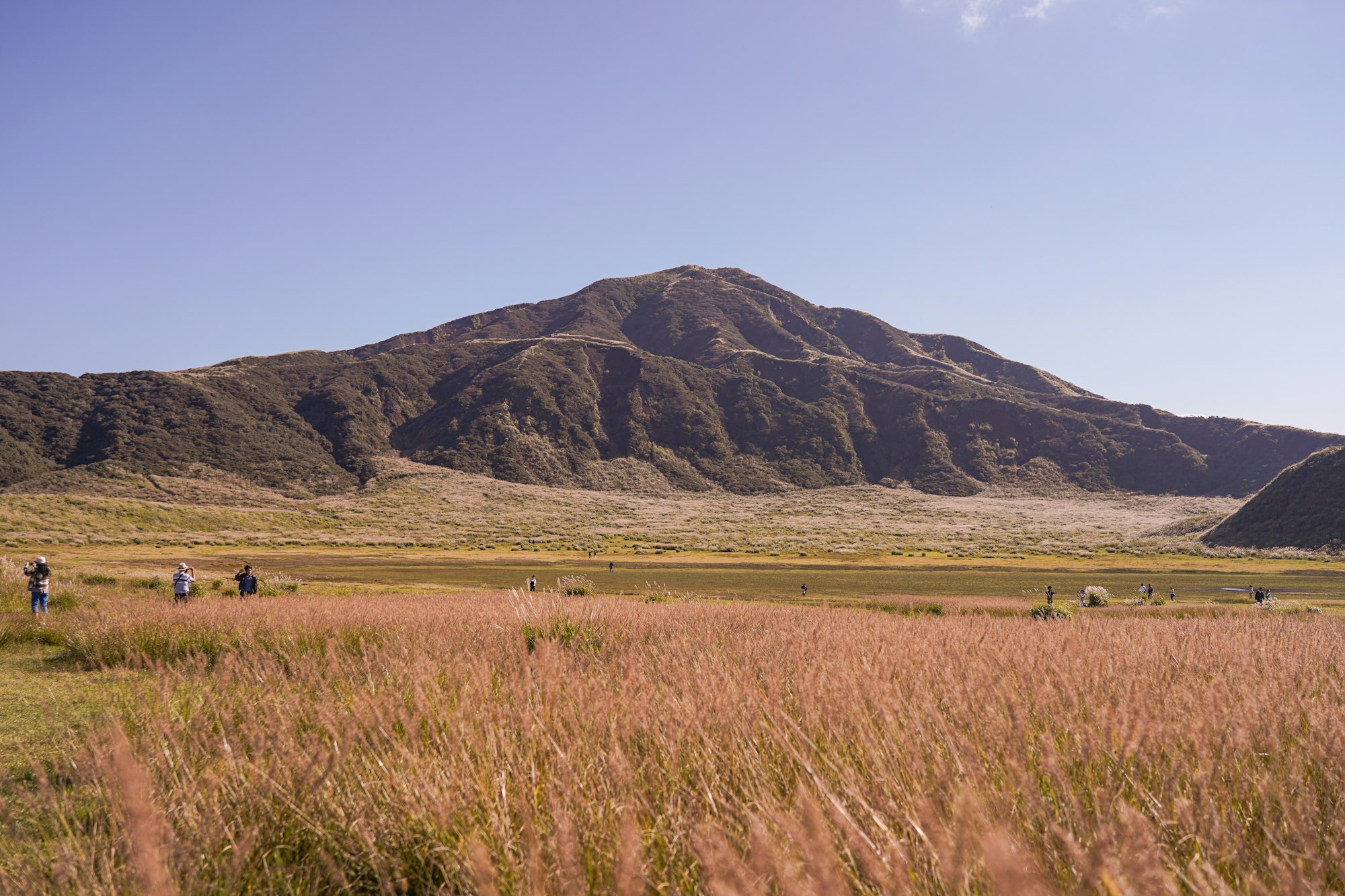
Kusasenri-ga-hama is the postcard view of Aso: a broad grassy meadow in an old crater, with a shallow pond in the middle and the smoking peak of Nakadake behind it. Cattle and horses graze here, and from early March to mid-December you can join a short guided horseback ride across the grass, a highlight for families. In autumn the meadow turns gold with pampas grass, making late October and November a lovely time to visit. Across the road, the Aso Volcano Museum explains how the caldera formed and shows live camera footage from the crater, which is the closest you can get while the crater area is closed; it is open 9:00 to 17:00 and admission is 1,300 yen. Buses run from JR Aso Station to Kusasenri for 1,000 yen every one to two hours (not covered by the JR Pass), but a rental car gives you far more freedom to explore the caldera. Bring a jacket, since it is often windy and cooler up here than in Kumamoto.
2. Daikanbo Lookout
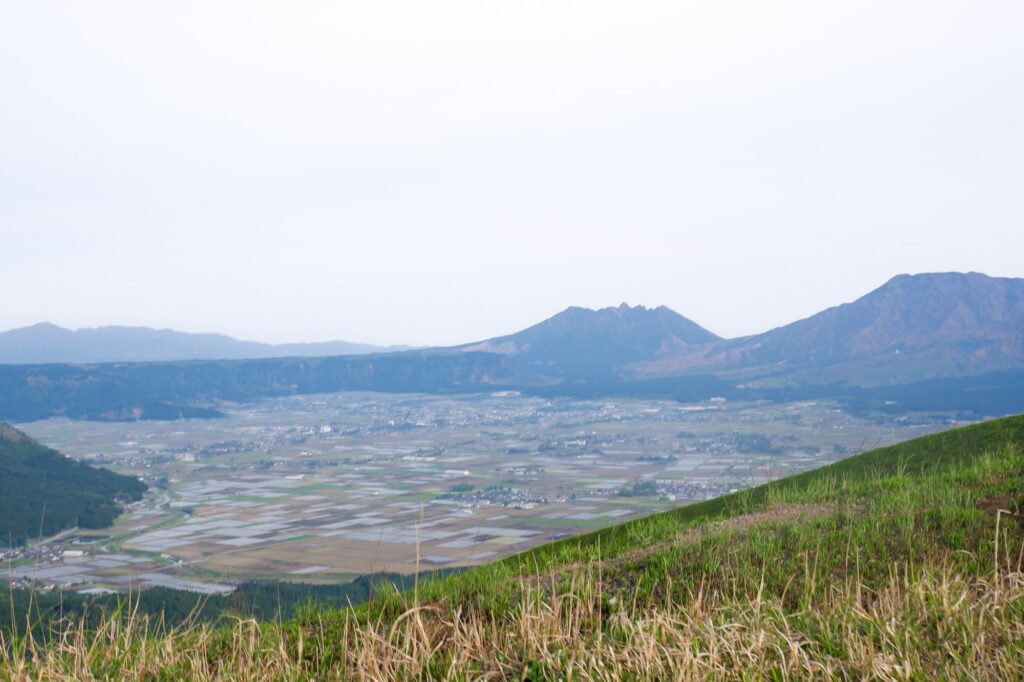
Daikanbo, whose name means “great viewpoint,” sits at 936 meters on the northern outer rim of the caldera, the highest point on that side, and it gives you the classic panorama of Aso. Below you lie the rice fields and towns of the Aso Valley, and across the caldera rise the five central peaks, whose outline is said to look like a reclining Buddha, known locally as the Nehan-zo. On clear days you can also see the Kuju mountains in neighboring Oita. In autumn, and especially in November, cold mornings after warm days can fill the caldera with a sea of clouds, so the Buddha appears to float; come at sunrise for the best chance. The lookout has a souvenir shop and a restaurant that keep daytime hours, while the viewpoint itself is open-air. Public transport is limited, so Daikanbo is easiest to reach by car or on a guided tour, and it combines well with a drive along the caldera rim and on to Kurokawa Onsen.
3. Komezuka
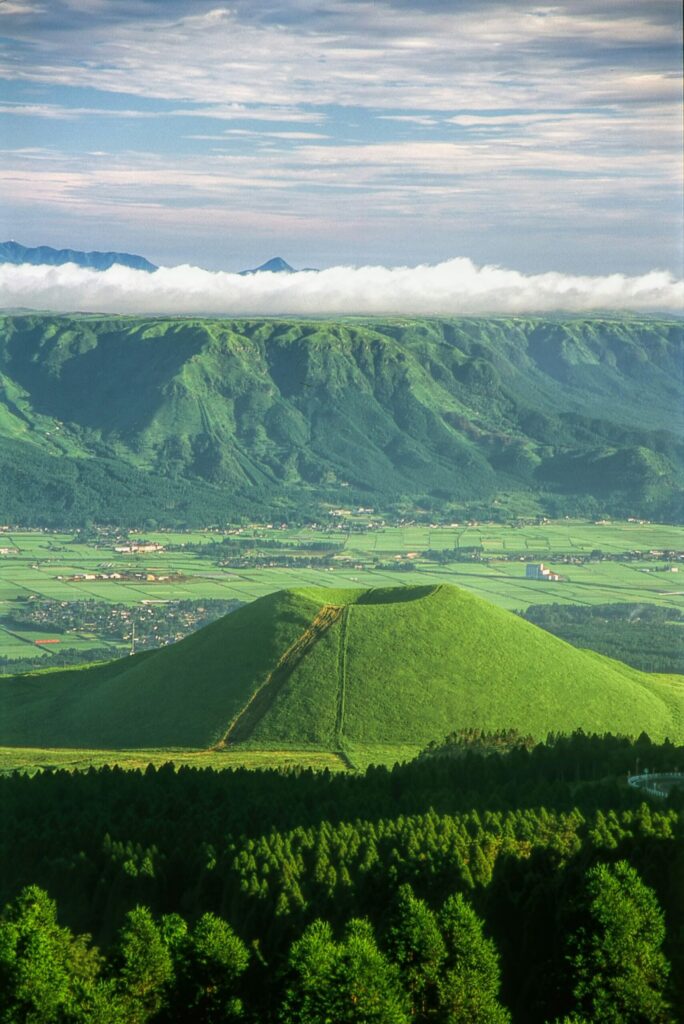
Komezuka is a small, nearly symmetrical volcanic cone that rises from the grasslands on the road between Aso town and Kusasenri, and its smooth green slopes and dented top make it one of the most photographed sights in Aso. It is also one of Aso’s youngest volcanoes: the cone took its present shape about 3,000 years ago, and lava from Komezuka and nearby peaks helped form the plains around it. Legend says the hollow at the top was made when a god scooped out a handful of rice to give to hungry villagers, which is how the hill got its name, “rice mound.” Hiking up Komezuka is prohibited to protect the fragile volcanic surface, so enjoy it from the roadside pull-offs and viewpoints along the way. It is greenest from spring to summer and turns golden brown in autumn and winter. Drive slowly here: the road is narrow and winding, and in good weather many people stop for photos.
Where to Stay Near Aso
 Where to stay: Aso
Hotel links in this section go to Booking.com. If you book through them, we may earn a commission at no extra cost to you.
Most visitors stay in Aso City, around JR Aso Station and the Uchinomaki hot spring area, where you can catch buses to Kusasenri and the Kyushu Odan limited express trains. Many hotels in the caldera have their own hot spring baths and free parking, which matters because a car is the easiest way to see Aso.
Luxury
KAMENOI HOTEL Aso is a comfortable hot spring hotel where rooms come with mountain views and a private open-air bath. There are also shared hot spring baths, a sauna, a garden and a restaurant serving local dishes, plus free parking.
Hot spring hotel with private open-air baths and mountain views.
Mid-Range
Fairfield by Marriott Kumamoto Aso is a modern, straightforward base for a road trip, with simple, comfortable rooms, a terrace, a lounge, a shared kitchen and free on-site parking. It is a good choice if you plan to explore by car and eat out locally.
Fairfield by Marriott Kumamoto Aso
Modern roadside hotel with a terrace, lounge and free parking.
Budget-Friendly
Syukubo Aso is a traditional, good-value inn with tatami rooms, a shared bath and free parking. Guests praise its Japanese breakfast and dinner, and it is well placed for both the volcano area and Kurokawa Onsen.
Traditional inn with tatami rooms, a public bath and home-style meals.
Compare prices before you book
Hotels in Aso on Booking.com
Stay in the Aso Caldera for sunrise at Daikanbo, an easy drive to Kusasenri and hot spring baths at the end of the day.
Affiliate link — if you book through Booking.com, we may earn a commission at no extra cost to you.
Quick Tips for Visiting
- Check the Japan Meteorological Agency for Aso’s current volcanic alert level before you go; the Nakadake crater area is closed for now.
- Rent a car in Kumamoto or Aso if you can: buses in the caldera run only every one to two hours.
- Visit Aso Shrine in Ichinomiya, one of Japan’s oldest shrines, whose two-story Romon gate was fully restored after the 2016 earthquake.
- Come to Daikanbo at sunrise in autumn for the best chance of a sea of clouds.
- Dress in layers: the caldera rim is often windy and much cooler than Kumamoto city.
Getting there by train: The JR Hohi Line runs from Kumamoto to Aso Station through the caldera, with limited express trains such as the Kyushu Odan Tokkyu and the seasonal Aso Boy sightseeing train. The line was rebuilt after the 2016 earthquakes, and service was affected again by the July 2026 quake, so check JR Kyushu for current timetables. To reach Kumamoto, take the Kyushu Shinkansen from Hakata. Read our guide to riding trains in Japan, learn how to ride the Shinkansen, and check whether the JR Pass is worth it for your route.
Frequently Asked Questions
Can you visit the Mount Aso crater now?
Not at the moment. As of mid-October 2026, Aso’s volcanic alert is Level 2 with a 1-kilometer no-entry zone around the Nakadake crater, so the crater road and trails are closed. Kusasenri, Daikanbo and the rest of the caldera remain open.
What is the best viewpoint at Mount Aso?
Daikanbo, at 936 meters on the northern rim of the caldera, offers the classic panorama of the Aso Valley and the five peaks, which look like a reclining Buddha.
Can you climb Komezuka?
No. Hiking up Komezuka is prohibited to protect the volcanic surface, but you can view it from the road between Aso and Kusasenri.
How do you get to Kusasenri?
Buses run from JR Aso Station to Kusasenri for 1,000 yen every one to two hours. Driving is the most flexible way to explore the caldera.