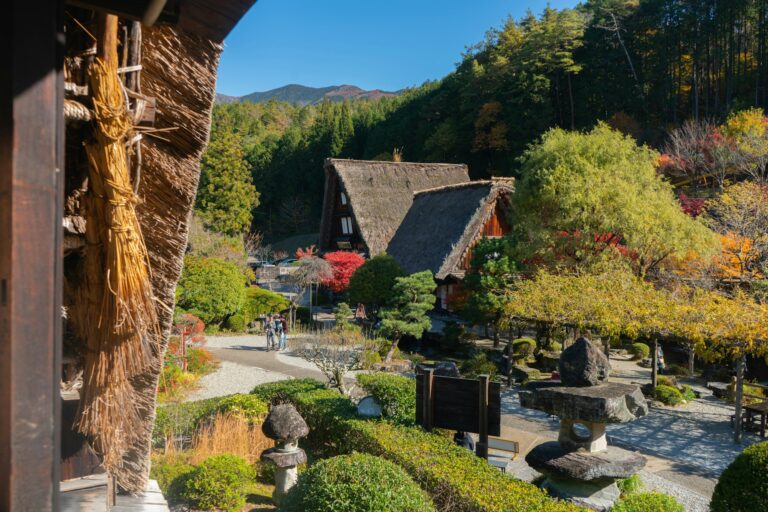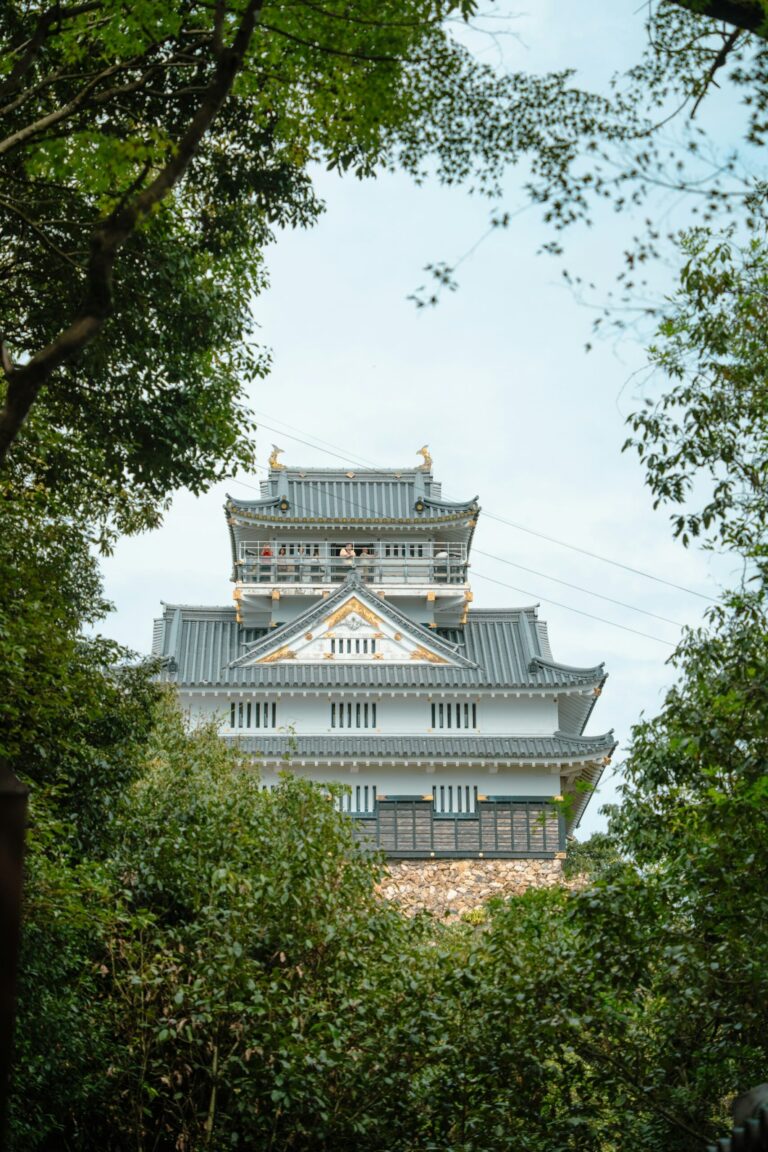
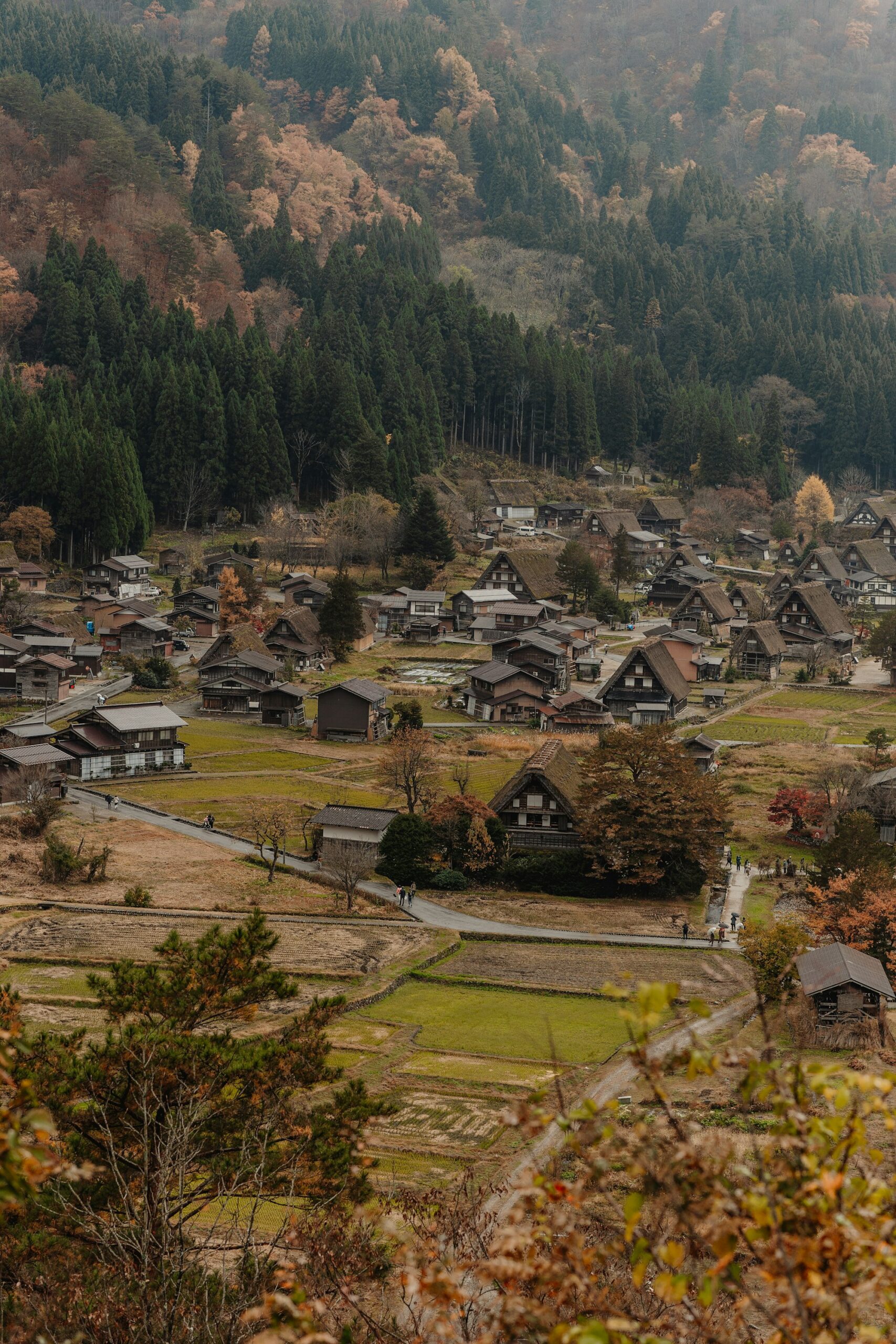
Shirakawa-go, Takayama Old Town and Hida Folk Village are the reasons most first-time visitors make the trip to the mountains of northern Gifu Prefecture. Together they show a side of Japan that feels a world away from Tokyo and Kyoto: steep thatched farmhouses in a snowy valley, dark wooden merchant streets lined with sake breweries, and an open-air museum where you can step inside centuries-old homes. Takayama is the natural base, with the Hida limited express from Nagoya and buses to Shirakawa-go. This guide covers what to see at each spot, practical tips for buses and reservations, and where to stay in Takayama.
1. Shirakawa-go (Ogimachi Village)
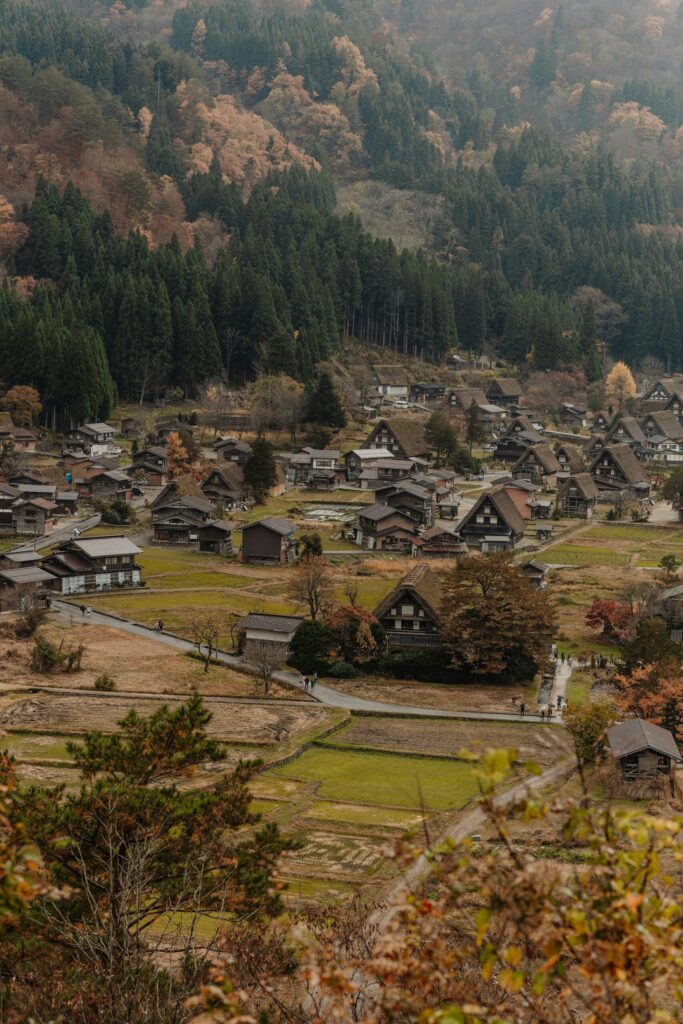
Shirakawa-go is a UNESCO World Heritage village famous for its gassho-zukuri farmhouses, whose steep thatched roofs are said to resemble hands pressed together in prayer. The roofs were built to shed the region’s heavy snow, and the large attics were once used for raising silkworms. Ogimachi, the main village, is compact enough to explore on foot in a few hours; climb to the Shiroyama viewpoint for the classic postcard view over the rooftops. Some houses are open to visitors, while many are still private homes, so stay on the paths and out of gardens. Nohi Bus runs from Takayama in about 50 minutes for 2,800 yen one way, and from Kanazawa in roughly 1 hour 15 to 1 hour 25 minutes; some departures require a reservation, so book seats on Japan Bus Online. The famous winter light-up uses a full pre-booking system: in 2026 you could only enter as an overnight guest in the village, with a reserved parking space or on an organized bus tour. Dates for 2027 had not been announced at the time of writing.
2. Takayama Old Town (Sanmachi Suji)
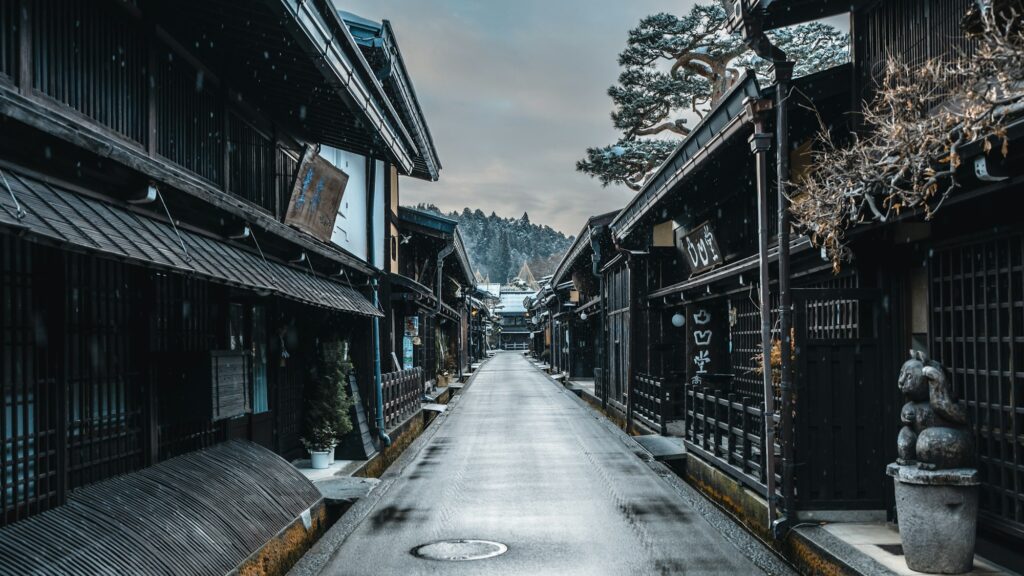
Takayama’s old town, centered on the Sanmachi Suji streets, is one of the best-preserved merchant districts in Japan. Low wooden townhouses with latticed windows line narrow lanes, and the cedar balls hanging above some doorways mark sake breweries, several of which offer tastings. Snack stalls sell Hida beef sushi, grilled rice dumplings and miso-flavored treats, so come hungry. A few minutes away, Takayama Jinya is a rare surviving government office from the Edo period, where you can walk through tatami reception rooms, offices and storehouses. It is open 8:45 to 17:00 from April to October and 8:45 to 16:30 from November to March, with admission at 440 yen; you take your shoes off inside. In the morning, stroll the Miyagawa morning market along the river for pickles, local crafts and fresh produce. The old town gets busy by late morning, so go early or in the late afternoon. Takayama Station is about a 10 to 15-minute walk from the old town.
3. Hida Folk Village (Hida no Sato)
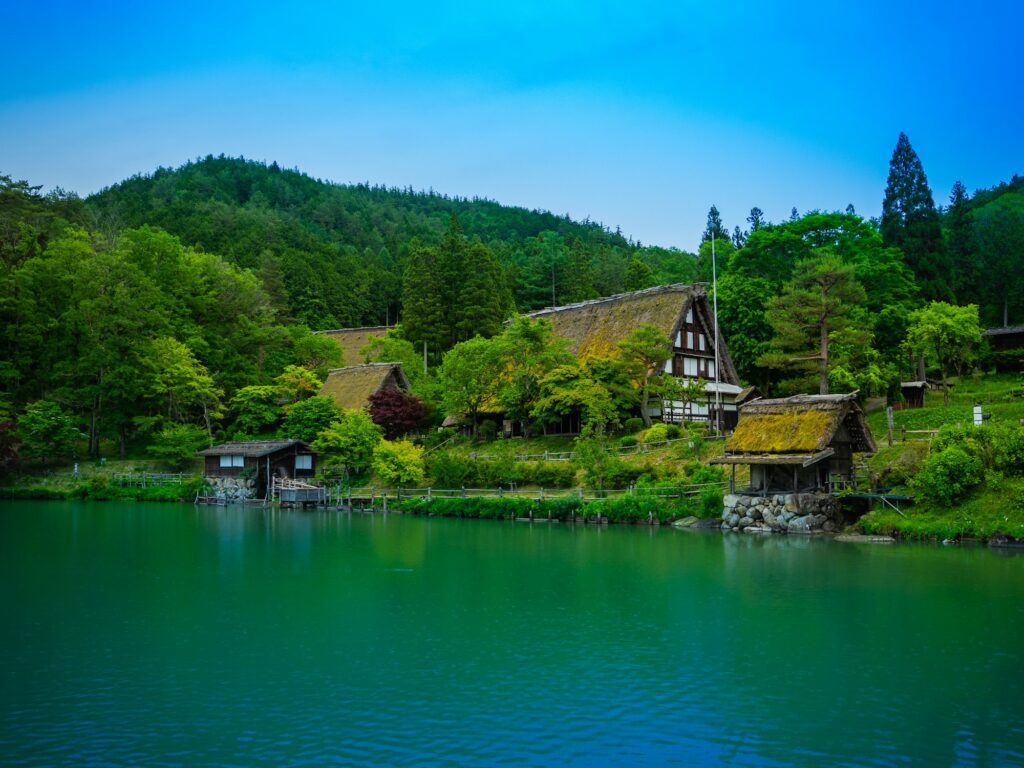
Hida Folk Village is an open-air museum on a hillside just outside central Takayama, where dozens of traditional farmhouses from around the Hida region, including gassho-zukuri houses, have been moved and preserved around a pond. Unlike Shirakawa-go, nobody lives here, so you can step inside the houses, climb into the attics, sit by the sunken irori hearths and see the tools rural families used through the long winters. It is a great choice if you cannot fit Shirakawa-go into your schedule, and a quieter complement if you can. Craft demonstrations and the chance to see how the thatch is tied together make it especially interesting for families. Plan about two hours for a relaxed visit. Hida Folk Village is open daily from 8:30 to 17:00, and admission is 700 yen for adults. The Sarubobo Bus from Takayama Station takes about 10 minutes, or you can walk in about 30 minutes. Look for sarubobo, the faceless red good-luck dolls that are a symbol of Hida.
Where to Stay Near Takayama
 Where to stay: Takayama
Hotel links in this section go to Booking.com. If you book through them, we may earn a commission at no extra cost to you.
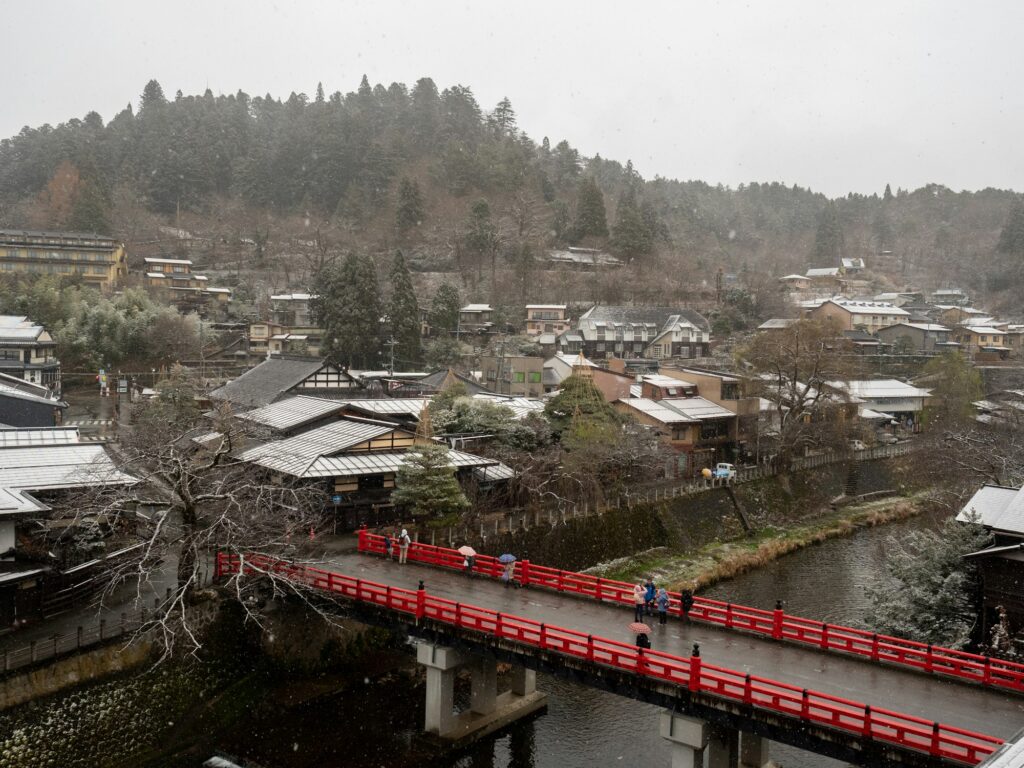
Takayama is the best base for this part of Gifu. The old town, Takayama Jinya and the morning markets are walkable from the station area, Hida Folk Village is a short bus ride away, and Nohi buses to Shirakawa-go and Kanazawa leave from the bus terminal next to the station. If you want to sleep in Shirakawa-go itself, the village has small farmhouse inns that book up early, especially on light-up dates.
Luxury
Honjin Hiranoya Kachoan is a well-known traditional ryokan close to the old town and the Miyagawa River, with hot spring baths and multi-course kaiseki-style dinners featuring local Hida ingredients. It is a good choice for your first ryokan stay.
Traditional ryokan with onsen baths near the old town.
Mid-Range
Country Hotel Takayama is a practical hotel facing Takayama Station, which makes early buses to Shirakawa-go and trains on the Hida line easy. The old town is a short, flat walk away.
Simple hotel right by the station and bus terminal.
Budget-Friendly
K’s House Takayama Oasis is a friendly, well-reviewed hostel near the station with both dorm beds and private rooms, plus a shared kitchen and lounge, making it a good fit for budget travelers and solo visitors.
Popular hostel with private rooms near the station.
Compare prices before you book
Hotels in Takayama on Booking.com
Stay near the old town, catch the early bus to Shirakawa-go and enjoy Takayama’s streets before the crowds arrive.
Affiliate link — if you book through Booking.com, we may earn a commission at no extra cost to you.
Quick Tips for Visiting
- Book Nohi Bus seats to Shirakawa-go in advance, especially on weekends and in autumn and winter.
- Arrive in Shirakawa-go early in the day to enjoy the village before most tour groups.
- Visit the Miyagawa morning market and Sanmachi Suji in the early morning for the quietest streets.
- Bring cash for snack stalls, small shops and some admission fees.
- Pack warm, waterproof shoes for winter, when snow covers the villages.
Getting there by train: The Hida limited express runs from Nagoya to Takayama in about 2.5 hours, with stops at Gifu and Gero, and it is covered by the JR Pass (a seat reservation is required during all-reserved periods). From Tokyo, take the Tokaido Shinkansen to Nagoya and change to the Hida. Nohi buses to Shirakawa-go are not covered by the JR Pass. Read our guide to riding trains in Japan, learn how to ride the Shinkansen, and check whether the JR Pass is worth it.
Frequently Asked Questions
How do you get from Takayama to Shirakawa-go?
Take the Nohi Bus from the Takayama bus terminal next to the station. The ride takes about 50 minutes and costs 2,800 yen one way. Some departures require a reservation, which you can make on Japan Bus Online.
Do you need a reservation for the Shirakawa-go light-up?
Yes. The winter light-up uses a pre-booking system. In 2026 you could enter only as an overnight guest in the village, with a reserved parking space or on an organized bus tour. Check the official Shirakawa-go tourism site for the next dates.
Is Hida Folk Village worth visiting if you go to Shirakawa-go?
Yes. At Hida Folk Village you can go inside many of the preserved farmhouses, which is not possible with most homes in Shirakawa-go. It is open daily from 8:30 to 17:00, and admission is 700 yen for adults.
How long should you stay in Takayama?
Two nights is ideal: one day for the old town, Takayama Jinya and Hida Folk Village, and one day for a round trip to Shirakawa-go.