Tsuru-no-Mai Bridge, the giant Tachineputa floats of Goshogawara and the old merchant town of Kuroishi show a quieter side of Aomori Prefecture: the Tsugaru countryside around Hirosaki. This is a region of apple orchards, rice fields and small towns watched over by Mt. Iwaki, the volcano locals call “Tsugaru Fuji.” Local railways such as the Gono Line, the Tsugaru Railway and the Konan Railway connect the sights, and Hirosaki makes an easy base. This guide covers three highlights, how to get there and where to stay.
1. Tsuru-no-Mai Bridge
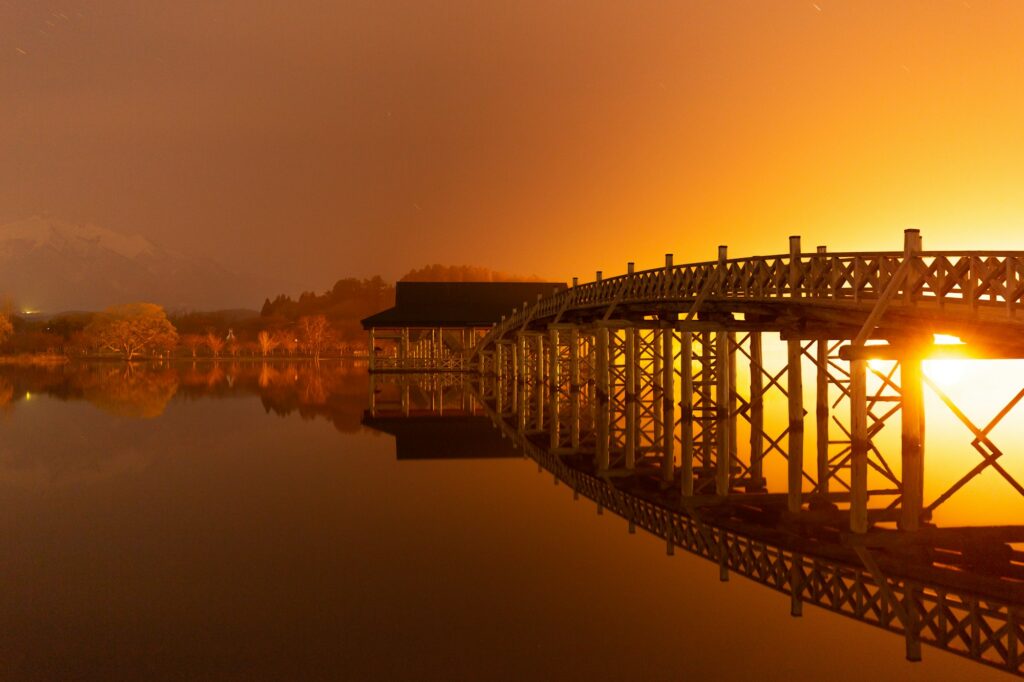
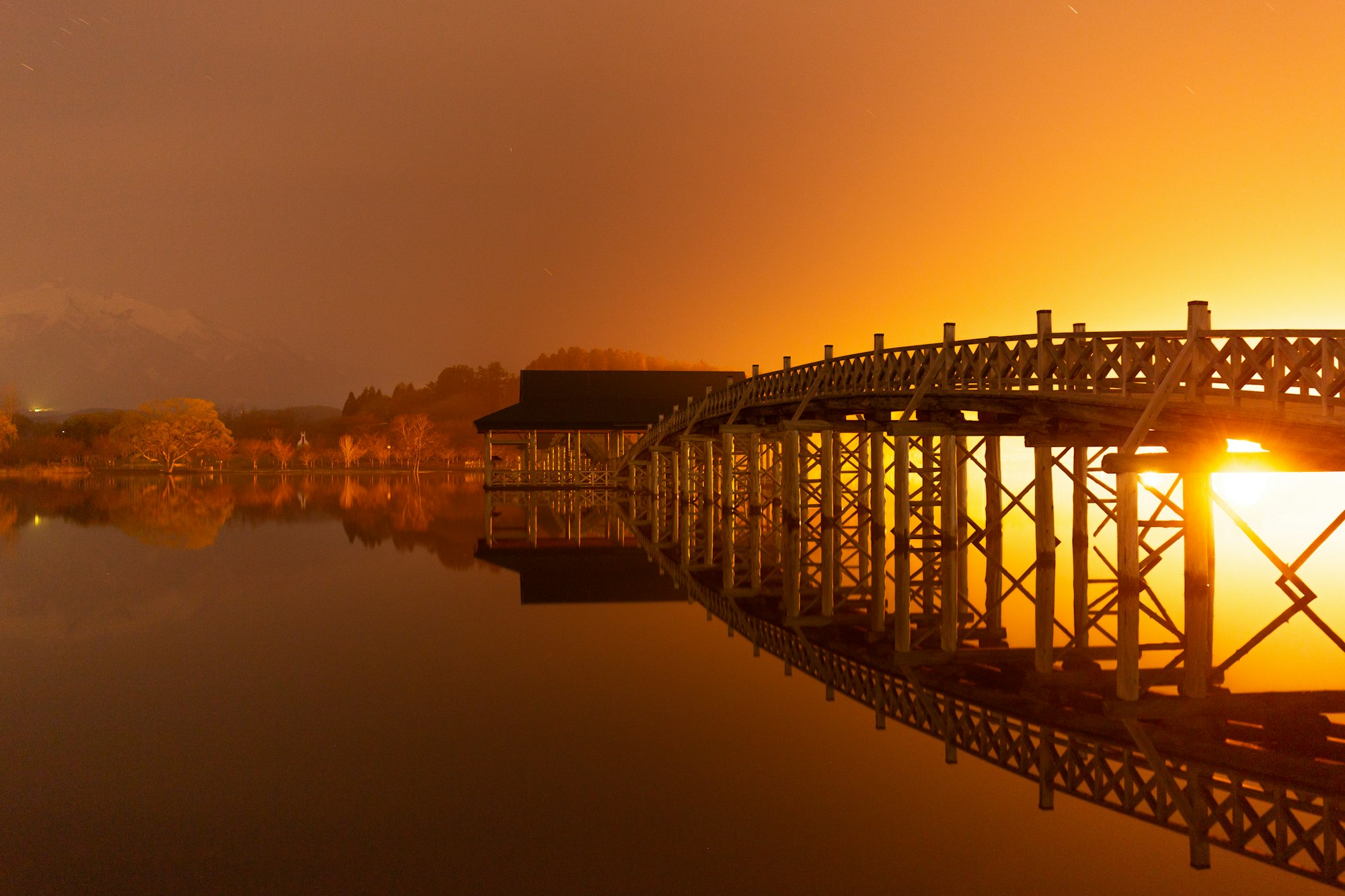
Tsuru-no-Mai Bridge, which means “Dancing Crane Bridge,” stretches about 300 meters across Tsugaru Fujimi Lake in the town of Tsuruta and is described as Japan’s longest wooden triple-arch bridge. Its three gentle arches look like a crane spreading its wings, and on a clear day Mt. Iwaki rises directly behind it, mirrored in the calm water at sunrise and sunset. The bridge is free and open at all times, with free parking nearby. After a major renovation in several phases, it reopened in April 2026 and can now be crossed in winter, too. Spring cherry blossoms and autumn leaves are the most popular seasons, while snowy winter scenes are beautiful and much quieter. The wooden deck becomes slippery in rain and snow, so walk carefully. The nearest station is Mutsu-Tsuruta on the JR Gono Line, about 15 minutes away by taxi, so driving or a taxi is the easiest way to visit.
2. Goshogawara Tachineputa and Kanagi
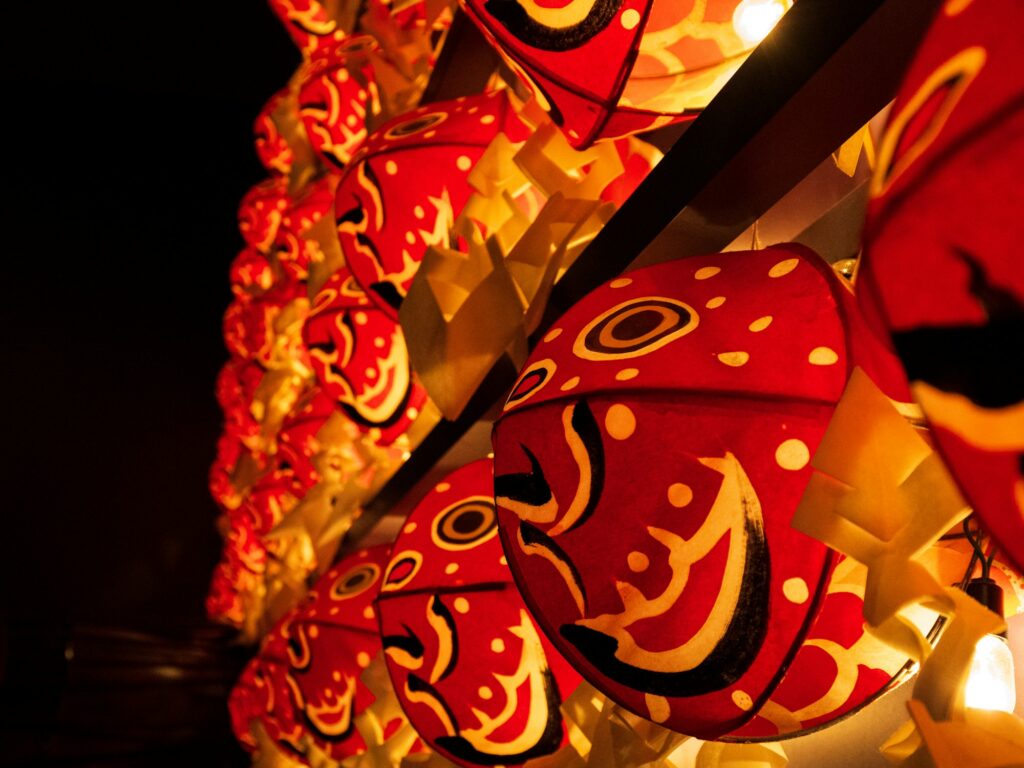
Goshogawara is home to the Tachineputa, towering festival floats about 23 meters tall and weighing around 19 tons, the height of a seven- or eight-story building. You can see them all year at Tachineputa no Yakata, a museum where the floats stand in a tall atrium so you can see them up close. The museum reopened in July 2026 after a major renovation; admission is 650 yen for adults, and it opens 9:00 to 17:00 from October to June and until 19:00 in July to September. The Goshogawara Tachineputa Festival, when the floats are pulled through the streets, takes place August 4 to 8. From Goshogawara, the small Tsugaru Railway reaches Kanagi in about 20 minutes. Kanagi is the hometown of novelist Osamu Dazai, and his family’s grand mansion is now the Shayokan memorial museum (600 yen, 9:00 to 16:30). In winter, the railway runs its famous Stove Train with coal-burning stoves inside the cars, usually from December to March.
3. Kuroishi: Komise Street and Nakano Momiji-yama
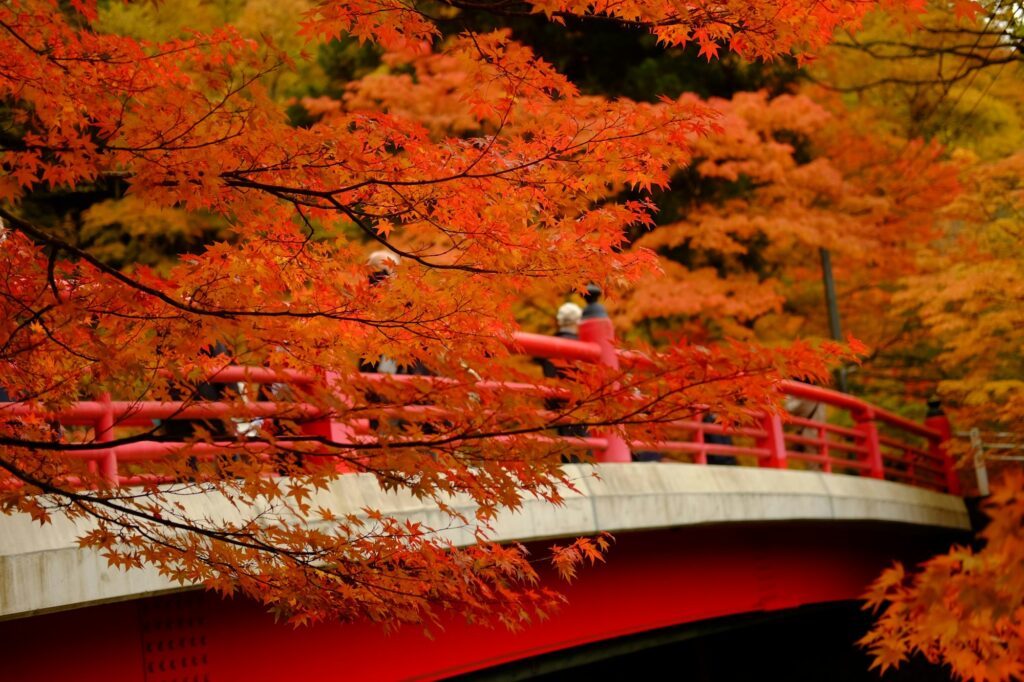
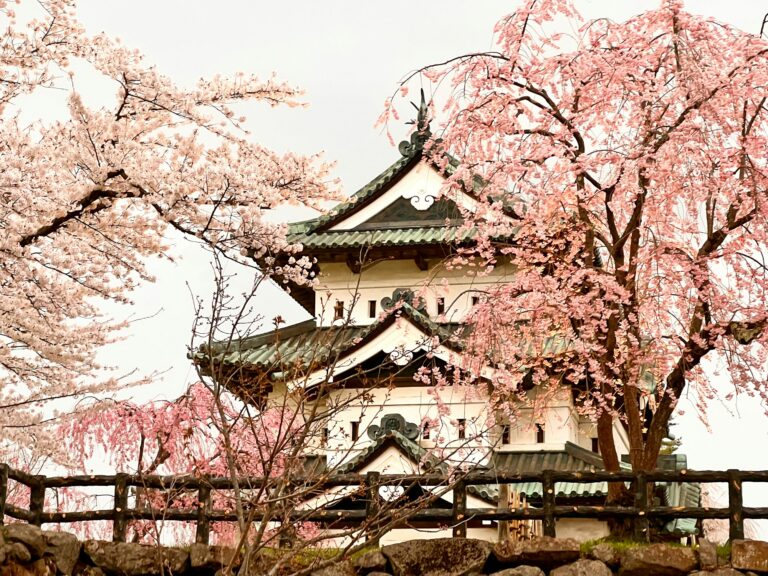
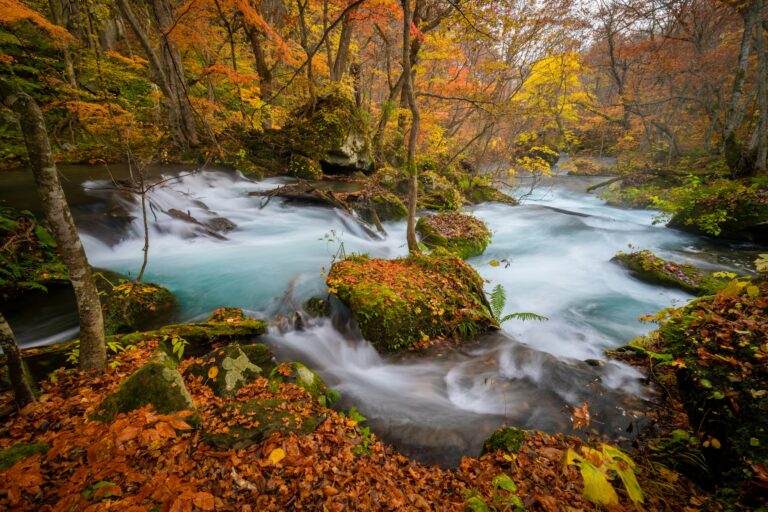
Kuroishi, a small historic town east of Hirosaki, preserves Komise-dori, a street of traditional buildings linked by covered wooden walkways called komise, which once kept shoppers dry in heavy snow. It has been selected as one of Japan’s 100 best streets. Along the street you can visit Takahashi House, a merchant home designated a national Important Cultural Property, and the Kiku-no-i and Tamadare sake breweries. From late April to early November, Tsugaru Komise Eki hosts daily live performances of Tsugaru shamisen, the powerful local folk music. In autumn, nearby Nakano Momiji-yama is one of the best foliage spots in the Tsugaru area, free to enter, with colors that usually peak from late October to early November. In 2026 the maples are lit up from October 24 to November 8, 16:30 to 21:00. Komise-dori is about a 15-minute walk from Kuroishi Station, and Nakano Momiji-yama is about 20 minutes by taxi, or by bus to the Itadome stop and a 10-minute walk.
Where to Stay Near Hirosaki
 Where to stay: Hirosaki
Hotel links in this section go to Booking.com. If you book through them, we may earn a commission at no extra cost to you.
Hirosaki is the natural base for the Tsugaru countryside: the Konan Railway to Kuroishi starts here, the JR lines toward Goshogawara and the Gono Line pass through, and the city has plenty of restaurants, cafes and its famous castle park. Most hotels are clustered around Hirosaki Station.
Luxury
Art Hotel Hirosaki City, right next to JR Hirosaki Station, is the most polished hotel in town, with comfortable rooms, a tea lounge and a teppanyaki restaurant. It is perfect for early trains toward Goshogawara and Kuroishi.
Upscale hotel right next to the station.
Mid-Range
Dormy Inn Hirosaki is a popular mid-range choice with large hot spring baths, ideal after a day of walking in the cold Tsugaru countryside, and it is convenient for both the station and Hirosaki Park.
Hot spring baths and a central location.
Budget-Friendly
Toyoko Inn Hirosaki Ekimae is a simple, dependable budget hotel steps from Hirosaki Station, with compact rooms and breakfast included.
Good-value rooms in front of the station.
Compare prices before you book
Hotels in Hirosaki on Booking.com
Base yourself in Hirosaki for easy trains to Goshogawara, Kuroishi and the Gono Line, plus the castle park on your doorstep.
Affiliate link — if you book through Booking.com, we may earn a commission at no extra cost to you.
Quick Tips for Visiting
- Rent a car or plan taxis for Tsuru-no-Mai Bridge, as the nearest station is about 15 minutes away by taxi.
- Visit Tsuru-no-Mai Bridge at sunrise or sunset for reflections of Mt. Iwaki, and walk carefully on the wooden deck when it is wet or snowy.
- The Tsugaru Railway Stove Train requires a separate stove train ticket on top of the regular fare; check the 2026-27 timetable on the railway’s website before you go.
- Plan your Kuroishi visit for late October or early November to catch the autumn colors and the evening light-up at Nakano Momiji-yama.
- Combine this route with Hirosaki Castle, which is a short bus ride or walk from Hirosaki Station.
Getting there by train: From Tokyo, take the Tohoku Shinkansen to Shin-Aomori in about 3 hours 10 minutes, then the JR Ou Line to Hirosaki in about 30 to 40 minutes. From Hirosaki, the Konan Railway reaches Kuroishi in about 30 minutes, and JR trains continue toward Goshogawara, where you can change to the Tsugaru Railway for Kanagi. The scenic Resort Shirakami train on the Gono Line also passes through Mutsu-Tsuruta and Goshogawara (all seats reserved). Read our guide to riding trains in Japan, learn how to ride the Shinkansen, and check whether the JR Pass is worth it for your route.
Frequently Asked Questions
How long is Tsuru-no-Mai Bridge?
Tsuru-no-Mai Bridge is about 300 meters long and is described as Japan’s longest wooden triple-arch bridge. It is free to visit at any time.
Is Tachineputa no Yakata open?
Yes. The museum reopened in July 2026 after a renovation. Admission is 650 yen for adults.
When is the Goshogawara Tachineputa Festival?
The festival is held August 4 to 8, when floats about 23 meters tall are pulled through the streets of Goshogawara.
When are the autumn leaves best in Kuroishi?
Nakano Momiji-yama usually peaks from late October to early November. In 2026 it is lit up from October 24 to November 8, 16:30 to 21:00.