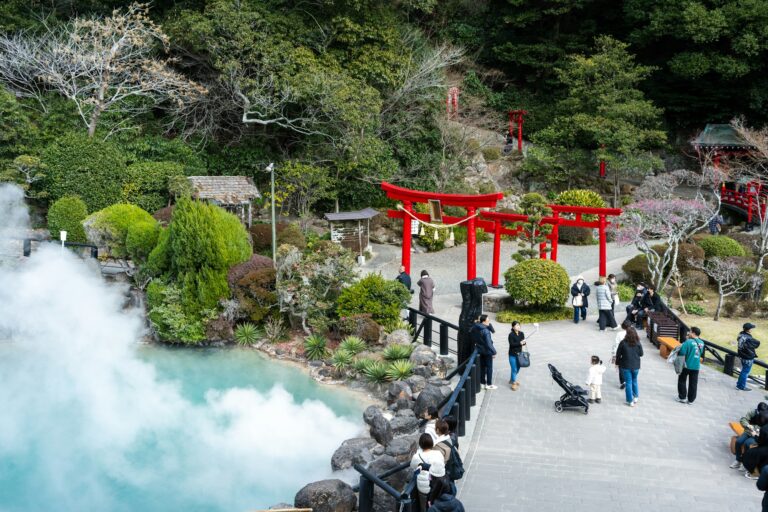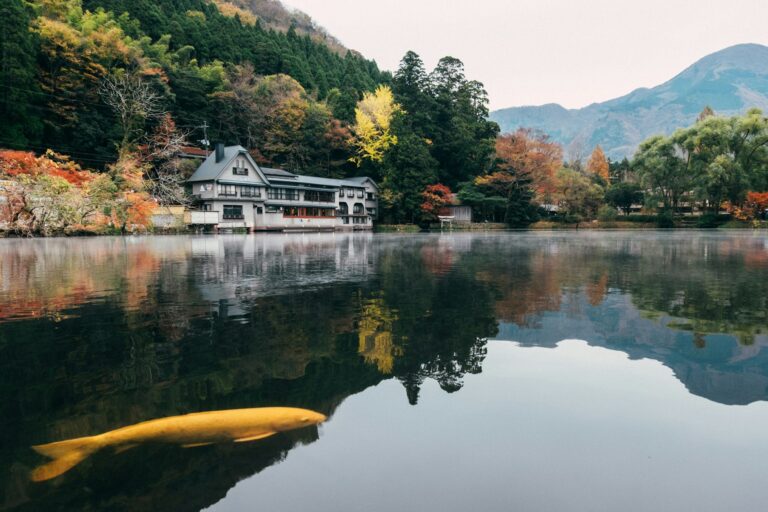
Usa Jingu, the Usuki Stone Buddhas and the Kokonoe Yume Grand Suspension Bridge are three of the most rewarding day trips in Oita Prefecture, and they show a side of Kyushu that most visitors to Beppu never see. Usa Jingu is the head shrine of the Hachiman faith, Usuki holds Japan’s first rock-carved Buddhas to be named a National Treasure, and Kokonoe has a breathtaking pedestrian bridge high above an autumn gorge. Each is roughly an hour from Oita city in a different direction, so Oita Station, with its trains, buses and rental car offices, makes a smart base. This guide covers what to see at each site, current admission prices and hours, how to get there, and where to stay near Oita Station.
1. Usa Jingu
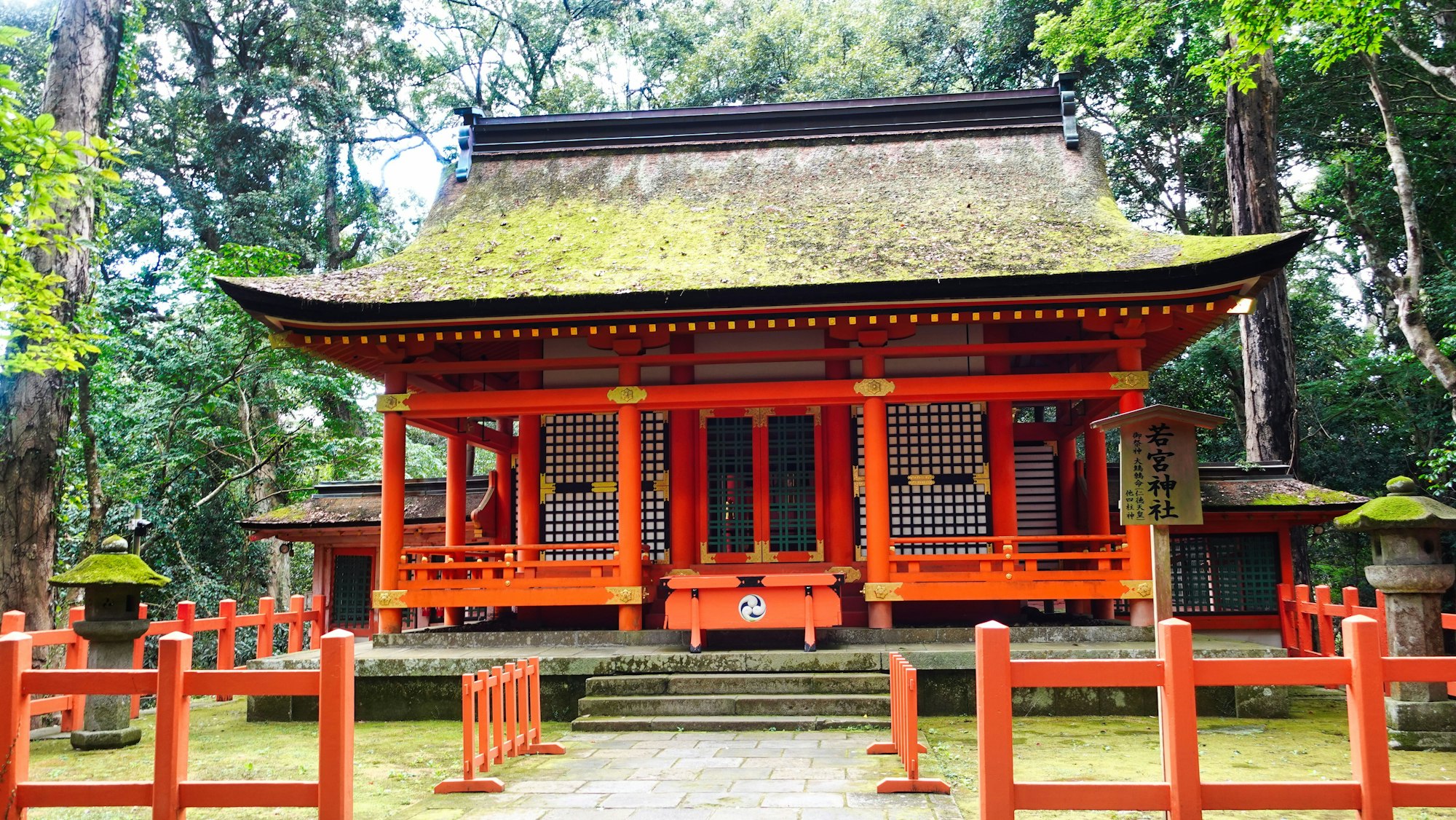
Usa Jingu is the head of more than 40,000 Hachiman shrines across Japan, dedicated to the god of archery and war who was also revered as a protector of the nation. The shrine was founded in the 8th century, and its vermilion main hall is a National Treasure and the original model for the Hachiman-zukuri style, with two connected buildings under twin roofs. Walk across the bridge and through the wooded grounds to the upper shrine, admiring the bright vermilion gates against the deep green trees. Usa Jingu has its own way of praying: instead of the usual two claps, worshippers bow twice, clap four times and bow once more. Entry to the grounds is free, and the Treasure Hall, which costs 300 yen, is open 10:00 to 15:00 and closed on Mondays and Tuesdays. From JR Usa Station, an hourly bus takes about seven minutes to the Usa Hachiman stop and costs 240 yen, or a taxi costs around 1,600 yen. Allow at least two hours.
2. Usuki Stone Buddhas
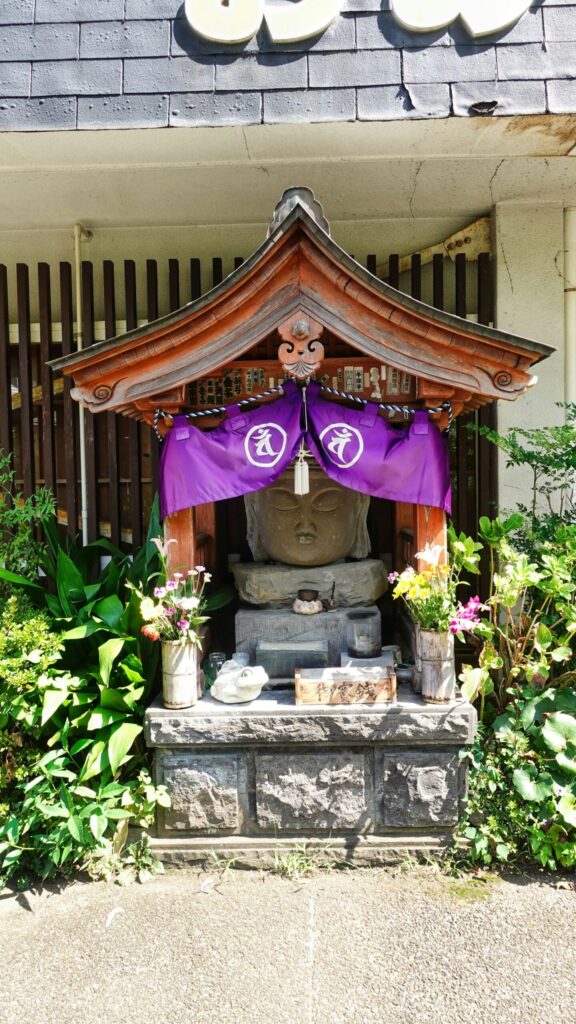
The Usuki Stone Buddhas are more than 60 figures carved directly into the soft volcanic rock of a quiet hillside south of Oita city, mostly in the late Heian period, roughly 900 years ago. In June 1995 they became the first rock-carved Buddhas in Japan to be designated a National Treasure, and the serene, finely carved faces of the Furuzono group, led by a large seated Dainichi Buddha, are the highlight. The figures are protected under wooden shelters, and a short loop path through the rice fields and lotus ponds connects the four groups. Admission is 550 yen for adults and 270 yen for children aged 6 to 14, and the site is open year-round from 9:00 to 17:00, with last entry at 16:30. From JR Usuki Station, buses take about 20 minutes and cost 200 yen but run only every one to three hours, so many visitors take a taxi or borrow one of the free rental bikes at the station. Save time for Usuki’s old samurai streets afterward.
3. Kokonoe Yume Grand Suspension Bridge
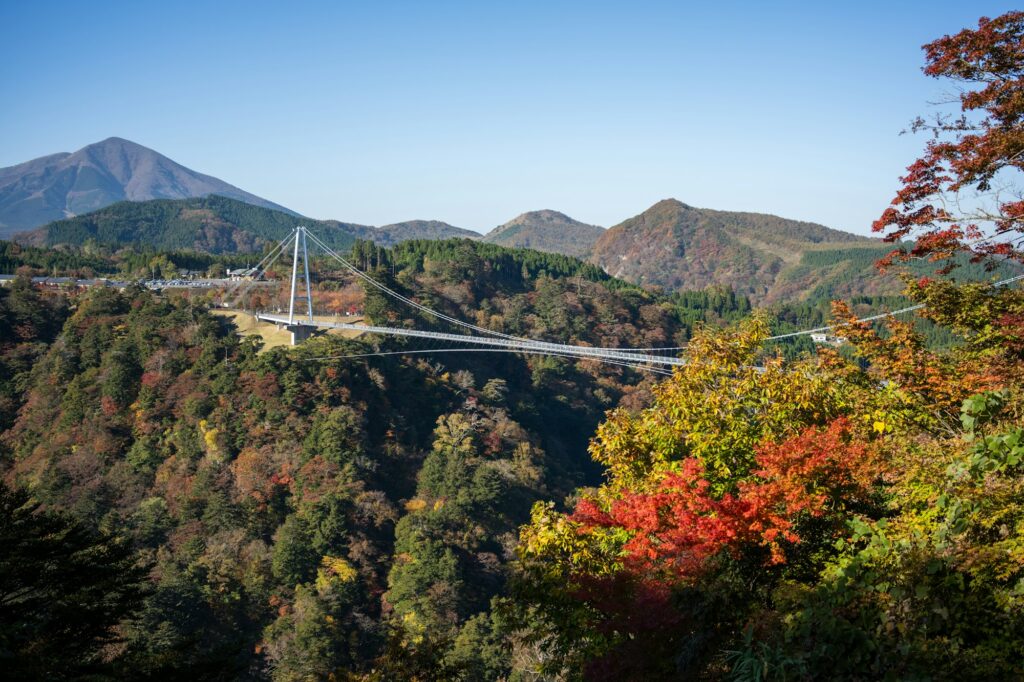
The Kokonoe Yume Otsurihashi is a pedestrian suspension bridge 390 meters long and 173 meters above the valley floor, set at about 777 meters above sea level in the mountains of western Oita. Walking across it feels like floating over the forest: below you lies a deep gorge with waterfalls, and on clear days the Kuju mountains rise in the distance. It is spectacular in autumn, when the maples turn red and gold, usually from late October into November, and the fresh green of spring is lovely too. Admission is 500 yen for adults and 200 yen for elementary school students, and the bridge is open daily from 8:30 to 17:00 from November to June and 8:30 to 18:00 from July to October; ticket sales stop 30 minutes before closing. The bridge can sway a little in the wind and the drop is dramatic, so it may not suit anyone with a strong fear of heights. By public transport, take a community bus from JR Bungo-Nakamura Station on the Kyudai Line; by car it pairs well with a drive across the Kuju highlands.
Where to Stay Near Oita Station
 Where to stay: Oita Station
Hotel links in this section go to Orbitz. If you book through them, we may earn a commission at no extra cost to you.
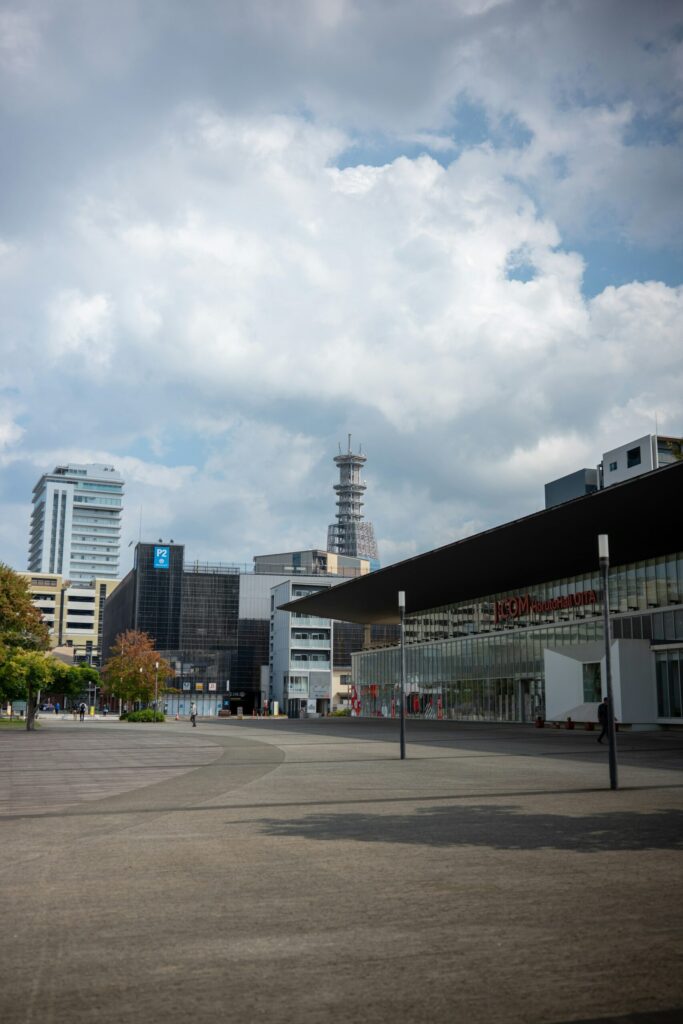
Oita Station is the most practical base for these day trips: trains run north to Usa and south to Usuki, the Kyudai Line heads west toward Kokonoe and Yufuin, and rental car offices are close by. The station area has plenty of hotels, restaurants and shopping, and Beppu is only about 10 minutes away by train if you want an evening soak.
Luxury
JR Kyushu Hotel Blossom Oita is the most convenient upscale choice, part of the JR Oita City complex right at the station. It has hot spring baths, a bar and lounge and free Wi-Fi, so you can go straight from the train to your room.
Stylish hotel in the JR Oita City station complex with hot springs.
Mid-Range
Dormy Inn Oita Hot Springs offers comfortable rooms and hot spring baths close to JR Oita City and the station, a great way to unwind after a day of walking at the shrines and the bridge.
Mid-range hotel with natural hot spring baths.
Budget-Friendly
Toyoko Inn Oita Ekimae is a dependable budget pick in front of Oita Station, with compact rooms with private bathrooms, which makes early-morning train departures easy.
Simple, good-value chain hotel by the station.
Compare prices before you book
Hotels in Oita on Orbitz
Base yourself near Oita Station for easy trains to Usa and Usuki, the Kyudai Line toward Kokonoe, and quick trips to Beppu.
Affiliate link — if you book through Orbitz, we may earn a commission at no extra cost to you.
Quick Tips for Visiting
- Rent a car at Oita Station if you want to see Kokonoe and the Kuju highlands; buses there are infrequent.
- Bow twice, clap four times and bow once when you pray at Usa Jingu.
- Borrow a free rental bike at JR Usuki Station to reach the Stone Buddhas and the old town.
- Visit the Kokonoe Yume bridge from late October into November for autumn colors, and arrive early to beat tour buses.
- Combine these trips with an evening in Beppu, only about 10 minutes from Oita by train.
Getting there by train: Oita Station is on the JR Nippo Line. From Hakata (Fukuoka), the Sonic limited express runs to Oita via Kokura in a little over two hours, and from Honshu you can take the Sanyo Shinkansen to Kokura and change to the Sonic. Usa and Usuki are on the Nippo Line north and south of Oita, while Bungo-Nakamura, the gateway to Kokonoe, is on the Kyudai Line toward Yufuin. Read our guide to riding trains in Japan, learn how to ride the Shinkansen, and check whether the JR Pass is worth it for your route.
Frequently Asked Questions
How much is the Kokonoe Yume Grand Suspension Bridge?
Admission is 500 yen for adults and 200 yen for elementary school students. The bridge is open 8:30 to 17:00 from November to June and 8:30 to 18:00 from July to October.
How do you pray at Usa Jingu?
At Usa Jingu, worshippers bow twice, clap four times and bow once more, instead of the usual two claps. Entry to the shrine grounds is free.
How much are the Usuki Stone Buddhas?
Admission is 550 yen for adults and 270 yen for children aged 6 to 14. The site is open year-round from 9:00 to 17:00, with last entry at 16:30.
Where should I stay for day trips in Oita?
Oita Station is the most practical base, with trains to Usa and Usuki, the Kyudai Line toward Kokonoe, rental car offices and quick trains to Beppu.