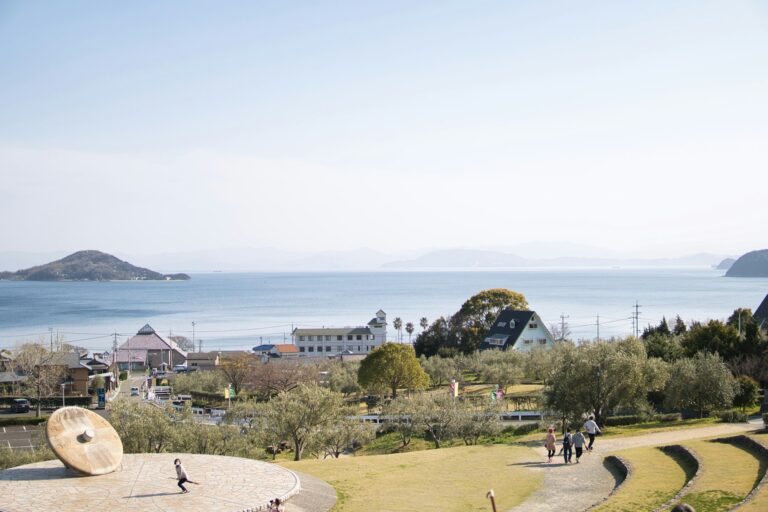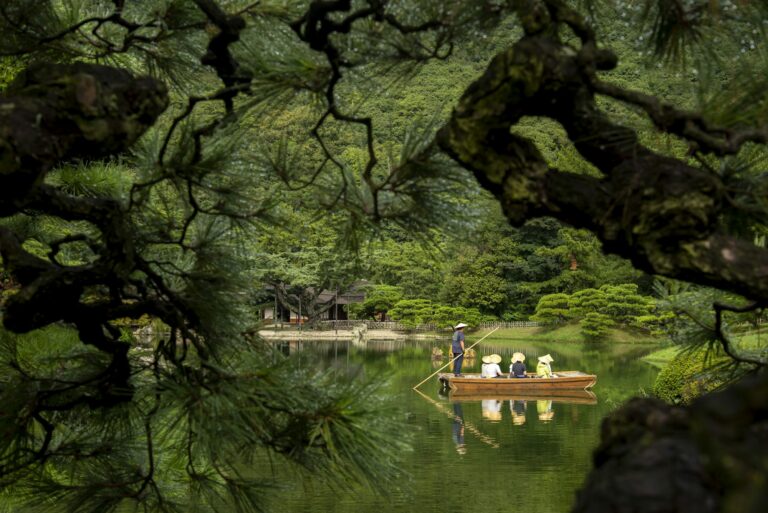
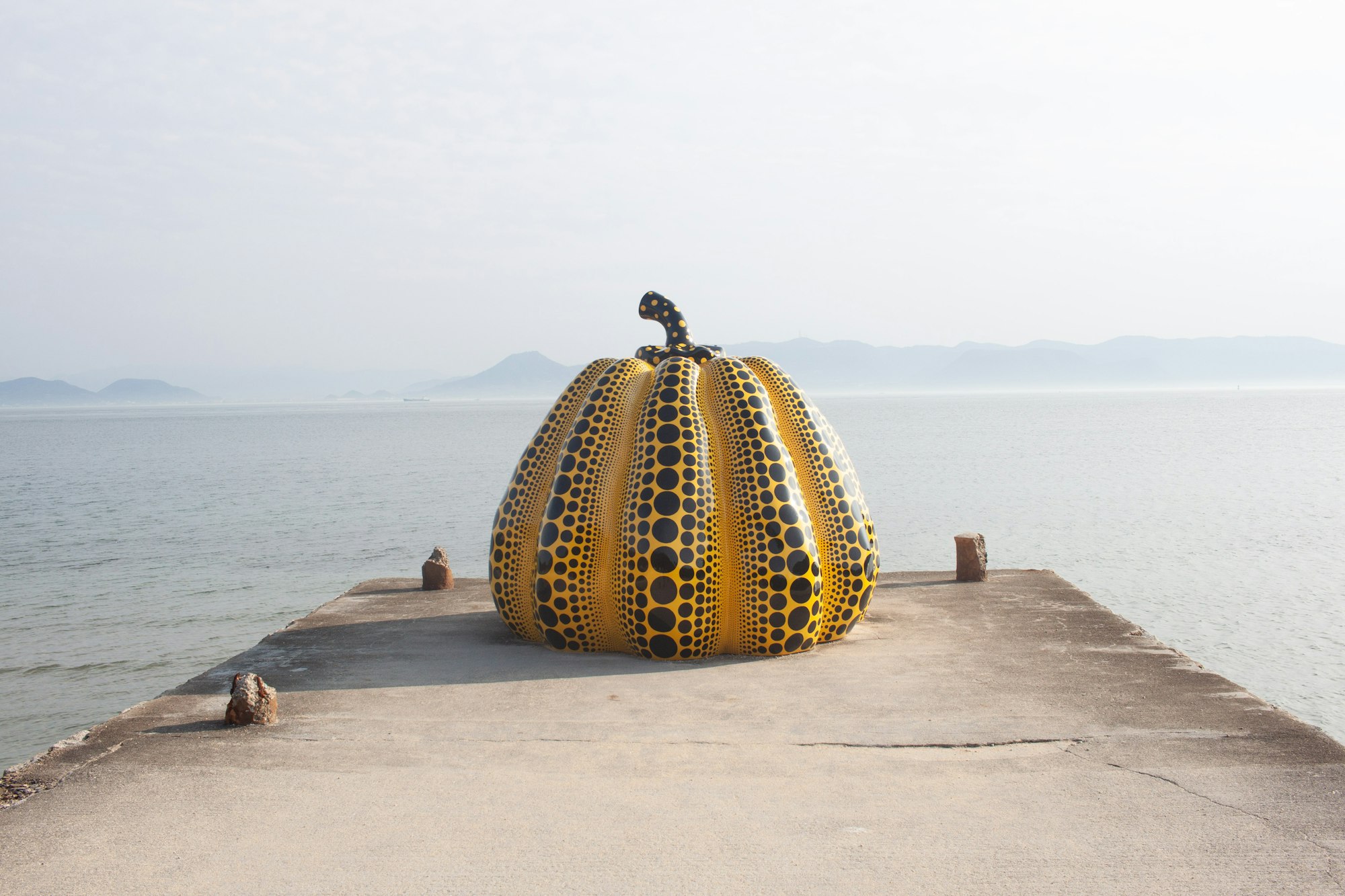
Naoshima, with Yayoi Kusama’s Yellow Pumpkin and the Chichu Art Museum, and neighboring Teshima, home of the Teshima Art Museum, are the heart of Japan’s famous art islands in the Seto Inland Sea, part of Kagawa Prefecture. Over the past few decades, the Benesse Art Site project has turned these small fishing islands into a world-class destination for contemporary art and architecture, with museums by Tadao Ando and Ryue Nishizawa set into the landscape. Ferries from Takamatsu make the islands an easy day trip, though staying overnight is far more relaxing. One important change: since October 2024, every Benesse art site requires an online ticket booked in advance. This guide covers the three highlights, tickets, ferries and where to stay.
1. Yellow Pumpkin and Benesse House
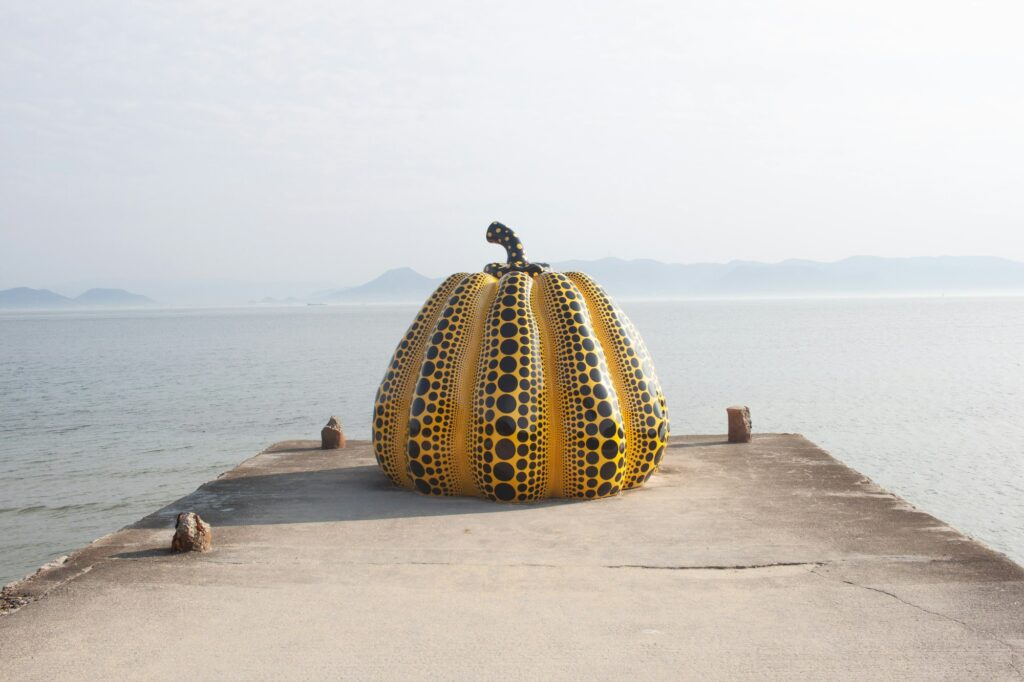
Yayoi Kusama’s Yellow Pumpkin, sitting at the end of an old pier on Naoshima’s south coast, is the symbol of the art islands and one of the most photographed artworks in Japan. The original was swept into the sea by a typhoon in August 2021, and a newly made pumpkin returned to the same pier in October 2022. It is outdoors and free to see, but expect a line for photos around midday; early morning and late afternoon are quieter. The pumpkin sits on the grounds of Benesse House, a museum and hotel designed by Tadao Ando, where galleries blend art with views of the sea. Benesse House Museum is open every day, 8:00 to 21:00 (last entry 20:00), and costs 1,300 yen online. Outdoor works dot the nearby beaches and lawns, so allow time to wander. A free shuttle bus and the island’s town buses link the Benesse area with Miyanoura port.
2. Chichu Art Museum
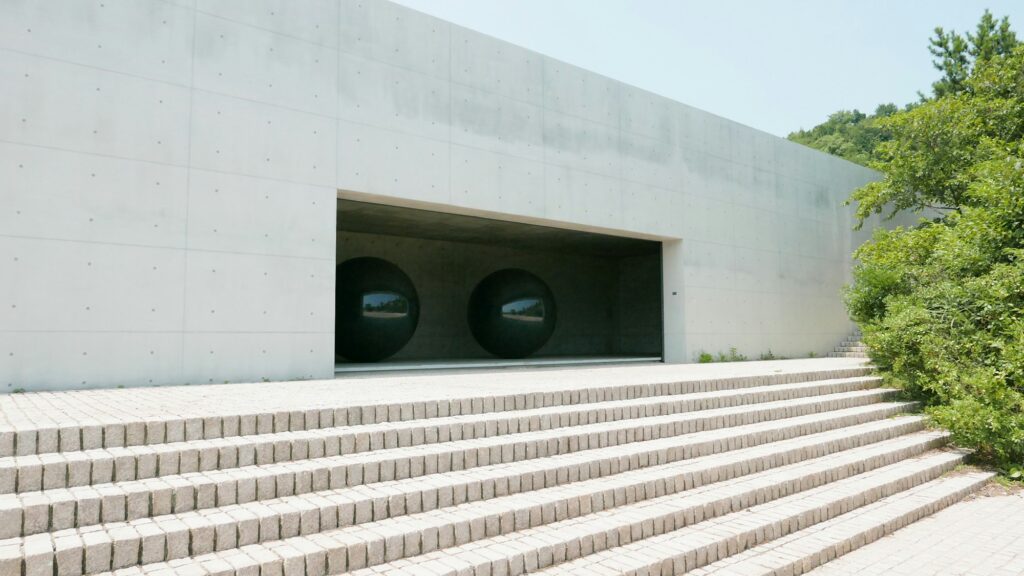
The Chichu Art Museum, whose name means “in the earth,” is Tadao Ando’s masterpiece on Naoshima: a museum built almost entirely underground, lit by natural daylight from openings in its concrete walls. It holds a small number of works by just three artists, Claude Monet, Walter De Maria and James Turrell, each displayed in a space designed for it, and the light changes the experience with the time of day and weather. Monet’s late Water Lilies paintings, seen under soft daylight in a white room, are unforgettable. Tickets must be booked online for a specific date and time slot: 2,500 yen on weekdays and 2,700 yen on weekends and holidays (free for ages 15 and under). The museum opens 10:00 to 17:00, with last entry at 16:00, and is closed on Mondays. Nearby, the Lee Ufan Museum (1,200 yen online) and the Naoshima New Museum of Art, opened in 2025, round out the island’s Ando buildings.
3. Teshima Art Museum
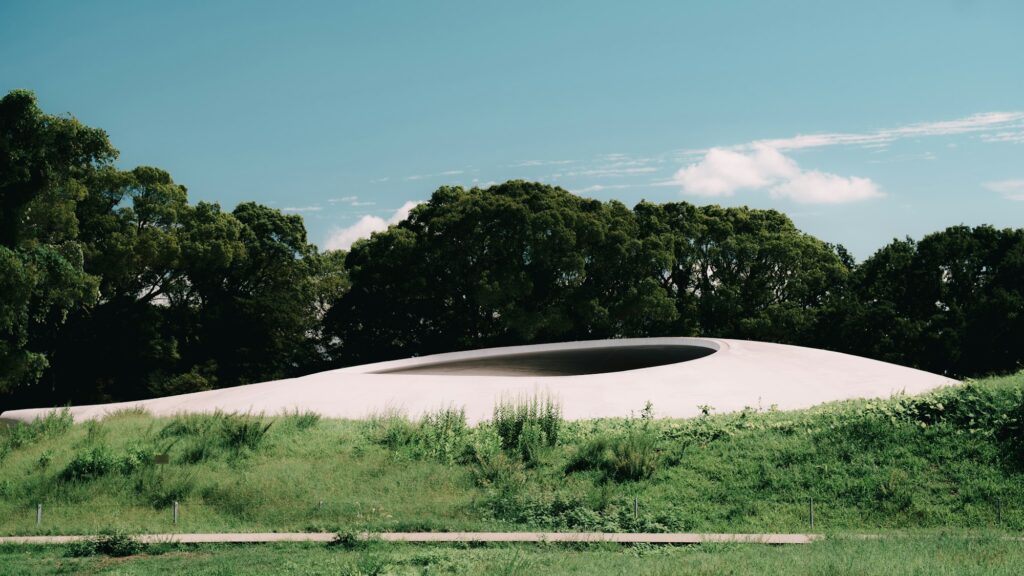
The Teshima Art Museum, on the green hills of neighboring Teshima, is one of the most extraordinary buildings in Japan. Designed by architect Ryue Nishizawa with artist Rei Naito, it is a single low white concrete shell shaped like a water droplet, with no pillars and two large openings to the sky. Inside, tiny droplets of water emerge from the floor and slowly move across the smooth surface, and visitors sit in silence watching the light, wind and water change. The museum stands among restored rice terraces overlooking the sea, and the walk up is part of the experience. Tickets are booked online for a time slot: 1,800 yen online. From October to February it opens 10:00 to 16:00, and it is closed on Tuesdays from March to November and Tuesday to Thursday from December to February. Ferries and high-speed boats connect Teshima with Takamatsu and Naoshima, so check the timetable carefully.
Where to Stay Near Naoshima
 Where to stay: Naoshima
Hotel links in this section go to Orbitz. If you book through them, we may earn a commission at no extra cost to you.
Staying on Naoshima lets you see the island after the last day-trippers leave, enjoy sunset over the sea and visit the museums at a relaxed pace. Rooms are limited and sell out early, especially on weekends, so book well ahead. If the island is full, Takamatsu is an easy alternative, with frequent ferries from the port next to the station.
Luxury
Benesse House is the ultimate art-island stay, a hotel designed by Tadao Ando where rooms sit among the artworks and guests can enter Benesse House Museum free of charge. The reservation system changed for stays from August 2026, so book early and check the details carefully.
Tadao Ando-designed hotel and museum by the sea.
Mid-Range
Dormy Inn Takamatsu is a comfortable mid-range base in Takamatsu, with the relaxing large baths and late-night ramen the Dormy Inn chain is known for. Staying here lets you catch morning ferries to Naoshima and Teshima and come back to the city’s restaurants in the evening.
Comfortable Takamatsu base with hot spring baths.
Budget-Friendly
MY LODGE Naoshima is a relaxed, simple place to stay on Naoshima itself, a good budget choice for travelers who want to wake up on the island and reach the museums early.
Simple, stylish lodging on the island.
Compare prices before you book
Hotels in Naoshima on Orbitz
Stay on Naoshima to enjoy the art islands at a slower pace, or base yourself in Takamatsu for easy ferries.
Affiliate link — if you book through Orbitz, we may earn a commission at no extra cost to you.
Quick Tips for Visiting
- Book every museum online in advance: since October 2024, all Benesse art sites on Naoshima, Teshima and Inujima require online tickets, and popular time slots sell out.
- Most museums close on Mondays (Teshima Art Museum on Tuesdays), so plan your island days around these closures.
- Ferries do not take reservations; arrive at the port early on weekends and holidays.
- Rent an electric bicycle near Miyanoura port to get around Naoshima at your own pace.
- Allow at least one full day for Naoshima and a second day if you want to add Teshima.
Getting there by train: From Tokyo, take the Tokaido and Sanyo Shinkansen to Okayama, then the JR Marine Liner rapid train across the Seto Ohashi Bridge to Takamatsu in about 55 minutes; the whole trip takes about four and a half hours on the fastest trains. From Takamatsu port, next to the station, Shikoku Kisen ferries reach Naoshima’s Miyanoura port in about 50 minutes, and high-speed boats in about 30 minutes. Naoshima is also reached from Uno port in Okayama Prefecture. Read our guide to riding trains in Japan, learn how to ride the Shinkansen, and check whether the JR Pass is worth it for your route.
Frequently Asked Questions
Do you need tickets in advance for Naoshima museums?
Yes. Since October 2024, every Benesse art site on Naoshima, Teshima and Inujima requires an online ticket, and the Chichu Art Museum requires a date and time slot.
How much is the Chichu Art Museum?
Online tickets cost 2,500 yen on weekdays and 2,700 yen on weekends and holidays. Visitors aged 15 and under enter free.
Is the Yellow Pumpkin back on Naoshima?
Yes. After the original was damaged by a typhoon in 2021, a newly made Yellow Pumpkin was installed on the same pier in October 2022.
How long is the ferry from Takamatsu to Naoshima?
The ferry from Takamatsu to Miyanoura takes about 50 minutes, and the high-speed boat about 30 minutes.