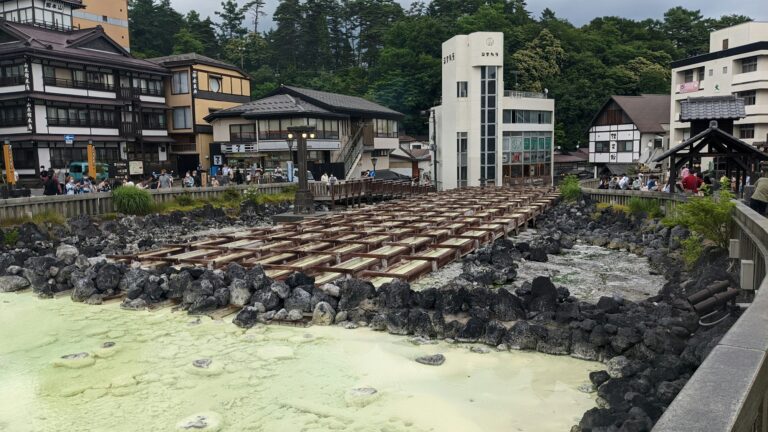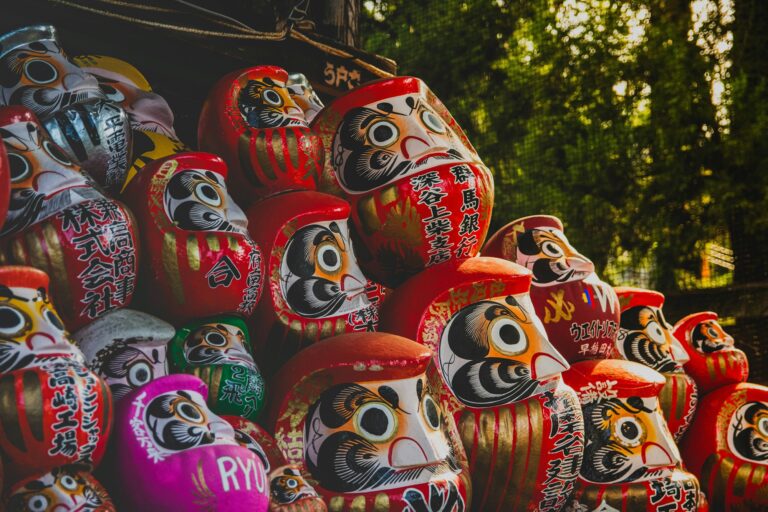
Fukiware Falls, the riverside baths of Takaragawa Onsen and the Tanigawadake Ropeway show off the wild, mountainous north of Gunma Prefecture, where the Tone River begins its journey to the Pacific. Minakami is one of Japan’s top outdoor towns, with rafting and hiking in the warmer months, deep snow and ski slopes in winter, and hot springs all year. It is only about 70 minutes from Tokyo to Jomo-Kogen Station on the Joetsu Shinkansen, so the mountains are surprisingly easy to reach. This guide covers the three highlights, seasonal tips and where to stay.
1. Fukiware Falls
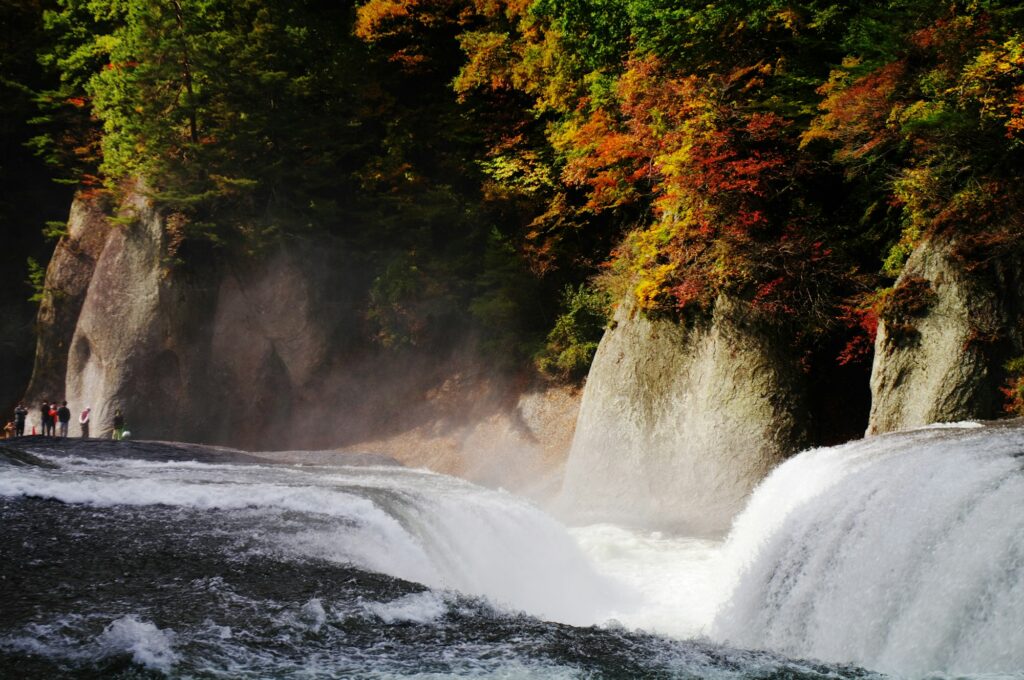
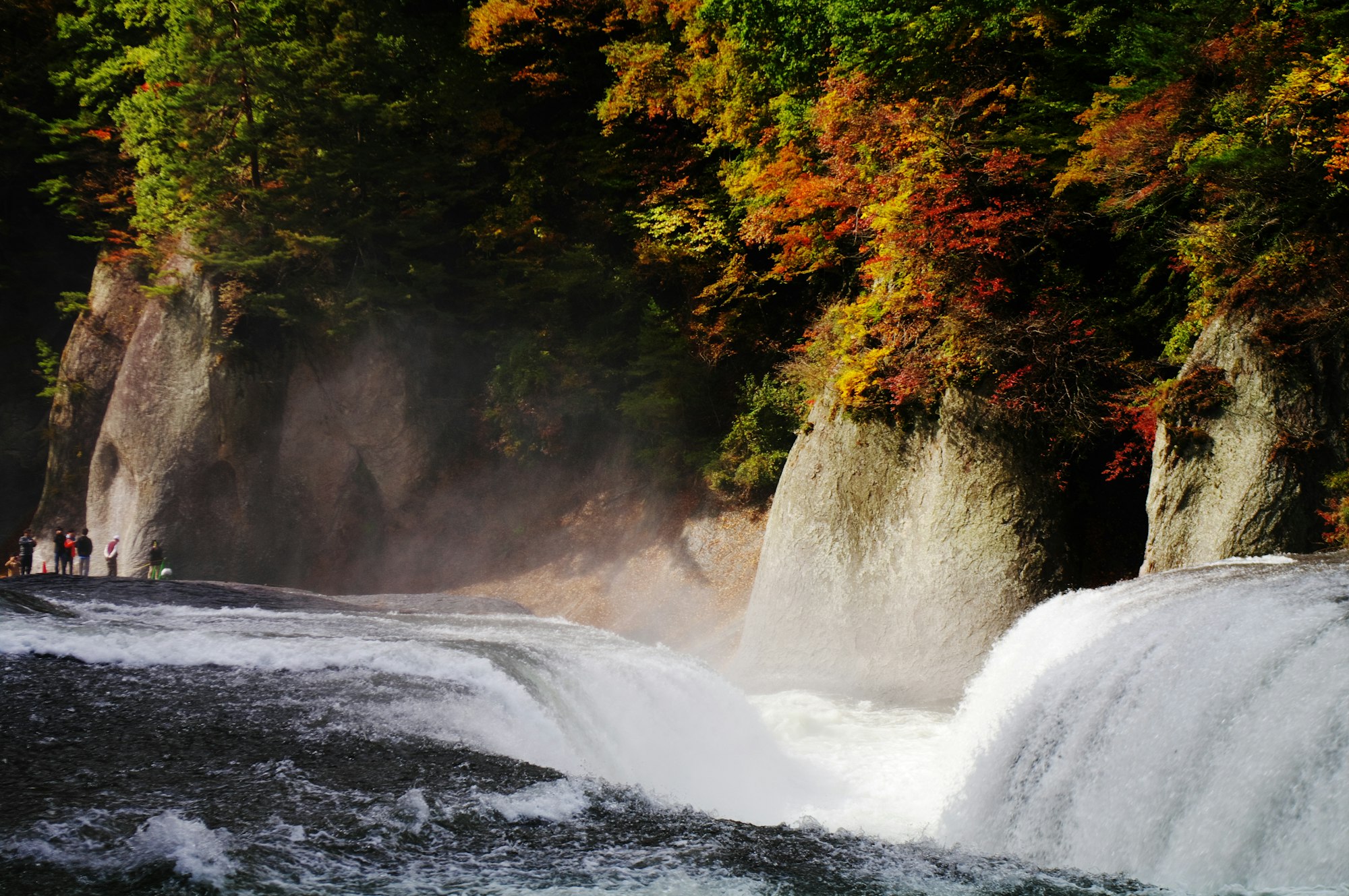
Fukiware Falls in Numata, on the way from Minakami toward Oze, is nicknamed the Niagara of the Orient. The waterfall is only about 7 meters high, but it is about 30 meters wide, and the Katashina River pours into a deep crack in the riverbed, so the water seems to drop into a split in the rock. A walking path runs right along the flat rock beside the falls, letting you get much closer than at most waterfalls; stay behind the painted lines, as the rock can be slippery and the current is powerful. Upstream and downstream, a trail leads along the gorge through forest that turns red and gold in autumn, which is the most popular time to visit. The falls area is closed in winter, from about mid-December to late March. Kanto Kotsu buses from Numata Station take about 45 minutes, and by car it is about half an hour from the Numata interchange.
2. Takaragawa Onsen
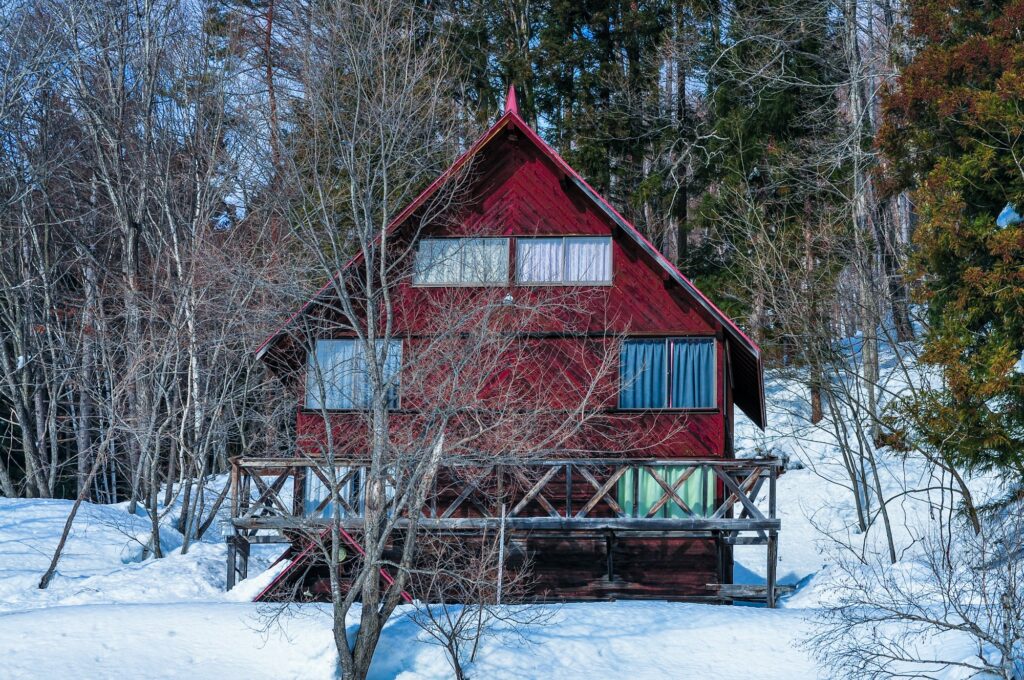
Takaragawa Onsen, in the Fujiwara area deep in the mountains of Minakami, is famous for its enormous open-air baths spread along both banks of the Takaragawa River. Day visitors can bathe from 10:00 to 16:30 (last entry 16:00) for 1,500 yen for adults, with a four-hour limit. Most of the outdoor pools are mixed bathing, and everyone wears the bathing garment provided with admission, while one large pool is for women only, which makes it a comfortable introduction to Japanese outdoor bathing. Soaking beside the rushing river under falling snow or autumn leaves is unforgettable. To get there, take a bus from Minakami Station to the Takaragawa Iriguchi stop (about 30 minutes, 1,300 yen) and then a free transfer for the last stretch; buses run only every two to three hours, so check times in advance. If you drive in winter, snow tires are essential.
3. Tanigawadake Ropeway and Minakami Snow
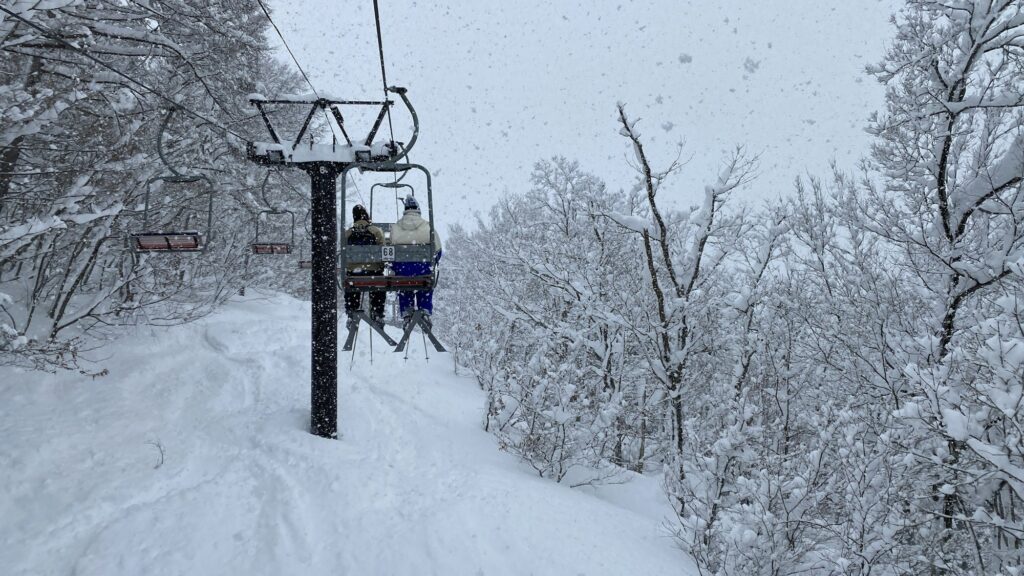
Mount Tanigawa, on the border with Niigata, is one of the most dramatic peaks near Tokyo, and the Tanigawadake Ropeway lifts you from the valley to the Tenjindaira area high on its slopes. In the green season, which runs from about mid-April to mid-November in 2026, a round trip on the ropeway costs 3,000 yen for adults, or 3,600 yen with the lift to the Tenjin observation deck, with fares raised in December 2025. Hikers continue on trails toward the summit, while others simply enjoy the views. In winter, Minakami becomes a snow destination, with ski areas such as Tenjindaira, Hodaigi and Okutone Snow Park, generally open from mid-December to late March. The nearest station to the ropeway is Doai, the famous mole station on the JR Joetsu Line, where the downbound platform lies 70 meters underground and is reached by 462 steps; allow plenty of time if you go this way.
Where to Stay Near Minakami
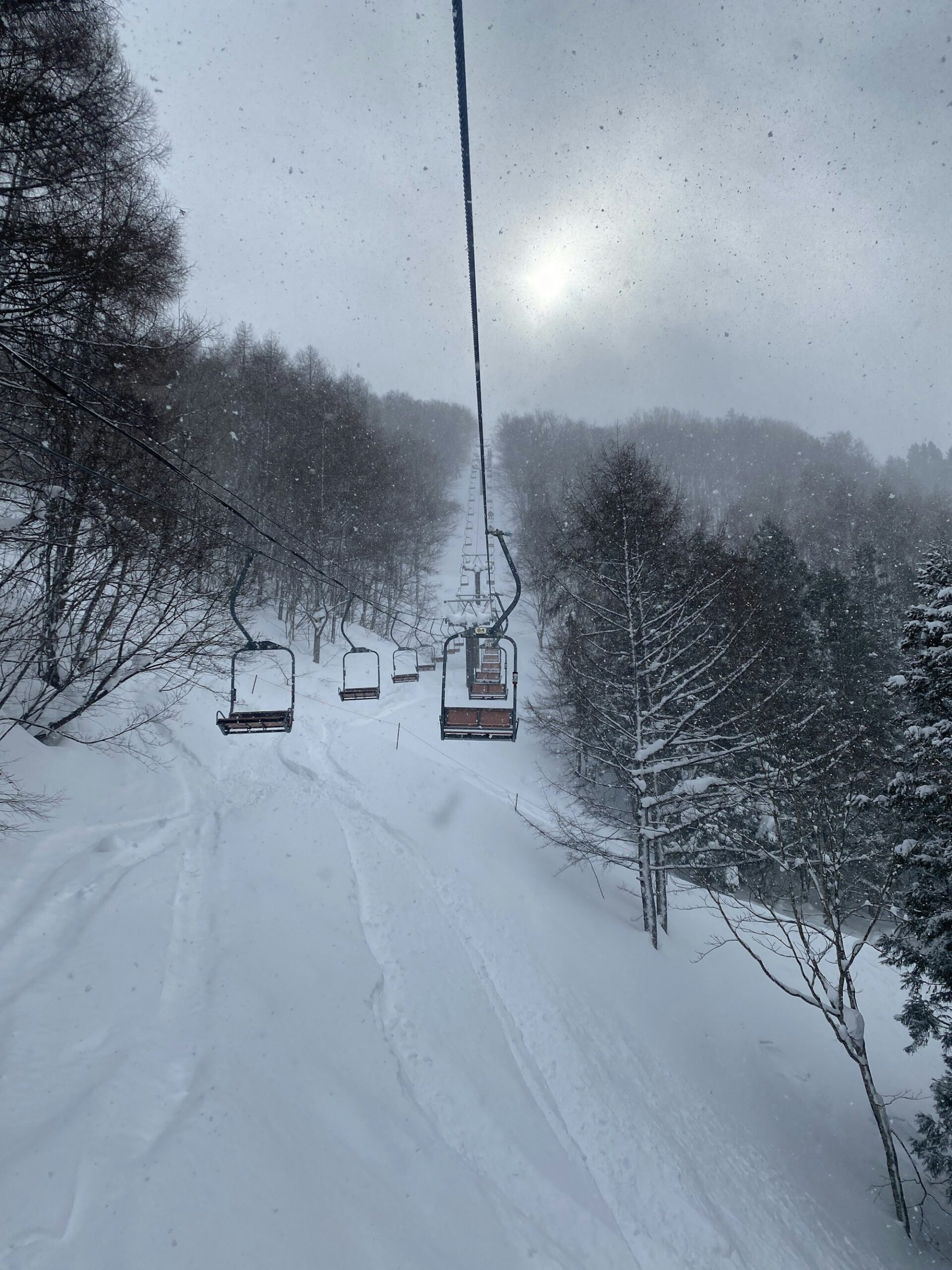 Where to stay: Minakami
Hotel links in this section go to Orbitz. If you book through them, we may earn a commission at no extra cost to you.
Minakami Onsen, near Minakami Station, is the most convenient base, with hotels along the Tone River and buses toward the ropeway and Takaragawa. For a quieter night, stay at a ryokan in the Fujiwara area or at Takaragawa itself. Buses are infrequent, so the Minakami Area Pass for local buses, sold at Jomo-Kogen Station, can be good value.
Luxury
Takaragawa Onsen Osenkaku is the historic ryokan behind the famous riverside baths, letting you enjoy them at a slower pace after a night in the mountains.
Historic ryokan with famous riverside baths.
Mid-Range
Minakami Hotel Juraku is a large hot spring hotel in Minakami Onsen, convenient for buses to the ropeway and Takaragawa.
Large hot spring hotel in Minakami Onsen.
Budget-Friendly
Zazan Minakami is a good-value hot spring stay in Minakami, a practical base for skiing, hiking and bath hopping.
Good-value hot spring stay in Minakami.
Compare prices before you book
Hotels in Minakami on Orbitz
Compare hotels and ryokan in Minakami, from Minakami Onsen to the mountain hot springs.
Affiliate link — if you book through Orbitz, we may earn a commission at no extra cost to you.
Quick Tips for Visiting
- Pick up the Minakami Area Pass at the Jomo-Kogen Station tourist information center if you plan to use local buses.
- Fukiware Falls is closed from about mid-December to late March.
- Takaragawa Onsen provides bathing garments for the mixed baths; you cannot wear your own swimsuit.
- Rafting season runs roughly from spring to autumn, with stronger rapids in spring from snowmelt.
- In winter, carry chains or use a rental car with snow tires; roads in the Fujiwara area get heavy snow.
Getting there by train: From Tokyo, the Joetsu Shinkansen reaches Jomo-Kogen Station in about 70 minutes, and buses take about 20 minutes from there to Minakami Station and Minakami Onsen. For Fukiware Falls, take the JR Joetsu Line to Numata and then a Kanto Kotsu bus. Read our guide to riding trains in Japan, learn how to ride the Shinkansen, and check whether the JR Pass is worth it for your route.
Frequently Asked Questions
Is Takaragawa Onsen mixed bathing?
Most of the outdoor pools are mixed, but everyone wears the bathing garment provided. There is also a large women-only pool.
How much is a day visit to Takaragawa Onsen?
Day bathing costs 1,500 yen for adults, from 10:00 to 16:30 with last entry at 16:00.
When is Fukiware Falls closed?
The falls area closes in winter, from about mid-December to late March.
How do you get to Minakami from Tokyo?
Take the Joetsu Shinkansen to Jomo-Kogen (about 70 minutes), then a bus of about 20 minutes to Minakami.