Last checked: October 2026 · Part of our Japan Travel Insurance & Health series
Nobody plans to see a doctor on vacation, but a fever in Osaka, a sprained ankle on a Kyoto hiking trail or a bad reaction to something you ate happens to plenty of travelers. The good news: Japan has excellent, efficient medical care, and you can usually be seen the same day. The catch: as a tourist you are outside Japan’s public health insurance, the system runs mostly in Japanese, and you pay at the counter. Here is how to find the right place, what it costs, what to bring and the phrases that help.
Disclosure: The First Pick takes part in affiliate programs, including World Nomads through CJ Affiliate. We may earn a fee when you get a travel insurance quote through a link on this page, at no extra cost to you. We are not an insurance company or a licensed insurance agent, and nothing on this page is insurance advice or a recommendation to buy a particular policy. Coverage, limits and exclusions vary by policy and by your state of residence, so always read the policy wording before you buy. See our Affiliate Disclosure.
- Emergency: dial 119 for an ambulance. The call and the ride are free in most of Japan.
- Need help in English? Call the Japan Visitor Hotline (JNTO) at 050-3816-2787, 24/7.
- Minor illness or injury: go to a local clinic, not a big hospital, which may add an extra charge without a referral.
- Payment: tourists pay 100% of the bill on the spot. Bring a credit card, some cash and your passport.
- Insurance: keep every receipt and ask for a medical certificate so you can claim later.
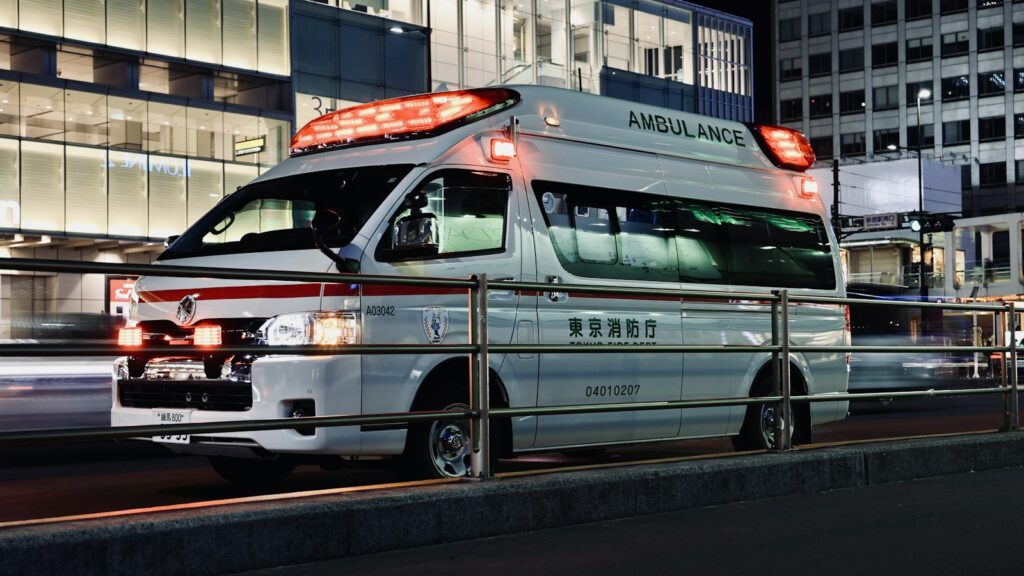
Emergency: how to call an ambulance in Japan
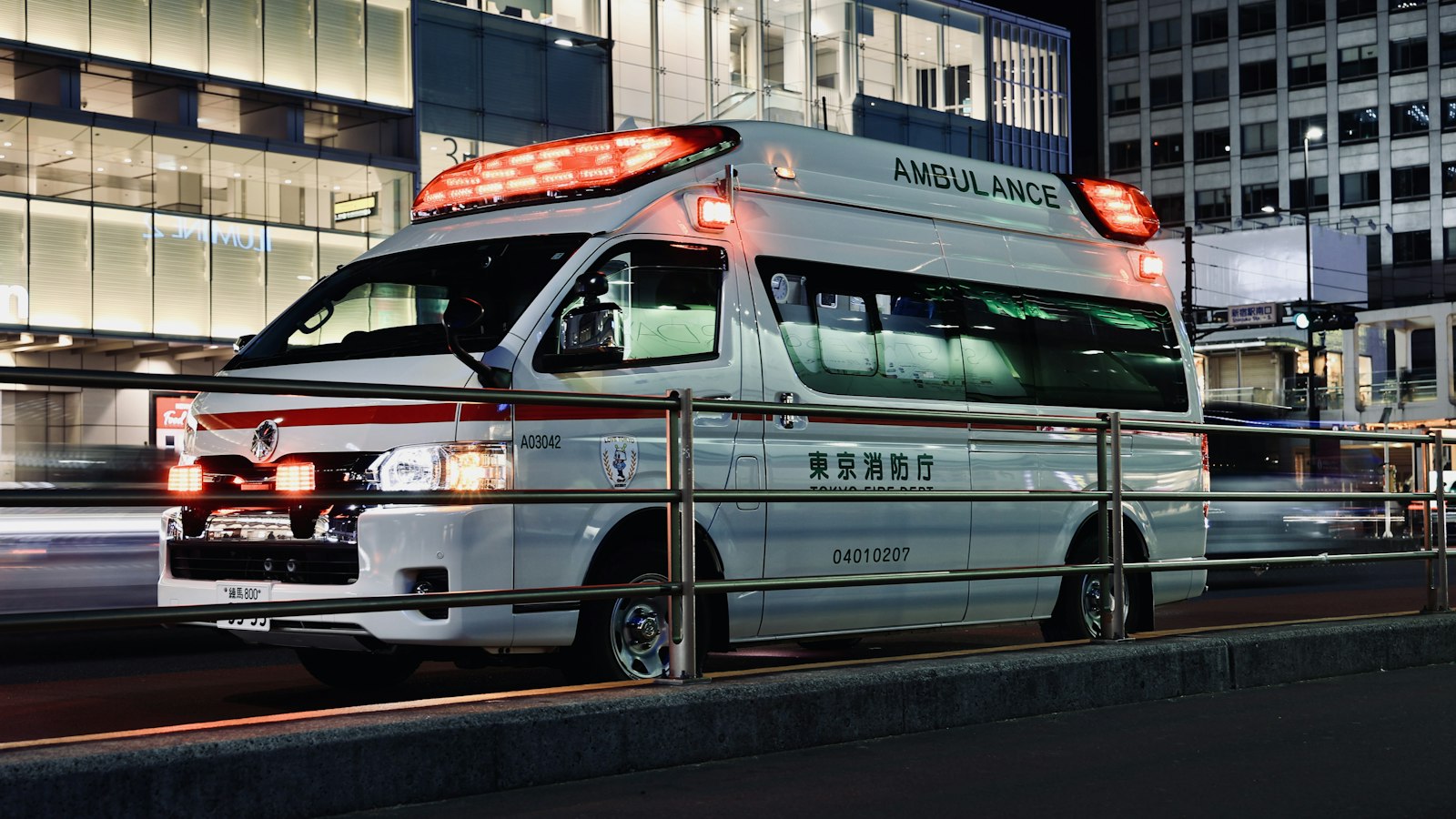
Dial 119 from any phone for an ambulance or the fire department, and 110 for the police. Operators in big cities can usually connect an interpreter. Say “kyūkyū desu” (it’s a medical emergency), then give your location: the name of your hotel, a nearby station or a building name works well. Ambulances in Japan are free to call in most areas, although a few local governments and hospitals have started charging patients whose cases turn out not to be urgent. Save 119 for real emergencies.
Go straight to emergency care
Chest pain, trouble breathing, a serious fall, heavy bleeding, signs of stroke or severe heatstroke.
Not sure how serious it is?
Call your travel insurer’s assistance line or the Japan Visitor Hotline. Some prefectures also run a #7119 medical advice line, mostly in Japanese.
Clinic or hospital? Where to go for what
Japan has two main tiers. Small clinics (called kurinikku or iin) handle everyday problems and are everywhere, often on the upper floors of buildings near stations. Large hospitals are meant for serious cases and referrals: university and big regional hospitals add a special charge, currently at least ¥7,000, for first visits without a referral letter, except in emergencies. For a cold, a stomach bug, a small cut or a sprain, start at a clinic.
| Problem | Clinic type (Japanese) | Look for |
|---|---|---|
| Fever, cold, stomach bug | Internal medicine (naika) | 内科 |
| Sprain, fracture, back pain | Orthopedics (seikei-geka) | 整形外科 |
| Cuts and wounds | Surgery (geka) | 外科 |
| Ear, nose, throat | ENT (jibi-inkōka) | 耳鼻咽喉科 |
| Rash, sunburn, bites | Dermatology (hifuka) | 皮膚科 |
| Children | Pediatrics (shōnika) | 小児科 |
Arrange cover before your trip
World Nomads offers simple and flexible travel insurance. Buy at home or while traveling and claim online from anywhere in the world.
What a doctor visit costs a tourist
Japanese residents usually pay about 30% of the bill because they are in the public health insurance system. As a visitor you pay the full price, and hospitals can set their own rates for uninsured patients, so two hospitals may charge quite different amounts for the same treatment. A short clinic visit with medicine is usually affordable. Admission, surgery, intensive care or an air ambulance home can cost many times more, and larger hospitals may ask for a deposit before admitting you.
- Show your passport at receptionYou will fill in a short form about your symptoms. Many clinics have English or picture-based versions.
- Tell them you have no Japanese insuranceSay “hoken wa arimasen”. If you have travel insurance, show the policy and the assistance number.
- Pay at the counter after the visitCards are common at hospitals; small clinics may prefer cash.
- Ask for the documents your insurer needsAn itemized receipt (ryōshūsho) and a medical certificate (shindansho). Certificates often cost extra and may take a few days.
Pharmacies, drugstores and bringing your own medicine
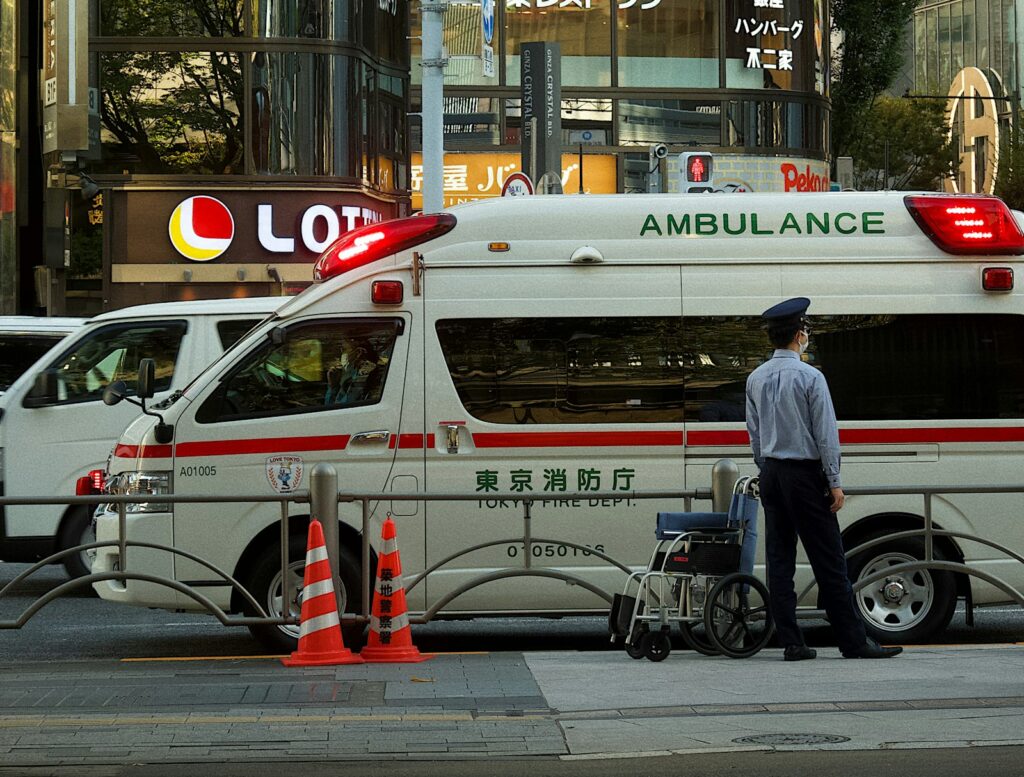
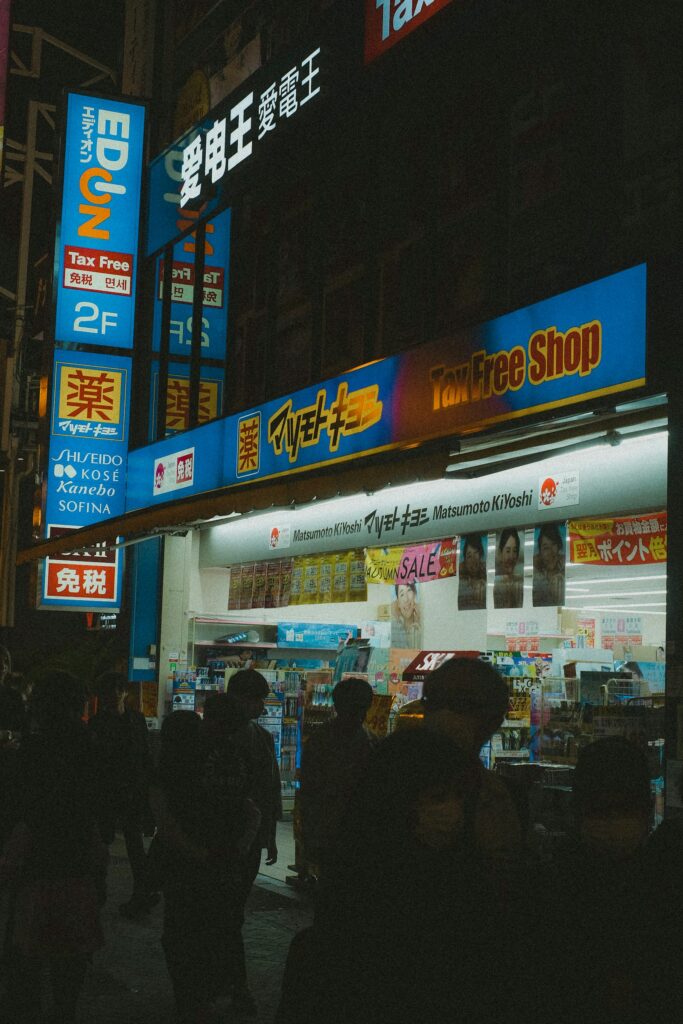
Drugstores are on almost every shopping street and sell cold medicine, painkillers, stomach remedies, bandages and sunscreen without a prescription. Many Japanese over-the-counter medicines come in different strengths or with different ingredients from US brands, so show the pharmacist what you normally take. Prescription medicine is filled at a pharmacy (薬局, yakkyoku) with a prescription from a Japanese doctor; US prescriptions are not accepted.
Useful phrases at the clinic
Summer heat: avoid heatstroke
Japanese summers are hot and very humid, and heatstroke sends people to the hospital every year. Drink water and electrolyte drinks (sports drinks are sold in every vending machine), rest in air-conditioned shops and stations, and plan temple visits and long walks for early morning or evening. On very hot days, the Japan Meteorological Agency and the Ministry of the Environment issue heatstroke alerts.
Get a quote for your Japan dates
World Nomads offers simple and flexible travel insurance. Buy at home or while traveling and claim online from anywhere in the world.
FAQ
Is healthcare free for tourists in Japan?
No. Tourists are not covered by Japanese public health insurance, so you pay the full cost of treatment, usually at the end of each visit. Calling an ambulance is free in most areas.
How do I find an English-speaking doctor in Japan?
Use the Japan National Tourism Organization (JNTO) list of medical institutions for foreign visitors, ask your hotel to call ahead, or call your travel insurer’s assistance line. The Japan Visitor Hotline (050-3816-2787) also helps 24/7.
What number do I call for an ambulance in Japan?
Dial 119 for an ambulance or fire, and 110 for police. Both are free from any phone.
Can I use my US prescription in Japan?
No. Japanese pharmacies only fill prescriptions from doctors in Japan. Bring enough of your own medicine for the trip; up to about a one-month supply generally needs no paperwork, but some medicines are restricted.
Do Japanese hospitals accept credit cards?
Most large hospitals accept major credit cards. Smaller clinics and pharmacies may prefer cash, so carry some yen.