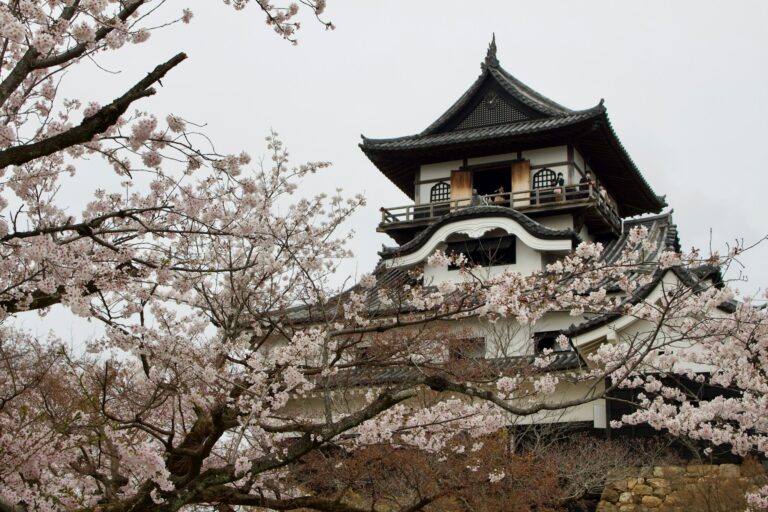
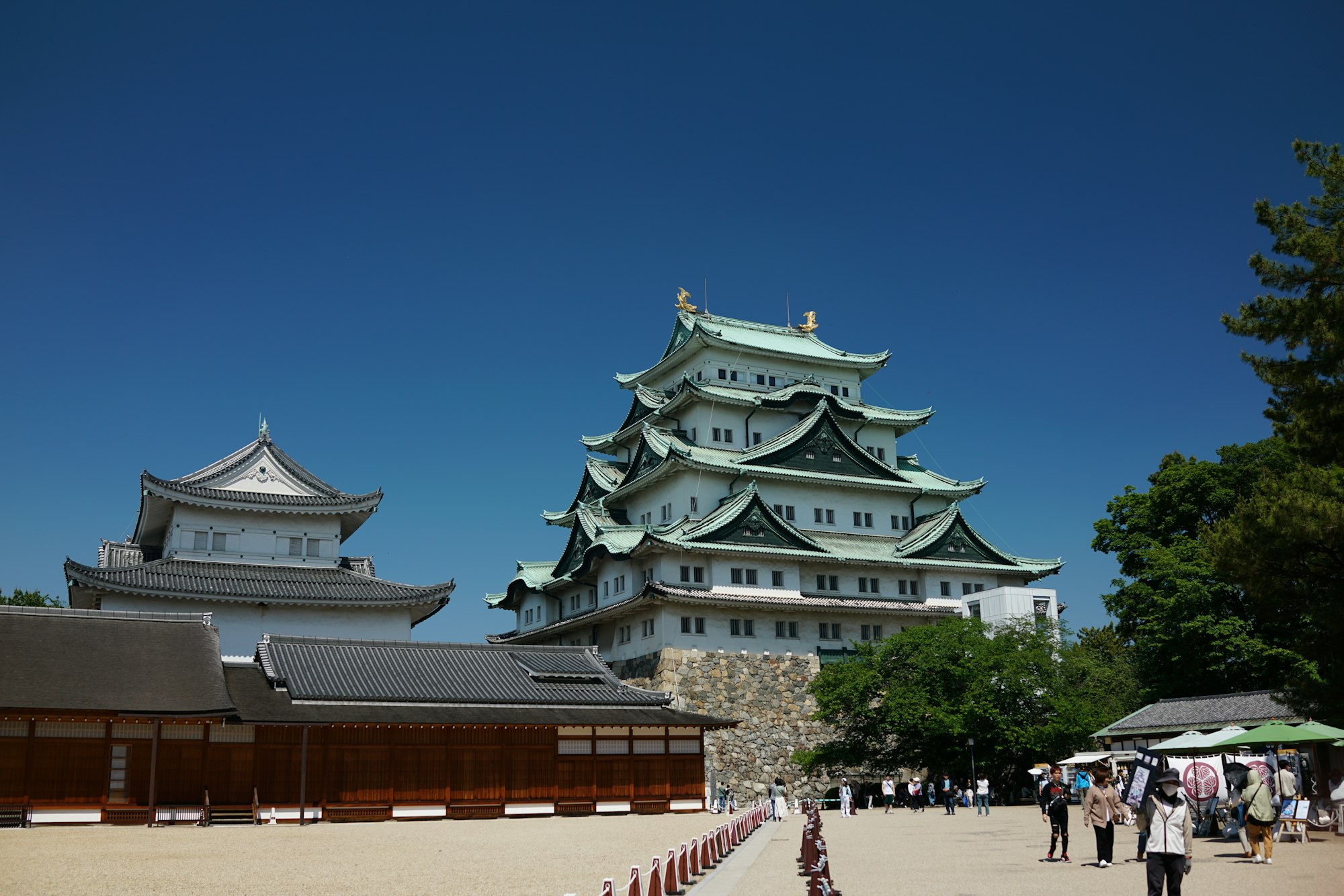
Nagoya Castle, Atsuta Jingu and Osu Kannon are the three landmarks that define Nagoya, Japan’s fourth-largest city and the capital of Aichi Prefecture. Many travelers speed past Nagoya on the Shinkansen between Tokyo and Kyoto, but the city rewards a stop of a day or two: it has a famous samurai-era castle, one of the most sacred shrines in Japan, a lively temple district full of street food, and a hearty local food culture all its own. This guide covers what to see at each landmark, how to get around by subway and train, and where to stay in central Nagoya.
1. Nagoya Castle and the Honmaru Palace
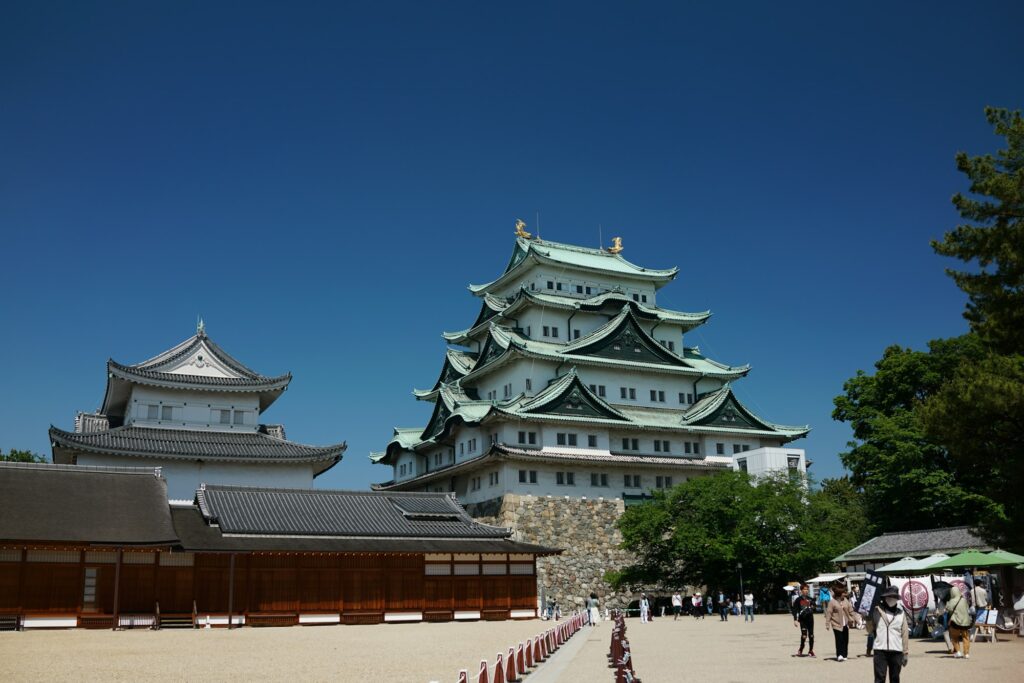
Nagoya Castle was built for the Tokugawa shogunate in the early 1600s, and the golden shachi, mythical tiger-headed fish on its roof, became a symbol of the city’s wealth. The original keep burned in air raids in 1945; the concrete replica built in 1959 has been closed since 2018 while the city plans a wooden reconstruction, so you can admire it only from the outside for now, and no reopening date has been set. The real highlight today is the Honmaru Palace, a faithful reconstruction of the lord’s residence completed in 2018, with gleaming cypress wood, gold-leaf sliding doors and elaborate painted ceilings. You take your shoes off at the entrance, flash photography is not allowed, and the palace has no air conditioning, so dress for the season. The castle grounds are generally open from 9:00 to 16:30, with last entry at 16:00. Admission was raised in October 2026, so check the current fee on the official website. Nagoyajo Station on the Meijo subway line is the closest stop, and the Sengencho Station on the Tsurumai Line is also within walking distance.
2. Atsuta Jingu
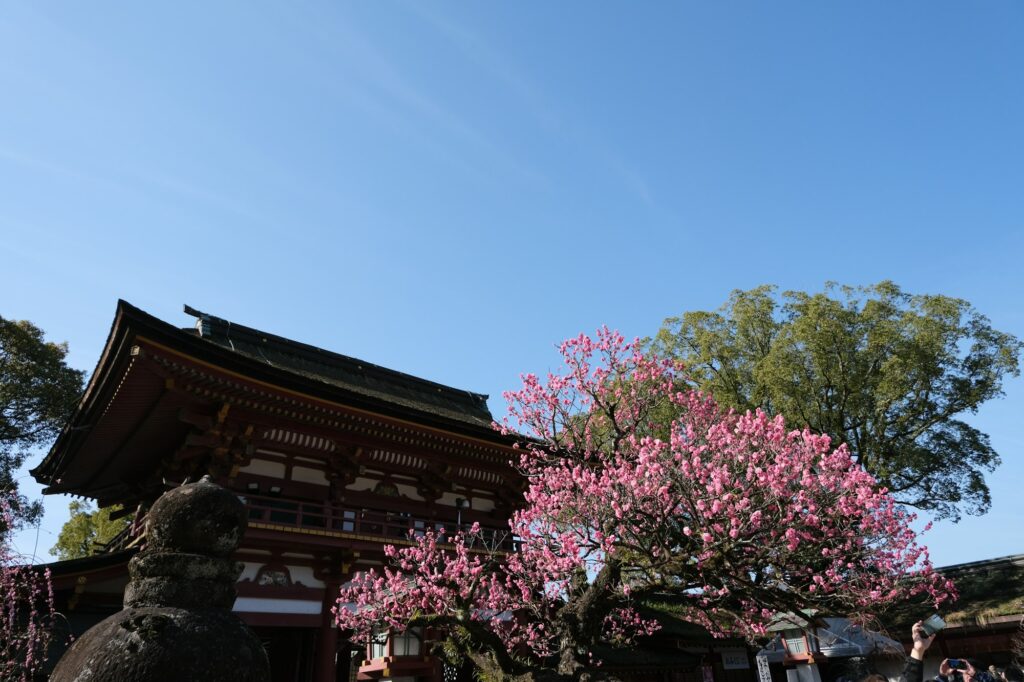
Atsuta Jingu is one of the most important Shinto shrines in Japan, with a history said to stretch back about 1,900 years. It enshrines Kusanagi-no-Tsurugi, a sacred sword that is one of the three Imperial Regalia of Japan; the sword is never shown to anyone, but its presence gives the shrine enormous prestige, and millions of worshippers visit each year. The grounds are free to enter and feel like a quiet forest in the middle of the city, with giant camphor trees, gravel paths and the elegant main sanctuary. The Kusanagi-kan museum displays swords and other treasures donated to the shrine over the centuries for a separate fee. Please follow shrine etiquette: bow at the torii gate, rinse your hands at the water basin and keep your voice down near the main hall. Jingu-mae Station on the Meitetsu line is about three minutes on foot, Atsuta Jingu Nishi Station on the Meijo subway line is about five minutes away, and JR Atsuta Station is about ten minutes away. Afterward, try hitsumabushi, Nagoya’s famous grilled eel over rice, at one of the long-established restaurants nearby.
3. Osu Kannon and the Osu Shopping District
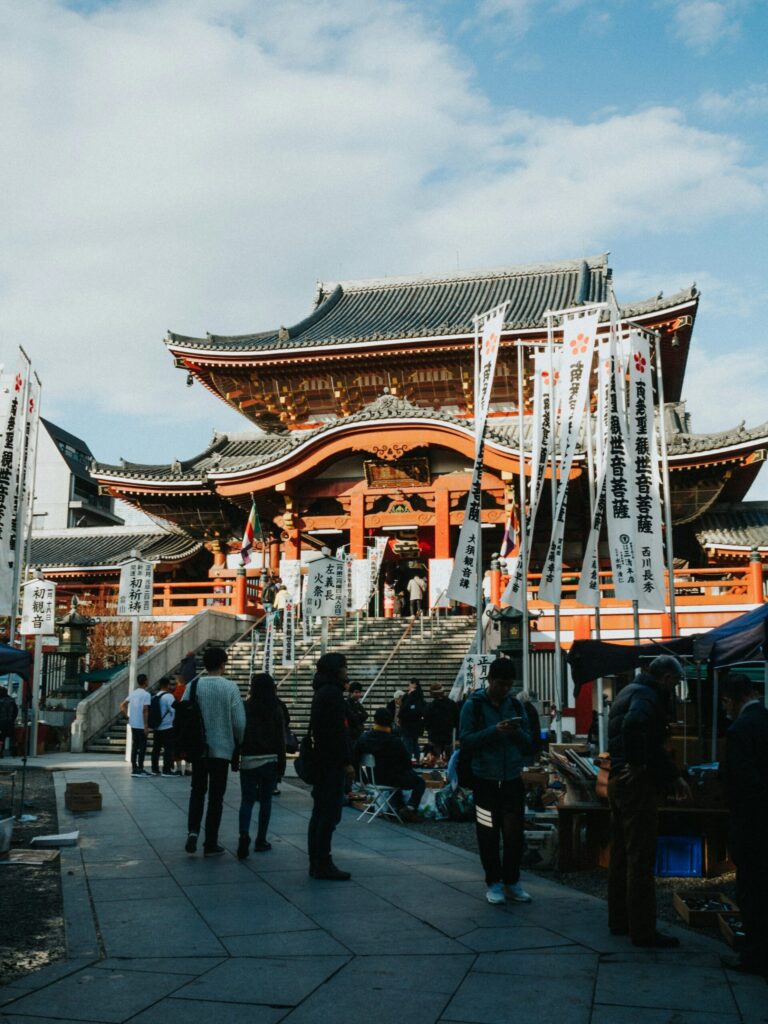
Osu Kannon is a bright red Buddhist temple that was moved to its current site in central Nagoya in the early 1600s, and it is one of the city’s most popular places of worship. The temple is free to visit and open every day. On the 18th and 28th of each month, a flea market fills the grounds with stalls selling antiques, old kimono, pottery and curios, which makes those dates especially fun to visit. Right next to the temple lies the Osu shopping district, a maze of covered arcades with hundreds of shops and restaurants. You will find secondhand clothing, electronics, anime and cosplay shops, international restaurants and plenty of street food, from fried chicken and Taiwanese snacks to local sweets. It feels more local and laid-back than the big department stores of Sakae. Most shops open around late morning and close in the early evening. Osu Kannon Station on the Tsurumai subway line is right at the temple, and Kamimaezu Station is a short walk through the arcades.
Where to Stay Near Sakae, Nagoya
 Where to stay: Sakae, Nagoya
Hotel links in this section go to Booking.com. If you book through them, we may earn a commission at no extra cost to you.
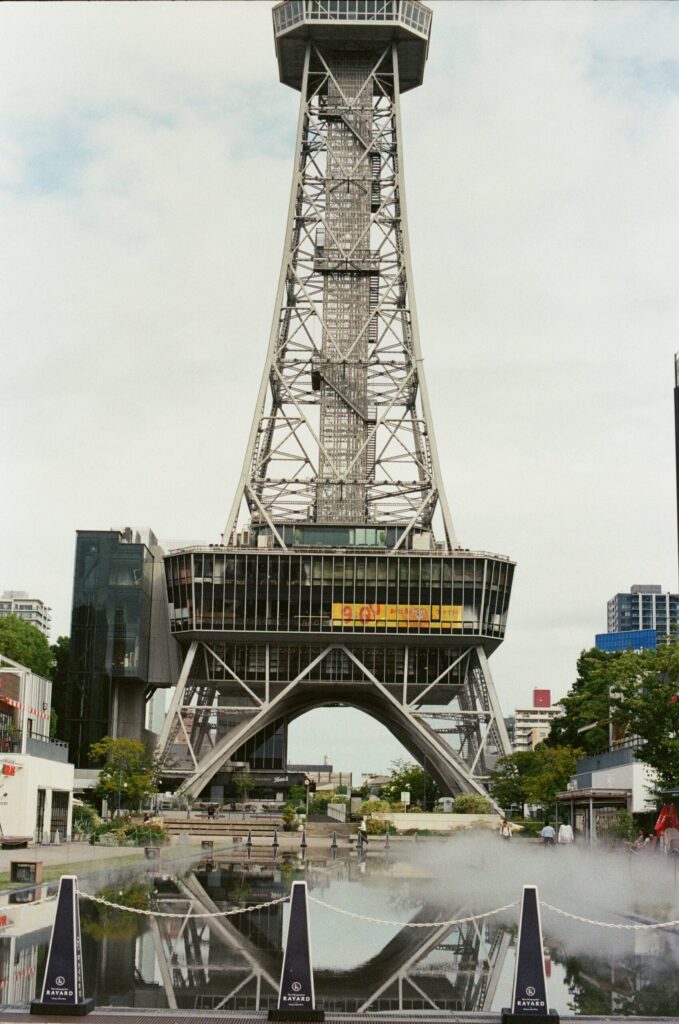
Sakae is Nagoya’s downtown shopping and entertainment district, with department stores, the Hisaya Odori Park and the Mirai Tower, and plenty of restaurants open late. It is well connected by subway: Nagoya Castle, Osu Kannon and Atsuta Jingu are all short rides away, and Nagoya Station is just a few stops west.
Luxury
Nagoya Tokyu Hotel is a classic upscale hotel within walking distance of central Sakae, known for its polished service, spacious rooms and several restaurants, and it consistently earns excellent guest reviews.
Classic upscale hotel a short walk from central Sakae.
Mid-Range
Dormy Inn Premium Nagoya Sakae Natural Hot Spring has natural hot spring baths on site, a popular perk after a long day of walking, and the Dormy Inn chain’s free late-night ramen. It is a comfortable, practical base in the heart of Sakae.
Dormy Inn Premium Nagoya Sakae Natural Hot Spring
Hot spring baths and free late-night ramen in central Sakae.
Budget-Friendly
Toyoko Inn Nagoya Sakae offers simple, clean rooms near the Sakae area at a lower price, with free breakfast, making it a good choice if you plan to spend most of the day out exploring.
Simple, good-value chain hotel near Sakae.
Compare prices before you book
Hotels in Nagoya on Booking.com
Stay in central Nagoya and reach the castle, Atsuta Jingu and Osu Kannon in minutes by subway, with great food right outside your door.
Affiliate link — if you book through Booking.com, we may earn a commission at no extra cost to you.
Quick Tips for Visiting
- Buy a rechargeable IC card such as Suica or ICOCA; it works on Nagoya’s subways, buses and the Meitetsu line.
- Plan to see the castle in the morning, Osu Kannon around lunchtime and Atsuta Jingu in the late afternoon.
- Visit Osu Kannon on the 18th or 28th of the month for the temple flea market.
- Do not miss Nagoya’s local dishes: hitsumabushi (grilled eel over rice), miso katsu and tebasaki chicken wings.
- Wear shoes that slip on and off easily for the Honmaru Palace, where you walk in socks.
Getting there by train: Nagoya is about 1 hour 40 minutes from Tokyo and about 35 minutes from Kyoto by Nozomi on the Tokaido Shinkansen. JR Pass holders can take Hikari trains at no extra cost or pay a supplement for the Nozomi. Within the city, the subway, the Meitetsu line and city buses are not covered by the JR Pass, but JR Atsuta Station is an option for Atsuta Jingu. Read our guide to riding trains in Japan, learn how to ride the Shinkansen, and check whether the JR Pass is worth it.
Frequently Asked Questions
Can you go inside Nagoya Castle?
You can visit the castle grounds and the reconstructed Honmaru Palace, but the main keep has been closed since 2018 for a planned wooden reconstruction, and no reopening date has been announced.
What is Atsuta Jingu famous for?
Atsuta Jingu enshrines Kusanagi-no-Tsurugi, a sacred sword that is one of Japan’s three Imperial Regalia. The sword is never shown, but the shrine grounds are free to visit and open every day.
When is the Osu Kannon flea market?
The flea market is held on the temple grounds on the 18th and 28th of each month, with stalls selling antiques, old kimono and curios.
How many days do you need in Nagoya?
One full day covers Nagoya Castle, Atsuta Jingu and Osu Kannon. Add a second day for museums such as the SCMaglev and Railway Park or a day trip to Inuyama Castle.