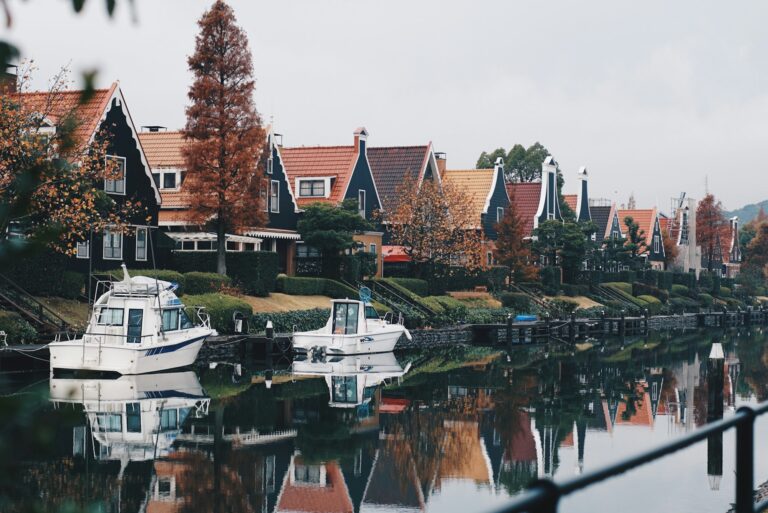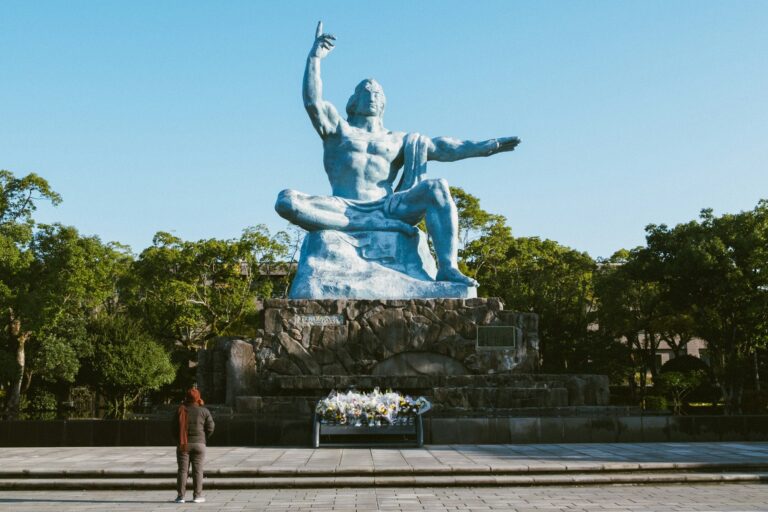
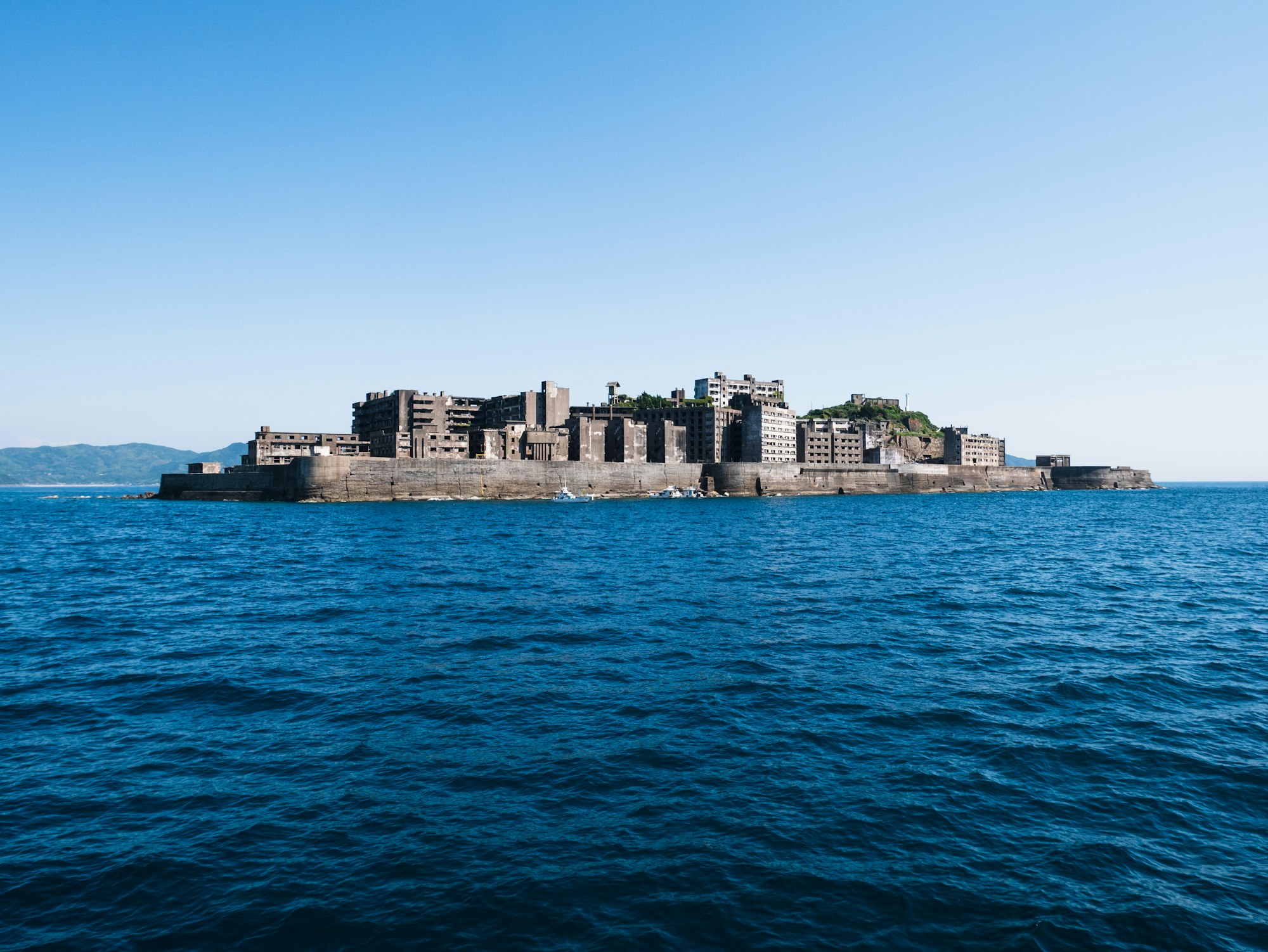
Gunkanjima, the Mount Inasa night view and Megane Bridge are the Nagasaki sights that most first-time visitors remember long after the trip. Beyond its moving war history, Nagasaki is a city of contrasts: an abandoned coal-mining island that looks like a battleship at sea, a mountain viewpoint ranked among the best night views in the world, and a 17th-century stone bridge mirrored in a quiet river. This guide explains how Gunkanjima landing cruises work and why they can be canceled, how to ride the ropeway up Mount Inasa, where to find the heart-shaped stones by Megane Bridge, what to eat in Shinchi Chinatown, and where to stay in central Nagasaki.
1. Gunkanjima (Hashima Island) Cruise
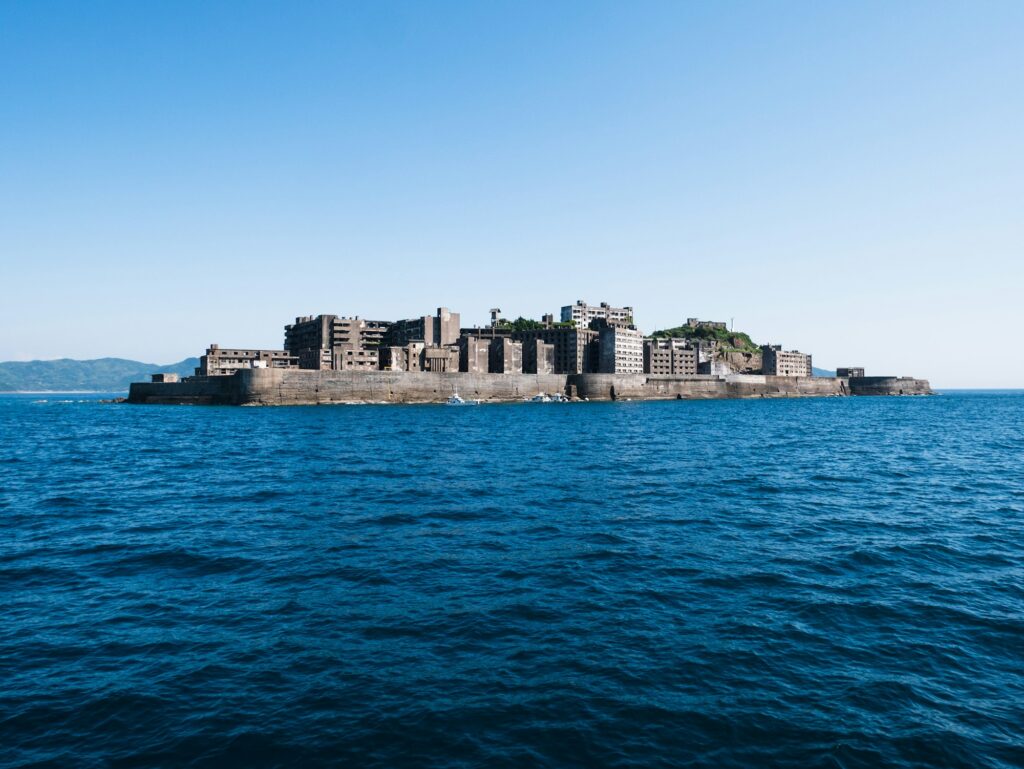
Off the coast southwest of Nagasaki, Hashima is a tiny island that was once a busy undersea coal mine, crowded with apartment blocks, schools and shops. The mine closed in 1974, the residents left, and the concrete ruins that remain gave it the nickname Gunkanjima, or Battleship Island. It is part of the UNESCO World Heritage Sites of Japan’s Meiji Industrial Revolution, and the island is also tied to the history of wartime forced labor, which is worth reading about before you go. Several companies run landing cruises from Nagasaki Port, including Yamasa Shipping, Gunkanjima Cruise, Seaman Company and Gunkanjima Concierge, taking about 2.5 to 3 hours with two sailings a day. Book ahead on the operators’ websites; fares vary by company and date. Landing is allowed only when the city judges the sea safe, even on calm-looking days. Wear flat shoes, leave the umbrella behind, and bring a drink: there are no toilets or shops on the island.
2. Mount Inasa Night View
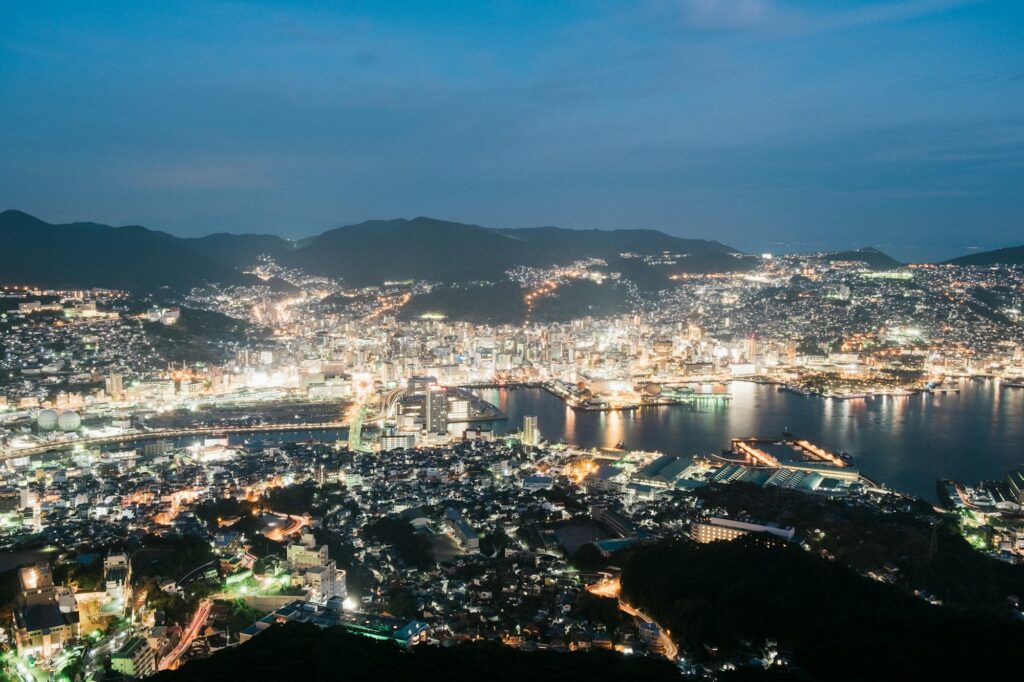
Mount Inasa, 333 meters tall on the west side of the harbor, has one of the most celebrated night views in Japan: the lights of Nagasaki curve around the bay and climb the hills on every side. It was named one of the “New Three Great Night Views of the World” alongside Monaco and Shanghai, and it is also counted among Japan’s New Three Great Night Views. The easiest way up is the Nagasaki Ropeway, which runs from 9:00 to 22:00; a round-trip ticket costs 1,900 yen for adults. A slope car is another option, and buses run from Nagasaki Station to the base of the mountain. Arrive about 30 minutes before sunset to watch the city change from daylight to dusk to full night, and dress warmly, because it is often windy at the top. The observation deck on the summit is free, with indoor seating and a restaurant.
3. Megane Bridge and Shinchi Chinatown
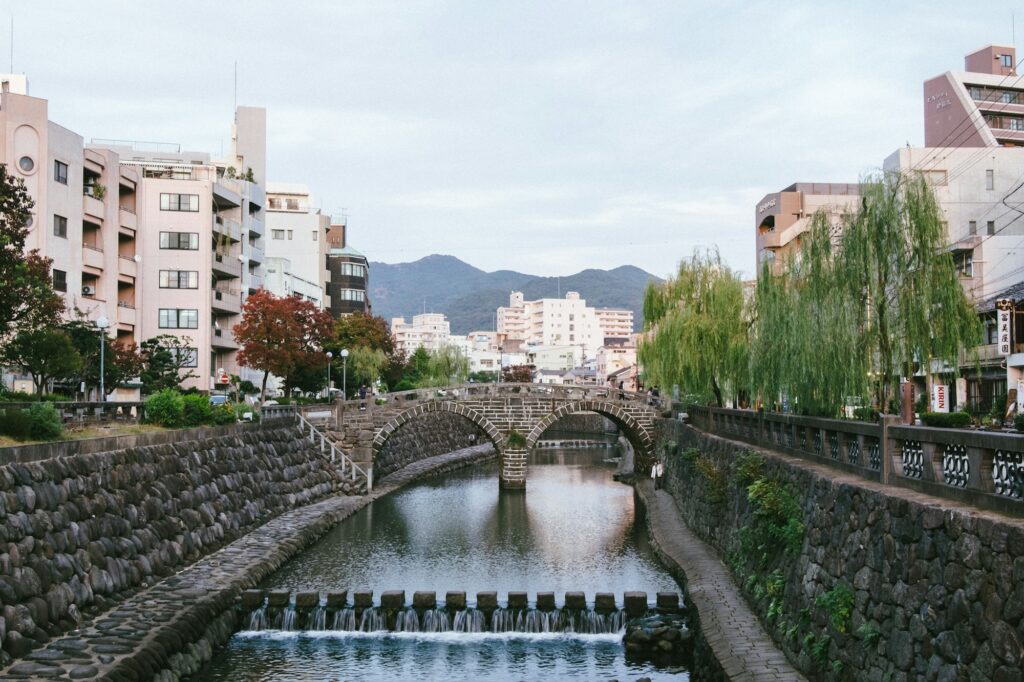
Megane Bridge, or Spectacles Bridge, crosses the Nakashima River in the old town. Built in 1634, it is said to be the oldest stone arch bridge in Japan and is a National Important Cultural Property. Its two arches reflect in the water to form a pair of spectacles, hence the name. The bridge is free to visit and lit up until 10 p.m., and it is a one-minute walk from the Megane-bashi tram stop. Walk along the riverbank and look for the heart-shaped stones set into the stone walls, a fun hunt that couples love. From here it is a short stroll to Shinchi Chinatown, one of the three historic Chinatowns of Japan, where you can try Nagasaki champon, a hearty noodle soup with pork, seafood and vegetables that is said to have been created in the city, and kakuni-manju, buns filled with braised pork belly. Come in the evening, when the lanterns are lit.
Where to Stay Near Central Nagasaki
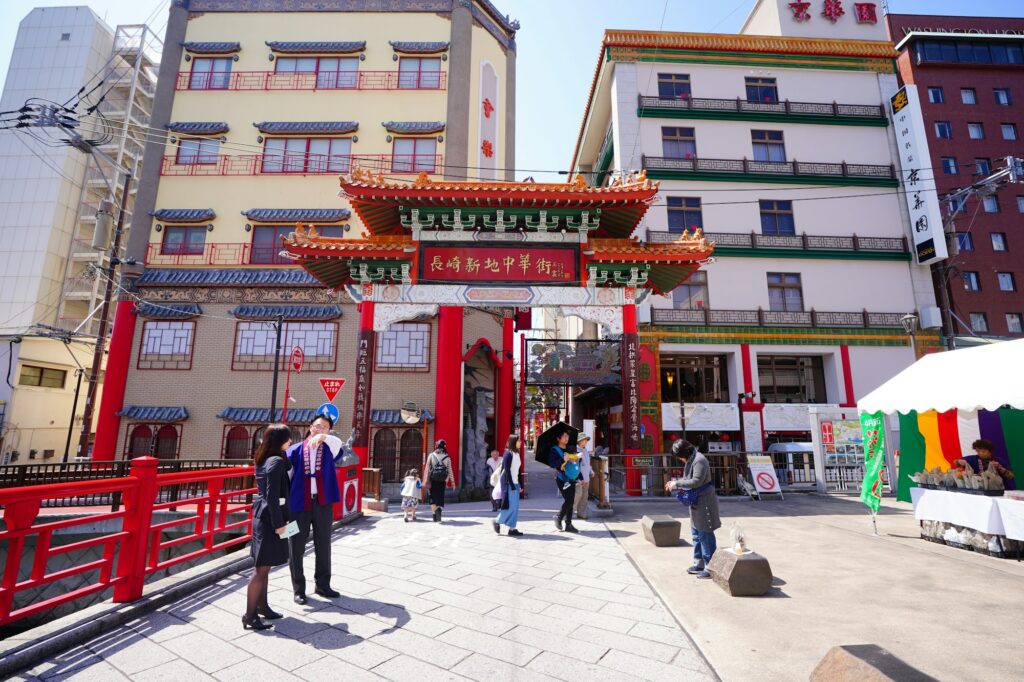 Where to stay: Shinchi Chinatown
Hotel links in this section go to Orbitz. If you book through them, we may earn a commission at no extra cost to you.
For this side of Nagasaki, the best bases are Nagasaki Station, where Gunkanjima tour reception points and the Inasa buses are close by, and the Shinchi Chinatown and Hamanomachi area, which is full of restaurants and a short walk from Megane Bridge.
Luxury
Hilton Nagasaki is a modern upscale hotel next to Nagasaki Station and the convention center, with three restaurants and easy access to the Shinkansen and trams.
Upscale hotel next to the station with three restaurants.
Mid-Range
Dormy Inn Nagasaki Shinchi Chinatown Hot Spring has a natural hot spring bath and free breakfast, and it sits by Shinchi Chinatown, a short walk from Megane Bridge and Dejima.
Dormy Inn Nagasaki Shinchi Chinatown Hot Spring
Hot spring hotel by Chinatown with free breakfast.
Budget-Friendly
Hostel Casa Noda is a cozy hostel with free Wi-Fi and a rooftop terrace, a simple and friendly base for budget travelers.
Cozy hostel with a rooftop terrace.
Compare prices before you book
Hotels in Nagasaki on Orbitz
Stay near Nagasaki Station or Shinchi Chinatown to reach the Gunkanjima piers, the Inasa ropeway and the old town easily.
Affiliate link — if you book through Orbitz, we may earn a commission at no extra cost to you.
Quick Tips for Visiting
- Book Gunkanjima cruises a few weeks ahead in busy seasons, and have a backup plan in case landing is canceled for rough seas.
- Check the sunset time and take the Mount Inasa ropeway up before dusk; the line to go down can be long right after dark.
- Take motion sickness tablets for the Gunkanjima cruise if you are prone to seasickness.
- Use the streetcar to hop between Nagasaki Station, Dejima, Chinatown and Megane Bridge.
- Visit Shinchi Chinatown during the Nagasaki Lantern Festival around Lunar New Year, when the city glows with thousands of lanterns.
Getting there by train: Nagasaki is about an hour and a half from Hakata (Fukuoka): take the Relay Kamome limited express to Takeo-Onsen, then change across the platform to the Nishi Kyushu Shinkansen Kamome. The Japan Rail Pass covers both trains. Read our guide to riding trains in Japan, learn how to ride the Shinkansen, and check whether the JR Pass is worth it for your route.
Frequently Asked Questions
Can you land on Gunkanjima?
Yes, on landing cruises run by several companies from Nagasaki Port. Landing is only allowed when the city judges conditions safe, so tours may circle the island without landing on rough days.
How much is the Mount Inasa ropeway?
A round-trip ticket on the Nagasaki Ropeway costs 1,900 yen for adults. It runs from 9:00 to 22:00.
Where are the heart stones at Megane Bridge?
The heart-shaped stones are set into the stone walls along the Nakashima River near Megane Bridge. Walk along the riverbank path to find them.
What food is Nagasaki famous for?
Nagasaki is famous for champon noodle soup, kakuni-manju pork belly buns and castella sponge cake. Shinchi Chinatown is the best place to try champon.