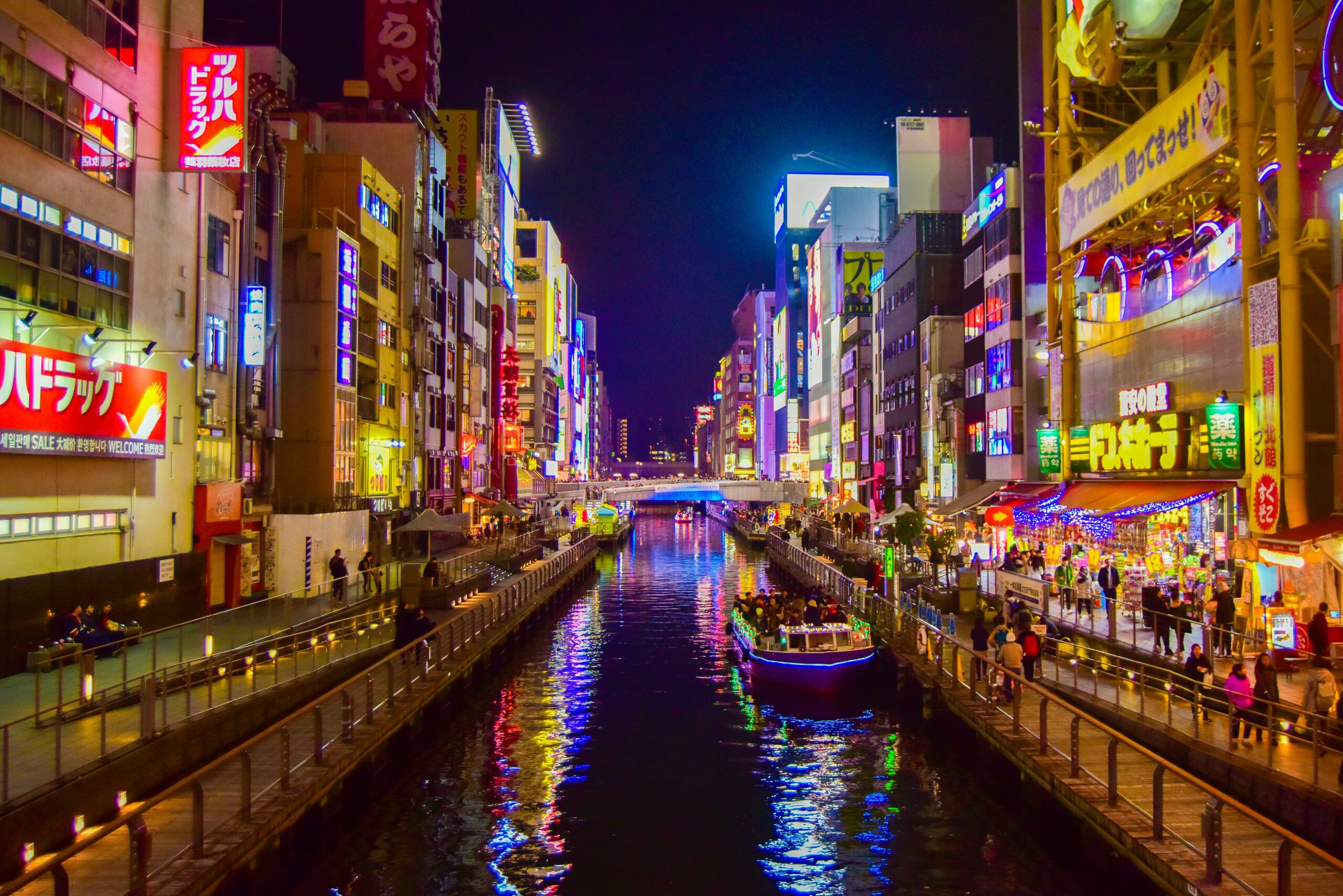
Osaka has a well-earned reputation as Japan’s food capital, and its local motto, “kuidaore” (eat until you drop), says it all. This guide covers three of the city’s most beloved food and culture districts — the neon canal-front of Dotonbori, the century-old Kuromon Ichiba Market, and the retro charm of Shinsekai — along with hotel picks for a stay centered on Osaka’s best eating.
Deciding where to base yourself? Compare Namba, Umeda and Shin-Osaka in our guide to where to stay in Osaka.
1. Dotonbori
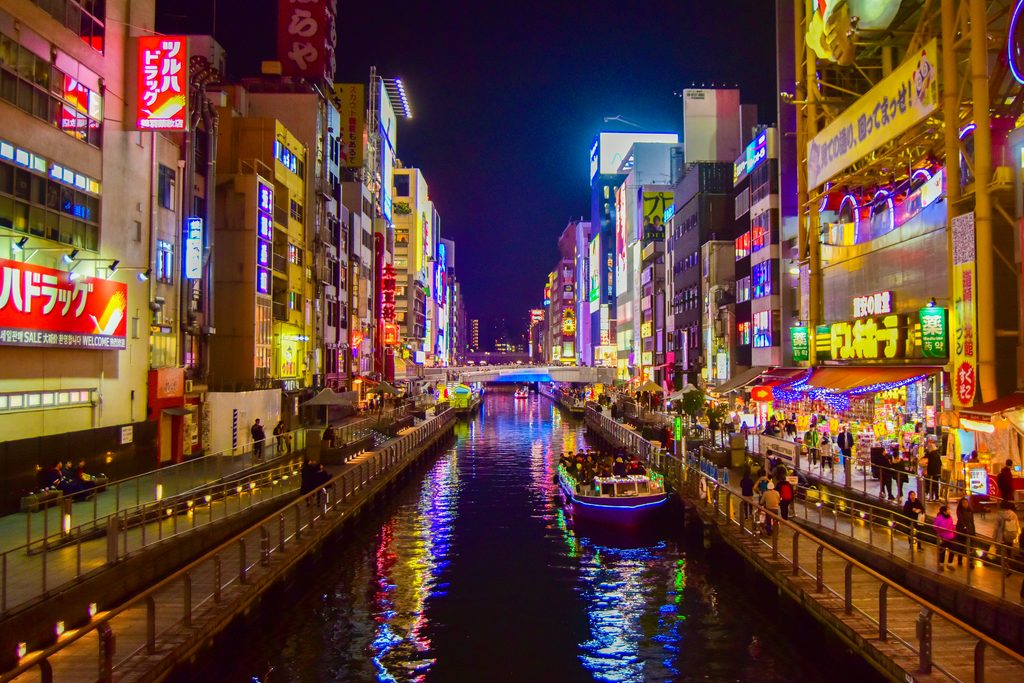
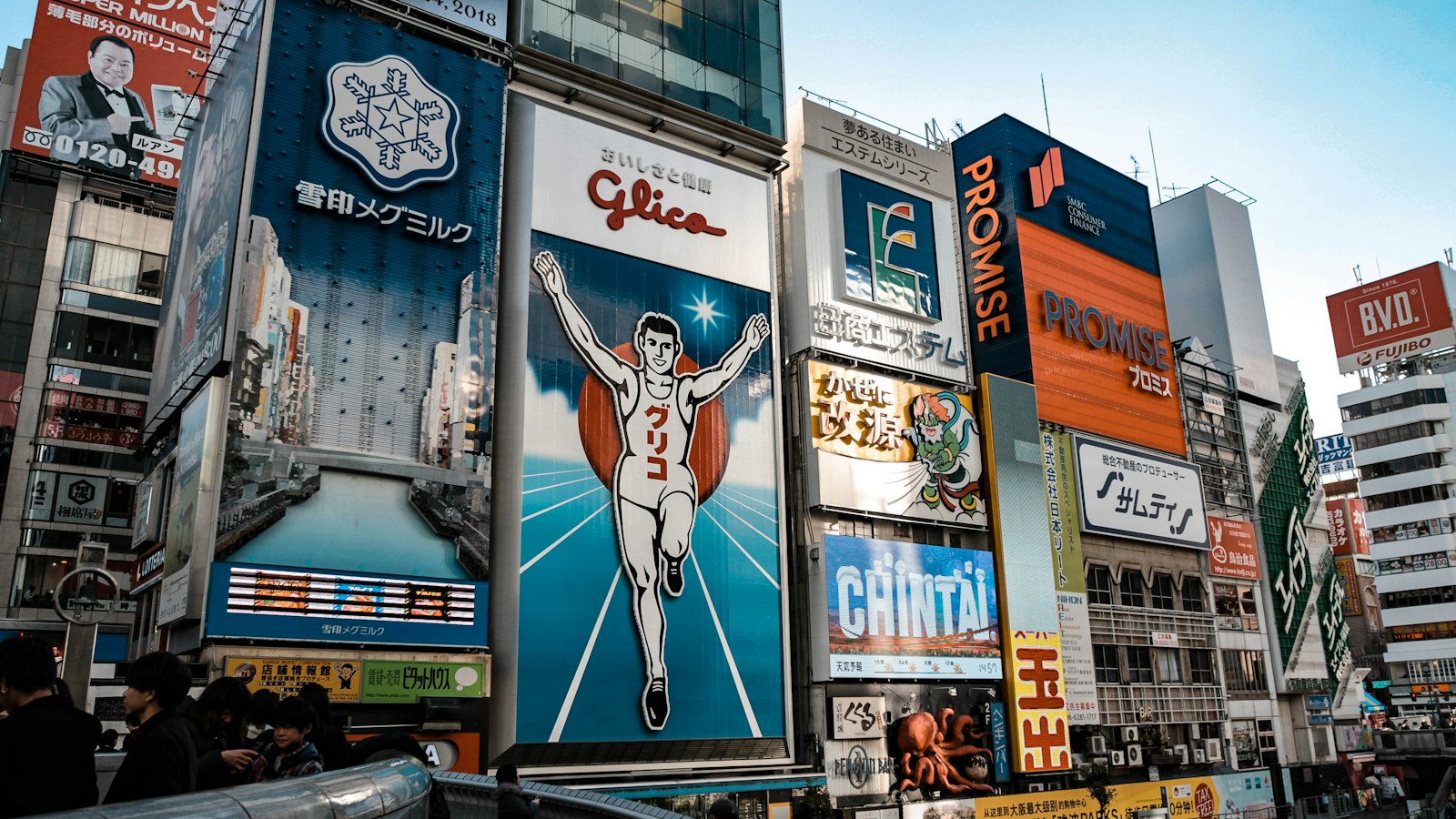
Dotonbori is Osaka’s most iconic entertainment district, a canal-side strip famous for its oversized, illuminated signage — including the running Glico Man billboard, a symbol of the city itself. The area is packed with restaurants specializing in Osaka’s signature street foods: takoyaki (octopus dumplings), okonomiyaki (savory pancakes), and kushikatsu (deep-fried skewers). Many shopfronts feature giant 3D models of crabs, dragons, and pufferfish to advertise their specialty, making a simple walk down the street its own kind of entertainment. Evening is the best time to visit, when the signs are lit and the canal-side walkways fill with both locals and visitors.
2. Kuromon Ichiba Market
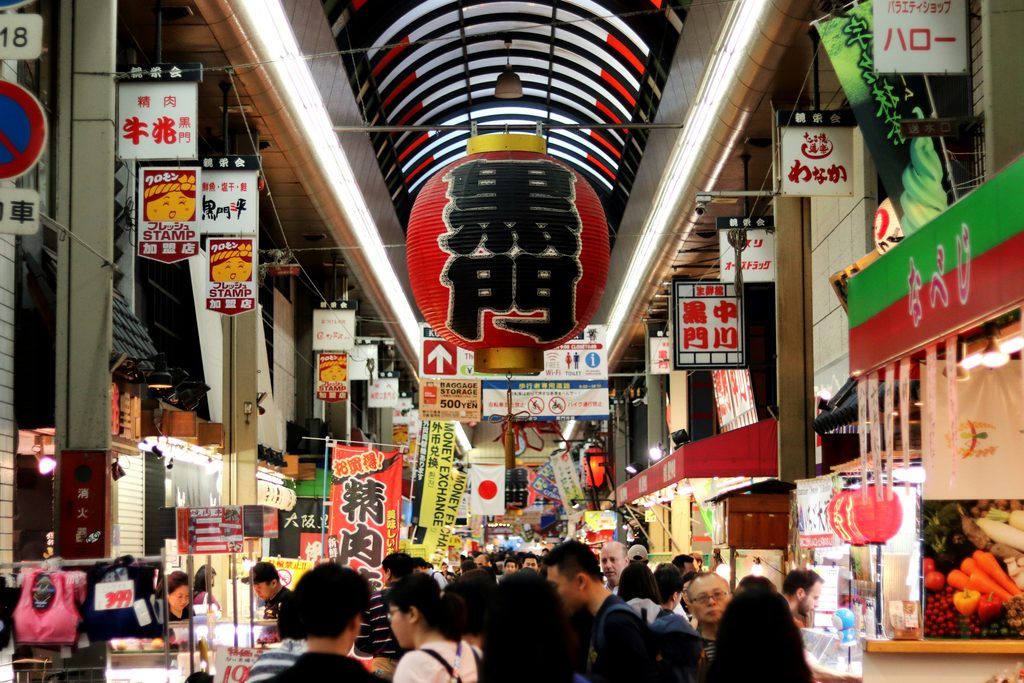
Known as “Osaka’s Kitchen,” Kuromon Ichiba Market has operated since the early 1800s and remains a working market for fresh seafood, produce, and street food. The covered arcade stretches for about 600 meters and includes roughly 150 shops, many offering fresh-grilled skewers, sashimi, and Japan’s famous wagyu beef in bite-sized, easy-to-eat portions perfect for grazing your way down the street. It’s busier and more geared toward walk-and-eat tourism than a typical neighborhood market, but it remains a genuine, functioning market at its core, with vendors who have run their stalls for generations.
3. Shinsekai & Tsutenkaku Tower
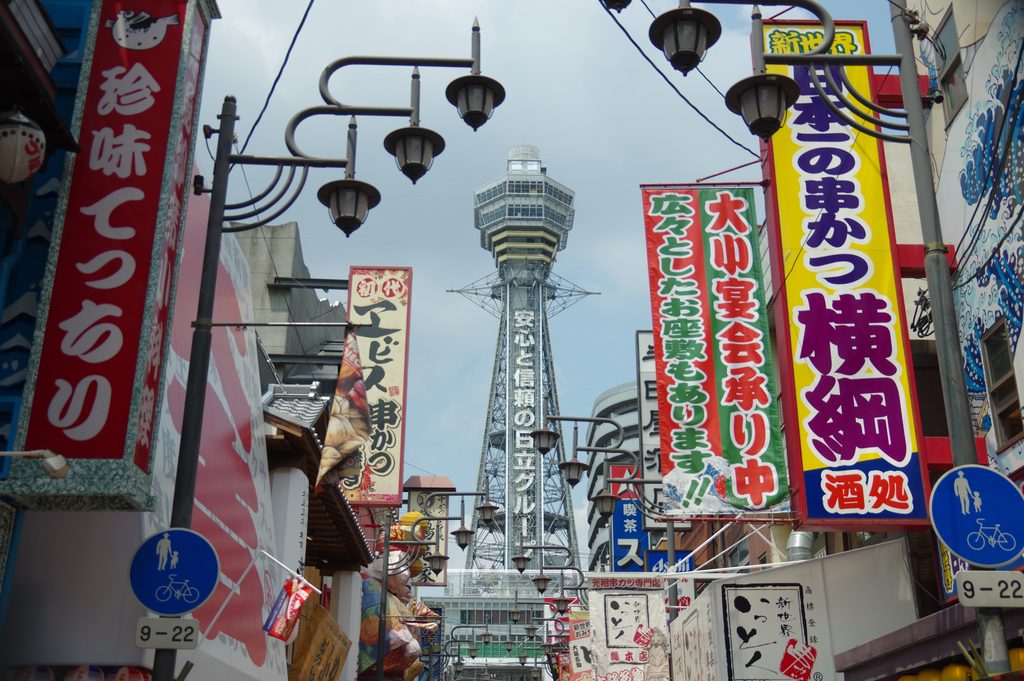
Built in 1912 and modeled in part after Paris and New York, Shinsekai (“New World”) is Osaka’s retro entertainment district, centered on the Tsutenkaku Tower. The neighborhood has a nostalgic, slightly worn charm that stands in contrast to Dotonbori’s polish, with old-fashioned game arcades, fortune-telling stalls, and countless kushikatsu restaurants — this is considered the dish’s birthplace. Many shops post a “no double-dipping” rule for the shared dipping sauce, a distinctly Osaka bit of street food etiquette worth knowing before you dig in. An elevator ride to the top of Tsutenkaku Tower offers a modest but worthwhile view over the surrounding rooftops.
Where to Stay Near Osaka’s Best Food Districts
 Where to stay: Namba, Osaka
Hotel links in this section go to Booking.com. If you book through them, we may earn a commission at no extra cost to you.
Staying near Namba or Shinsaibashi puts Dotonbori, Kuromon Market, and Shinsekai all within a short walk or quick subway ride.
Luxury
The Ritz-Carlton Osaka and Conrad Osaka offer high-end rooms with easy access to central Osaka’s dining and shopping districts via train.
English-manor-style luxury a short walk from Osaka Station in Umeda.
Rooms on the top floors of a Nakanoshima tower, with sweeping views over Osaka.
Mid-Range
Hotels like Hotel Nikko Osaka and Cross Hotel Osaka sit directly within walking distance of Dotonbori, ideal for late-night food exploring.
Connected to Shinsaibashi Station, about a 10-minute walk from Dotonbori.
Stylish rooms a couple of minutes from the Dotonbori canal.
Budget-Friendly
Business hotels such as APA Hotel Namba Shinsaibashi and Dormy Inn Premium Namba sit right in the Namba area — and Dormy Inn’s natural hot-spring public bath is a nice bonus after a long day of walking and eating.
Compact rooms between Namba and Shinsaibashi — easy for late-night food runs.
Natural hot-spring public bath and free late-night noodles, a signature of Dormy Inn.
Compare prices before you book
Hotels in Namba on Booking.com
Namba is the easiest base for Dotonbori, Kuromon Market and Shinsekai. Compare rates, reviews and free-cancellation options in one place.
Affiliate link — if you book through Booking.com, we may earn a commission at no extra cost to you.
Quick Tips for Visiting
- Come hungry — most of these districts are best experienced by sampling small portions from multiple vendors rather than one sit-down meal.
- Cash is still common at smaller market stalls, though most restaurants now accept cards or IC transit cards.
- Dotonbori is most photogenic after dark; Kuromon Market is best visited earlier in the day when more stalls are open.
- All three districts are within a 15-20 minute walk of each other, or a few minutes by subway.
Getting there by train: Read our guide to riding trains in Japan, learn how to ride the Shinkansen, and check whether the JR Pass is worth it for your itinerary.
Frequently Asked Questions
Is Kuromon Ichiba Market touristy?
It has become more tourist-oriented in recent years, especially for grab-and-go seafood skewers, but it remains a working market with genuine local vendors.
What food should I try in Dotonbori?
Takoyaki, okonomiyaki, and kushikatsu are the district’s signature dishes, all widely available from street-facing stalls and casual restaurants.
Is Shinsekai safe to visit at night?
Yes, it’s generally safe and well-trafficked by tourists and locals alike, though like any busy entertainment district, it’s wise to stay aware of your surroundings.