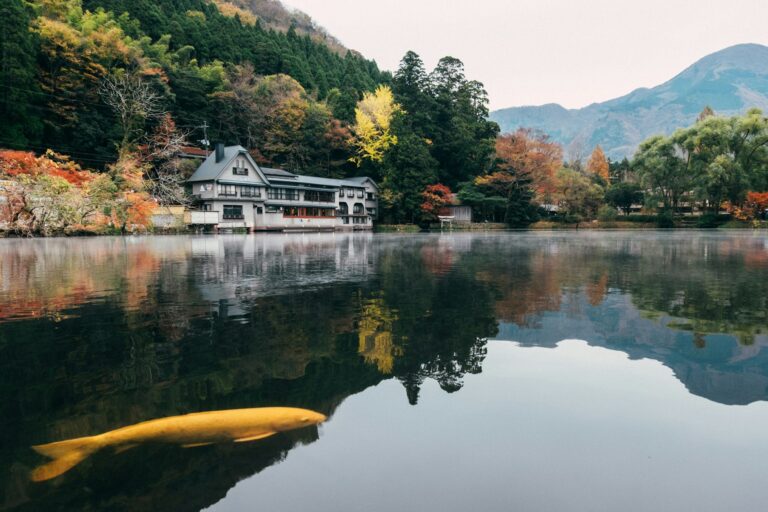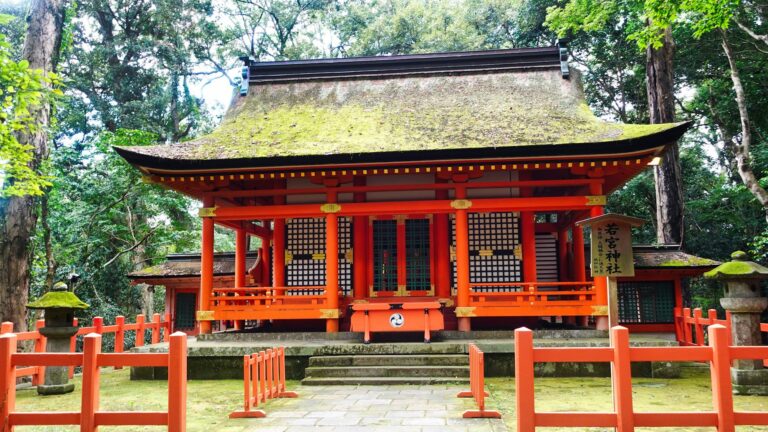
Beppu’s steaming “hells,” Umi Jigoku and Chinoike Jigoku, and the historic Takegawara Onsen bathhouse are the three experiences that make Beppu the hot spring capital of Japan. This seaside city in Oita Prefecture on the east coast of Kyushu has thousands of hot spring sources, and on a cool morning you can see columns of steam rising from rooftops and street vents all over the Kannawa district. The hells are hot springs too hot to bathe in, colored cobalt blue, blood red or milky white by minerals, while the public bathhouses let you soak like a local for a few hundred yen. This guide explains how the seven-hell common ticket works, how to get between the two hell areas by bus, what to expect at a sand bath, and where to stay in Beppu.
1. Umi Jigoku and the Kannawa Hells
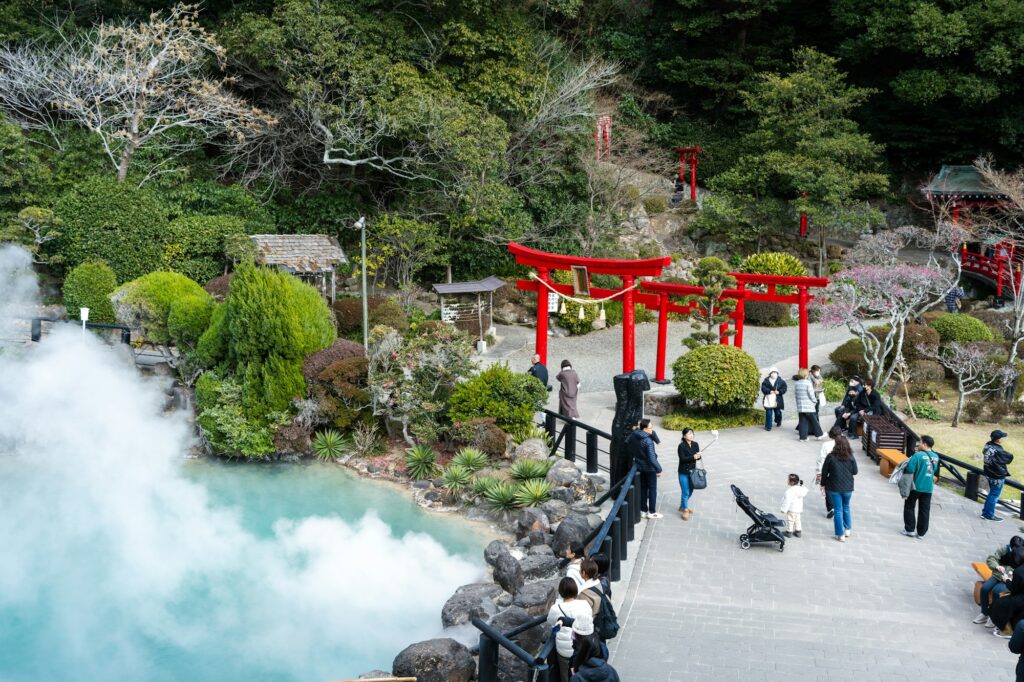
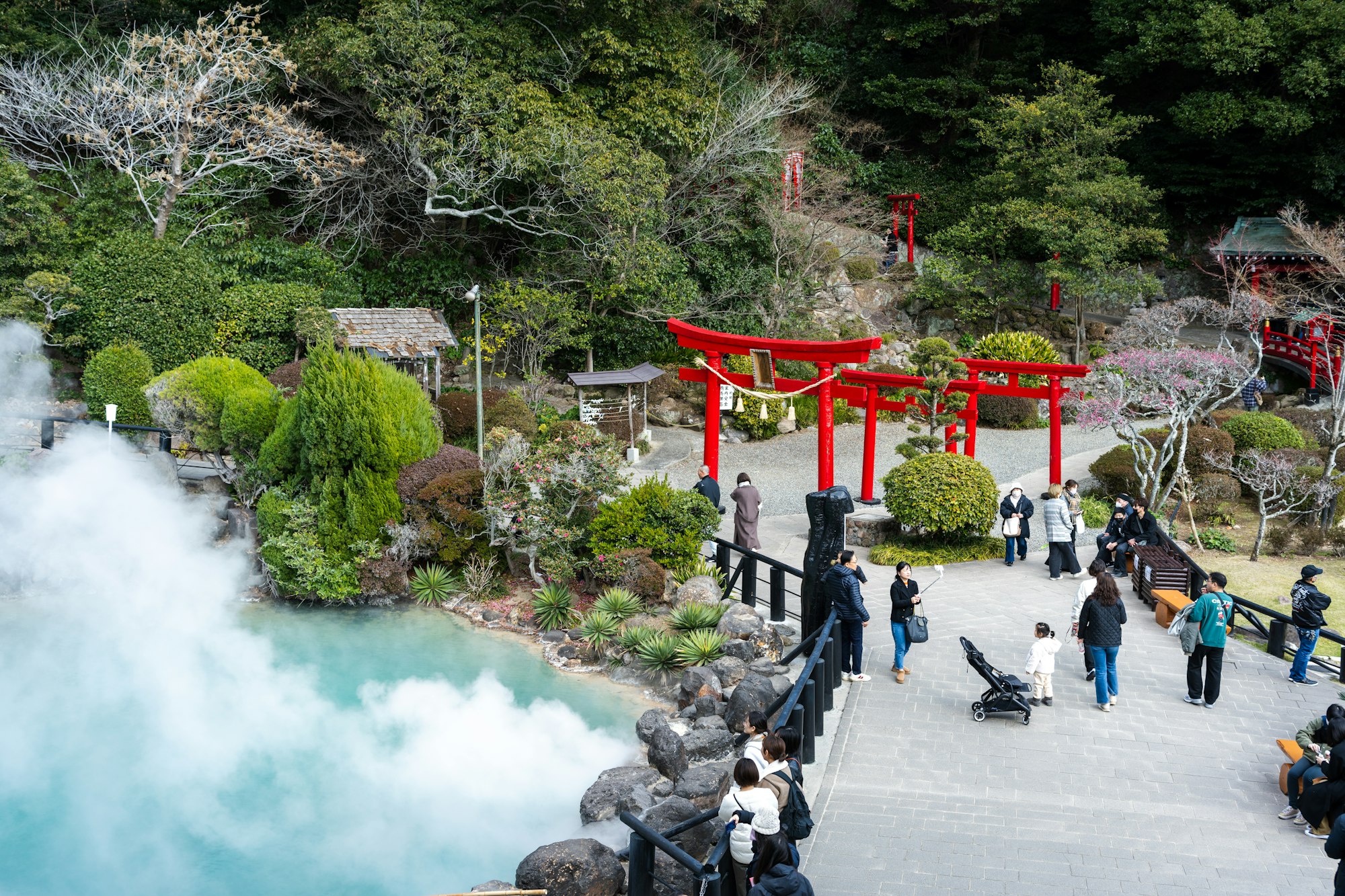
There are seven official hells in Beppu, and five of them, Umi, Oniishibozu, Shiraike, Kamado and Oniyama, sit close together in the Kannawa district. Start with Umi Jigoku, the “sea hell,” a large pond of startling cobalt-blue water that is hot enough to boil eggs, wrapped in clouds of steam and framed by a red torii and gardens. Next door, Oniishibozu Jigoku bubbles with gray mud that pops up in round shapes said to look like shaved monks’ heads, and Kamado Jigoku, the “cooking pot hell,” has several small pools in different colors. A common ticket for all seven hells costs 2,400 yen, is good for one entry at each hell and is valid for two consecutive days; single hells cost 450 to 500 yen. The hells are open 8:00 to 17:00. From Beppu Station, buses 5 and 7 reach Kannawa in about 15 minutes, and the area’s steaming lanes are fun to explore on foot.
2. Chinoike Jigoku and Tatsumaki Jigoku
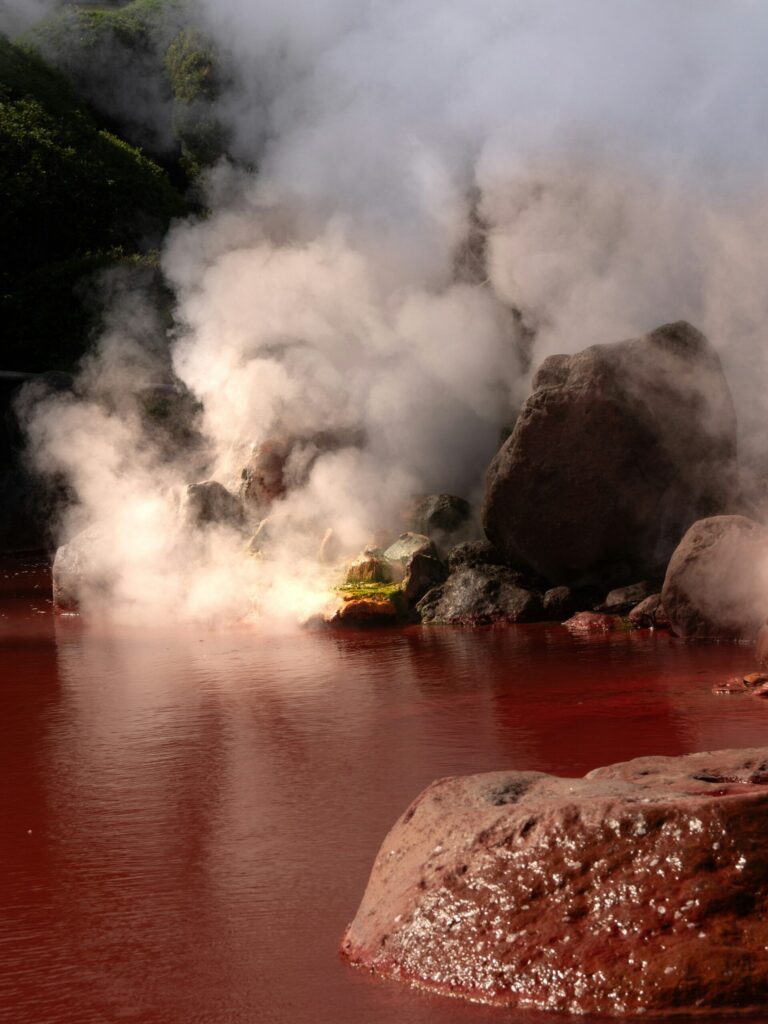
The other two hells are in the Shibaseki area, about 2 kilometers from Kannawa, and they are worth the short bus ride. Chinoike Jigoku, the “blood pond hell,” is a large pool of deep red water colored by iron oxide and other minerals, and its color is most vivid on a bright day. Right next to it, Tatsumaki Jigoku is a geyser that erupts at regular intervals behind a stone wall that keeps the spray in check, so check the posted schedule and wait for the next eruption rather than walking straight through. From Kannawa, buses 16 and 16A reach Shibaseki in about five minutes and run roughly twice an hour; for the return trip, take buses 26 or 26A. Allow two to three hours to see all seven hells. Bring a hat in summer, since there is little shade at some sites, and remember that the water is far too hot to touch: these hells are for viewing only, and the bathing is done elsewhere.
3. Takegawara Onsen
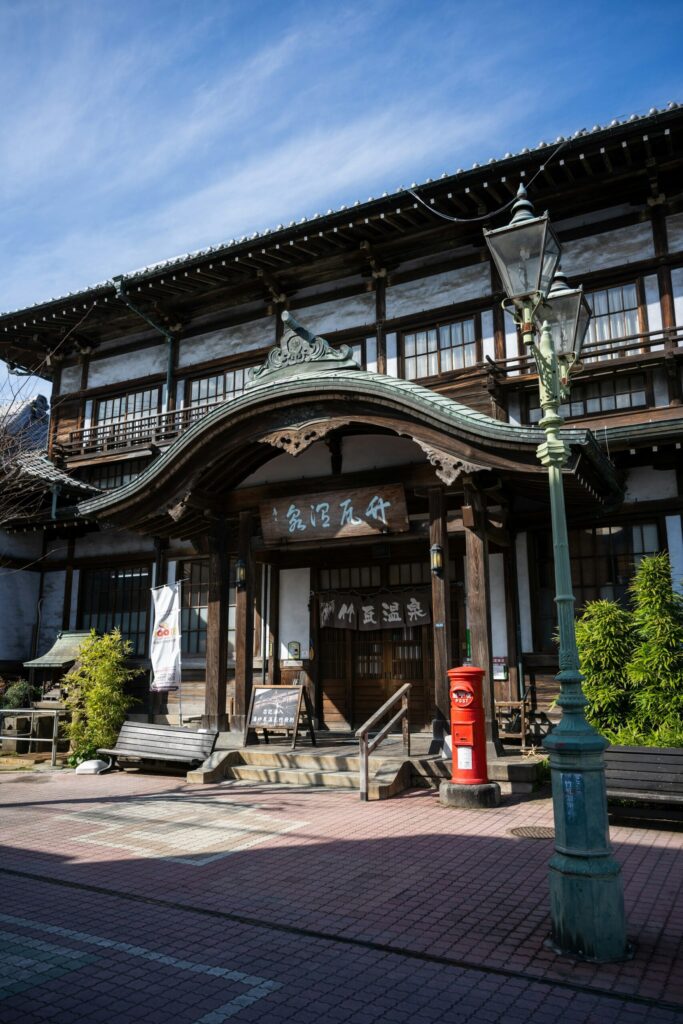
Takegawara Onsen is Beppu’s most famous public bathhouse, a beautiful wooden building from 1938 with a curved gable roof, registered as a tangible cultural property and within walking distance of Beppu Station in the old downtown. A regular soak in the simple hot spring bath costs only 300 yen and is available from 6:30 to 22:30, so it is a perfect way to start or end the day. The highlight for many visitors is the sand bath: staff bury you up to your neck in warm sand heated by the hot spring, you lie there for several minutes while the heat soaks into your muscles, then you rinse off and finish in the bath. The sand bath costs 1,500 yen, runs from 8:00 to 22:30 with last entry at 21:30, and is not open to children under six. Takegawara closes on the third Wednesday of each month (the next day if that Wednesday is a holiday). Bring a small towel and follow basic bath etiquette: wash before you enter the water.
Where to Stay Near Beppu
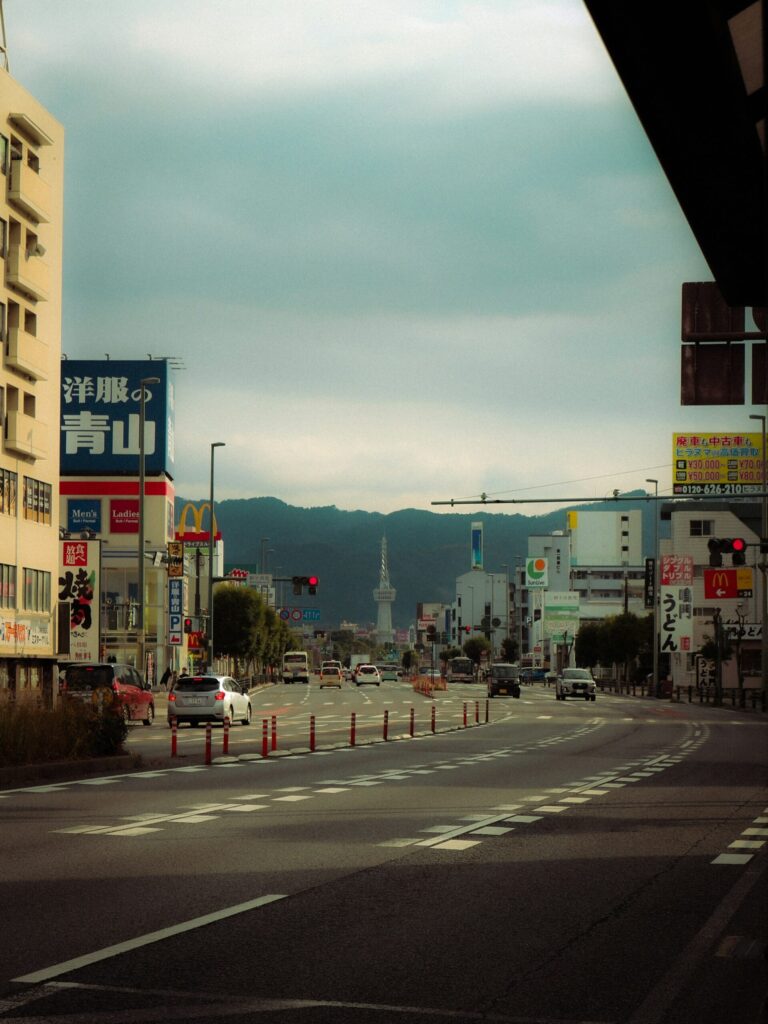 Where to stay: Beppu
Hotel links in this section go to Booking.com. If you book through them, we may earn a commission at no extra cost to you.
Beppu has two very different bases. Stay near Beppu Station for easy train and bus connections and a walk to Takegawara Onsen, or stay up the hill in Kannawa to sleep among the hells and steam vents, with many inns offering their own hot spring baths.
Luxury
ANA InterContinental Beppu Resort & Spa is Beppu’s top international resort, set on the hillside above the city. Rooms have balconies and mountain views, and guests can use the spa, a sauna and a year-round outdoor pool after a day at the hells.
ANA InterContinental Beppu Resort & Spa
Upscale resort with a spa, sauna and year-round outdoor pool.
Mid-Range
Beppu Kannawa Onsen HIROMIYA puts you right in Kannawa, within walking distance of Umi Jigoku and the other hells. It offers tatami family rooms with yukata, free Wi-Fi, a shared kitchen and a lounge, a nice mix of local character and practicality.
Tatami-room inn in the steamy Kannawa hot spring district.
Budget-Friendly
Super Hotel Beppu Ekimae is a dependable budget pick close to Beppu Station, with compact soundproofed rooms that have private bathrooms. It is handy for the buses to Kannawa and a short walk from Takegawara Onsen.
Simple, good-value hotel by the station.
Compare prices before you book
Hotels in Beppu on Booking.com
Stay near Beppu Station for easy buses and Takegawara Onsen, or in Kannawa to wake up next to the steaming hells.
Affiliate link — if you book through Booking.com, we may earn a commission at no extra cost to you.
Quick Tips for Visiting
- Buy the seven-hell common ticket (2,400 yen) if you want to see them all; it is valid for two consecutive days.
- Visit the Kannawa hells first, then take bus 16 or 16A to Chinoike and Tatsumaki in Shibaseki.
- Try jigoku-mushi, food steamed over hot spring vents, at the steam kitchens in Kannawa.
- For views over the city and the bay, ride the Beppu Ropeway up Mount Tsurumi (1,800 yen round trip); bus 36 from Beppu Station takes about 20 minutes.
- Carry a small towel and some cash for public baths, and check closing days before you go.
Getting there by train: Beppu is on the JR Nippo Line along the coast of Oita. From Hakata (Fukuoka), the Sonic limited express runs to Beppu in roughly two hours, and from Honshu you can take the Sanyo Shinkansen to Kokura and change to the Sonic there. Yufuin is about 50 minutes away by Kamenoi Bus, so it is easy to combine both towns. Read our guide to riding trains in Japan, learn how to ride the Shinkansen, and check whether the JR Pass is worth it for your route.
Frequently Asked Questions
How much is the Beppu hells ticket?
The common ticket for all seven hells costs 2,400 yen, allows one entry at each hell and is valid for two consecutive days. Single hells cost 450 to 500 yen. The hells are open 8:00 to 17:00.
Can you bathe in the Beppu hells?
No. The hells are far too hot for bathing and are for viewing only. To soak, visit a public bathhouse such as Takegawara Onsen or the bath at your hotel.
How much is the sand bath at Takegawara Onsen?
The sand bath costs 1,500 yen and runs from 8:00 to 22:30, with last entry at 21:30. A regular bath costs 300 yen. Children under six cannot use the sand bath.
How do you get to the Beppu hells?
From Beppu Station, take bus 5 or 7 to Kannawa, about 15 minutes. From Kannawa, buses 16 and 16A reach Chinoike and Tatsumaki in Shibaseki in about five minutes.