Kurokawa Onsen, Kamishikimi Kumanoimasu Shrine and Nabegataki Falls are three of the most atmospheric places in the hills around Mount Aso, and together they make a perfect slow-travel escape from Kumamoto. Kurokawa is a tiny hot spring village in a wooded valley where you hop between ryokan baths in a cotton yukata; Kamishikimi is a moss-covered forest shrine with hundreds of stone steps; and Nabegataki is a wide waterfall that you can walk behind. All three are in rural Minamioguni, Oguni and Takamori, so a rental car or a planned bus route is key. This guide covers how the Kurokawa bath-hopping pass works, what to expect at the shrine, the reservation rules for Nabegataki, and where to stay in Kurokawa Onsen.
1. Kurokawa Onsen
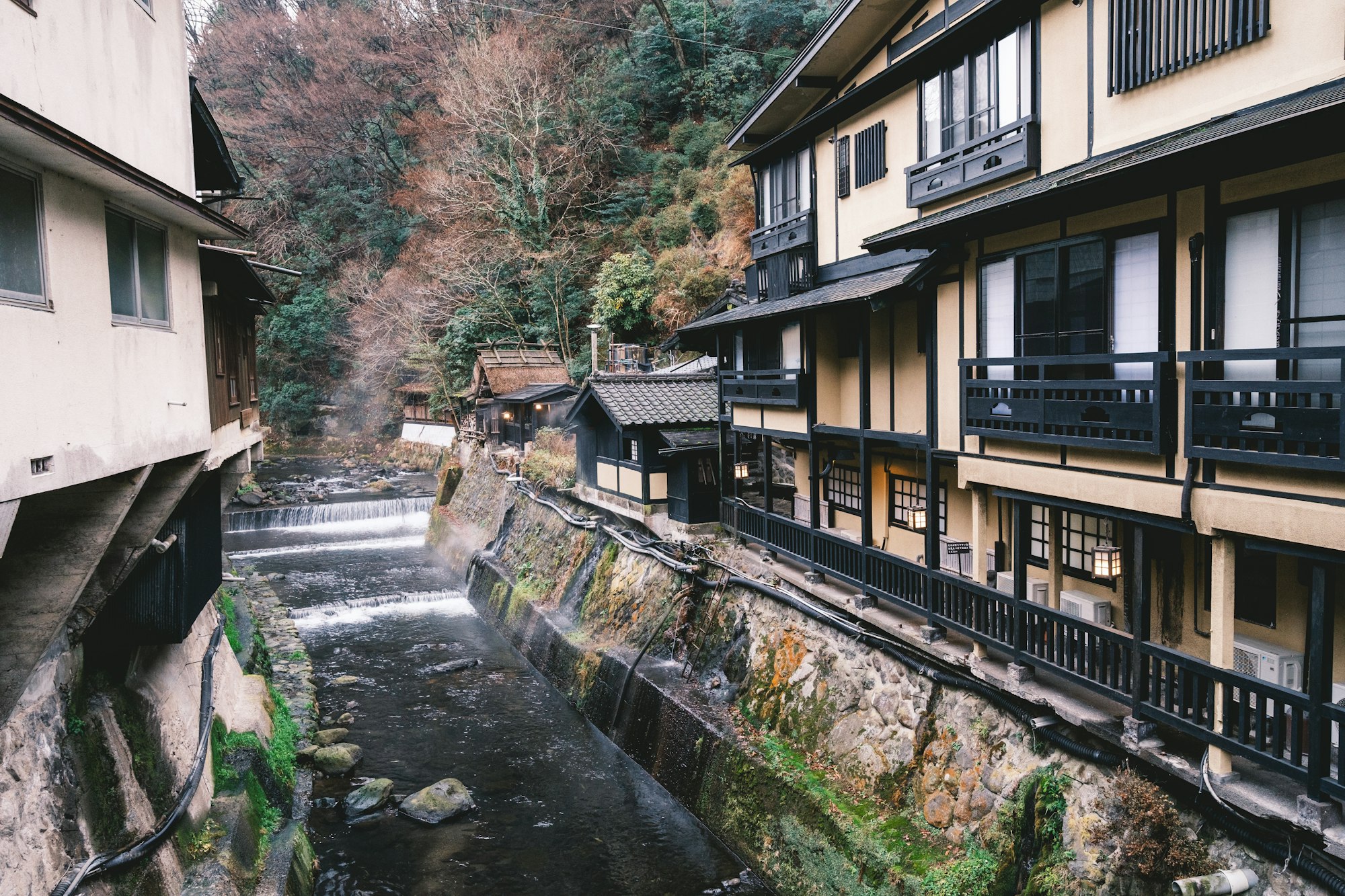
Kurokawa Onsen is one of the prettiest hot spring villages in Japan: a cluster of wooden ryokan along a narrow river, with no neon signs or high-rise hotels, and lanterns glowing on the paths at night. The famous way to enjoy it is the Nyuto Tegata, a wooden bath pass that costs 1,500 yen and lets you use three outdoor baths at participating ryokan; more than 20 inns take part, and the pass is valid for six months, so you can save a bath for your next visit. A single bath without the pass costs about 600 yen. Bathing hours vary by ryokan but generally run from morning until about 21:00. Walk the village in a yukata, pick up a snack at the shops along the river, and visit a mix of riverside, cave and forest baths. Highway buses from Hakata, Tenjin and Fukuoka Airport take about three hours, and the trip from Aso is around 50 minutes by bus or car.
2. Kamishikimi Kumanoimasu Shrine
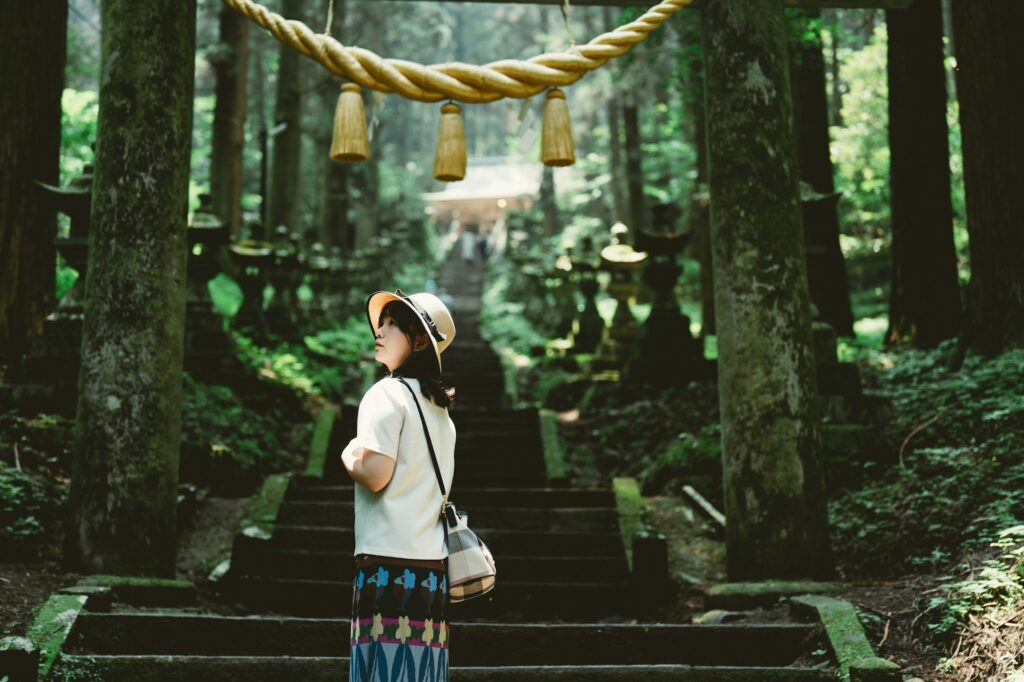
Kamishikimi Kumanoimasu Shrine, in the town of Takamori on the southern side of the Aso caldera, feels like a scene from a fantasy film, and in fact it inspired the setting of the 2011 anime film Hotarubi no Mori e (To the Forest of Firefly Lights). The approach climbs more than 260 steep stone steps through a dark cedar forest, lined with about 100 stone lanterns and torii gates covered in thick green moss. At the top, beyond the small main hall, a short path leads to Ugeto-iwa, a huge rock with a hole about 10 meters wide; legend says a demon kicked it through, and locals visit it to pray for success in exams and contests. The shrine is open at all times and there is no admission fee. The steps are uneven and slippery after rain, so wear shoes with good grip. By car it is about 10 minutes from Takamori Station; by bus, ride from Kumamoto Station to Takamori Chuo, change to a bus toward Tenjin and get off at Oomura, then walk about four minutes.
3. Nabegataki Falls
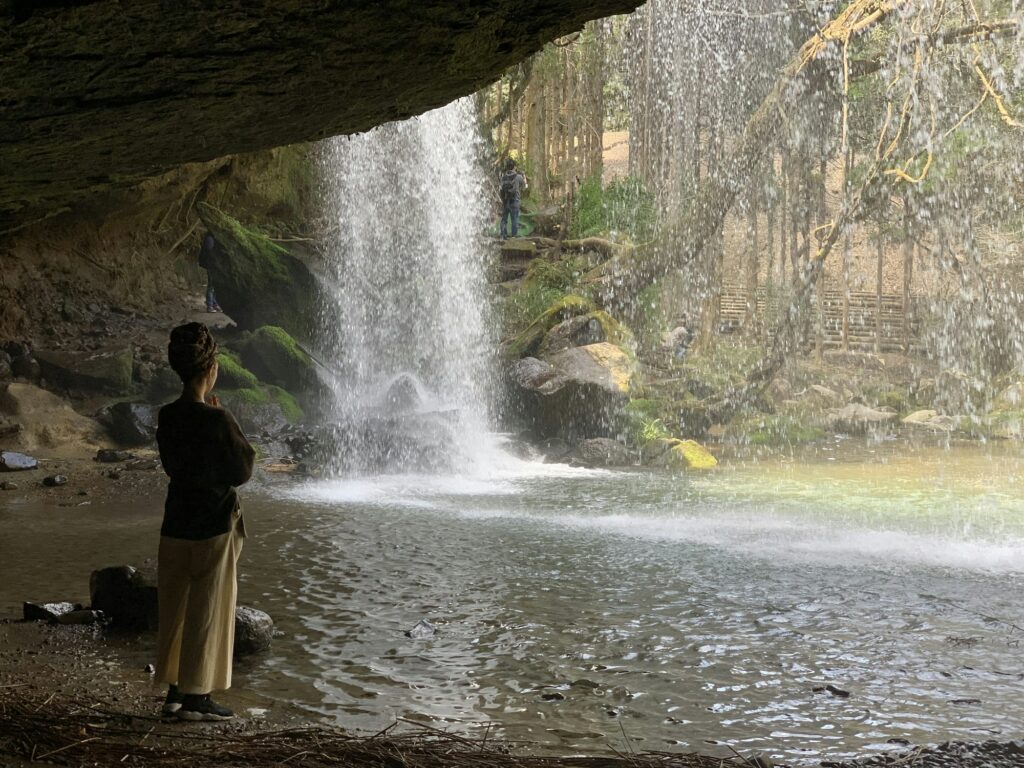
Nabegataki Falls, in the neighboring town of Oguni a short drive from Kurokawa, is a broad, gentle curtain of water, and its claim to fame is that you can walk behind it: a path leads into the hollow under the overhanging rock, so you look out through the falling water at the green forest. Admission is 300 yen for adults and 150 yen for children, payable in cash, and the falls are open 9:00 to 17:00 with last entry at 16:30; they close from December 28 to January 3. The falls have become very popular, so online reservations are recommended, and on busy days entry is by reservation only. They may also close temporarily after heavy rain, typhoons or earthquakes, so check the latest status before you set out. Nabegataki is easiest to reach by car; by public transport it means a bus from Aso Station followed by a short taxi ride. Combine it with Kurokawa Onsen for a relaxing day in the mountains.
Where to Stay Near Kurokawa Onsen
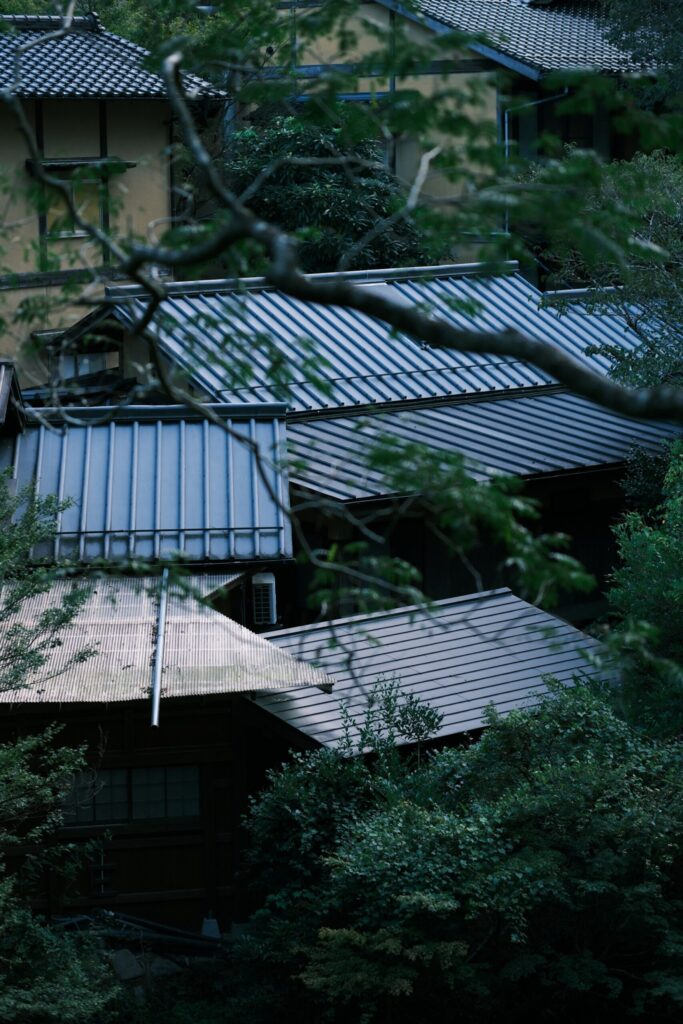 Where to stay: Kurokawa Onsen
Hotel links in this section go to Booking.com. If you book through them, we may earn a commission at no extra cost to you.
Staying in Kurokawa itself is part of the experience: dinner is usually a multi-course kaiseki meal at your ryokan, and after dark you can wander the lantern-lit village in your yukata. Ryokan are small and book up early, especially in autumn and on weekends, so reserve well ahead. Prices are generally higher than in Aso City, even at the simpler inns.
Luxury
Kurokawa-So is a traditional ryokan in a quiet valley along the river, known for its wide choice of indoor and open-air hot spring baths, including a family bath that guests can use. Rooms are Japanese style with tatami floors.
Riverside ryokan with many indoor and open-air hot spring baths.
Mid-Range
Okyakuya is a historic ryokan right in the center of the village, with tatami rooms, yukata and air conditioning. Bathing facilities are shared, and you are steps from the riverside lanes and other baths.
Historic ryokan in the heart of the village.
Budget-Friendly
Fujiya is a relatively affordable choice for Kurokawa, with tatami family rooms overlooking the river, a hot spring bath, free parking and a well-reviewed breakfast featuring local ingredients.
Relatively affordable inn with river views and a hot spring bath.
Compare prices before you book
Hotels in Kurokawa Onsen on Booking.com
Book a ryokan in Kurokawa Onsen to enjoy the lantern-lit village at night and the riverside baths in the morning.
Affiliate link — if you book through Booking.com, we may earn a commission at no extra cost to you.
Quick Tips for Visiting
- Buy the Nyuto Tegata bath pass (1,500 yen for three baths) at the village information center or a participating ryokan.
- Reserve Nabegataki Falls online before you go, since busy days are reservation-only.
- Bring cash: small inns, shops and the waterfall may not accept cards.
- Wear shoes with good grip for the mossy stone steps at Kamishikimi Kumanoimasu Shrine.
- Rent a car if you can; buses to these villages are infrequent and some routes need a reserved seat.
Getting there by train: There is no railway to Kurokawa or Oguni. Take the Kyushu Shinkansen to Kumamoto, then continue by bus or rental car, or ride the JR Hohi Line to Aso and drive or take a bus from there; highway buses also run from Fukuoka to Kurokawa Onsen. For Kamishikimi, the nearest station is Takamori on the Minamiaso Railway. Read our guide to riding trains in Japan, learn how to ride the Shinkansen, and check whether the JR Pass is worth it for your route.
Frequently Asked Questions
How much is the Kurokawa Onsen bath pass?
The Nyuto Tegata costs 1,500 yen and gives entry to three outdoor baths at participating ryokan. It is valid for six months. A single bath without the pass costs about 600 yen.
How do you get to Kurokawa Onsen?
Highway buses run from Hakata, Tenjin and Fukuoka Airport in about three hours. From Aso, it is about 50 minutes by bus or car. There is no train station in Kurokawa.
Do you need a reservation for Nabegataki Falls?
Online reservations are recommended, and on busy days entry is by reservation only. Admission is 300 yen for adults and 150 yen for children, and the falls are open 9:00 to 17:00.
Is Kamishikimi Kumanoimasu Shrine free?
Yes. The shrine is open at all times and there is no admission fee. Expect more than 260 stone steps through a mossy cedar forest.