Kusatsu Onsen’s steaming Yubatake, the yumomi water-stirring show at Netsunoyu and the huge open-air bath in Sainokawara Park are why this mountain town in Gunma Prefecture is regularly ranked among the best hot springs in Japan. Kusatsu has one of the largest natural flows of hot spring water in the country, and its strongly acidic water has drawn bathers for centuries. The town is compact and walkable, with old ryokan, souvenir shops and free public baths clustered around the Yubatake. It takes about three to four hours to get here from Tokyo by train and bus or by direct highway bus. This guide covers the three highlights, bathing tips and where to stay.
1. The Yubatake (Hot Water Field)
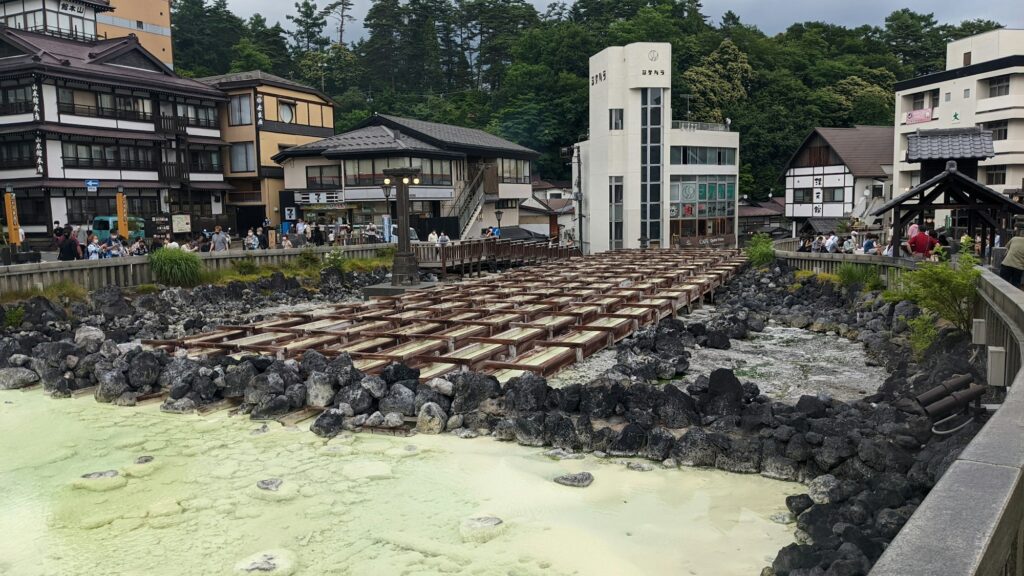
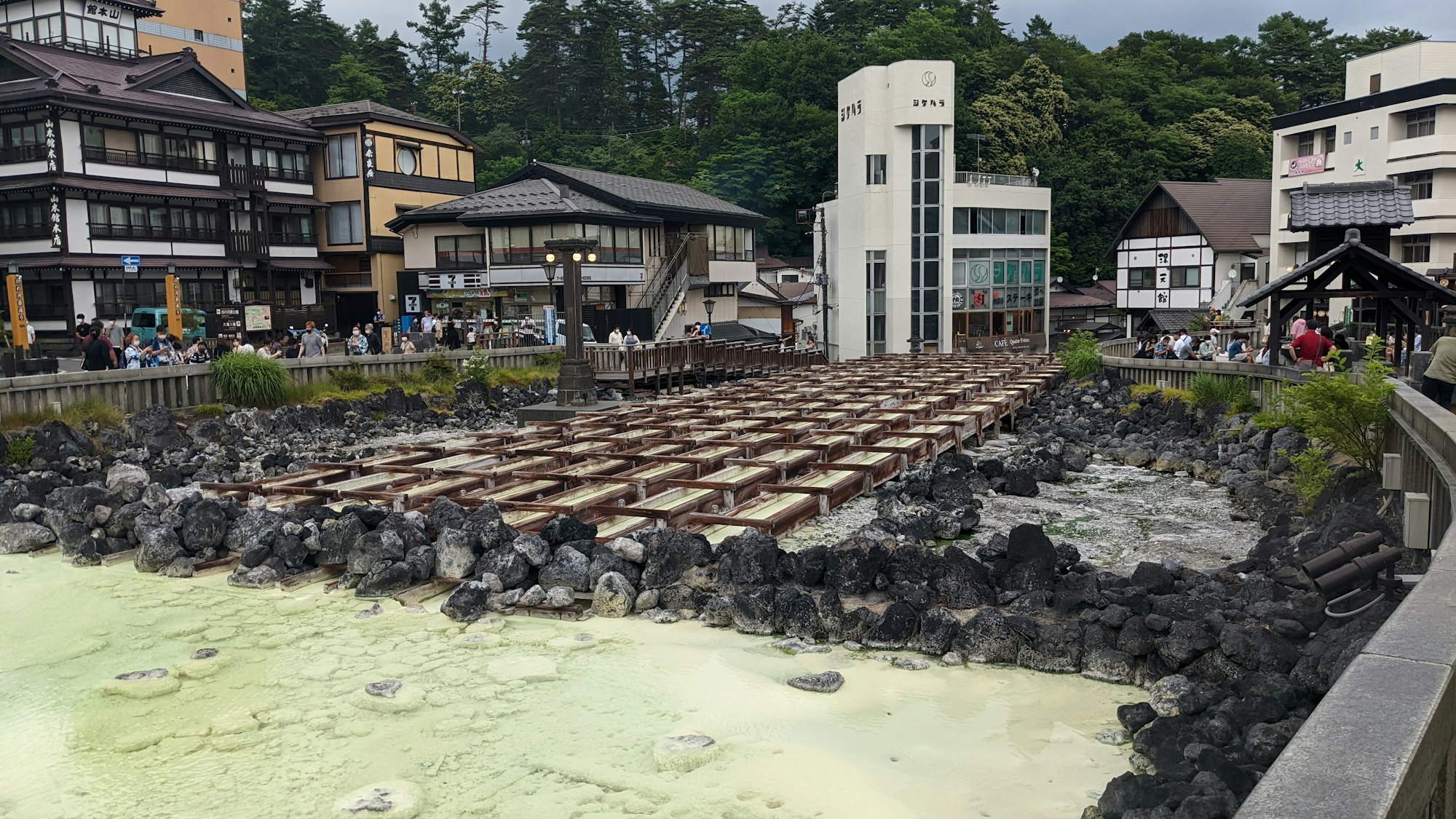
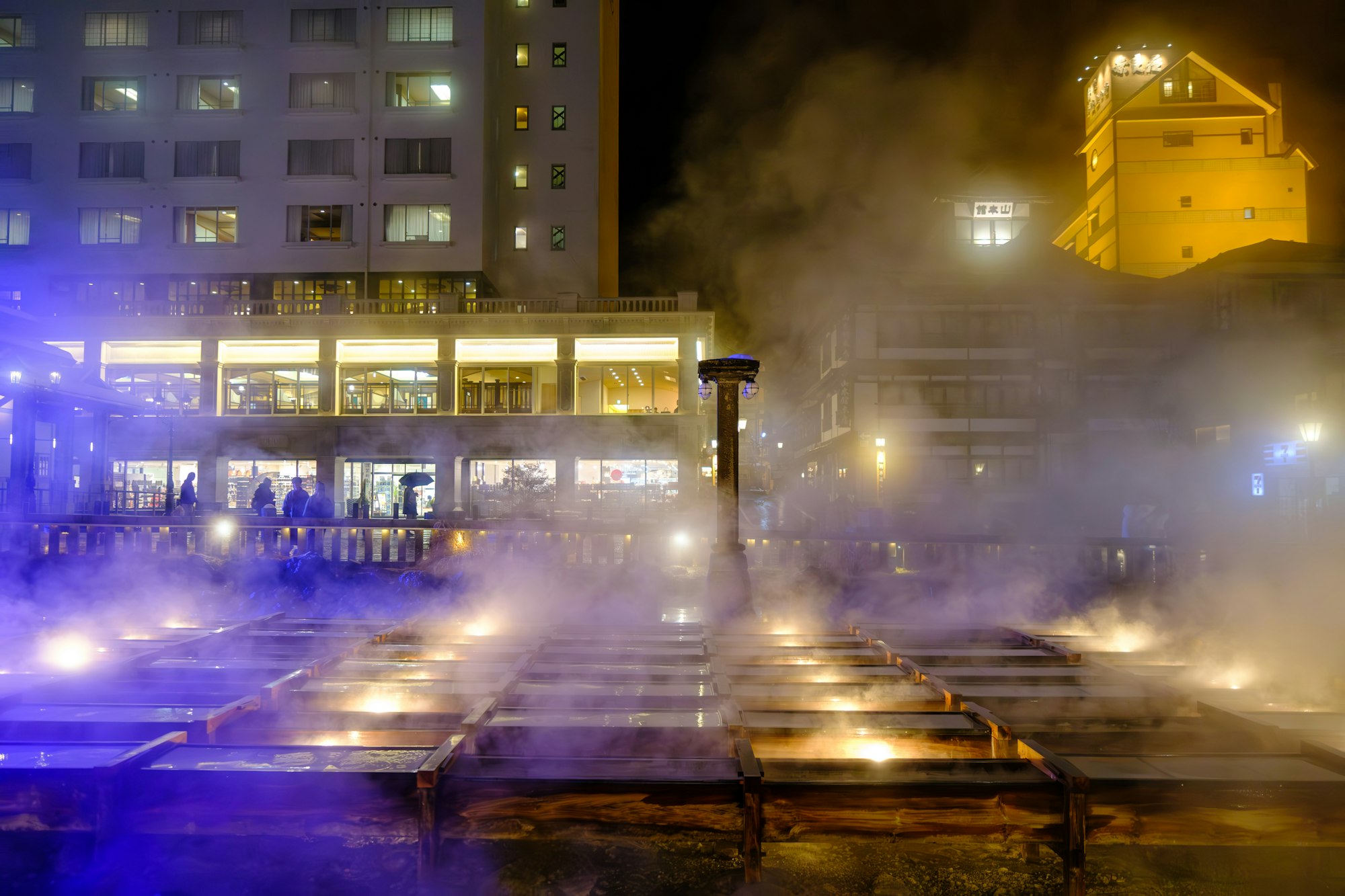
The Yubatake, or hot water field, is the steaming heart of Kusatsu. Thousands of liters of hot spring water a minute flow from the source and down a series of long wooden channels, which cool the water before it is piped to the town’s inns and baths and also collect yunohana, the mineral deposits sold as bath salts. The water collects in a turquoise pool at the end before tumbling over a small waterfall, and the whole scene is wrapped in steam and the scent of sulfur. A promenade runs all the way around, with stone fences carved with the names of famous past visitors, and there are free footbaths nearby where you can warm your feet. Come back after dark, when the Yubatake is lit up and the steam glows under the lights; it is one of the most atmospheric night scenes at any Japanese hot spring. Viewing is free and open around the clock.
2. Netsunoyu and the Yumomi Show
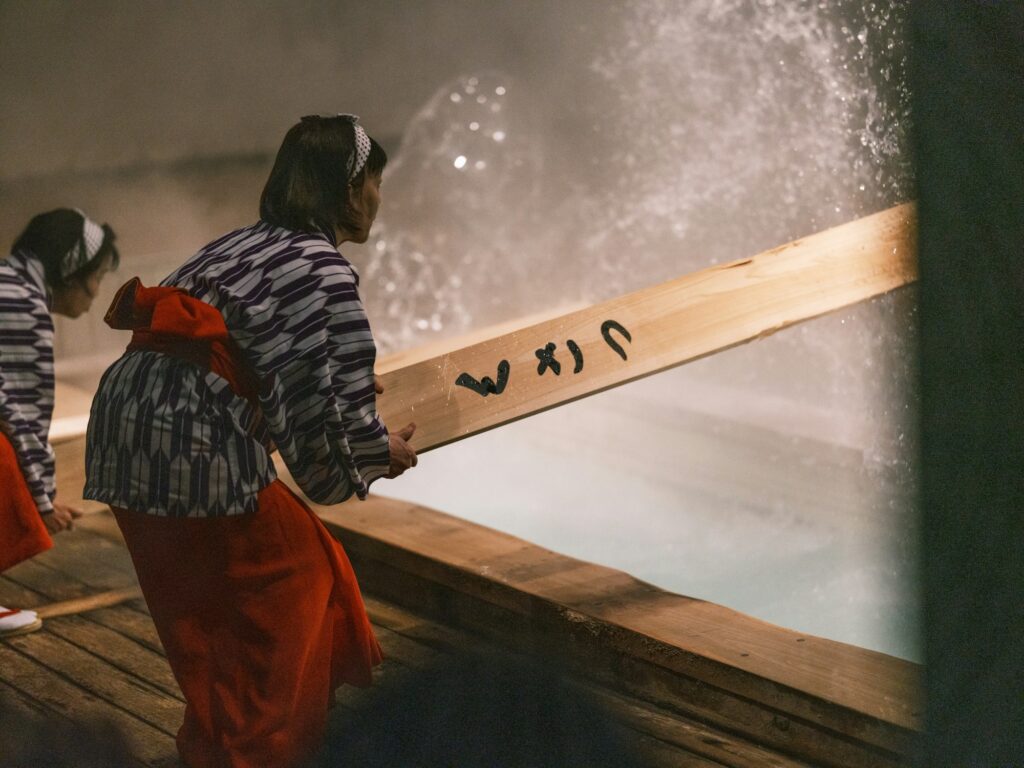
Right beside the Yubatake, the wooden Netsunoyu hall hosts Kusatsu’s famous yumomi show. Because the spring water is too hot to bathe in straight from the source, locals traditionally cooled it by stirring it with long wooden boards rather than diluting it with cold water, which would weaken its effects. In the show, women in traditional dress sing a Kusatsu folk song while rhythmically paddling the water, and visitors are invited to try a few strokes themselves. Shows last about 30 minutes and are held six times a day, at 9:30, 10:00 and 10:30 in the morning and 15:30, 16:00 and 16:30 in the afternoon. Tickets cost 700 yen. Seats fill up on weekends and holidays, so buy tickets early in the day, and note that the hall occasionally closes for maintenance. It is one of the most memorable cultural experiences in Gunma and great for families.
3. Sainokawara Park and Kosenji Temple
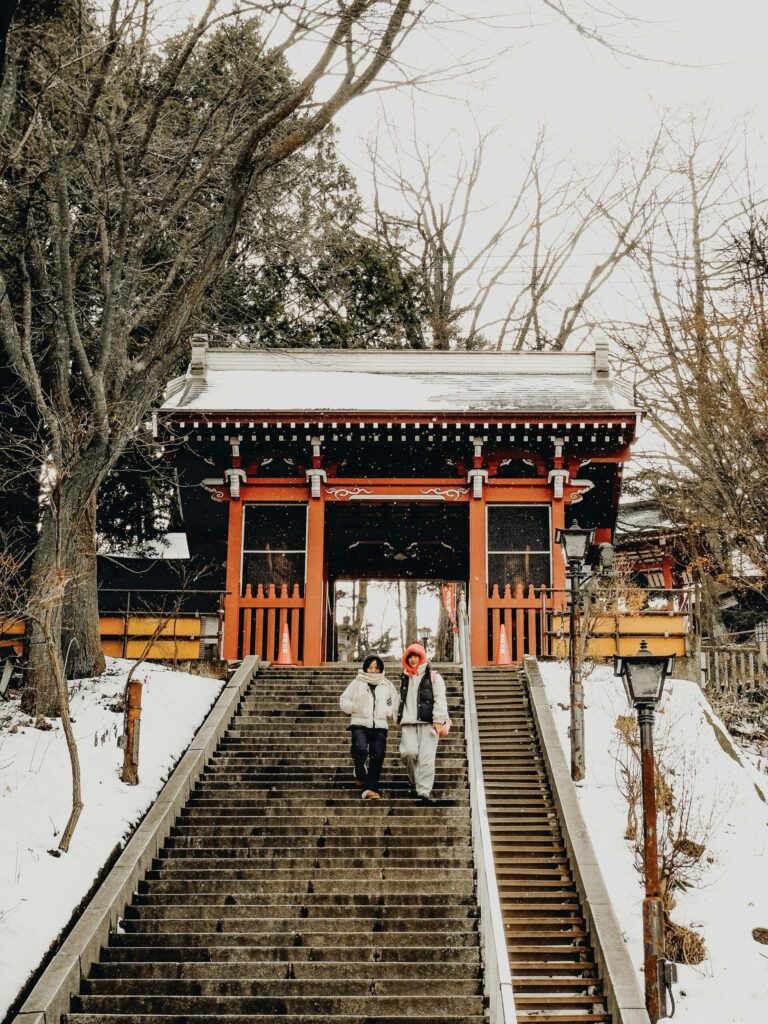
A walk of about 10 minutes west of the Yubatake leads to Sainokawara Park, a valley of rocks and pools where hot water bubbles up from the ground and flows down warm streams. At the top of the park is the Sainokawara Rotenburo, one of the largest open-air baths in Kusatsu, with separate pools for men and women set among trees. Admission is 800 yen; it opens 7:00 to 20:00 (9:00 to 20:00 from December to March), with last entry 30 minutes before closing. Bathing here in falling snow is unforgettable. On the way back, climb the stone steps of Kosenji, the temple that overlooks the Yubatake, for a different angle on the steaming field below. The streets between the park and the Yubatake are lined with shops selling onsen manju buns and onsen tamago, eggs slowly cooked in hot spring water.
Where to Stay Near Kusatsu Onsen
 Where to stay: Kusatsu Onsen
Hotel links in this section go to Booking.com. If you book through them, we may earn a commission at no extra cost to you.
Stay within walking distance of the Yubatake so you can wander out to the baths and the night illuminations. Kusatsu has everything from traditional ryokan with hot spring baths and multi-course dinners to small guesthouses, and staying overnight lets you enjoy the town after the day-trippers leave. Weekends, holidays and the winter ski season book up early.
Luxury
Tokinoniwa is one of Kusatsu’s upscale stays, a good choice for a special night with private relaxation and hot spring bathing.
Upscale hot spring stay in Kusatsu.
Mid-Range
KAMENOI HOTEL Kusatsu Yubatake is a hot spring hotel close to the Yubatake, convenient for evening strolls to the illuminations and the yumomi shows.
KAMENOI HOTEL Kusatsu Yubatake
Hot spring hotel near the Yubatake.
Budget-Friendly
Kusatsu Onsen Guesthouse Gyoten is a small guesthouse with simple rooms at budget-friendly prices, leaving more for bath hopping.
Kusatsu Onsen Guesthouse Gyoten
Small, budget-friendly guesthouse.
Compare prices before you book
Hotels in Kusatsu Onsen on Booking.com
Compare ryokan, hotels and guesthouses around the Yubatake.
Check Kusatsu Onsen hotel prices →
Affiliate link — if you book through Booking.com, we may earn a commission at no extra cost to you.
Quick Tips for Visiting
- Kusatsu has free public baths such as Shirohata-no-yu (8:00 to 23:00) and Jizo-no-yu (8:00 to 22:00); they are small baths used by locals, so wash first and keep quiet.
- The water is strongly acidic: remove silver jewelry before bathing and rinse off if your skin is sensitive.
- Limited express seats from Ueno and highway bus seats sell out on weekends, so reserve ahead.
- Bring warm clothes in winter; Kusatsu sits high in the mountains and gets heavy snow.
- Buy yumomi show tickets early in the day on weekends.
Getting there by train: From Ueno Station in Tokyo, the limited express Kusatsu-Shima reaches Naganohara-Kusatsuguchi in about two and a half hours (only a few departures a day, all seats reserved), and a JR bus takes about 25 minutes from there to Kusatsu Onsen. Alternatively, the JR Bus Kanto highway bus from Tokyo Station and Busta Shinjuku takes about four hours; JR passes do not cover it. Read our guide to riding trains in Japan, learn how to ride the Shinkansen, and check whether the JR Pass is worth it for your route.
Frequently Asked Questions
What is the Yubatake in Kusatsu?
It is the hot spring source in the center of Kusatsu, where hot water flows through wooden channels to cool before being piped to inns and baths. Viewing is free, and it is lit up at night.
What time is the yumomi show at Netsunoyu?
Shows run at 9:30, 10:00, 10:30, 15:30, 16:00 and 16:30, last about 30 minutes, and cost 700 yen.
Can you bathe for free in Kusatsu Onsen?
Yes. Public baths such as Shirohata-no-yu and Jizo-no-yu are free. Larger baths such as Sainokawara Rotenburo charge admission (800 yen).
How do you get to Kusatsu Onsen from Tokyo?
Take the limited express Kusatsu-Shima from Ueno to Naganohara-Kusatsuguchi and a JR bus to Kusatsu, or a direct highway bus from Tokyo Station or Shinjuku (about four hours).