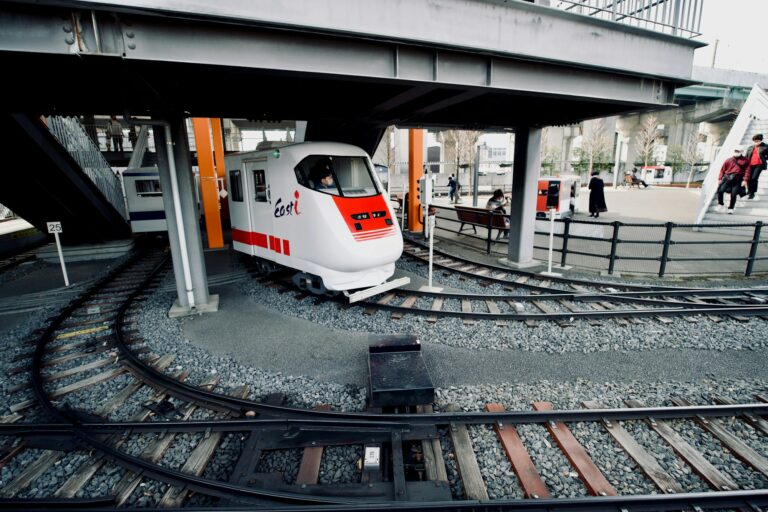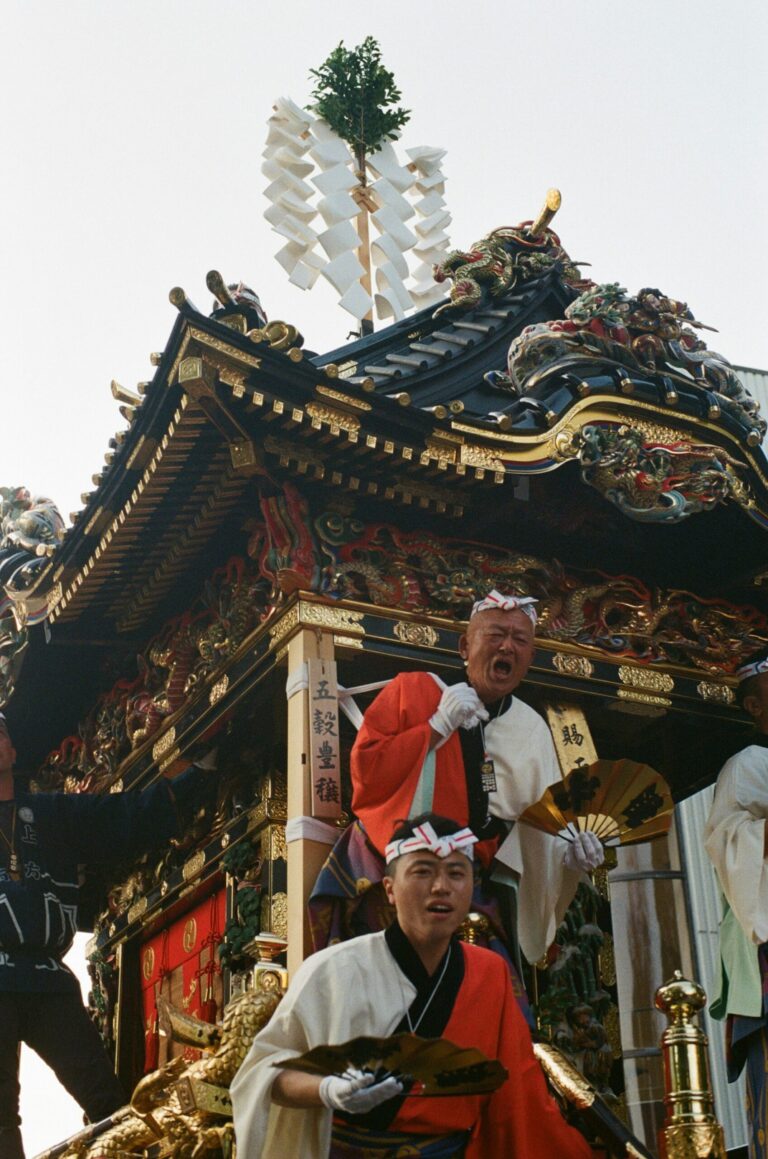
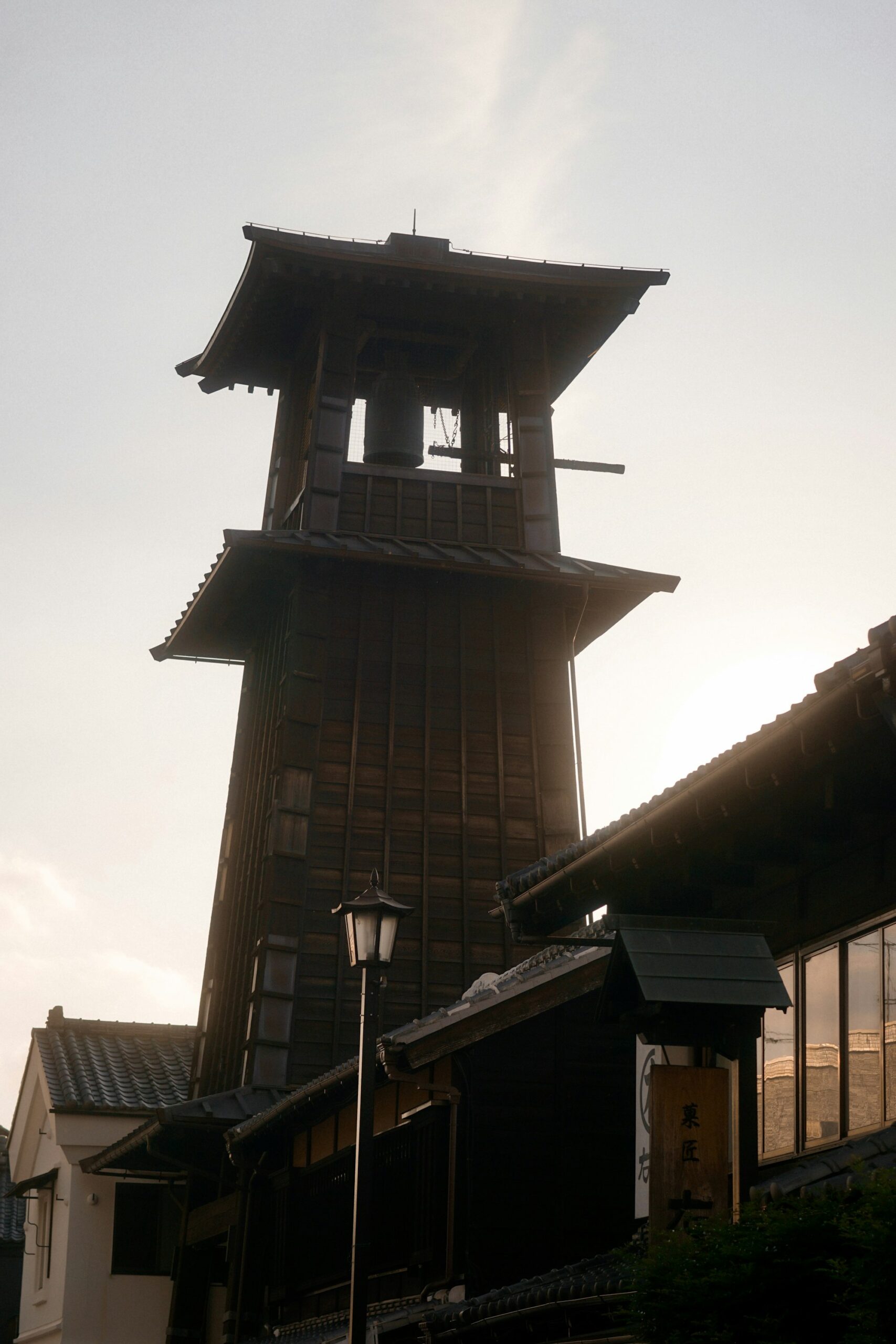
A Kawagoe day trip is the easiest way to see an Edo-period merchant town from Tokyo. Nicknamed “Little Edo,” Kawagoe in Saitama Prefecture is only about 30 minutes from Ikebukuro by express train, yet its main street is still lined with heavy, clay-walled warehouse stores, an old wooden bell tower still rings over the rooftops, and a love-themed shrine draws crowds with glass wind chimes every summer. This guide covers Kawagoe’s three must-see sights, practical tips for getting around, and where to stay if you want to enjoy the old town after the day-trippers leave.
1. Toki no Kane (Bell of Time)
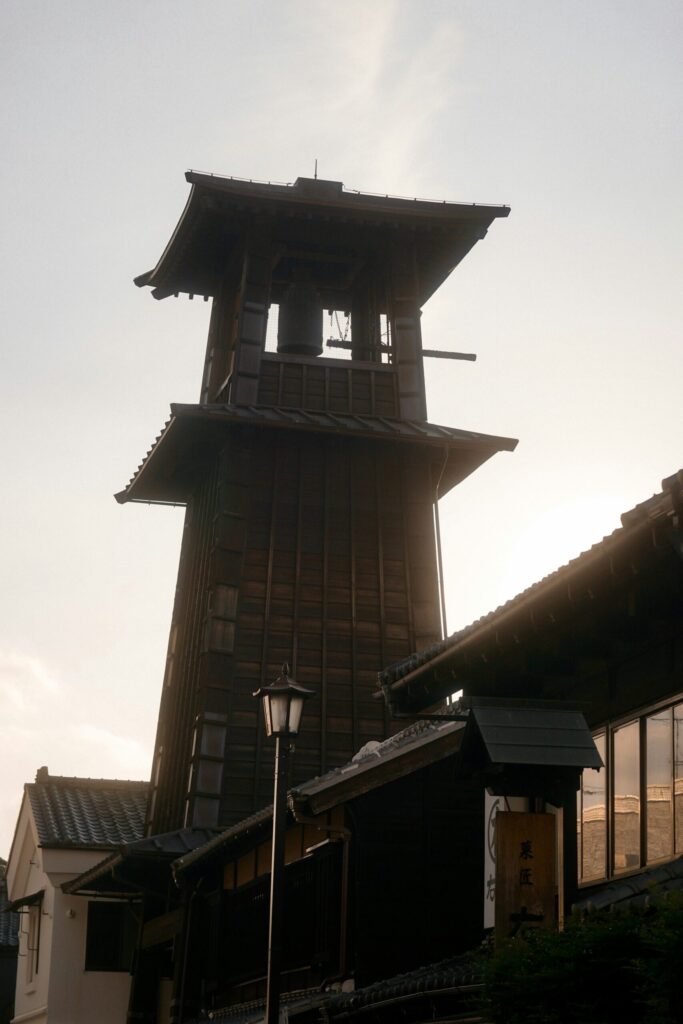
Toki no Kane, the “Bell of Time,” is the symbol of Kawagoe: a three-story wooden tower about 16 meters tall that rises just off the main warehouse street. The first tower was built in the 1620s and 1630s under the local lord Sakai Tadakatsu to tell townspeople the time, and the current one was rebuilt in 1894 after the Great Fire of Kawagoe destroyed much of the town the year before. The bell still rings four times a day, at 6:00, 12:00, 15:00 and 18:00, and its sound was chosen as one of the “100 Soundscapes of Japan” in 1996. Try to be nearby at noon or 3 p.m. to hear it. The tower itself is not open to climb, but the little lane beneath it leads to a small shrine and several cafés, and it is one of the best photo spots in town, especially in the softer light of late afternoon.
2. Kurazukuri Warehouse Street & Kashiya Yokocho
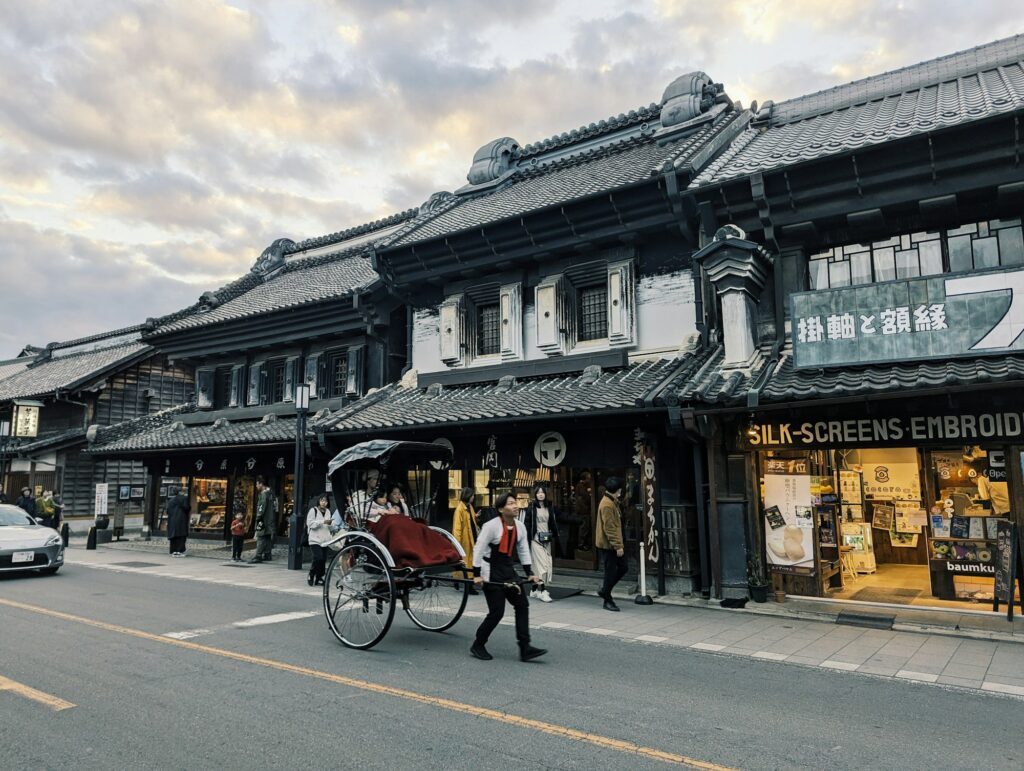
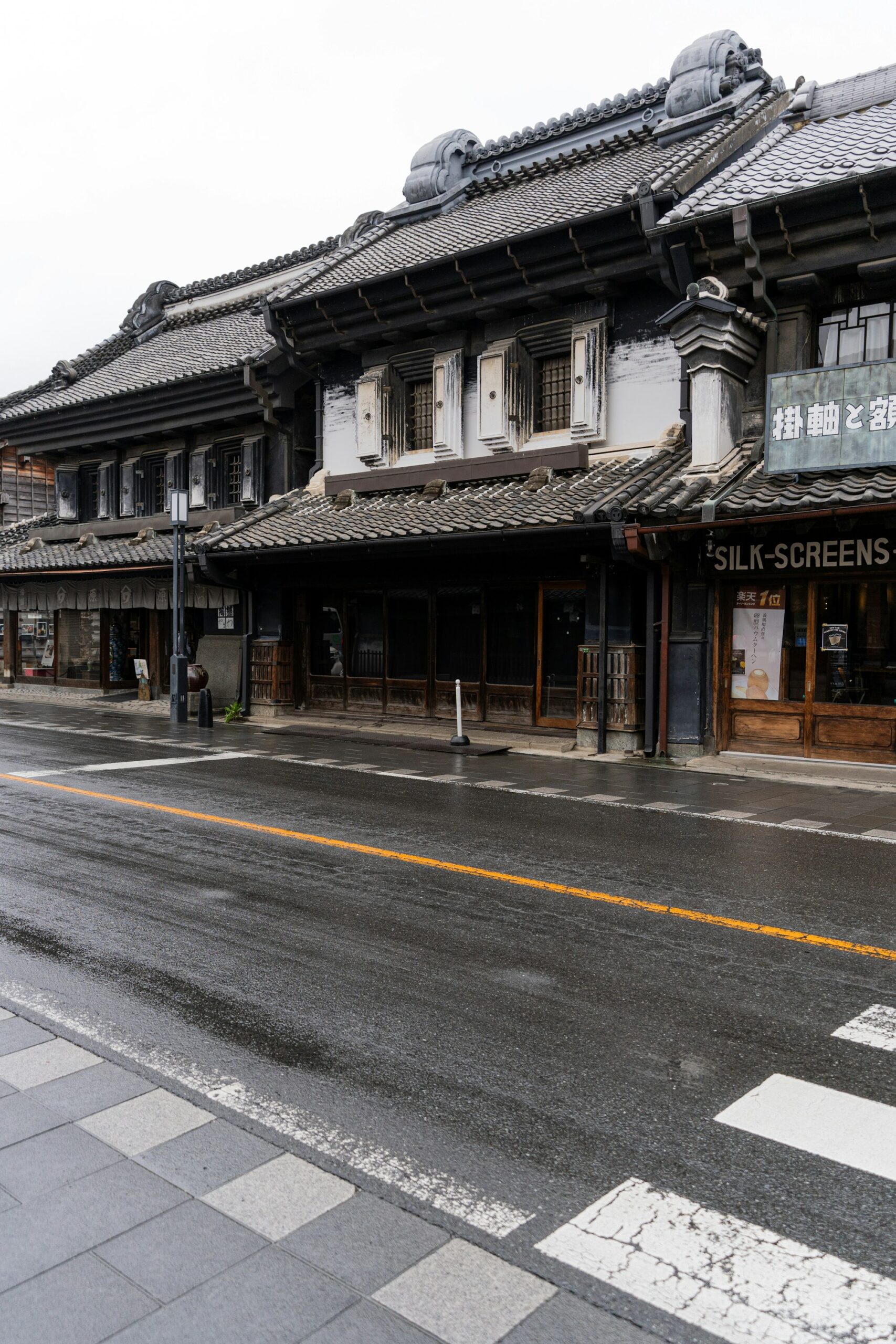
Ichibangai, the main street of the Kurazukuri district, is why most people come to Kawagoe. After the 1893 fire, merchants rebuilt their shops in the fire-resistant kurazukuri style, with thick earthen walls, heavy black-tiled roofs and massive doors, and dozens of these buildings still stand along a few blocks. Today they house sweet shops, pickle stores, craft shops and cafés, and rickshaw drivers offer rides past the facades. A short walk north, Kashiya Yokocho, or Candy Alley, is a narrow lane of old-fashioned sweet shops. It once had more than 70 shops; just over 20 remain, selling hard candies, sweet potato snacks and dagashi treats. Most shops open around 10:00 to 17:00, and many close on Monday or Wednesday. Kawagoe is famous for sweet potatoes, so try a sweet potato snack or soft-serve as you walk, and be ready for big crowds on weekends.
3. Kawagoe Hikawa Shrine
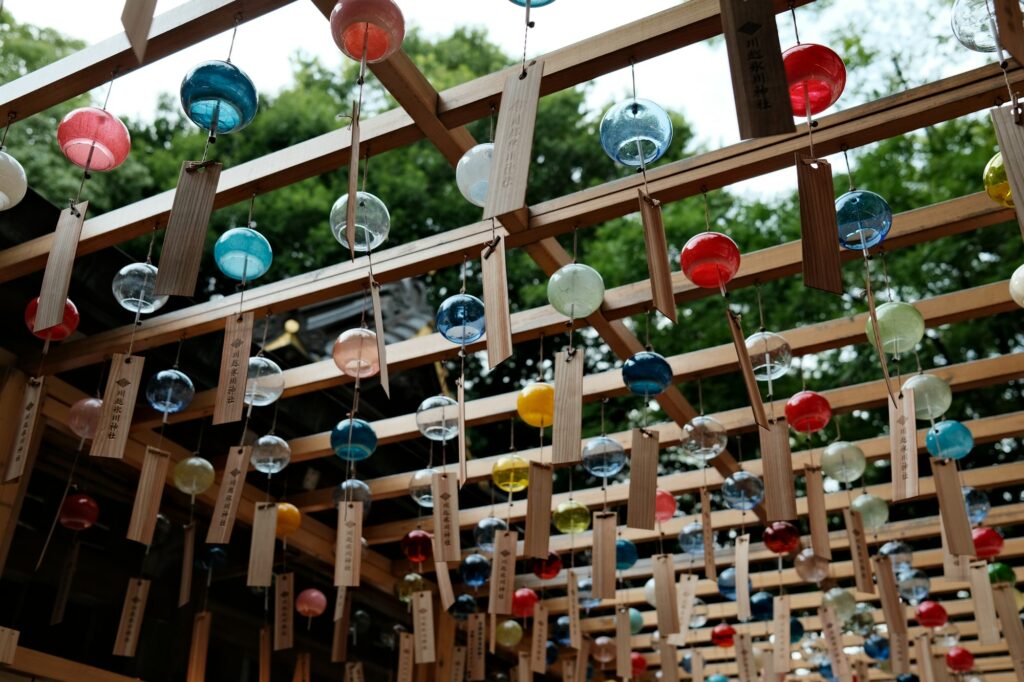
Kawagoe Hikawa Shrine is said to date back to the year 541 and is beloved as a shrine for enmusubi, or good relationships and love. Couples and friends come to pray for luck in love, and the shrine is known for its fortune slips shaped like red sea bream that you “fish” out with a small rod. Its most famous event is the summer wind chime festival: in 2026 it ran from June 27 to September 6, with about 2,000 Edo-style glass wind chimes hung in a long corridor that tinkles in the breeze and glows at night. Even outside the festival, the shrine has a beautiful approach, a large torii gate and a quiet stream where visitors float paper wishes. It is about a 35-minute walk from Kawagoe Station, so most visitors take the Koedo Loop Bus or a local bus, or walk over from the warehouse street in about 15 minutes.
Where to Stay Near Kawagoe
 Where to stay: Kawagoe
Hotel links in this section go to Orbitz. If you book through them, we may earn a commission at no extra cost to you.
Most visitors see Kawagoe as a day trip from Tokyo, but staying overnight lets you walk the warehouse street in the quiet early morning and evening. The main hotels cluster around Kawagoe Station and Hon-Kawagoe Station, both about 15 to 20 minutes on foot from the old town, while a handful of traditional inns sit closer to the historic streets.
Luxury
Kawagoe Tobu Hotel is Kawagoe’s top-rated full-service hotel, about three minutes from Kawagoe Station with easy train access back to Tokyo.
Polished, highly rated hotel steps from Kawagoe Station.
Mid-Range
Ryokan Matsumuraya is a small Japanese inn on Taisho Roman Street, about a minute from the warehouse district, for a more traditional stay. Kawagoe Prince Hotel is a comfortable alternative beside Hon-Kawagoe Station.
Traditional ryokan a minute from the warehouse street.
Reliable hotel next to the Seibu line station.
Budget-Friendly
Super Hotel Saitama Kawagoe is a simple, good-value business hotel with easy access to the station and the bus to the old town.
Simple, good-value rooms for an overnight stay.
Compare prices before you book
Hotels in Kawagoe on Orbitz
Compare hotels and traditional inns in Kawagoe.
Affiliate link — if you book through Orbitz, we may earn a commission at no extra cost to you.
Quick Tips for Visiting
- Go on a weekday if you can; the warehouse street is very crowded on weekends and holidays.
- The Tobu Koedo Loop Bus circles the main sights, and a one-day pass costs 400 yen.
- Tobu sells the KAWAGOE DISCOUNT PASS Premium (1,200 yen for adults) with a discounted round trip from Ikebukuro, local bus rides and shop discounts.
- Many Candy Alley shops close on Monday or Wednesday, so check before you go if sweets are your priority.
- Nearby Kitain Temple has more than 500 stone rakan statues and rooms moved from Edo Castle; admission to the buildings is about 400 yen.
Getting there by train: From Ikebukuro, the Tobu Tojo Line express reaches Kawagoe Station in about 30 minutes for 490 yen. From Seibu-Shinjuku, the Seibu Shinjuku Line runs to Hon-Kawagoe, and JR Pass holders can take the JR Saikyo and Kawagoe lines from Shinjuku in about an hour. Read our guide to riding trains in Japan, see how to get from Narita or Haneda into Tokyo, and check whether the JR Pass is worth it for your trip.
Frequently Asked Questions
How long does it take to get to Kawagoe from Tokyo?
The Tobu Tojo Line express from Ikebukuro takes about 30 minutes. From Shinjuku, the Seibu line or JR line takes about 45 to 60 minutes.
Is Kawagoe worth a day trip?
Yes. It is one of the closest places to Tokyo with a well-preserved Edo-style townscape, and its main sights can be seen in half a day to a full day.
When does the Toki no Kane bell ring?
The bell rings four times a day, at 6:00, 12:00, 15:00 and 18:00.
When is the Kawagoe Hikawa Shrine wind chime festival?
It is held every summer, usually from late June to early September. In 2026 it ran from June 27 to September 6.