Last checked: October 2026 · Our complete guide to trains in Japan
Japan’s trains are famously punctual, clean and safe, and they are the best way to get around for most visitors. They can also look overwhelming at first: several companies, color-coded lines, signs in two scripts, and gates that snap shut if your card is empty. This guide covers how the network works, how to pay, how to read the stations, and the etiquette locals expect, with links to our detailed guides on passes, Suica, the Shinkansen and airport transfers.
- Get an IC card (Suica, PASMO or ICOCA, or Suica on your iPhone) and tap through the gates. It works on almost every city train, subway and bus.
- Use Google Maps or a transit app for routes. They show the line color, platform number and which car to ride.
- JR, subways and private railways are different companies, but IC cards work across all of them.
- For long distances, take the Shinkansen. Book online with a US card. The JR Pass only pays off for long, multi-city trips.
- Etiquette: queue at the floor markings, keep phone calls off, keep your voice low and backpacks off your back in crowded cars.
Find a train station near you
The map shows an example area. Tap a button to open Google Maps in English with the stations and ticket offices closest to you right now.
How Japan’s rail network works
Japan Railways
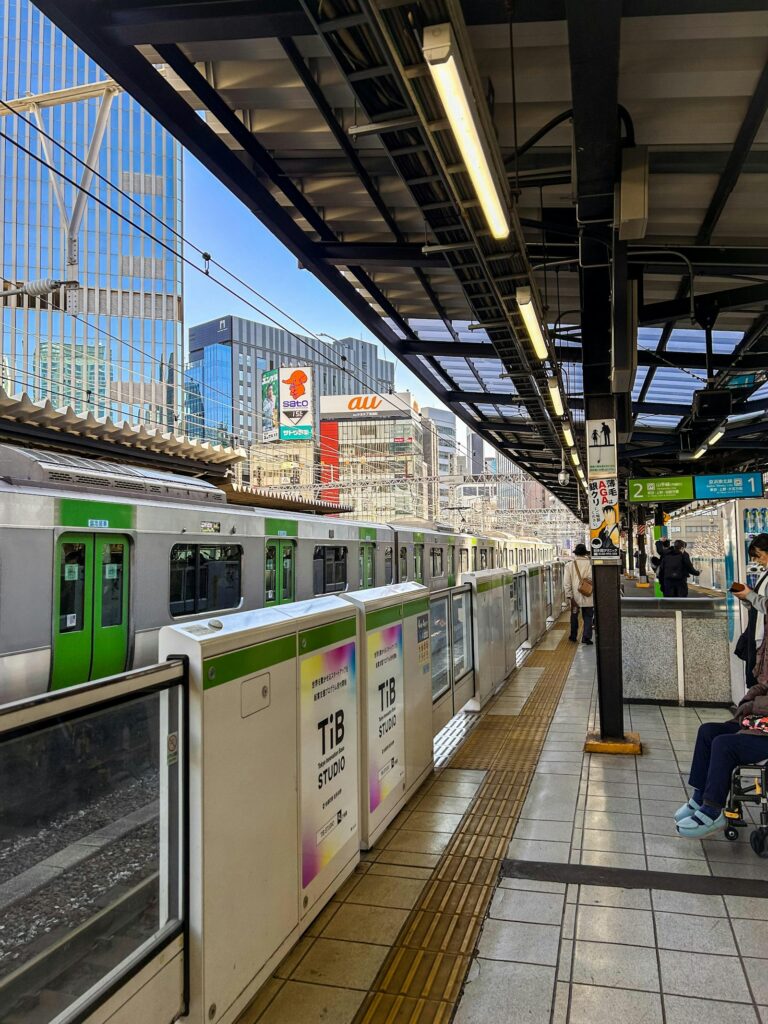
Six regional companies run the Shinkansen and many city lines, including Tokyo’s loop Yamanote Line. Covered by the JR Pass.
Metro lines
Tokyo Metro and Toei in Tokyo, Osaka Metro, Kyoto Municipal Subway and others. Each line has a color and letter (e.g. G for Ginza Line).
Shitetsu
Companies like Keisei, Keikyu, Odakyu, Hankyu and Kintetsu link cities and suburbs. Many sell scenic limited-express seats.
Shinkansen
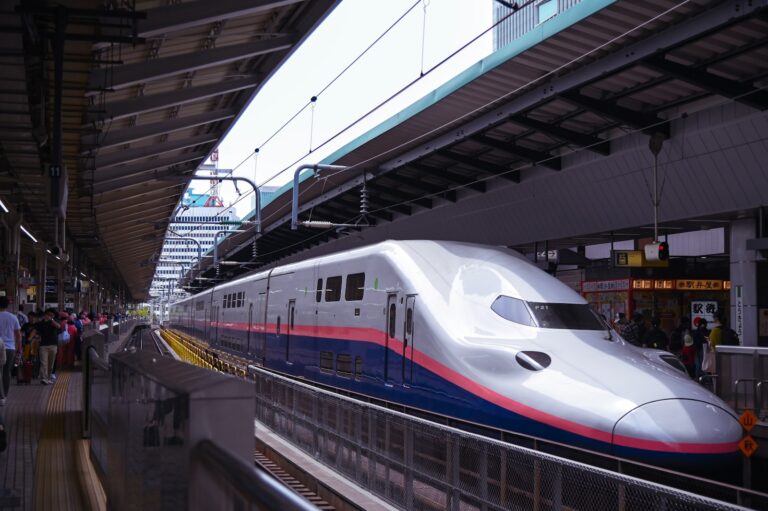
High-speed lines from Kagoshima to Hokkaido. Separate gates inside major stations and separate tickets.
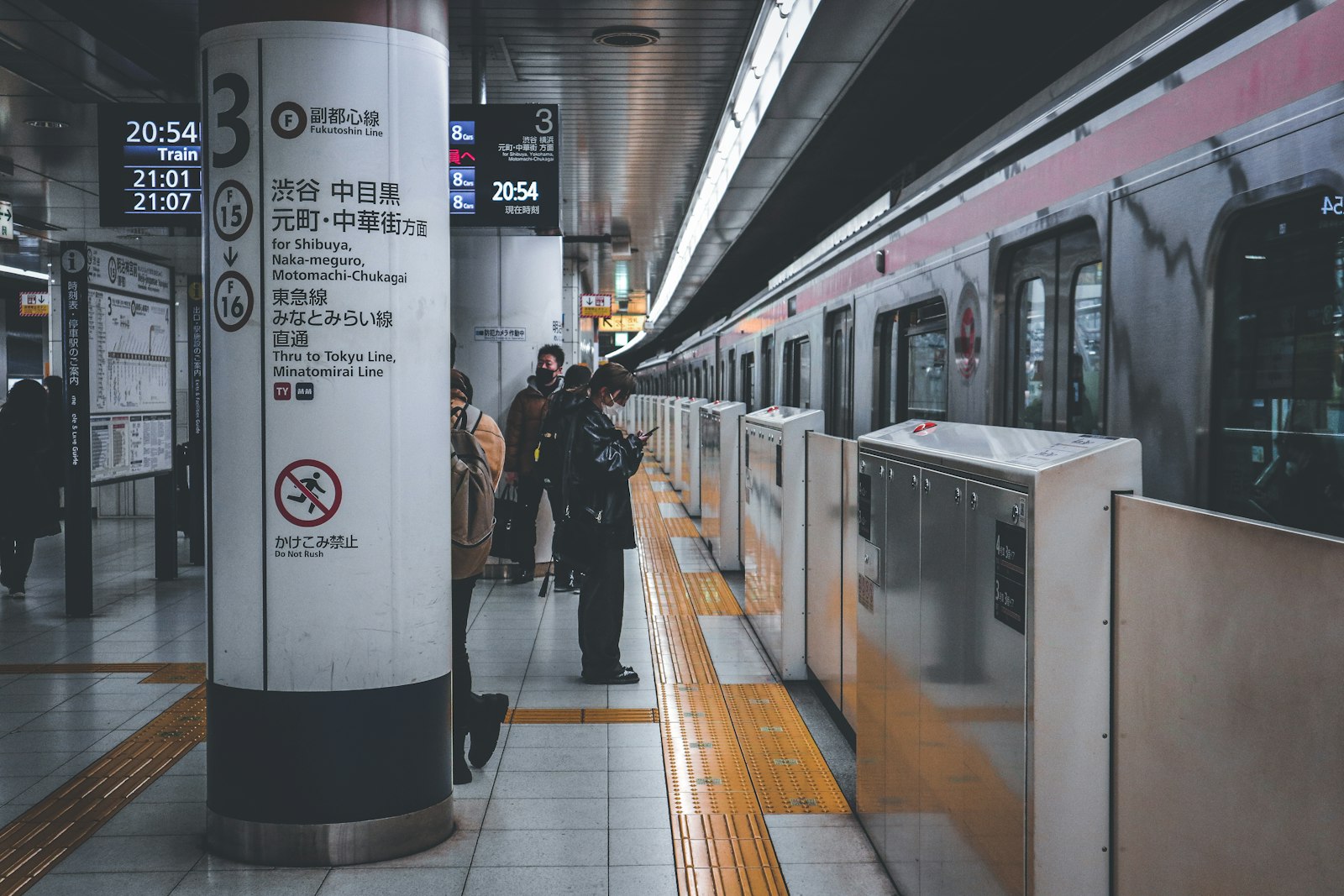
Station numbers make things easy. A sign like JY 01 means the JR Yamanote Line, station 1 (Tokyo). Subway stations work the same way, and transit apps use these codes.
Paying for trains: IC card, ticket or pass?
| Method | Best for | Notes |
|---|---|---|
| IC card (Suica, PASMO, ICOCA) | Everyday city travel | Tap in, tap out. Works on JR, subways, private lines and buses in all major cities. |
| Paper ticket | One-off rides, long-distance local trains | Buy from machines. Check the fare above the machines or use the English mode. |
| Subway day pass | Heavy sightseeing days in one city | E.g. Tokyo Subway Ticket (24/48/72 hours) for visitors. |
| Japan Rail Pass | Long multi-city trips | Only JR lines. Often not worth it for a single Tokyo–Kyoto round trip. |
| Shinkansen ticket | Intercity travel | Book online (smartEX, JR-EAST Train Reservation) or at machines. |
October 2026.
Read our Suica and IC card guide to set one up on your iPhone, and Is the JR Pass worth it? for the break-even math.
Inside the station: signs and gates
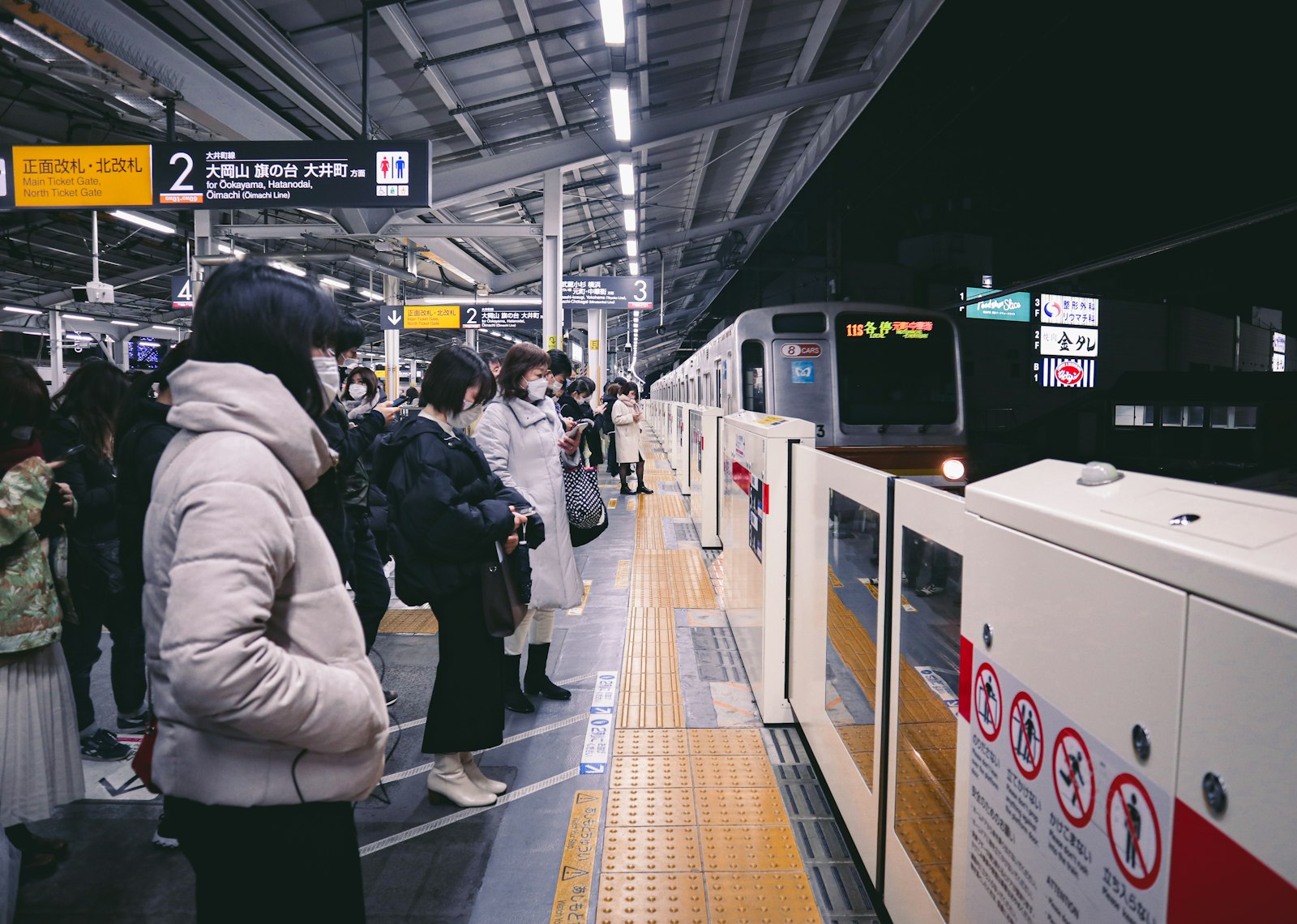
- Follow your line colorOverhead signs show the line name, color and symbol in English. Exits are yellow signs with numbers and letters (e.g. A3).
- Tap at the gateBlue IC readers are on the right side of each gate. Paper tickets go in the slot at the front and pop out at the other end.
- Check the platform numberDeparture boards switch between Japanese and English and show the train type and destination.
- Pick the right train typeLocal stops everywhere. Rapid, Express and Limited Express skip stations. Some limited expresses need an extra ticket.
- Exit with fare adjustment if neededIf the gate stops you, use the yellow fare adjustment (精算) machine to top up.
Train etiquette in Japan
- Line up at the floor markings and let passengers off before boarding.
- Set your phone to silent and avoid phone calls on the train.
- Keep conversations quiet. Trains are often almost silent.
- Wear your backpack on your front or put it on the rack when the car is crowded.
- Give priority seats to elderly passengers, pregnant women and people with disabilities.
- Eating is fine on the Shinkansen and long-distance trains, but avoid it on city trains.
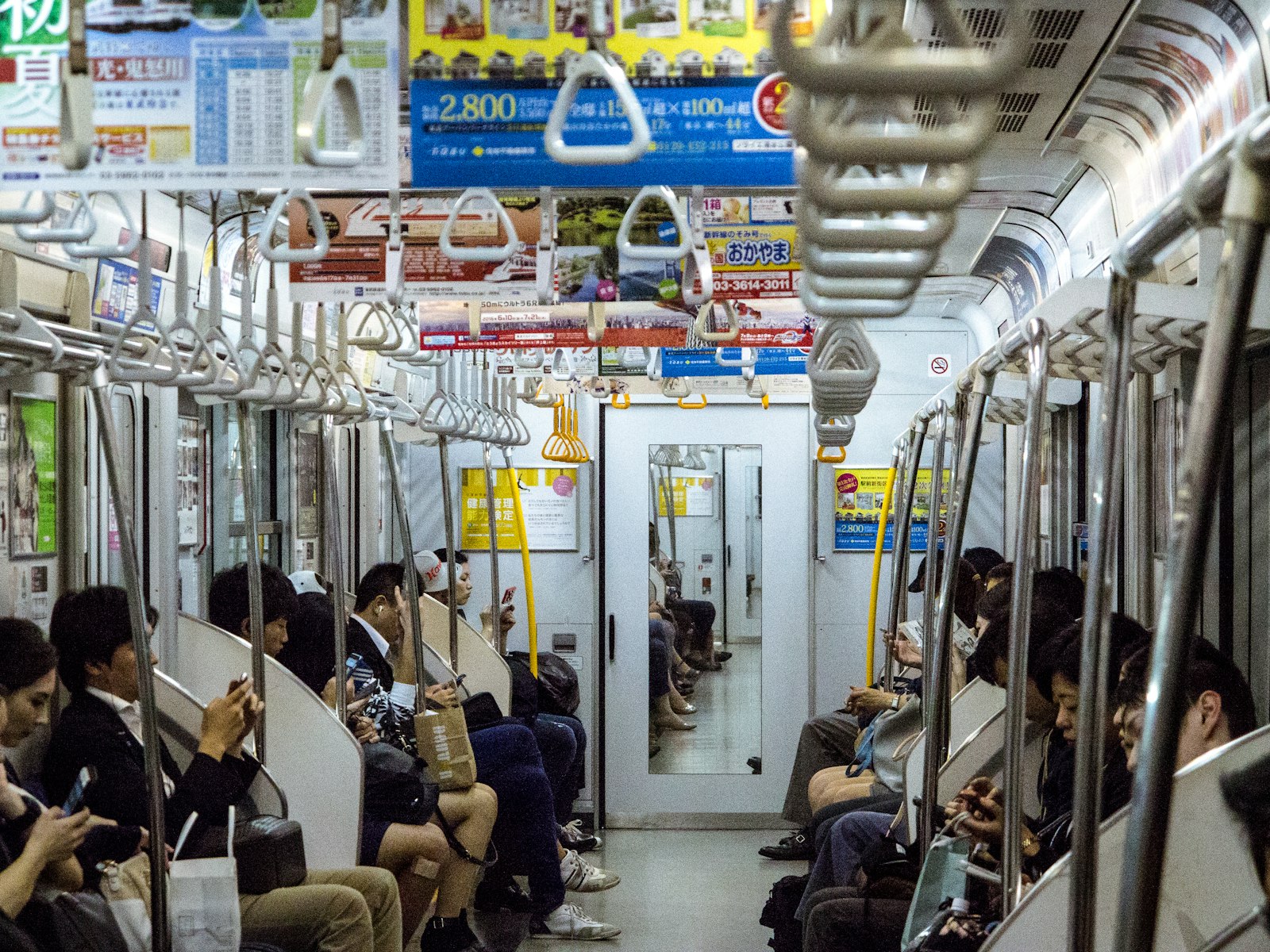
Timing: rush hour, last trains and busy seasons
Rush hour
About 7:30–9:30 am and 5:30–7:30 pm on weekdays. With luggage, travel outside these times.
Last trains
Most city lines stop between midnight and 1 am. Check the last train if you are out late.
Peak seasons
Late March–early April, Golden Week, mid-August and New Year. Reserve Shinkansen seats early.
Punctuality
Delays are rare. If one happens, staff can give you a delay certificate (遅延証明書).
Long distance: Shinkansen and airport trains
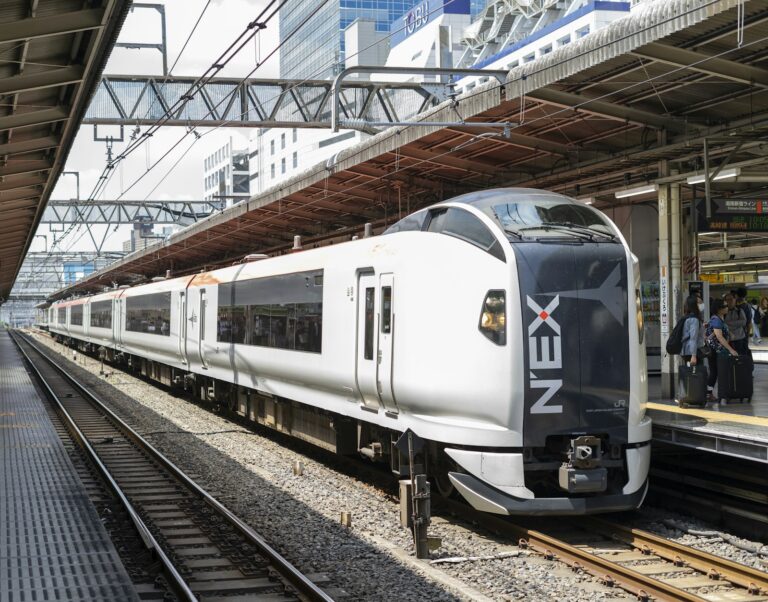
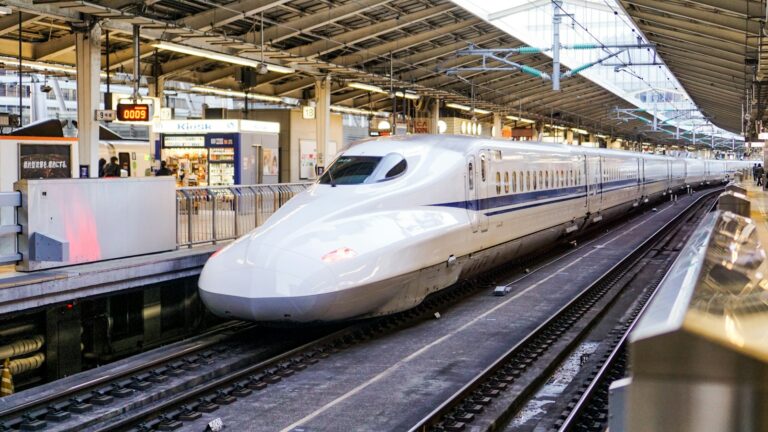
The Shinkansen links Tokyo with Kyoto and Osaka in under three hours. Our Shinkansen guide covers booking, the Mt. Fuji seat and the oversized luggage rule. Landing in Tokyo? Compare the Skyliner, Narita Express, Keikyu and Monorail in our airport-to-Tokyo guide.
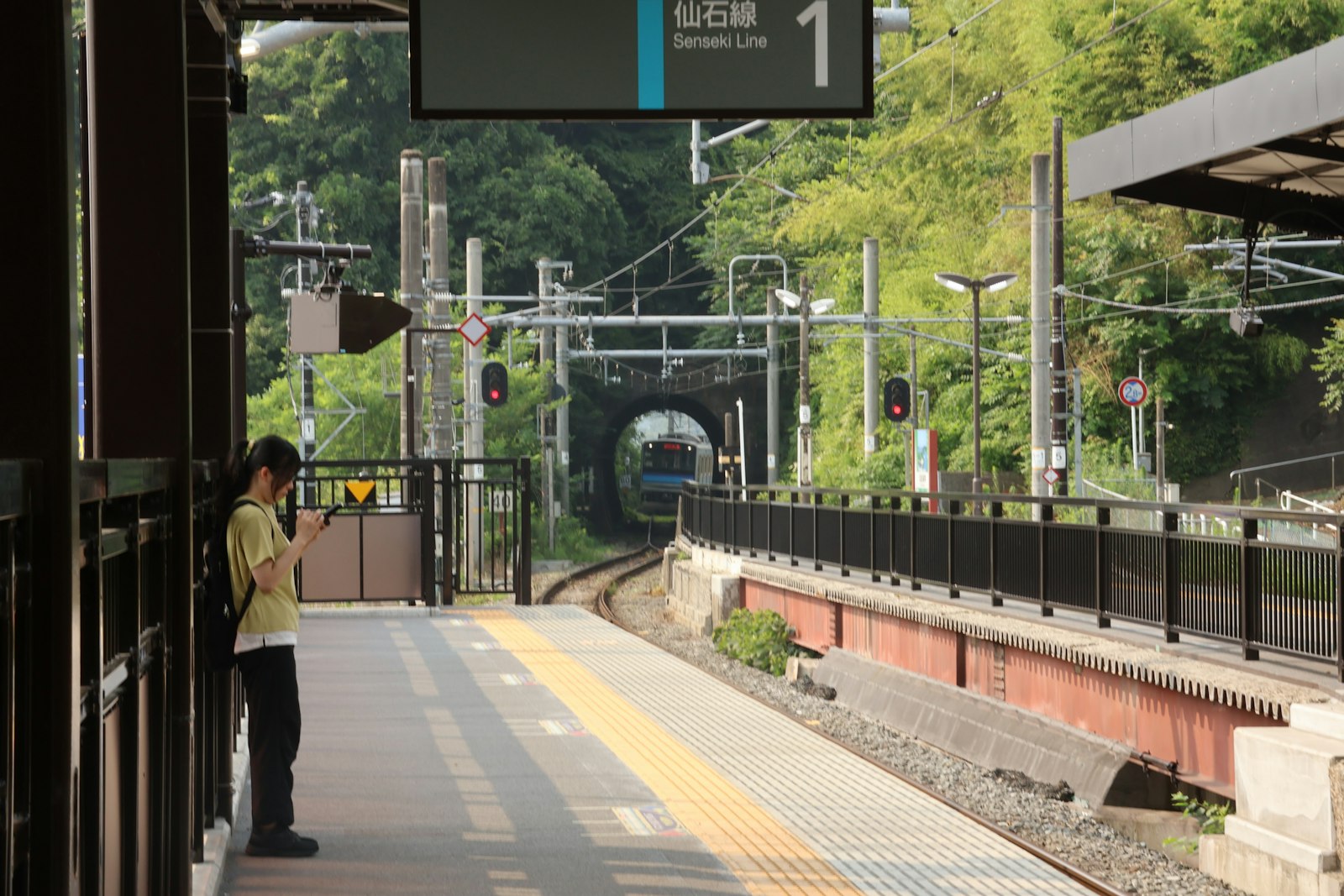
Trains don’t reach everywhere. For Hokkaido, Okinawa and the countryside, a car is often easier. See our Japan rental car guide.
Stay steps from the station
Make train days easier
Hotels next to major stations make early Shinkansen departures and luggage-heavy transfers much easier. Compare station-area hotels on Booking.com.
Hotels near Tokyo Station →Near Kyoto Station →Near Shin-Osaka →
Affiliate link — if you book through Booking.com, we may earn a commission at no extra cost to you.
FAQ
Is it easy for tourists to use trains in Japan?
Yes. Signs, announcements and ticket machines in major cities are in English, and an IC card like Suica lets you tap through gates without buying tickets. Transit apps show the line, platform and car to ride.
Do I need a Suica card in Japan?
It is not required, but it makes city travel far easier. It works on trains, subways and buses across major cities, and at convenience stores and vending machines.
What is the difference between JR and the subway?
JR (Japan Railways) and the subways are run by different companies. IC cards work on both, but the JR Pass covers only JR lines.
What time do trains stop running in Tokyo?
Most lines run their last trains between about midnight and 1 am and restart around 5 am. Check the last train on your route if you are out late.
Can you eat on trains in Japan?
Eating is normal on the Shinkansen and long-distance limited expresses. On crowded city trains and subways it is considered bad manners.