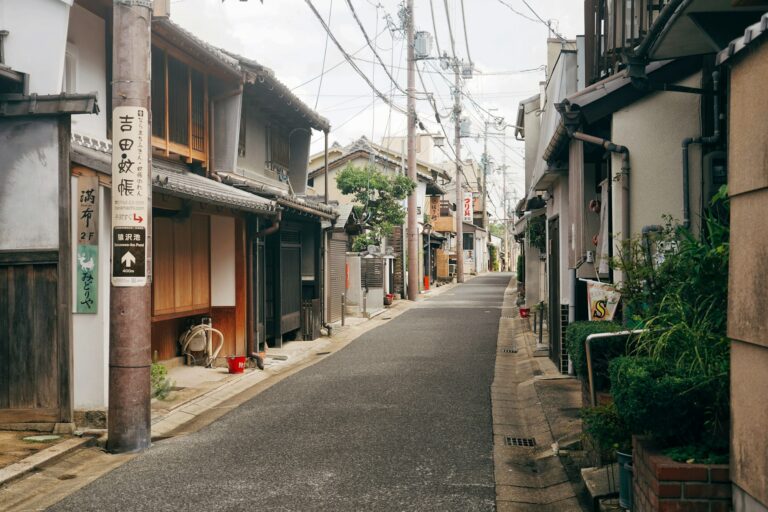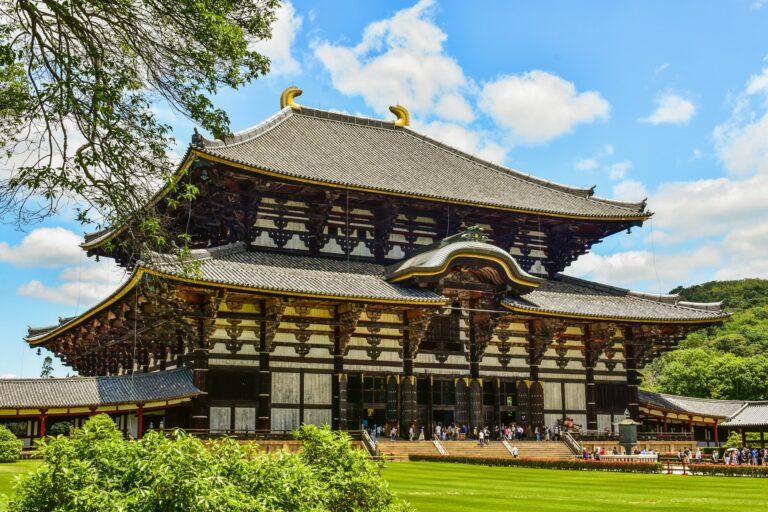
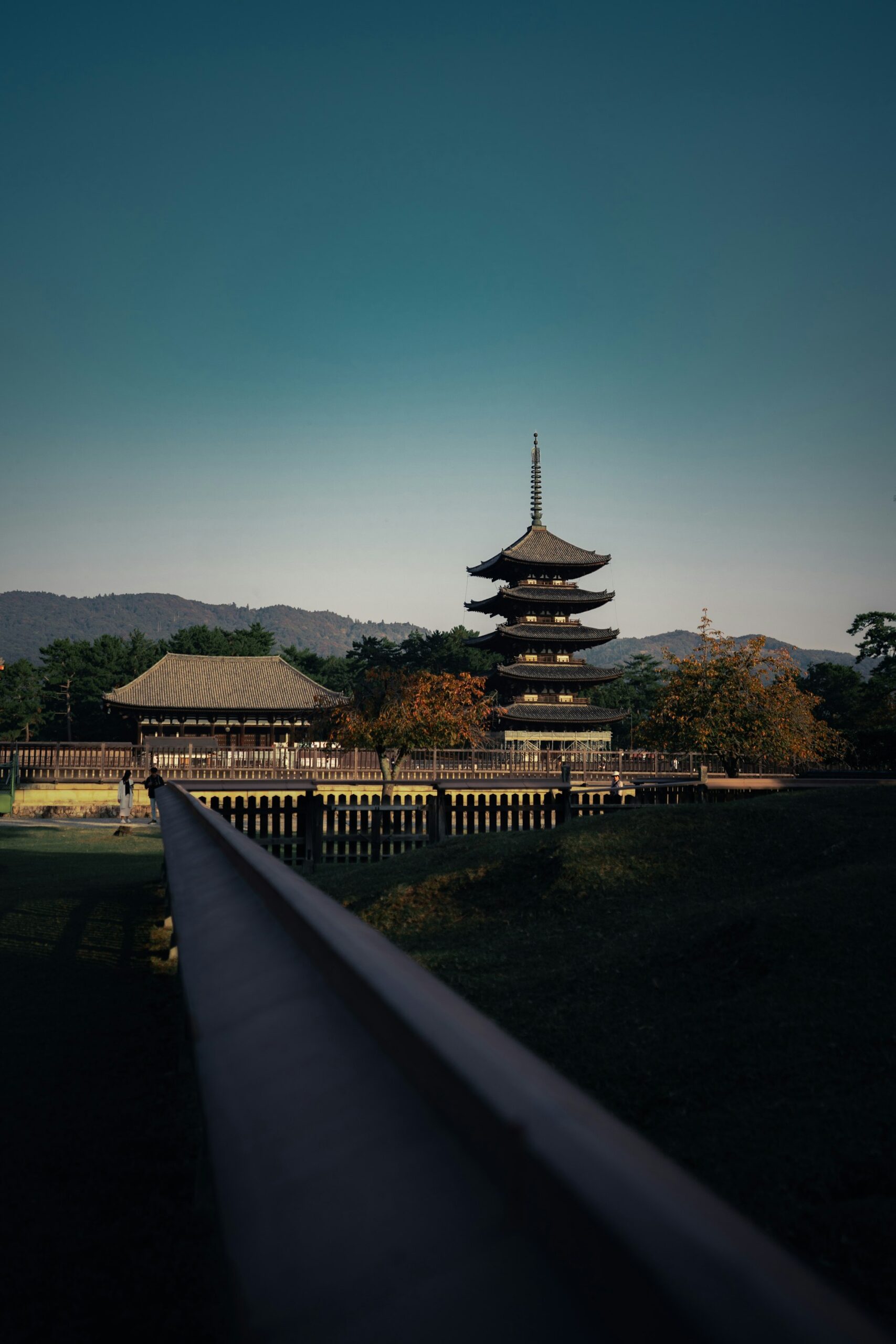
Horyu-ji, Yakushi-ji and Mount Yoshino are where Nara gets quieter and, for many travelers, even more memorable than the deer park. Most visitors never leave central Nara, yet some of Japan’s oldest and most important temples sit just a few train stops away, and the prefecture’s mountainous south holds one of the country’s most famous cherry blossom hillsides. This guide covers three easy add-ons for a second day in Nara: Horyu-ji, home to the oldest surviving wooden buildings in the world; Yakushi-ji, with its vermilion halls and pagodas in the western suburbs; and Mount Yoshino, a sacred mountain covered in tens of thousands of cherry trees.
1. Horyu-ji Temple
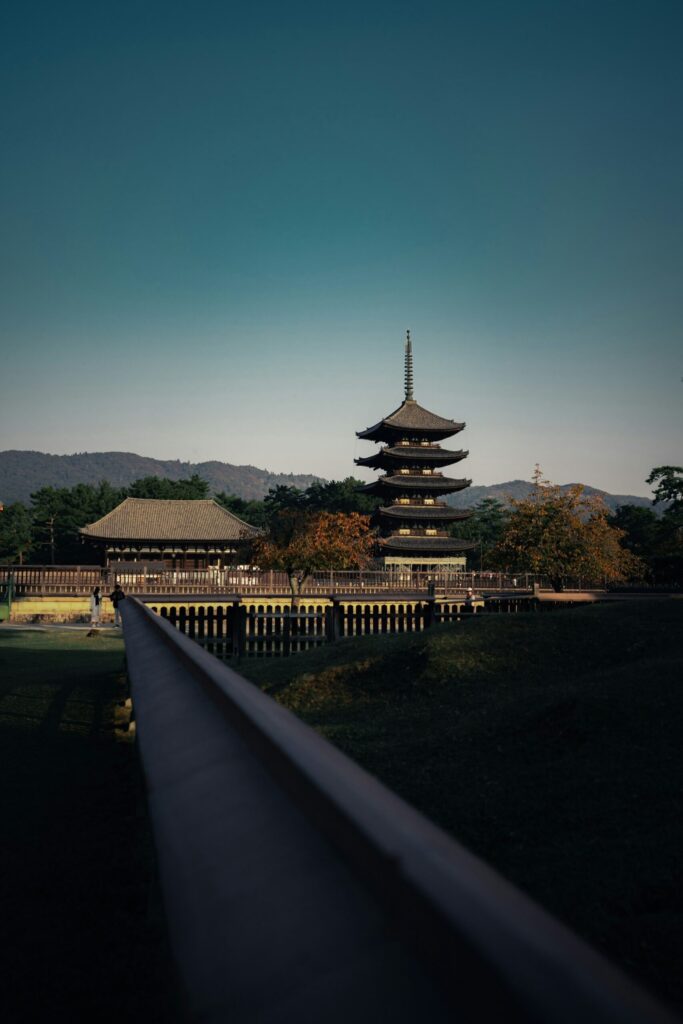
Horyu-ji was founded in 607 by Empress Suiko and Prince Shotoku, and its Golden Hall (Kondo) and Five-Story Pagoda are recognized as the oldest surviving wooden buildings in the world. In 1993 it became the first site in Japan inscribed on the UNESCO World Heritage List. The complex is split into a western precinct with the pagoda and Golden Hall, a treasure gallery packed with early Buddhist art, and an eastern precinct centered on the octagonal Yumedono (Hall of Dreams). Admission is 2,000 yen for adults and covers the main areas. The temple opens at 8:00 a.m. and closes at 5:00 p.m. (4:30 p.m. from early November to late February). From JR Horyuji Station on the JR Yamatoji Line, it is about a 20-minute walk, or take bus 72 to the Horyuji-sando stop. Allow at least two hours, because the grounds are large and the details reward a slow pace.
2. Yakushi-ji and Toshodai-ji
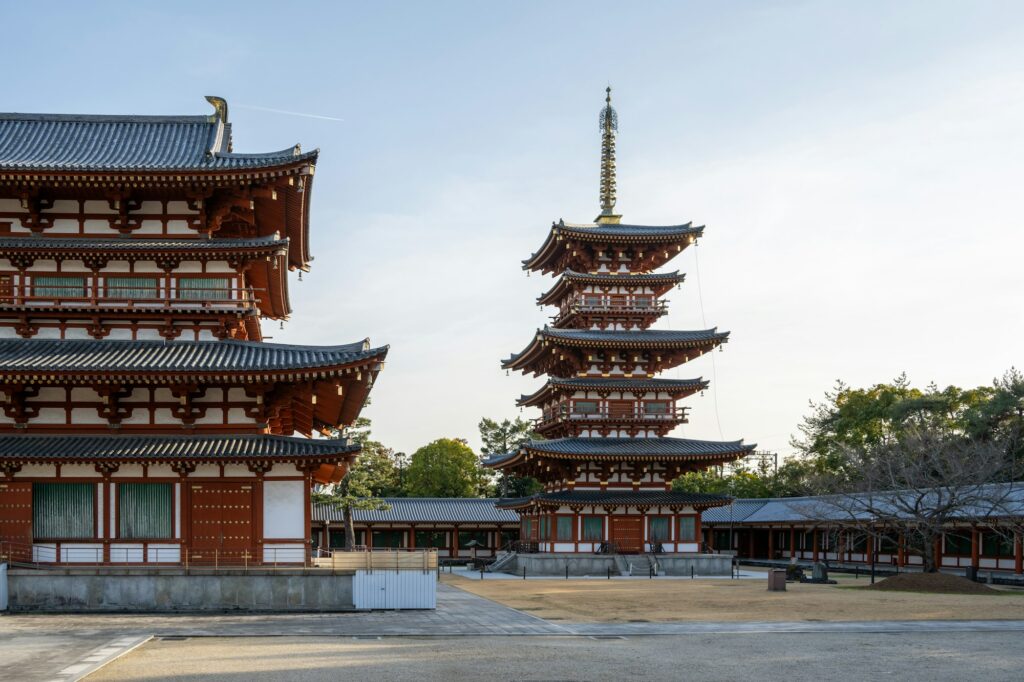
Yakushi-ji, in the Nishinokyo area west of central Nara, is one of the most photogenic temples in the prefecture, with bright vermilion halls and two pagodas facing each other across a gravel courtyard. The temple dates to the late 7th century; its East Pagoda is the only structure to survive from the Nara period, while the brightly painted halls are faithful modern reconstructions that show how the temple looked when new. Admission is 1,000 yen for adults, and the temple is open from 9:00 a.m. to 5:00 p.m. (last entry 4:30 p.m.). It is right in front of Kintetsu Nishinokyo Station, or about 18 minutes by bus from central Nara. Do not skip Toshodai-ji, a 10 to 15 minute walk north: founded by the Chinese monk Ganjin, it has a serene, unpainted Golden Hall and costs another 1,000 yen.
3. Mount Yoshino
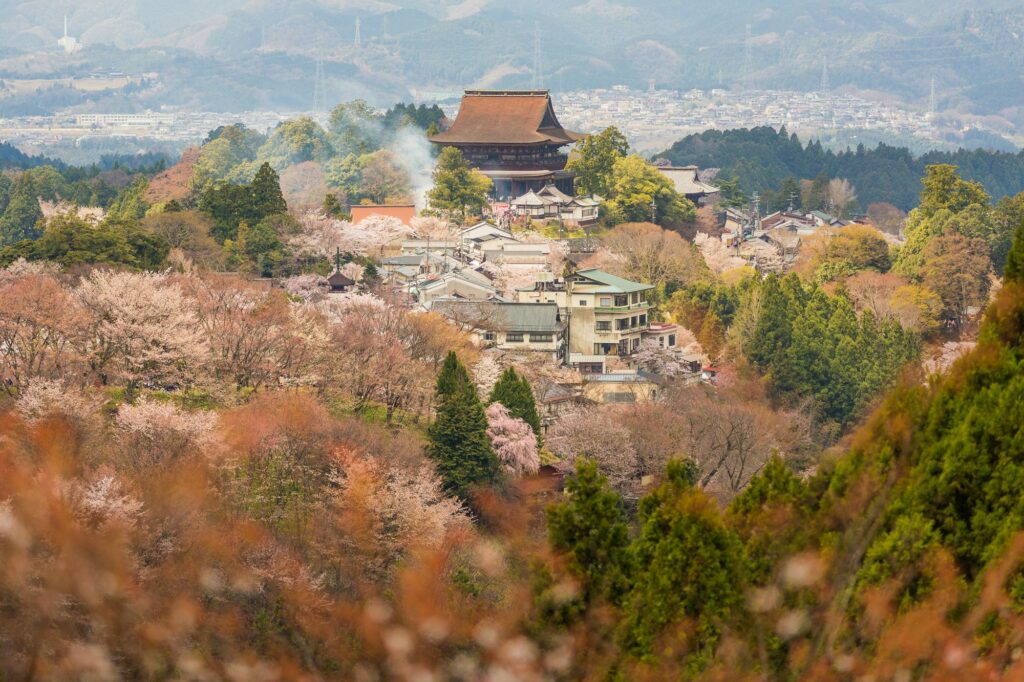
Mount Yoshino is Japan’s most celebrated cherry blossom mountain, with more than 30,000 trees spread across four zones, Shimo, Naka, Kami and Oku Senbon, that bloom in stages from the bottom of the mountain to the top. In recent years the lower slopes have peaked in early to mid April. The mountain is also a center of Shugendo mountain worship and part of the UNESCO-listed Sacred Sites and Pilgrimage Routes in the Kii Mountain Range. The main temple, Kinpusen-ji, has a 34-meter-tall Zao-do hall that is one of the largest wooden buildings in Japan; entry to the hall is 800 yen. Yoshino is reached on the Kintetsu Yoshino Line, about 75 minutes by limited express from Osaka-Abenobashi. In blossom season, book reserved seats early and arrive in the morning, because the narrow mountain road gets very crowded by midday. Outside spring, Yoshino is far quieter and makes a peaceful hiking day.
Where to Stay Near Central Nara
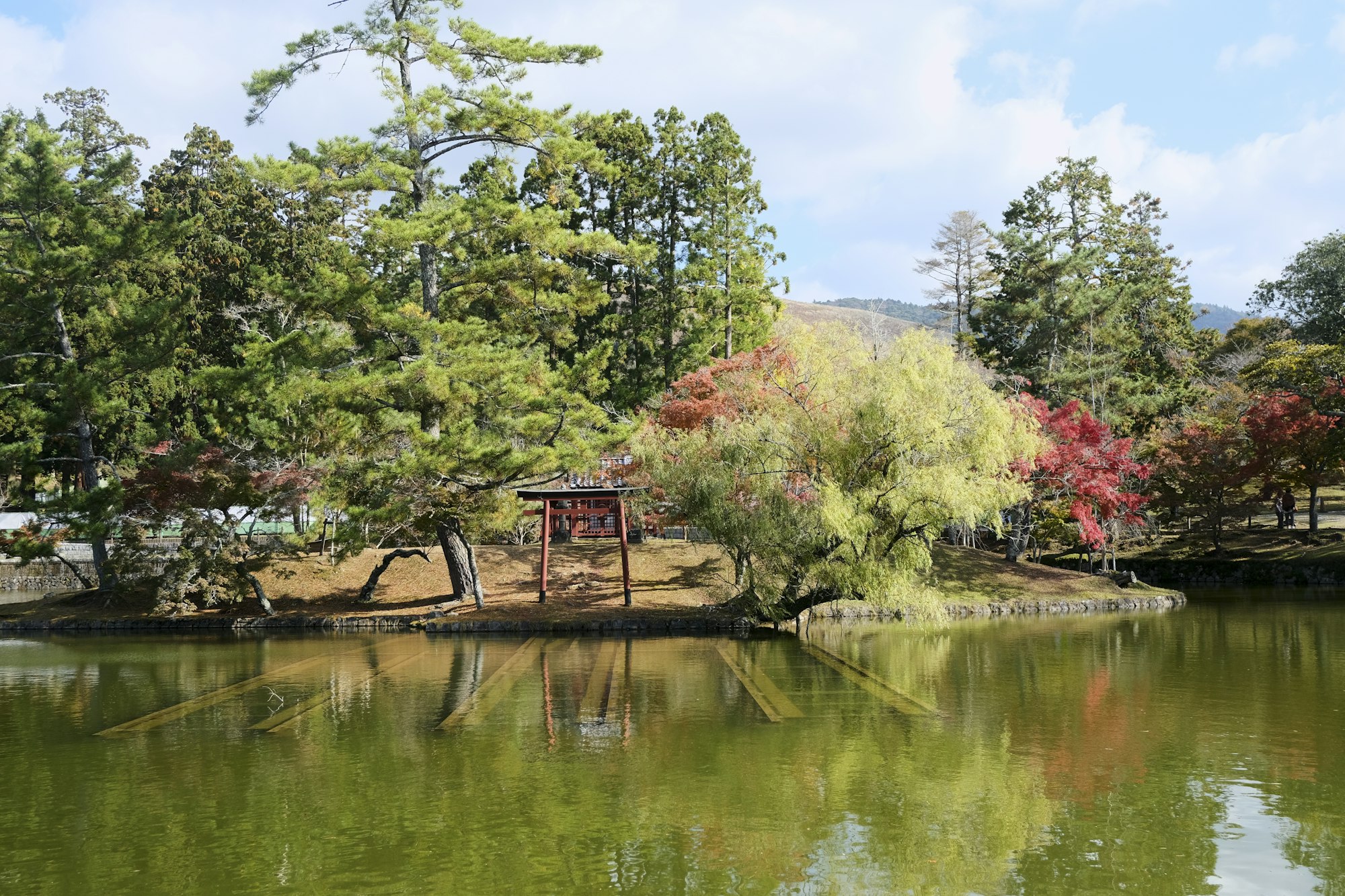 Where to stay: Central Nara
Hotel links in this section go to Orbitz. If you book through them, we may earn a commission at no extra cost to you.
For day trips to Horyu-ji, Yakushi-ji and Yoshino, stay in central Nara near JR Nara Station or Kintetsu-Nara Station. JR Nara Station puts you on the JR Yamatoji Line to Horyuji Station, while Kintetsu lines run to Nishinokyo and, with a change, toward Yoshino.
Luxury
JW Marriott Hotel Nara is the most polished upscale option near JR Nara Station, with spacious rooms, a spa and easy access to trains for day trips around the prefecture.
Upscale hotel with a spa, convenient for JR day trips.
Mid-Range
Hotel Asyl Nara is a practical mid-range hotel in central Nara, an easy walk from JR Nara Station. Another good choice is Nara Washington Hotel Plaza, a straightforward city hotel in central Nara.
Comfortable mid-range hotel, handy for JR Nara Station.
Simple, well-located city hotel in central Nara.
Budget-Friendly
SUPER HOTEL Premier JR Nara Station is a good-value business hotel right by JR Nara Station, a smart base if you plan to use the JR Pass for Horyu-ji.
SUPER HOTEL Premier JR Nara Station
Value business hotel next to the JR station.
Compare prices before you book
Hotels in Nara on Orbitz
A night or two in central Nara makes it easy to add Horyu-ji, Yakushi-ji and Yoshino to your trip without long transfers from Kyoto or Osaka.
Affiliate link — if you book through Orbitz, we may earn a commission at no extra cost to you.
Quick Tips for Visiting
- Pair Horyu-ji with Yakushi-ji and Toshodai-ji in one day, or save Mount Yoshino for its own day trip.
- Use JR for Horyu-ji (JR Horyuji Station) and Kintetsu for Nishinokyo and Yoshino; the JR Pass does not cover Kintetsu trains.
- If you are visiting in cherry blossom season, reserve Kintetsu limited express seats to Yoshino as early as possible.
- Bring cash for temple fees and buses, and allow extra time; these temples are spread out compared with central Nara.
Getting there by train: Central Nara is about 35 to 45 minutes from Kyoto and 40 to 50 minutes from Osaka. JR Nara and JR Horyuji stations are on JR lines covered by the JR Pass, while Nishinokyo and Yoshino are on Kintetsu lines. Read our guide to riding trains in Japan, check whether the JR Pass is worth it, and if you are coming from Tokyo, see how to ride the Shinkansen to Kyoto or Osaka first.
Frequently Asked Questions
How do you get to Horyu-ji from Nara?
Take the JR Yamatoji Line from JR Nara Station to JR Horyuji Station, then walk about 20 minutes or take bus 72 to the Horyuji-sando stop. The JR Pass covers the train.
How much is admission to Horyu-ji?
Admission to Horyu-ji is 2,000 yen for adults and covers the main precincts. The temple is open from 8:00 a.m. to 5:00 p.m., closing at 4:30 p.m. from early November to late February.
When do the cherry blossoms bloom on Mount Yoshino?
The cherry trees on Mount Yoshino bloom in stages from the lower slopes to the top. In recent years the peak has fallen in early to mid April, but timing varies each year, so check the forecast before you go.
Can you visit Yakushi-ji and Toshodai-ji together?
Yes. Both temples are near Kintetsu Nishinokyo Station and are about a 10 to 15 minute walk apart, so it is easy to see them in half a day.