Hakone is the mountain escape most Tokyo visitors dream about: steaming volcanic valleys, a lake framed by forested peaks, hot springs and, on clear days, views of Mount Fuji. Located in the southwest of Kanagawa Prefecture, Hakone is linked by a famous loop of mountain train, cable car, ropeway and lake cruise, so getting between sights is part of the fun. This guide covers three highlights that fit into one or two days: the Owakudani volcanic valley, Lake Ashi with Hakone Shrine’s torii in the water, and the sculpture-filled Hakone Open-Air Museum.
1. Owakudani Volcanic Valley
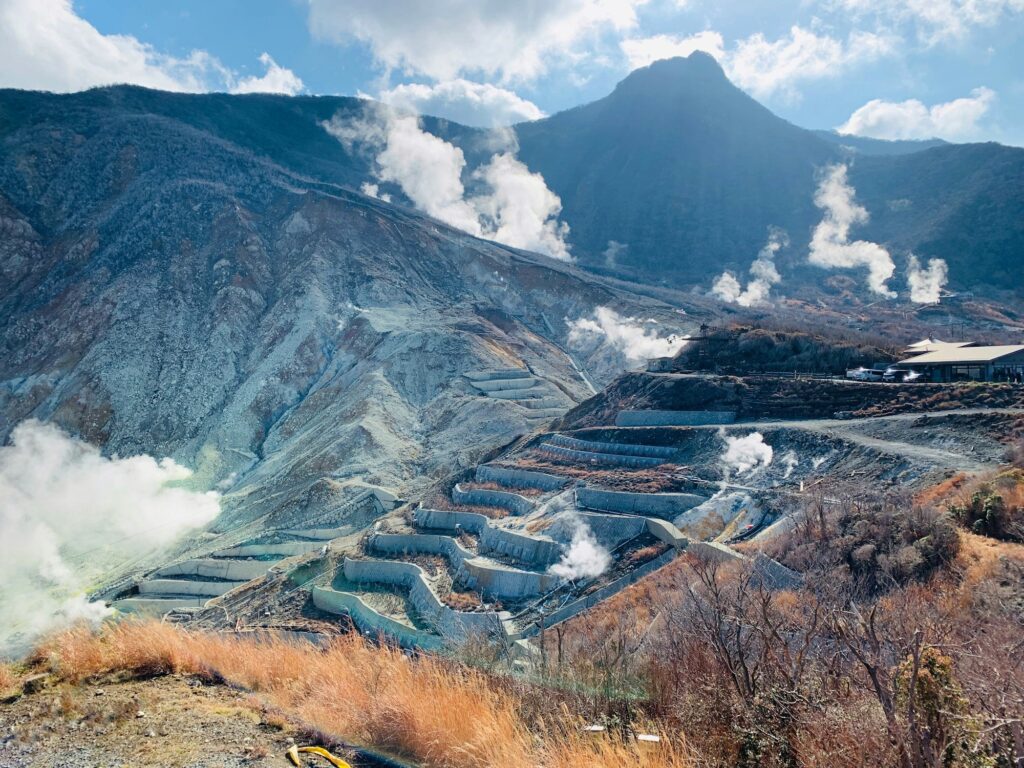
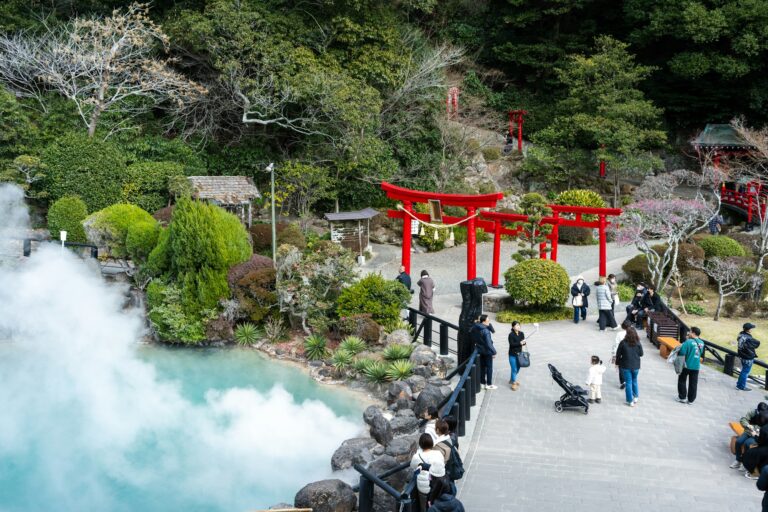
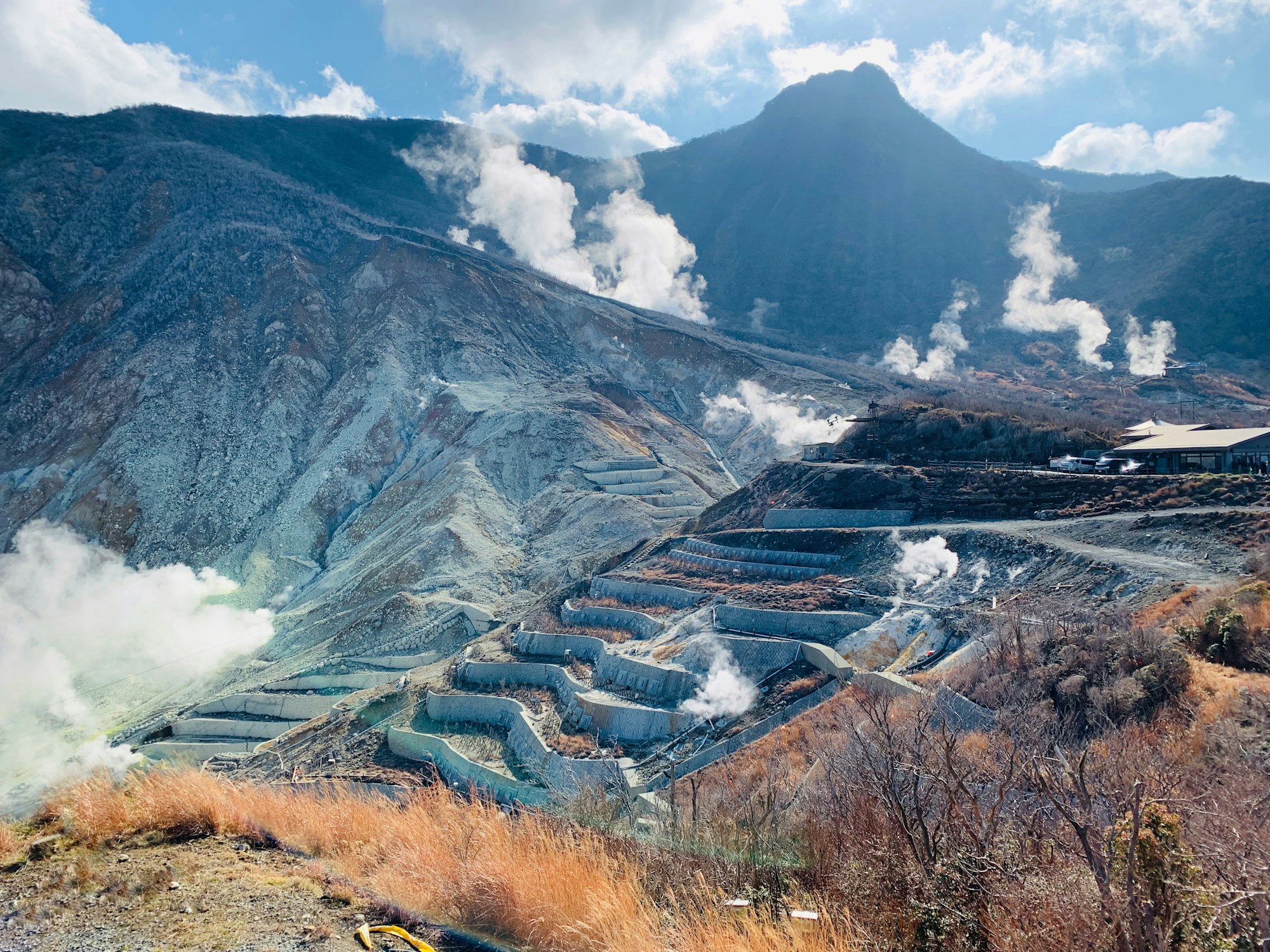
Owakudani, the “Great Boiling Valley,” is an active volcanic crater formed by an eruption roughly 3,000 years ago, and it still hisses with sulfur vents. Most people arrive by the Hakone Ropeway, which glides high over the steaming slopes — on a clear day you can see Mount Fuji from the gondola and the station area. The must-try snack is kuro-tamago, eggs boiled in the hot spring water until their shells turn black; local lore says each one adds seven years to your life, and they are sold in bags of several eggs. Volcanic gas levels are monitored constantly, and the area is sometimes closed or restricted when activity rises, so check the ropeway’s operating status on the morning of your visit. People with asthma or heart conditions, and pregnant travelers, are advised not to linger in the valley. Plan on 30 to 60 minutes here before continuing down to Lake Ashi.
2. Lake Ashi & Hakone Shrine
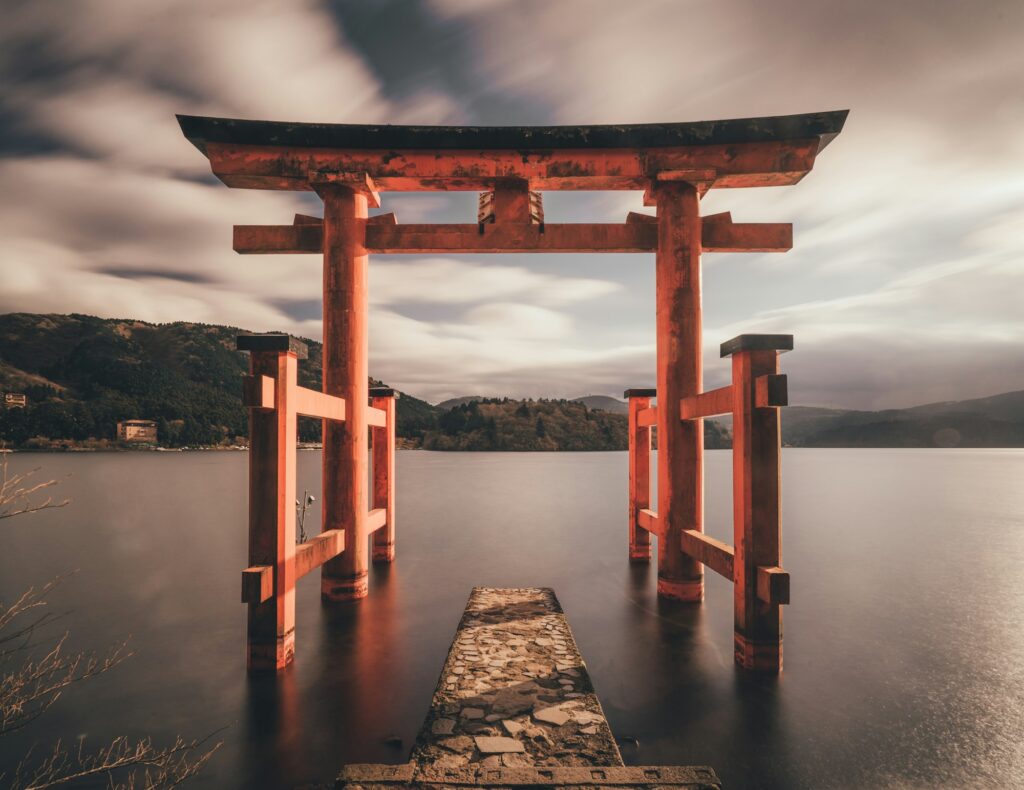
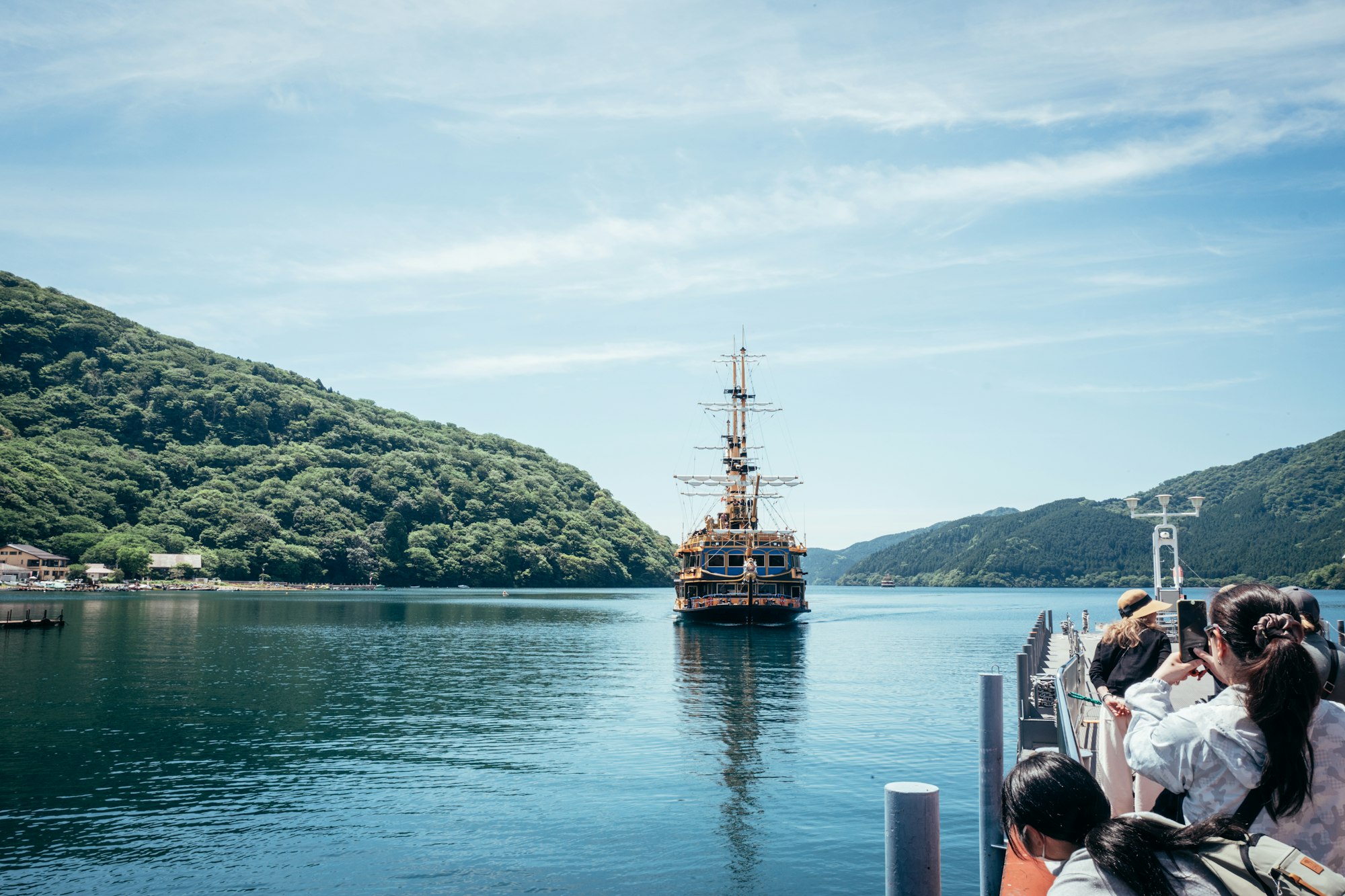
From Owakudani, the ropeway continues down to Togendai on the shore of Lake Ashi (Ashinoko), a crater lake where pirate-ship-style sightseeing boats cruise to Moto-Hakone and Hakone-machi. The ride takes you across the lake with mountain views and, in good weather, Mount Fuji rising behind the ridges. Hop off at Moto-Hakone and walk five to ten minutes to Hakone Shrine, an ancient shrine hidden in tall cedar forest. Its vermilion Torii of Peace stands in the water at the lake’s edge and is one of the most photographed spots in Japan; expect a line to take your photo under the gate, especially on weekends and from late morning. The shrine grounds are free to enter and open all year. Lanterns and stone steps lead up through the trees to the main hall, which feels especially atmospheric when mist rolls in off the lake.
3. Hakone Open-Air Museum
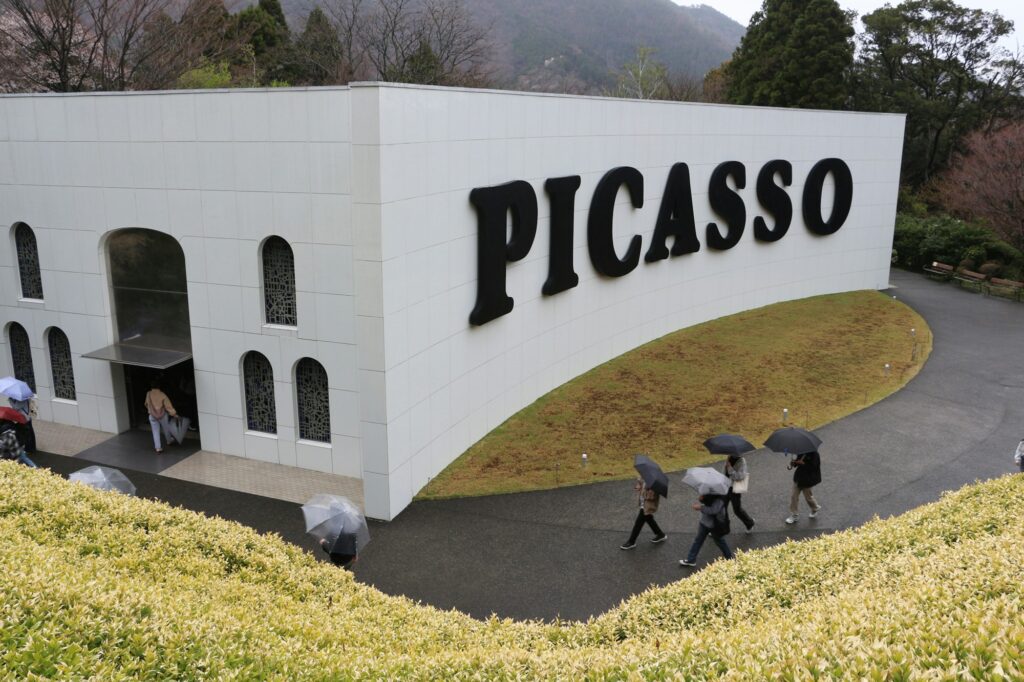
Even travelers who don’t usually visit art museums tend to love the Hakone Open-Air Museum. About 120 sculptures by modern and contemporary artists are set across lawns and hillsides with mountain views, so the visit feels more like a walk in a park. Highlights include the Picasso Pavilion, which displays a large collection of Picasso’s work, and the Symphonic Sculpture, a tower lined with stained glass that you can climb for views over the grounds. There is also a free foot bath fed by natural hot spring water where you can rest tired feet. The museum is steps from Chokoku-no-Mori Station on the Hakone Tozan Railway and is open daily from 9:00 a.m. to 5:00 p.m. (last entry 4:30 p.m.). Adult admission is 2,000 yen, with small discounts for Hakone Freepass holders and online tickets. Give yourself at least 90 minutes; art lovers can easily spend half a day.
Where to Stay in Hakone
 Where to stay: Gora, Sengokuhara & Yumoto
Hotel links in this section go to Booking.com. If you book through them, we may earn a commission at no extra cost to you.
Hakone is best experienced with an overnight stay, ideally at a hotel or ryokan with its own hot spring baths. Gora puts you close to the Open-Air Museum and the cable car, Sengokuhara is quieter and closer to Owakudani, and Hakone-Yumoto is the most convenient for trains from Tokyo.
Luxury
Hyatt Regency Hakone Resort and Spa is a calm, upscale retreat in Gora with spacious rooms and a hot spring spa — a short ride from the Open-Air Museum and the cable car up toward Owakudani.
Hyatt Regency Hakone Resort and Spa
Upscale mountain resort with hot spring spa, close to the Hakone loop.
Mid-Range
Hotel Green Plaza Hakone sits high in Sengokuhara near the Ubako stop on the Hakone Ropeway and is known for outdoor hot spring baths with Mount Fuji views on clear days.
Hot spring hotel near the ropeway with Fuji-view outdoor baths.
Budget-Friendly
Onsen Hostel K’s House Hakone is a popular budget pick in the Hakone-Yumoto area, with dorms and private rooms plus its own hot spring baths — rare at this price level.
Budget hostel with hot spring baths, near the start of the Hakone loop.
Compare prices before you book
Hotels in Hakone on Booking.com
Staying overnight lets you soak in a hot spring after a day on the loop and catch early-morning views of Fuji before clouds roll in.
Affiliate link — if you book through Booking.com, we may earn a commission at no extra cost to you.
Quick Tips for Visiting
- The Hakone Freepass covers the main loop (Tozan train, cable car, ropeway, lake cruise and many buses) and is usually the simplest option if you ride the full circuit.
- Mount Fuji is most often visible in the morning and in the cooler months; clouds frequently cover it by afternoon in summer.
- Start early on weekends and holidays — lines for the ropeway and for photos at the lakeside torii grow through the morning.
- Check the Hakone Ropeway’s operating status before you go — volcanic activity or strong winds can suspend service.
- Use a luggage forwarding service or station lockers rather than hauling suitcases around the loop.
Getting there by train: From Shinjuku, the Odakyu Romancecar runs directly to Hakone-Yumoto (it needs a separate limited express fee even with the Hakone Freepass), or you can take the Shinkansen to Odawara. Read our guide to riding trains in Japan, learn how to ride the Shinkansen, check whether the JR Pass is worth it, and see our guide to getting from Narita or Haneda Airport to Tokyo.
Frequently Asked Questions
Is Hakone worth visiting as a day trip from Tokyo?
Yes, you can ride the full Hakone loop in a long day from Tokyo, but an overnight stay is much more relaxing and lets you enjoy a hot spring bath and better odds of seeing Mount Fuji in the morning.
Can you see Mount Fuji from Hakone?
On clear days, yes — from the Hakone Ropeway near Owakudani, from parts of Lake Ashi and from some hotels. Visibility is best in the morning and in late autumn and winter.
What are Owakudani black eggs?
Kuro-tamago are ordinary eggs boiled in Owakudani’s hot spring water, which turns the shells black. Local legend says eating one adds seven years to your life.
Is the Hakone Freepass worth it?
If you plan to ride the full loop of train, cable car, ropeway and lake cruise, the Freepass is usually the easiest and most economical choice, and it also gives small discounts at attractions such as the Open-Air Museum.