Last checked: September 2026 · Part of our Japan rental car guide
Almost every Japan road trip ends at a gas station, because rental cars must go back with a full tank. Many stations are now self-service, and the pump talks to you in Japanese through a touchscreen. It looks intimidating, but every pump asks the same few questions in the same order. Here is each screen, translated, so you can fill up in two minutes.
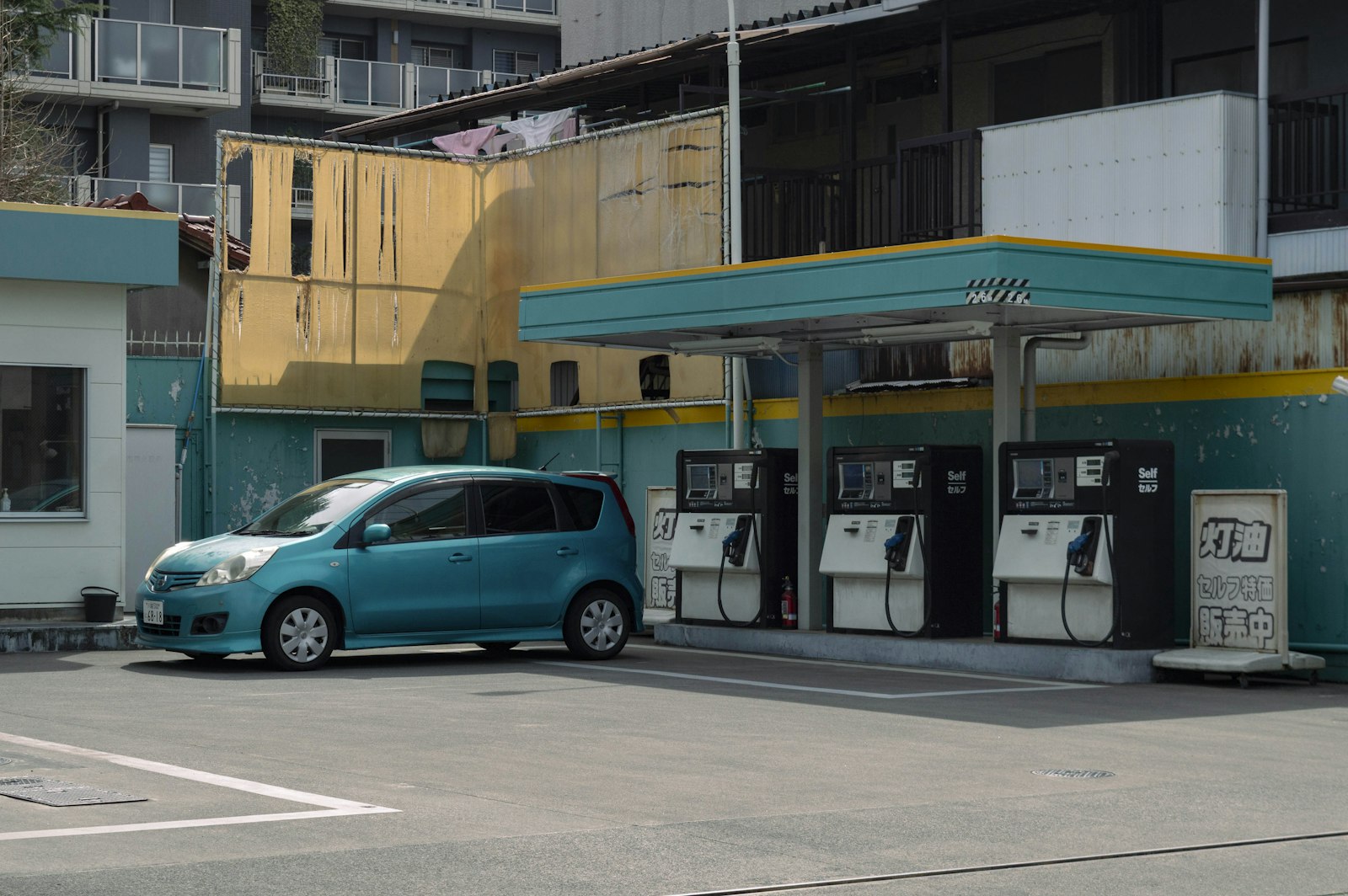
- Look for “セルフ” (self) on the sign. Stations without it are full-service: stay in the car and an attendant does everything.
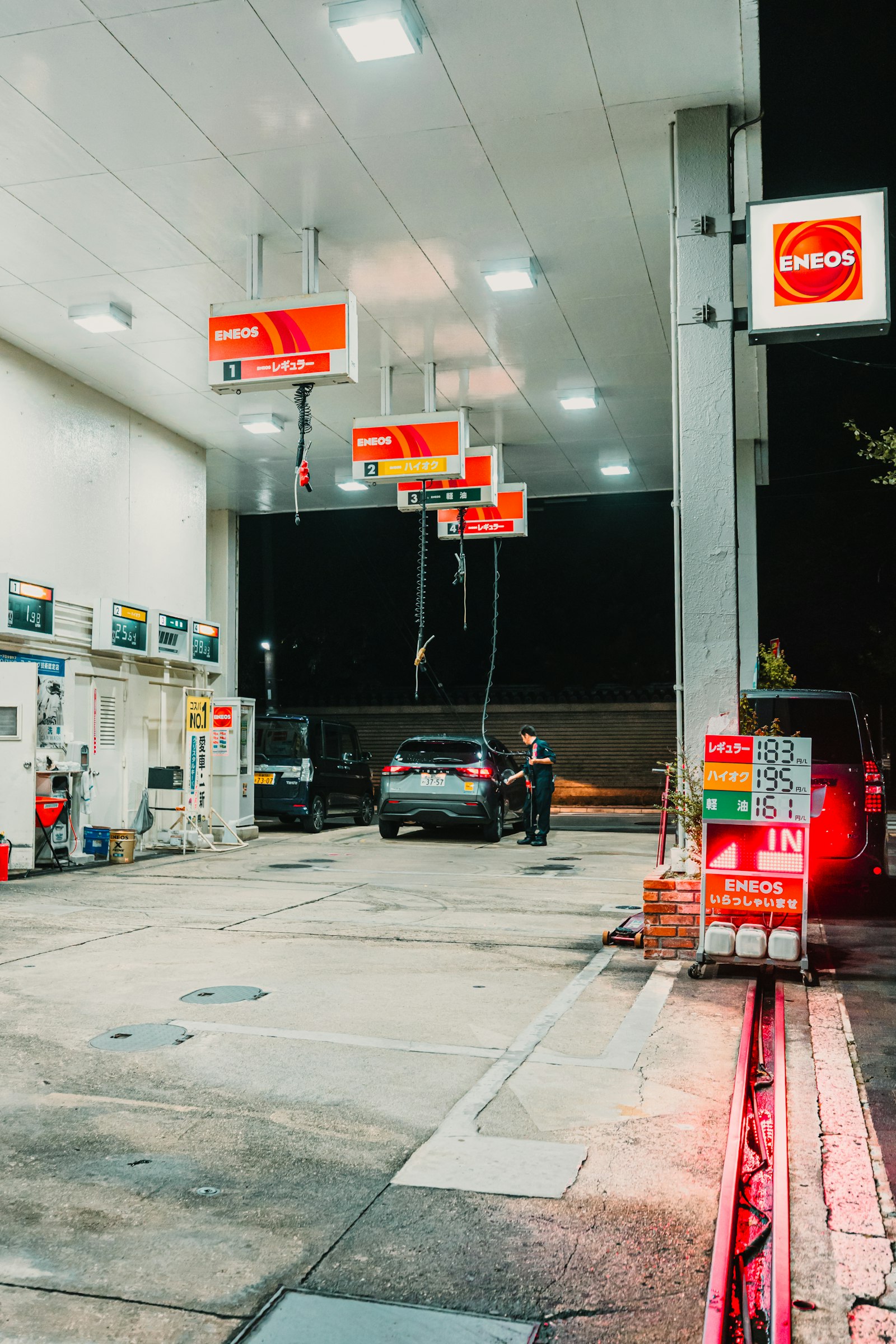
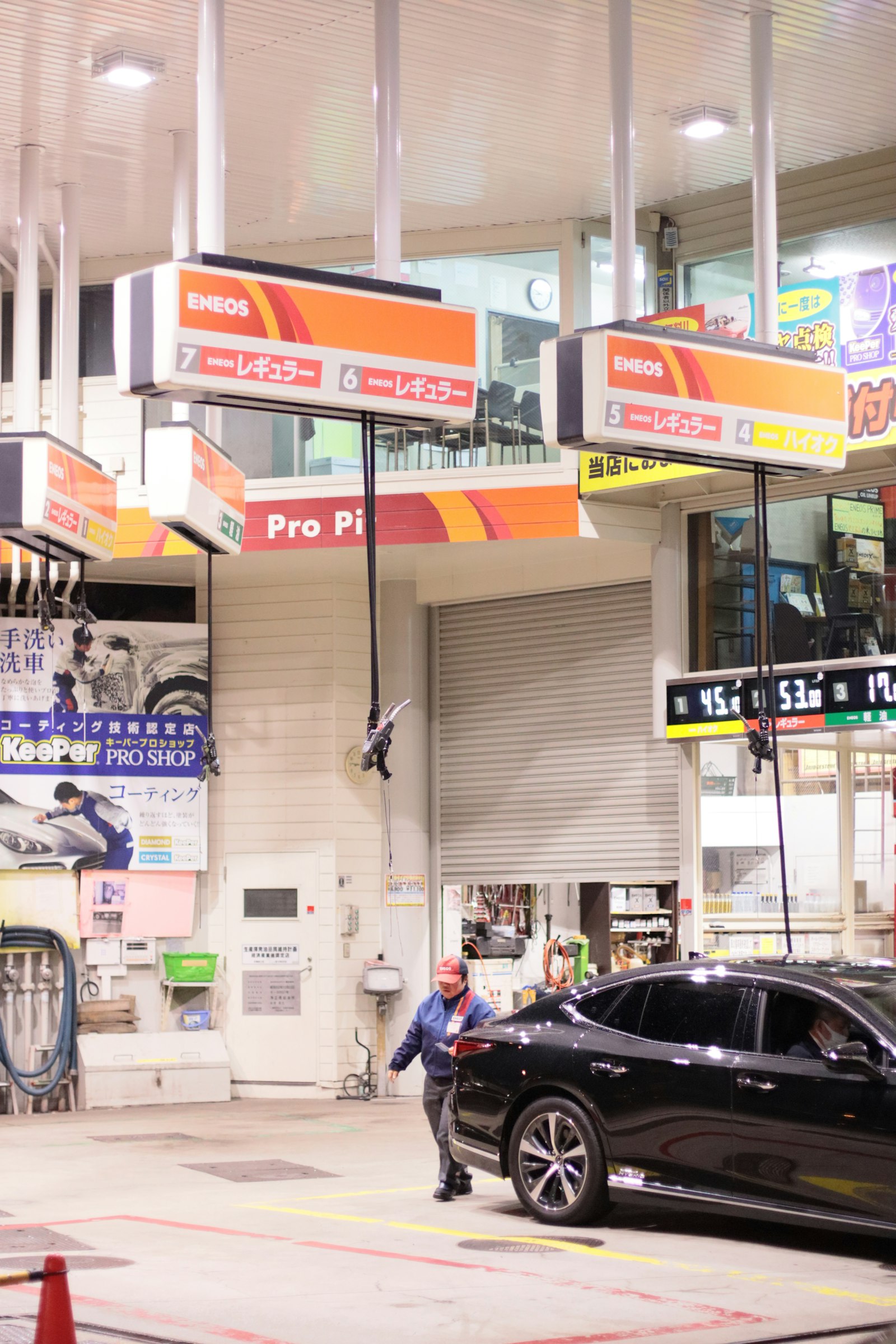
- Your rental almost certainly takes regular: レギュラー, the red nozzle. Yellow is premium (ハイオク), green is diesel (軽油). Never put diesel in a gasoline car.
- The screen order: payment method → fuel type → amount (tap 満タン for a full tank) → touch the static pad → fill → receipt.
- Price: regular averaged about ¥170 per liter in September 2026. A compact car’s full tank is roughly ¥5,000–¥7,000.
- Keep the receipt and fill up near the return office. Rental staff may ask to see it.
Find a gas station near you
The map shows an example area. Tap a button to open Google Maps in English with the gas stations closest to you right now.
Self-service vs. full-service stations
You pump, the machine talks
A touchscreen at each pump. Slightly cheaper per liter. Staff in the booth watch over the pumps and approve each fill-up remotely, so you are never on your own.
Stay in the car
Staff wave you in, fill up, take payment and often wipe your windows and take your trash. Easiest for first-timers: just say “Regyurā mantan” (regular, full).
Which fuel? The color code
| Japanese | Nozzle color | What it is | For your rental? |
|---|---|---|---|
| レギュラー (regyurā) | Red | Regular gasoline | Almost always yes. Check the sticker inside the fuel door. |
| ハイオク (hai-oku) | Yellow | Premium, high-octane gasoline | Only for some imported or sports cars |
| 軽油 (keiyu) | Green | Diesel. “Kei” here does not mean kei car | Only for diesel vehicles such as some SUVs and vans |
| 灯油 (tōyu) | — | Kerosene for home heaters, sold in cans | Never |
Step by step: using a self-service pump
- Park with the fuel door next to the pumpThe arrow next to the fuel gauge on your dashboard points to the side the fuel door is on. Turn off the engine.
- Choose payment (お支払い方法)Tap the payment method. Some pumps have an English button at the top; press it first.
- Choose the fuel type (油種)Tap レギュラー for regular. The matching nozzle lights up or unlocks.
- Choose the amount (給油量)Tap 満タン (full tank), or enter a yen amount or liters.
- Pay or insert your cardInsert a credit card, or feed in cash (bills are usually fine; take the change later).
- Touch the static padTap the black 静電気除去シート panel to discharge static before you open the fuel cap. The pump often won’t start until you do.
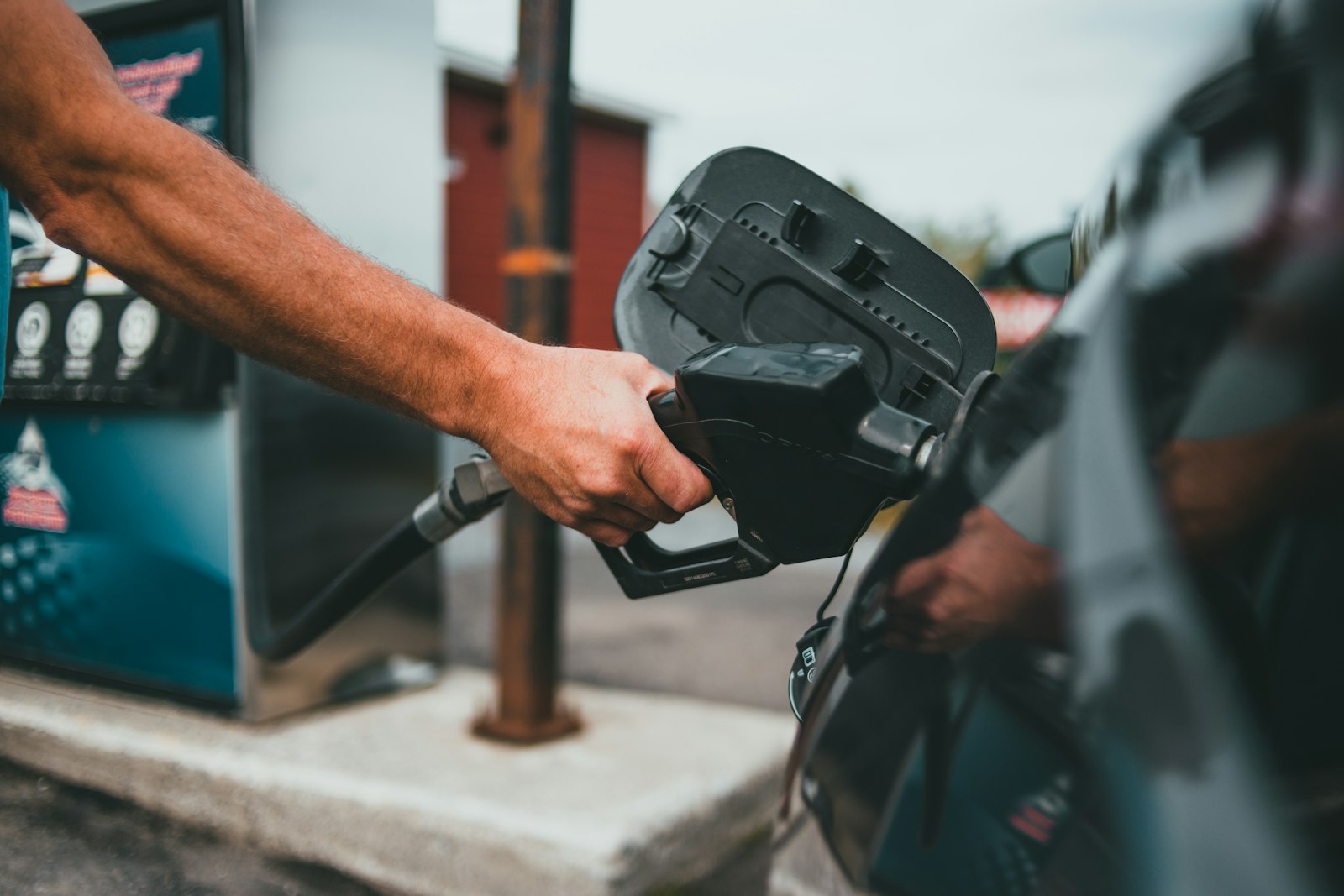
- Fill upInsert the nozzle fully and squeeze. It stops automatically when full. Don’t top off.
- Take the receiptReplace the nozzle and close the fuel cap. The receipt (レシート) prints at the pump. If you paid cash, take the receipt to the change machine (精算機) and scan its barcode to get your change.
Screen guide: the pump buttons, translated
Layouts differ between ENEOS, apollostation (Idemitsu), Cosmo and independent stations, but the buttons read the same. These are typical screens with the choice most rental drivers need highlighted.
Illustrations of typical self-service pump screens. Exact wording and layout vary by station.
Cheat sheet: words on the pump
| Japanese | Reading | Meaning |
|---|---|---|
| セルフ | serufu | Self-service |
| 満タン | mantan | Full tank |
| 静電気除去シート | seidenki jokyo shīto | Static discharge pad (touch before fueling) |
| 給油開始 / 給油終了 | kyūyu kaishi / shūryō | Start / finish fueling |
| ノズルを戻してください | nozuru o modoshite kudasai | Please return the nozzle |
| 精算機 | seisanki | Change / settlement machine (cash payments) |
| レシート / 領収書 | reshīto / ryōshūsho | Receipt |
| 呼出 | yobidashi | Call staff |
| 営業時間 | eigyō jikan | Opening hours |
Returning the rental with a full tank
Fill up within a few km of the return office
Rental offices near airports and stations usually have gas stations nearby. Staff may check the receipt’s time and location.
Returning it less than full
The company refuels for you and charges by distance driven or at a high per-liter rate, often much more than the pump price.
Rural stations close early
In the countryside many stations close around 7–8 pm and some close on Sundays or holidays. Fill up before evening on long drives.
Hybrids still use regular
A Prius or Aqua fills up like any gasoline car, just less often. Electric rentals return charged per the company’s rules.
Useful phrases at a full-service station
New to driving in Japan? Start with our complete guide to renting a car in Japan.
FAQ
How do you use a self-service gas station in Japan?
Choose a payment method on the touchscreen, pick the fuel type (レギュラー, regular, for most cars), choose 満タン for a full tank, pay, touch the static discharge pad, then fill up. Take the receipt; if you paid cash, scan it at the change machine to get your change.
Which gas should I put in a rental car in Japan?
Almost all rental cars use regular gasoline, called レギュラー, with a red nozzle. Premium (ハイオク) has a yellow nozzle and diesel (軽油) a green one. Check the sticker inside the fuel door to be sure.
Can I use a foreign credit card at Japanese gas stations?
Usually yes, especially Visa and Mastercard, but some self-service pumps reject foreign cards or ask for a PIN. Have cash as a backup or use a full-service station where staff can run the card.
How much is gas in Japan?
In September 2026, regular gasoline averaged about ¥170 per liter nationwide. Filling a compact rental car from near-empty costs roughly ¥5,000–¥7,000.
What does 満タン mean?
満タン (mantan) means a full tank. Tap it on the pump screen, or say “regyurā mantan” at a full-service station to get regular gasoline filled to the top.