Disclosure: The First Pick takes part in affiliate programs. If you buy through a link on this page, we may earn a commission at no extra cost to you. Prices, promotions and availability change, so always confirm details on the seller’s page. See our Affiliate Disclosure.
Japanese kitchen organization comes down to three ideas: use vertical space, give every item a home, and keep counters clear. Japanese kitchens are often compact, so people rely on shelf risers, drawer dividers, hooks and matching containers. You can copy the approach affordably with items from online marketplaces such as Temu, as long as you measure first and check materials.
Why Japanese homes are so good at small-space storage
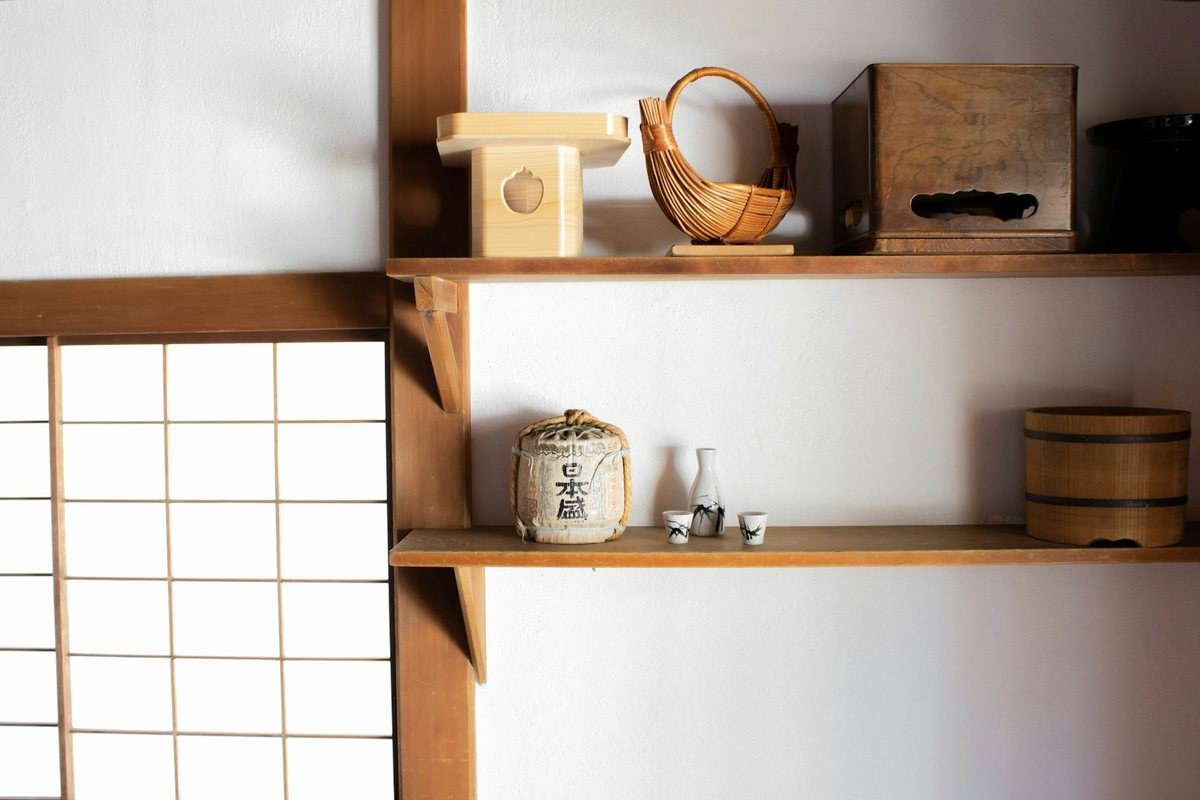
Space is at a premium in many Japanese homes, so storage (shuno in Japanese) is treated as a design skill. The goal is not to buy more containers but to make every shelf, drawer and wall work harder. Visiting Japan, you may notice the same approach in hotel rooms, convenience stores and even train stations: compact, tidy and thoughtfully arranged.
Seven ideas you can copy
1. Go vertical with shelf risers
A simple riser doubles the usable space in a cabinet. Place plates or bowls on the raised level and mugs or small dishes underneath. Measure your cabinet’s interior height and depth first.
2. Divide your drawers
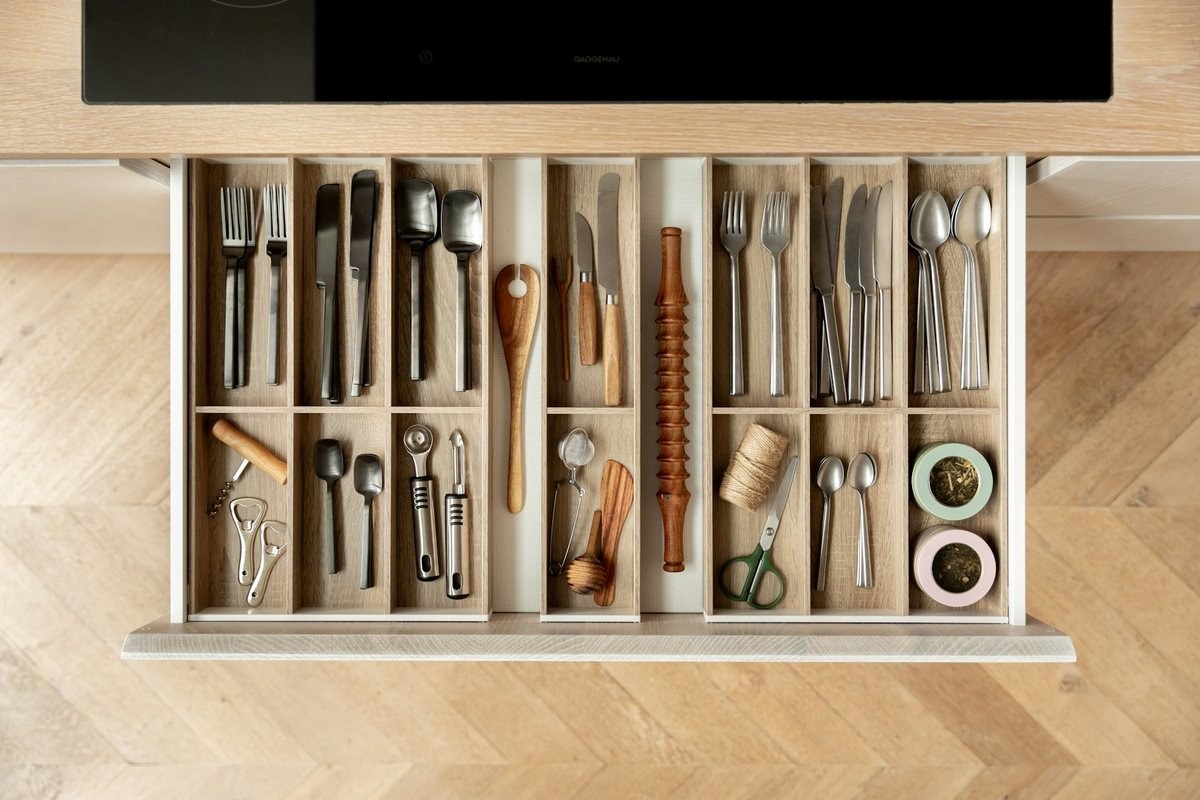
Adjustable drawer dividers keep utensils, wraps and gadgets in their own zones. Expandable dividers fit different drawer widths, which helps if you are not sure of exact measurements.
3. Use the inside of cabinet doors
Slim racks or hooks on the inside of cabinet doors are ideal for cutting boards, pot lids, sponges and measuring spoons. Check the weight limit and the door thickness.
4. Hang what you use daily
Rails with S-hooks or adhesive hooks free up counter space. Keep the items you use every day within reach and store the rest out of sight.
5. Match your containers
Uniform containers for dry goods stack neatly and make it easy to see what you have. Square containers use space more efficiently than round ones.
6. Label everything
A simple label maker or handwritten tags keep everyone in the household putting things back in the same place.
7. Keep the sink area clear
A compact draining rack, and a small tray for sponge and soap, keeps the busiest zone tidy.
Shopping for organizers on marketplaces like Temu
Organizers are an ideal category for budget shopping, because the products are simple and low-risk. Temu and similar marketplaces offer a very wide choice of risers, dividers, racks and containers at low prices, and promotions come and go. To avoid wrong sizes and poor materials, follow this checklist:
| Check | Why it matters |
|---|---|
| Exact dimensions in inches or cm | Organizers only work if they fit your shelf or drawer |
| Material description | Look for clear details on plastic, bamboo or metal, and read reviews for finish and durability |
| Food contact | For containers holding food, look for clear food-safe information, and be cautious if there is none |
| Load rating | Racks and hooks should list a weight limit |
| Customer photos | They show real-world size and quality better than product images |
| Return policy | Handy if the size is off |
A simple plan to start
- Empty one cabinet or drawer, wipe it and measure it.
- Sort items into keep, relocate and remove.
- Buy one or two organizers only, then adjust after a week of use.
- Repeat with the next zone.
If you are inspired by seeing Japan’s tidy spaces in person, our Japan travel guides will help you plan a trip. Many travelers enjoy browsing Japanese homeware shops in Osaka’s food and culture highlights and in Kyoto’s historic districts.
Temu Shortlist: Listings to Browse
These are example listings and category pages on Temu that match the items above. We have not tested them, and prices, ratings, sizes and availability change often, so read the current listing, recent reviews and the return policy before you buy.
| Listing type | What to check | Link |
|---|---|---|
| Kitchen drawer organizers (browse) | Measure your drawer and compare interior sizes | View on Temu |
| Kitchen cabinet organizers (browse) | Compare materials in customer photos | View on Temu |
| Drawer dividers | Adjustable length, height, non-slip edges | View on Temu |
| Stackable storage containers | Airtight seal, clear sides, dimensions per unit | View on Temu |
| Spice racks and jars | Shelf depth, label options, jar capacity | View on Temu |
| Under-shelf baskets | Max shelf thickness, load limit, mounting method | View on Temu |
Tip: sort by recent reviews, open the customer photos, and compare at least two or three listings before you order.
Frequently Asked Questions
What is Japanese kitchen organization?
It is an approach to storage that uses vertical space, drawer dividers, hooks and matching containers so every item has a place. It is well suited to small kitchens.
Can I use budget organizers from Temu?
Yes, for simple items such as risers, dividers and racks they can be a good value. Measure your space, read recent reviews and check materials and return policies.
Are budget containers safe for food?
Look for clear food-safe information from the seller. If a listing does not say what the material is or whether it is intended for food, choose another or use it for non-food storage.
Where should I start in a small kitchen?
Start with one drawer or cabinet. Add a divider or riser, see how it works for a week and then move on to the next area.