Higashi Chaya District, Kazuemachi and Nagamachi are where Kanazawa’s past feels most alive. Because the city escaped major bombing in World War II, its wooden teahouse quarters and samurai neighborhoods survived, and today you can walk lanes that look much as they did in the Edo period. Two of these districts are geisha teahouse areas along the Asano River, and the third is the old samurai quarter near the castle. This guide covers what to see in each, which houses are open to visitors, how to try Kanazawa’s famous gold leaf, and where to stay within walking distance.
1. Higashi Chaya District
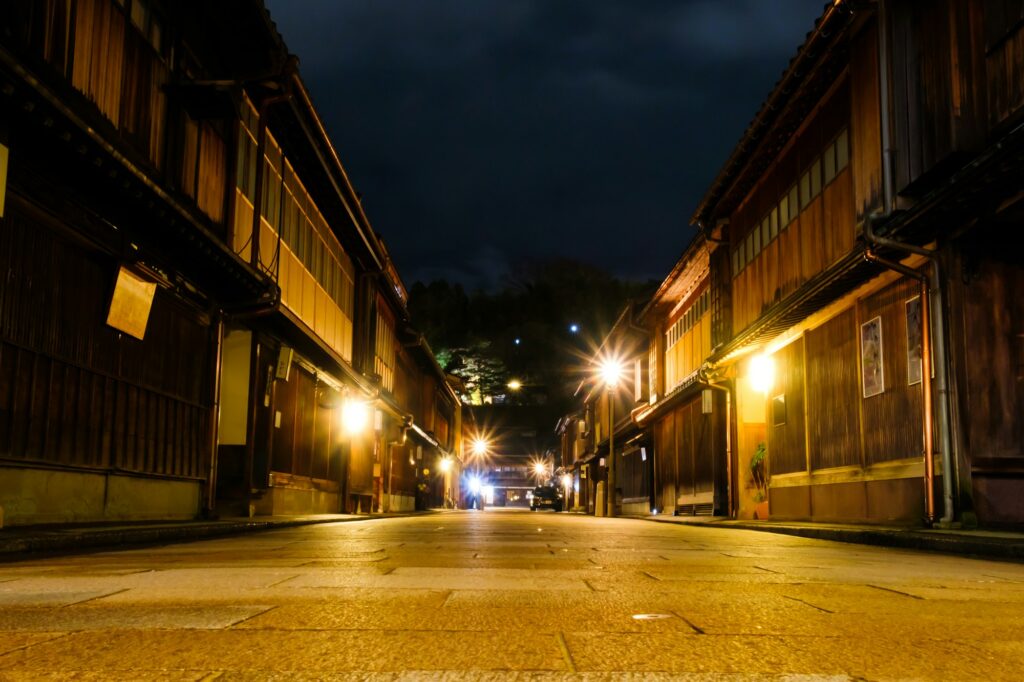
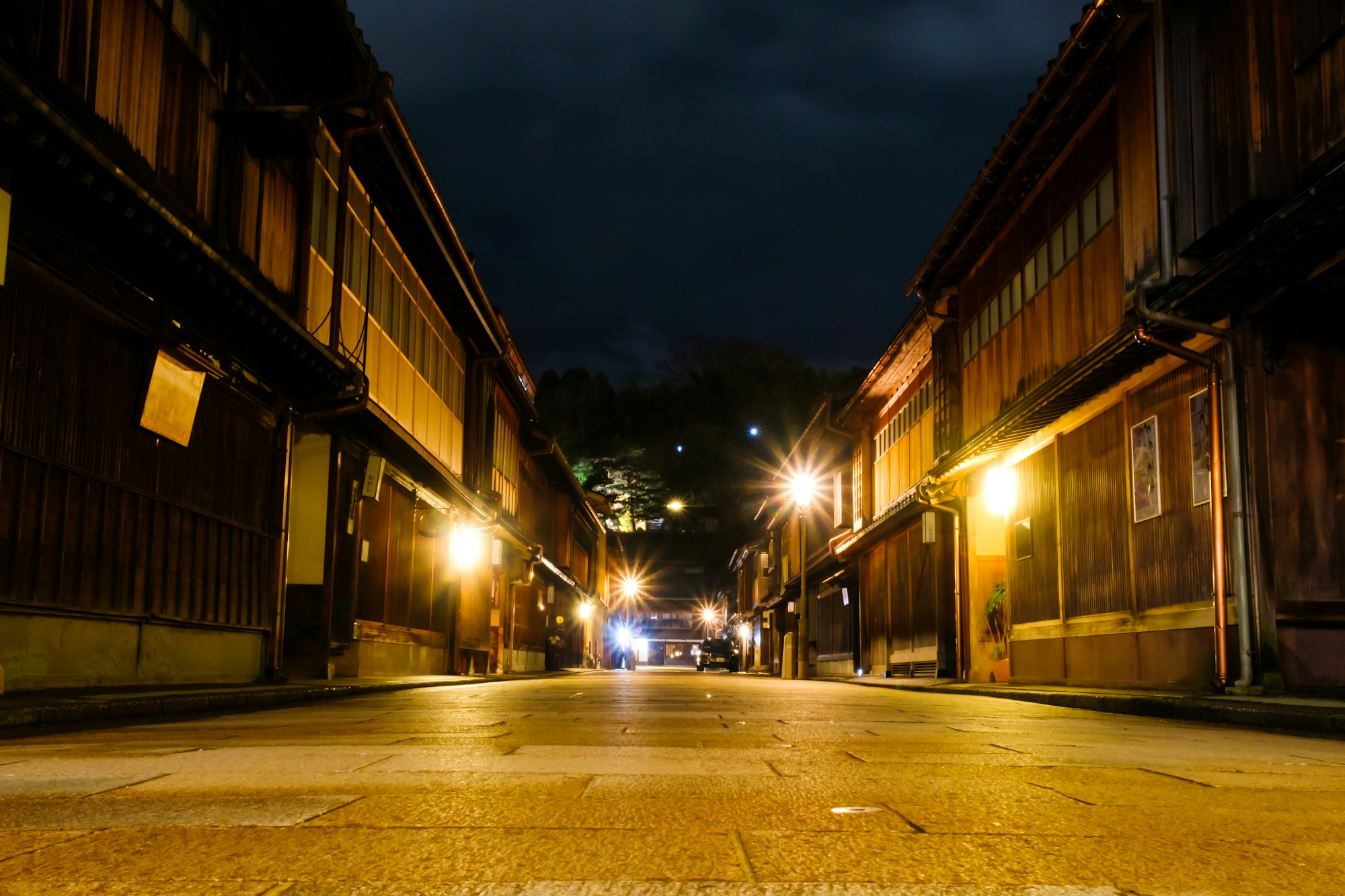
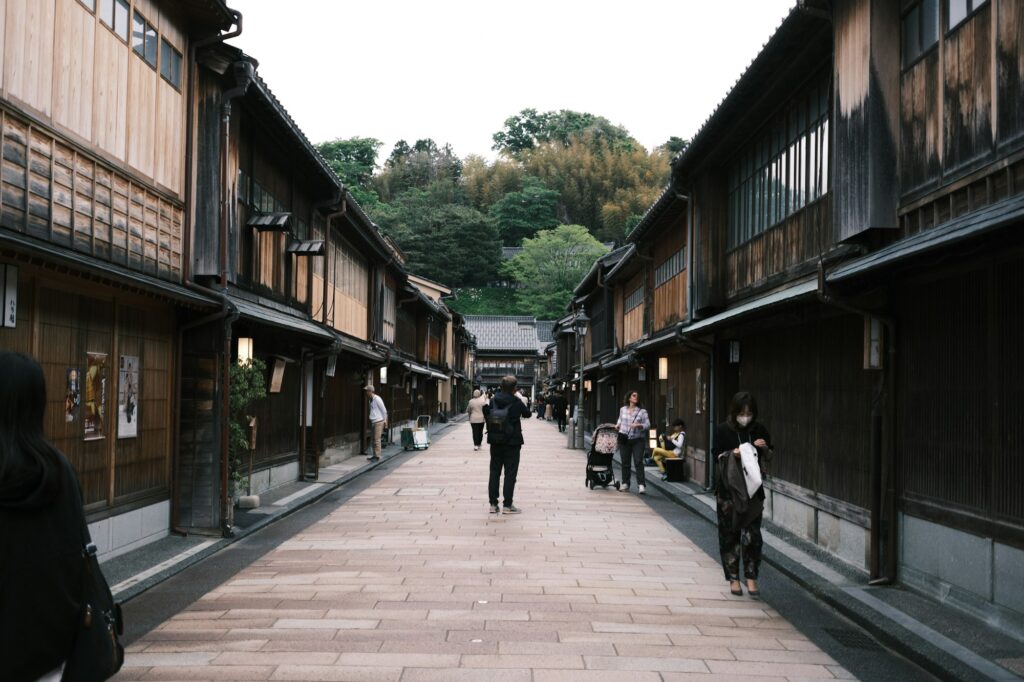
Higashi Chaya is the largest and best-known of Kanazawa’s three chaya, or teahouse, districts. Its main street is lined with two-story wooden houses with fine latticework called kimusuko, where geisha once entertained guests, and many now hold cafes, craft shops and sweet shops. To see inside a real teahouse, visit Shima, a preserved ochaya from the 1820s; entry is 500 yen and it is open 9:30 to 17:30 (until 17:00 from December to February). Kanazawa produces nearly all of Japan’s gold leaf, and this district is the best place to see it. Hakuza has a small storehouse covered in gold leaf inside and out, and Hakuichi sells a soft-serve ice cream topped with a whole sheet of gold leaf for 891 yen. Come early in the morning or toward evening, when the day-trip crowds thin out and the lanterns come on.
2. Kazuemachi Chaya District
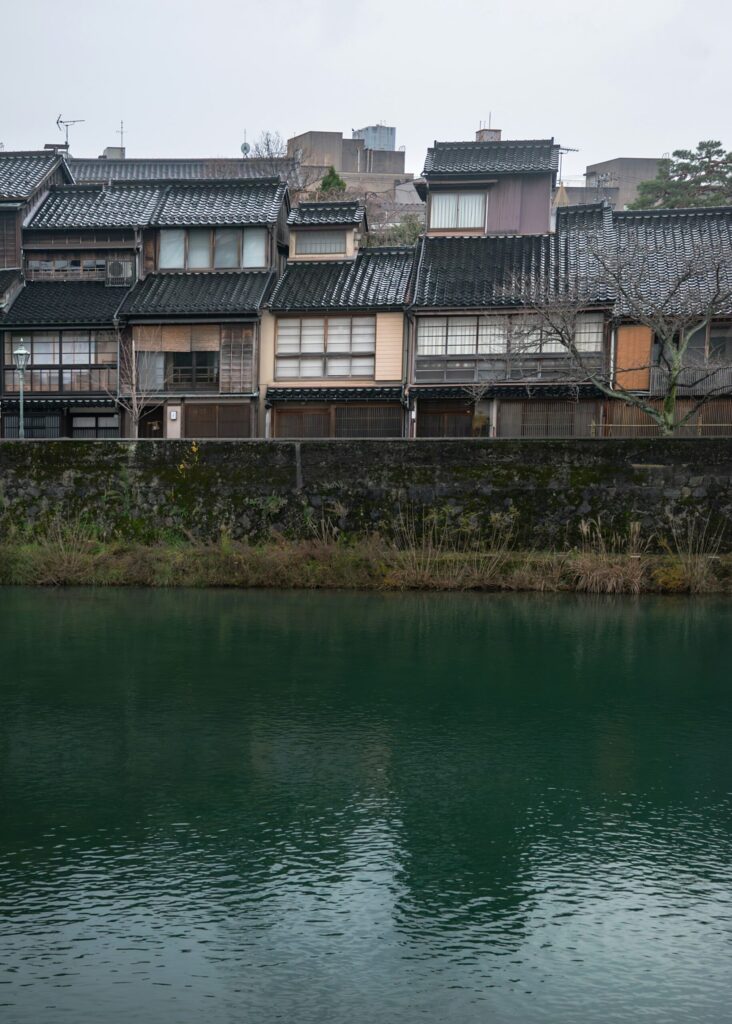
Just across the Asano River from Higashi Chaya, Kazuemachi is the smallest and quietest of Kanazawa’s teahouse districts, and many travelers say it is their favorite. A single row of wooden teahouses faces the river, and narrow stone-paved lanes and steps run up behind them, including a slope known as Kuragari-zaka. The view of the houses from the riverbank or the Naka-no-hashi footbridge is one of the classic images of Kanazawa, especially at dusk when the windows glow. Unlike Higashi Chaya, Kazuemachi has very few shops, so treat it as a short, atmospheric walk rather than a shopping stop. Some of the houses still operate as teahouses where geisha perform for private guests, so keep your voice down and do not photograph people at the doors. Combining Kazuemachi with Higashi Chaya makes an easy one-to-two-hour loop on foot.
3. Nagamachi Samurai District
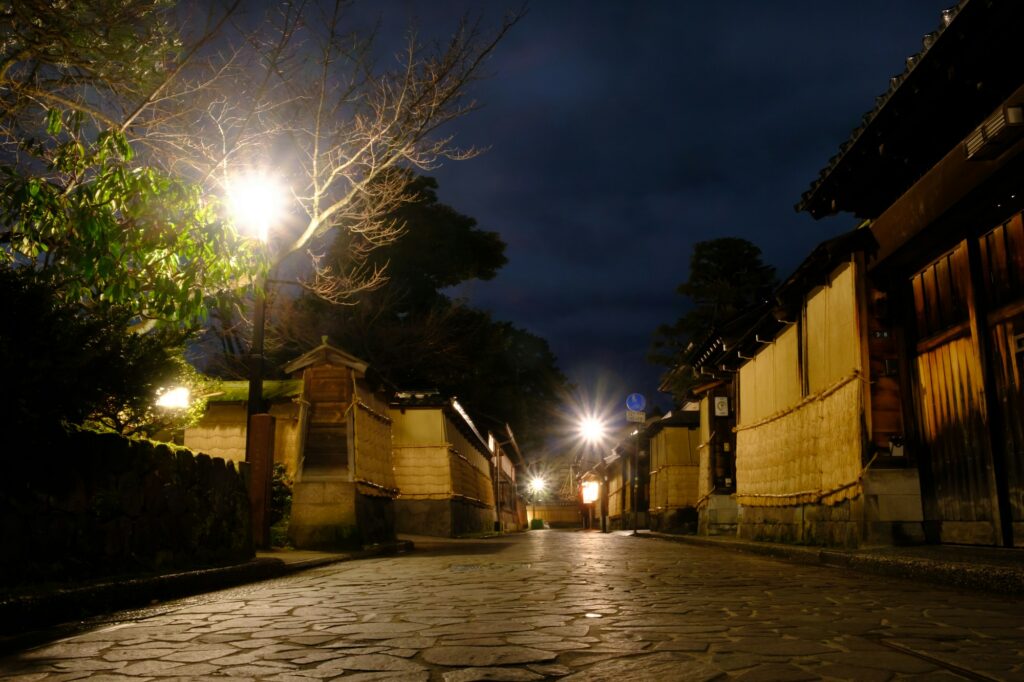
Nagamachi, on the west side of the city center, is where middle- and upper-ranking samurai of the Maeda clan once lived. Its narrow lanes are lined with earthen walls and gates, with small canals running alongside, and the walls are wrapped in straw mats in winter to protect them from snow. The highlight is Nomura-ke, a restored samurai residence with painted sliding doors and a small but beautiful garden of stone lanterns, moss and a koi pond. Entry is 550 yen, and it is open 8:30 to 17:30 (until 16:30 from October through March). Nearby, the free Ashigaru Museum shows how foot soldiers lived in much simpler homes. If you have time, book a tour of Myoryuji, the so-called Ninja Temple south of the Sai River, famous for its hidden stairways and trap doors. Reservations by phone are required, admission is 1,200 yen for adults in cash, and preschool children cannot enter.
Where to Stay Near Kanazawa’s Old Districts
 Where to stay: Higashiyama & central Kanazawa
Hotel links in this section go to Booking.com. If you book through them, we may earn a commission at no extra cost to you.
Central Kanazawa is compact, so hotels between the castle, Omicho Market and the Korinbo area put both teahouse districts and Nagamachi within a 10 to 20 minute walk. Staying here lets you see Higashi Chaya and Kazuemachi early in the morning and in the evening, when they are at their most atmospheric.
Luxury
Kanazawa Hakuchoro Hotel Sanraku is an elegant hotel next to the castle area with Japanese-inspired interiors and natural hot spring baths. It sits between the castle park and the Asano River teahouse districts.
Kanazawa Hakuchoro Hotel Sanraku
Elegant hotel with natural hot spring baths.
Mid-Range
KUMU Kanazawa by THE SHARE HOTELS is a stylish design hotel with a tea-culture theme, close to Omicho Market and an easy walk to Higashi Chaya and the castle.
KUMU Kanazawa by THE SHARE HOTELS
Stylish design hotel near Omicho Market.
Budget-Friendly
Kaname Inn Tatemachi is a good-value option on the Tatemachi shopping street, a short walk from Korinbo and the Nagamachi samurai district.
Good-value stay near Korinbo and Nagamachi.
Compare prices before you book
Hotels in Kanazawa on Booking.com
Pick a hotel in central Kanazawa and walk to the teahouse districts at sunrise, before the tour groups arrive.
Affiliate link — if you book through Booking.com, we may earn a commission at no extra cost to you.
Quick Tips for Visiting
- Visit Higashi Chaya before 9:00 or after 17:00 for quieter streets and better photos.
- Do not photograph geisha or private guests without permission, and stay off private property.
- Call ahead to book Myoryuji, the Ninja Temple; walk-in visits are not guaranteed.
- Bring cash for small teahouse admissions and snack shops.
- Combine Higashi Chaya and Kazuemachi in one walk, then take a bus or taxi to Nagamachi.
Getting there by train: The Hokuriku Shinkansen connects Tokyo and Kanazawa in about 2.5 hours on Kagayaki trains, and the JR Pass covers it. From Osaka or Kyoto, take the Thunderbird limited express to Tsuruga and transfer to the Hokuriku Shinkansen. From Kanazawa Station, the Kanazawa Loop Bus (220 yen per ride) stops near Higashi Chaya, and a 1-day Hokutetsu bus pass costs 800 yen. Read our guide to riding trains in Japan, learn how to ride the Shinkansen, and check whether the JR Pass is worth it.
Frequently Asked Questions
Can you go inside a geisha teahouse in Kanazawa?
Yes. Shima teahouse in the Higashi Chaya District is open to visitors for 500 yen. It is a preserved teahouse from the 1820s with guest rooms and displays of everyday items.
What is the difference between Higashi Chaya and Kazuemachi?
Higashi Chaya is the larger district with many cafes and gold-leaf shops. Kazuemachi, across the Asano River, is a small, quiet row of teahouses along the riverbank with few shops.
How much is the Nomura Samurai House?
Nomura-ke in the Nagamachi samurai district costs 550 yen for adults. It is open 8:30 to 17:30, closing at 16:30 from October through March.
Do you need a reservation for the Ninja Temple in Kanazawa?
Yes. Myoryuji requires an advance reservation by phone. Admission is 1,200 yen for adults, paid in cash, and preschool children cannot enter.