Koyasan, with Okunoin Cemetery, Kongobuji Temple and the Danjo Garan complex, is the most rewarding spiritual trip you can take from Osaka. Mount Koya is the center of Shingon Buddhism, founded in the ninth century by the monk Kobo Daishi (Kukai), and today a small town of more than 100 temples sits on a forested plateau in the mountains of Wakayama Prefecture. It is part of the Sacred Sites and Pilgrimage Routes in the Kii Mountain Range UNESCO World Heritage Site, and it is one of the best places in Japan to spend a night in a temple, eat a monk’s vegetarian dinner and join a morning prayer service. This guide covers the three essential sights, tickets and hours, getting there from Osaka and where to stay.
1. Okunoin Cemetery
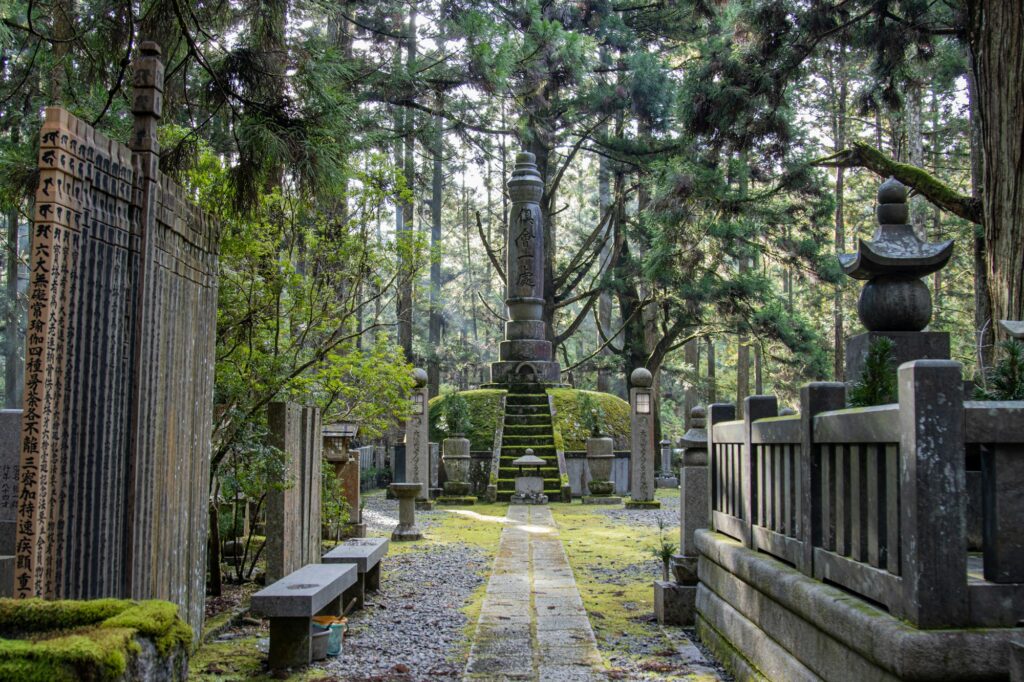
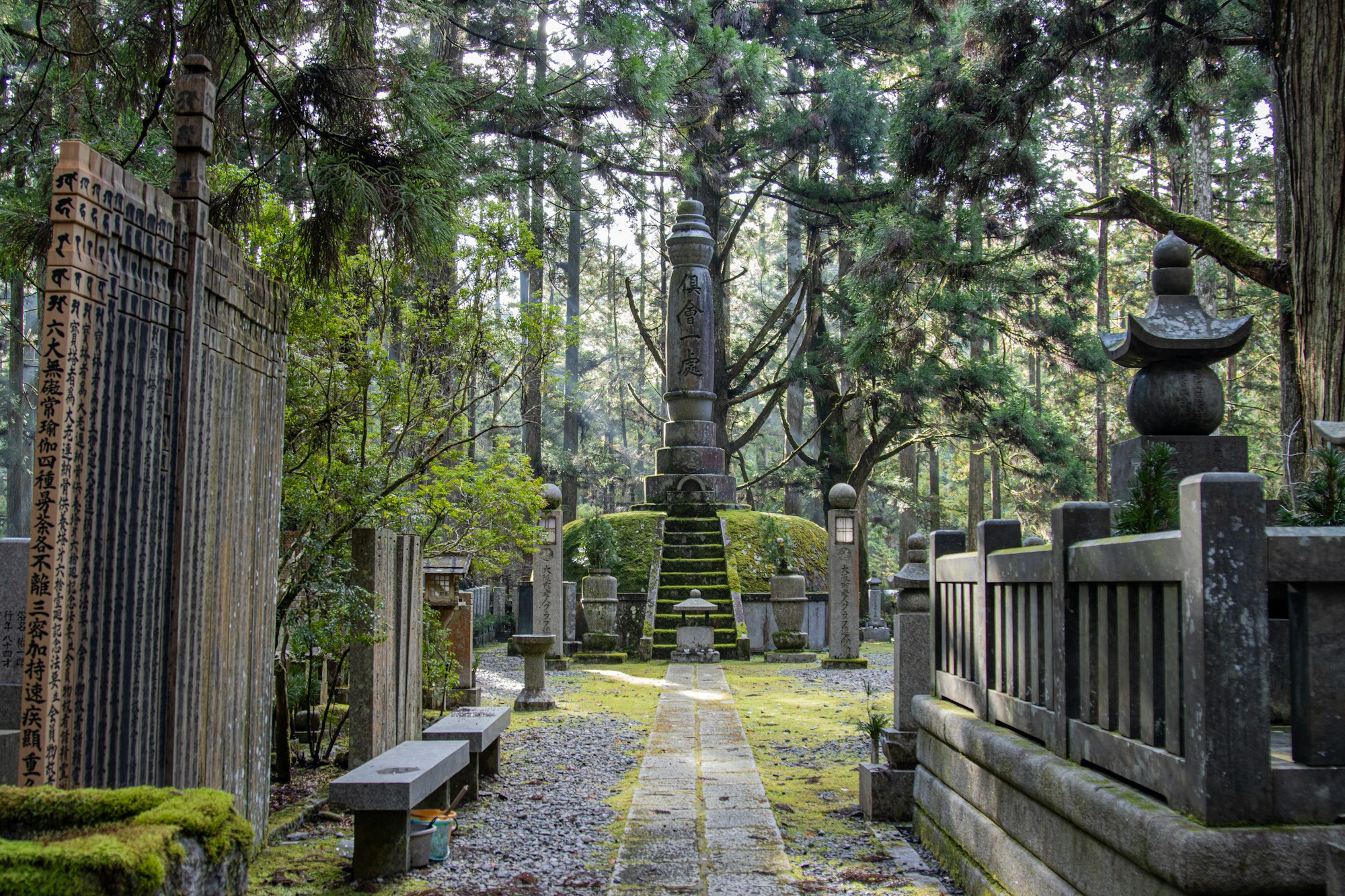
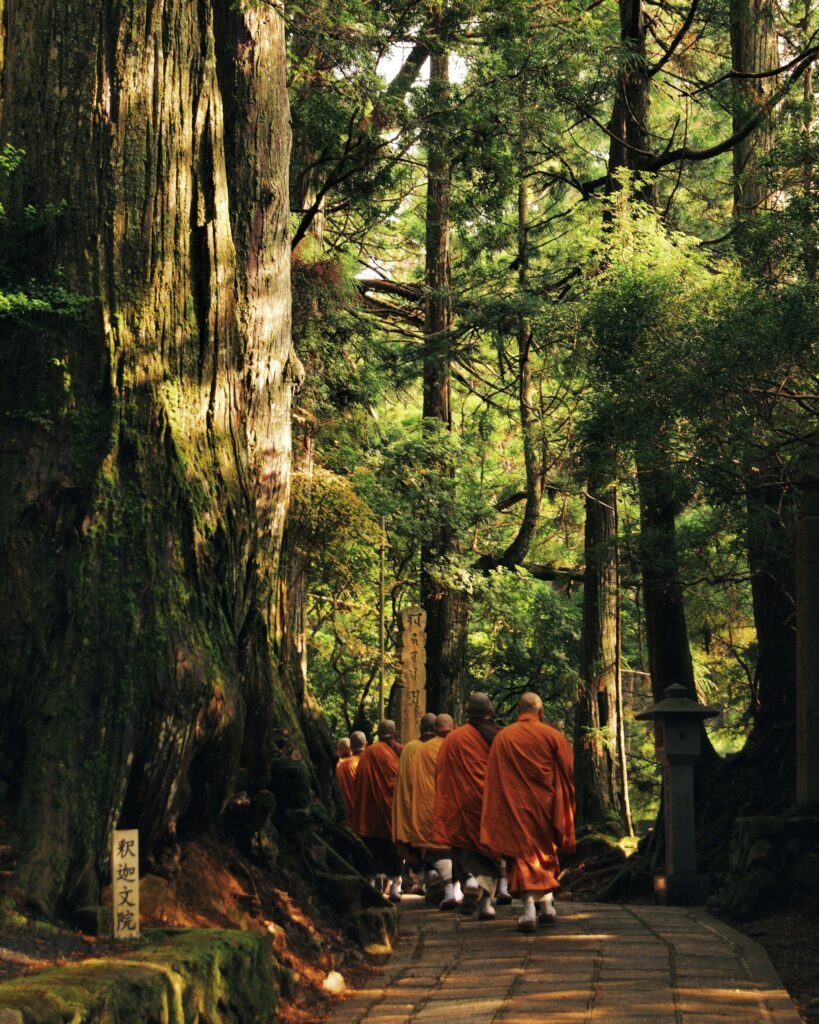
Okunoin is the largest cemetery in Japan and the most atmospheric place on Koyasan: a path of almost 2 km from the Ichinohashi Bridge winds through giant cedar trees past more than 200,000 moss-covered tombstones and memorials, including those of famous samurai clans and modern companies. It leads to the mausoleum of Kobo Daishi, who followers believe is still in eternal meditation. Before the mausoleum stands the Torodo, or Hall of Lamps, filled with more than 10,000 lanterns that are kept burning; it is open 6:00 to 17:00 and free to enter. Bow when you cross Ichinohashi and again at the Gobyobashi Bridge, and note that photography, food and drinks are not allowed beyond Gobyobashi. Many visitors pour water over the Mizumuke Jizo statues as an offering. If you are short on time, a path of just under 1 km starts at the Okunoin-mae bus stop. For a memorable experience, join an evening walking tour of the cemetery with a monk, offered through temple lodgings such as Eko-in.
2. Kongobuji Temple
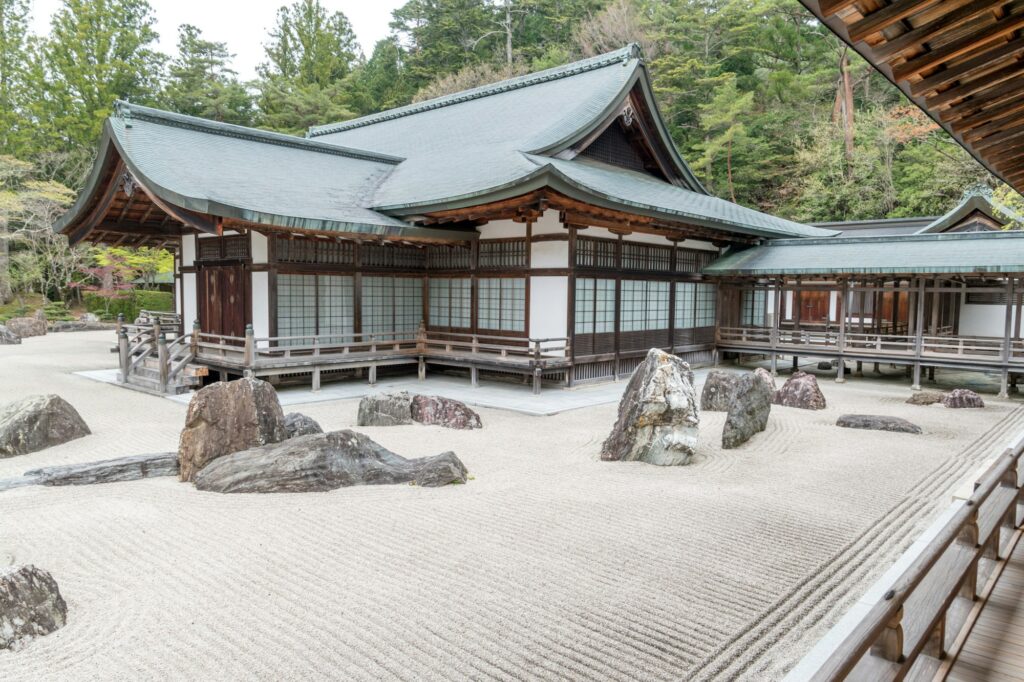
Kongobuji is the head temple of Koyasan Shingon Buddhism, and its long main hall is filled with beautifully painted sliding doors, including the Willow Room by the Kano school painter Kano Tansai and contemporary works by artist Hiroshi Senju. The highlight is Banryutei, the largest rock garden in Japan: 140 granite stones brought from Shikoku are arranged in raked white sand over 2,340 square meters to suggest a pair of dragons rising from a sea of clouds. The temple is open daily from 8:30 to 17:00 (last entry 16:30), and admission is 1,000 yen for adults and 300 yen for elementary school children. You are usually offered green tea and a small sweet in the large reception room, a relaxing break between sights. In autumn 2026 there is a special viewing of the inner Okuden hall from October 24 to November 10 for an extra 500 yen. Kongobuji is in the center of town, an easy walk from both Danjo Garan and the main street.
3. Danjo Garan & Konpon Daito Pagoda
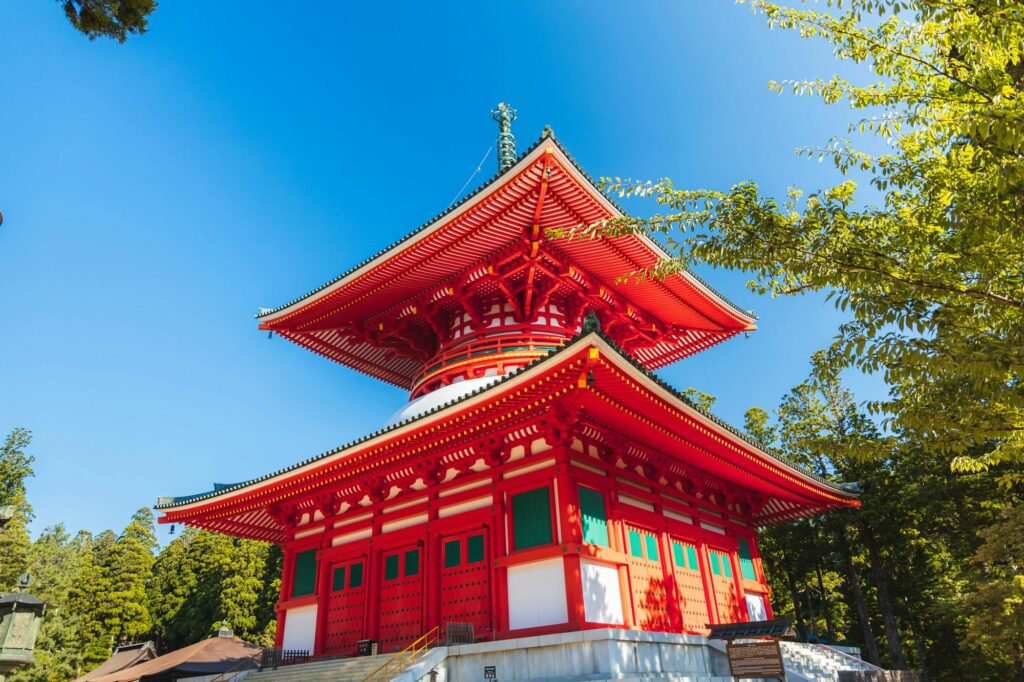
Danjo Garan is the sacred temple complex where Kobo Daishi first built his monastery, and it is the most photogenic spot on Koyasan. Its centerpiece is the vermilion Konpon Daito, a 48.5-meter pagoda believed to be the first two-story tahoto pagoda in Japan. Inside, a giant seated Buddha is surrounded by pillars painted with bodhisattvas, creating a three-dimensional mandala. Entry to the Konpon Daito costs 500 yen (8:30 to 17:00, last entry 16:30), and the Kondo main hall next to it has the same fee and hours; walking around the grounds is free. Look for the Chumon gate, rebuilt in 2015 for Koyasan’s 1,200th anniversary, and the many smaller halls and pagodas among the trees. Across the road, the Reihokan museum (1,300 yen) displays Buddhist statues and paintings from Koyasan’s temples, including many National Treasures. Garan is especially beautiful in autumn, when the maples around the pagoda turn red, and in the quiet early morning before day-trippers arrive.
Where to Stay Near Koyasan
 Where to stay: Koyasan temple lodgings
Hotel links in this section go to Booking.com. If you book through them, we may earn a commission at no extra cost to you.
The best way to experience Koyasan is to stay overnight in a shukubo, or temple lodging. About 50 of the town’s temples welcome guests, with tatami rooms, a shojin ryori dinner of Buddhist vegetarian cuisine (no meat, fish, onions or garlic) and an early-morning service with chanting monks. Book ahead for weekends and autumn, when the best temples fill up.
Luxury
Koyasan Shukubo Ekoin Temple is one of the most popular temple stays for international visitors, close to the entrance of Okunoin. Guests can join the daily morning service and goma fire ritual and try ajikan meditation, and the temple also runs the evening Okunoin walking tour.
Popular temple stay with fire ritual and meditation.
Mid-Range
Koyasan Sanadabo Rengejoin is a traditional temple lodging in the center of town, a short walk from Kongobuji and Danjo Garan, with tatami rooms, shojin ryori meals and morning prayers.
Traditional temple lodging in the town center.
Budget-Friendly
Koyasan Guesthouse Kokuu is a small, modern guesthouse that is a good budget alternative to temple lodging if you want a simple, affordable base for exploring.
Small modern guesthouse for budget travelers.
Compare prices before you book
Hotels in Koyasan on Booking.com
Spend a night in a temple on Koyasan to walk Okunoin at dusk and join the monks’ morning service.
Affiliate link — if you book through Booking.com, we may earn a commission at no extra cost to you.
Quick Tips for Visiting
- Koyasan is about 800 meters above sea level and noticeably cooler than Osaka, so bring a jacket, especially in the evening.
- Buy the Koyasan World Heritage Ticket in Namba: it covers the round-trip train and cable car plus unlimited Koyasan buses for two days.
- Dress modestly and keep your voice down at Okunoin, which is an active cemetery and place of worship.
- Remove your shoes in temple halls and in your lodging, and wear socks you are happy to show.
- Temple lodgings serve dinner early and lock their gates in the evening, so check the times when you arrive.
Getting there by train: Koyasan is reached on the private Nankai Koya Line from Namba in Osaka, which is not covered by the Japan Rail Pass. The limited express takes about 1 hour 25 minutes to Gokurakubashi, where a cable car climbs to Koyasan Station in about 5 minutes, followed by a 10 to 20-minute bus ride into town; allow about 1 hour 40 minutes by limited express or 2 hours by regular train. The Koyasan World Heritage Ticket from Namba costs 3,980 yen as a digital ticket or 4,210 yen on paper, with a version that includes the limited express. If you are coming from Tokyo or Kyoto, ride the Shinkansen or JR trains to Shin-Osaka or Osaka and transfer to the subway for Namba. Read our guide to riding trains in Japan, learn how to ride the Shinkansen, and check whether the JR Pass is worth it.
Frequently Asked Questions
How do I get to Koyasan from Osaka?
Take the Nankai Koya Line from Namba to Gokurakubashi (about 1 hour 25 minutes by limited express), the cable car to Koyasan Station (about 5 minutes) and a bus into town. The JR Pass is not valid on this route.
Can you take photos at Okunoin?
You can take photos along most of the cemetery path, but photography, food and drinks are not allowed beyond the Gobyobashi Bridge near Kobo Daishi’s mausoleum.
How much is Kongobuji Temple?
Admission to Kongobuji is 1,000 yen for adults and 300 yen for elementary school children. It is open daily from 8:30 to 17:00, with last entry at 16:30.
Is it worth staying overnight on Koyasan?
Yes. A night in a temple lodging lets you eat shojin ryori, join the monks’ morning service and walk Okunoin in the quiet of early morning or evening, which a day trip from Osaka cannot match.