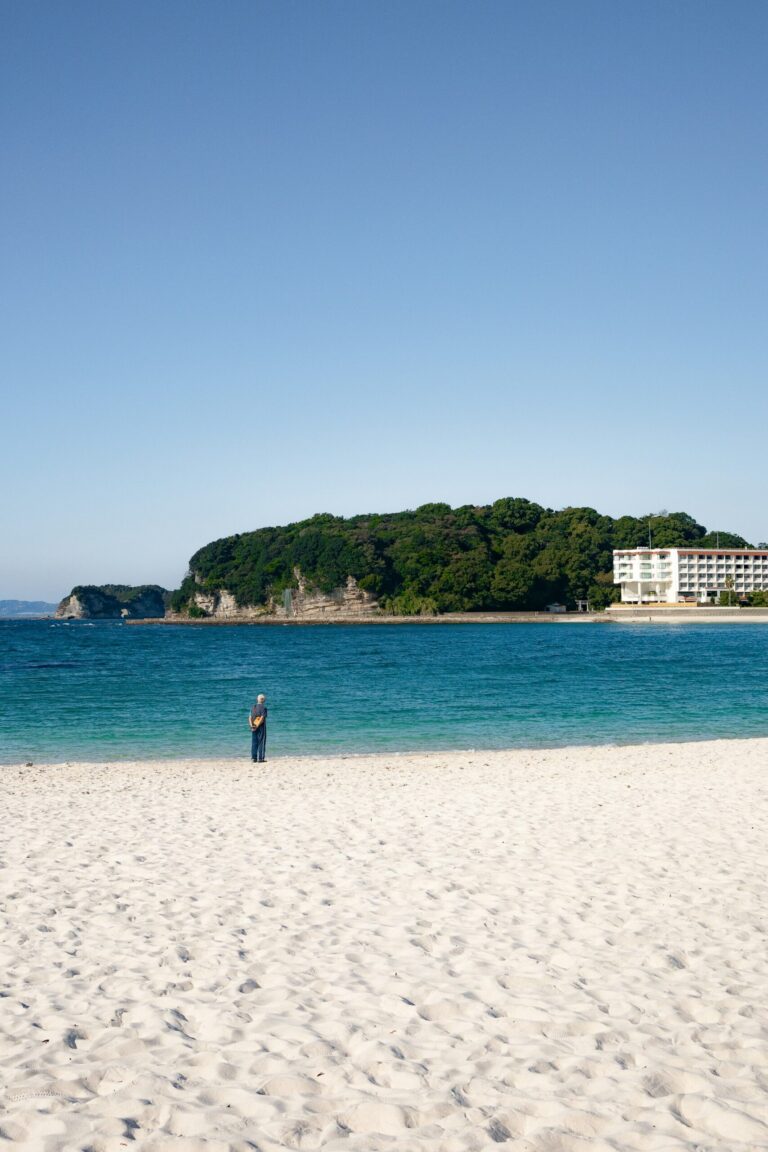
Nachi Falls, the Daimonzaka slope and Kumano Hongu Taisha are the highlights of the Kumano Kodo, the ancient pilgrimage routes through the mountains of southern Wakayama Prefecture. For more than a thousand years, emperors, aristocrats and ordinary pilgrims walked these forest trails to visit the three grand shrines of Kumano, and the routes are now part of a UNESCO World Heritage Site, one of only two pilgrimage routes on the list along with Spain’s Camino de Santiago. You do not need to hike for days to experience them: this guide shows how to see the most iconic sights by bus and on short walks, with entry fees, access tips and the best places to stay.
1. Nachi Falls & Seigantoji Pagoda
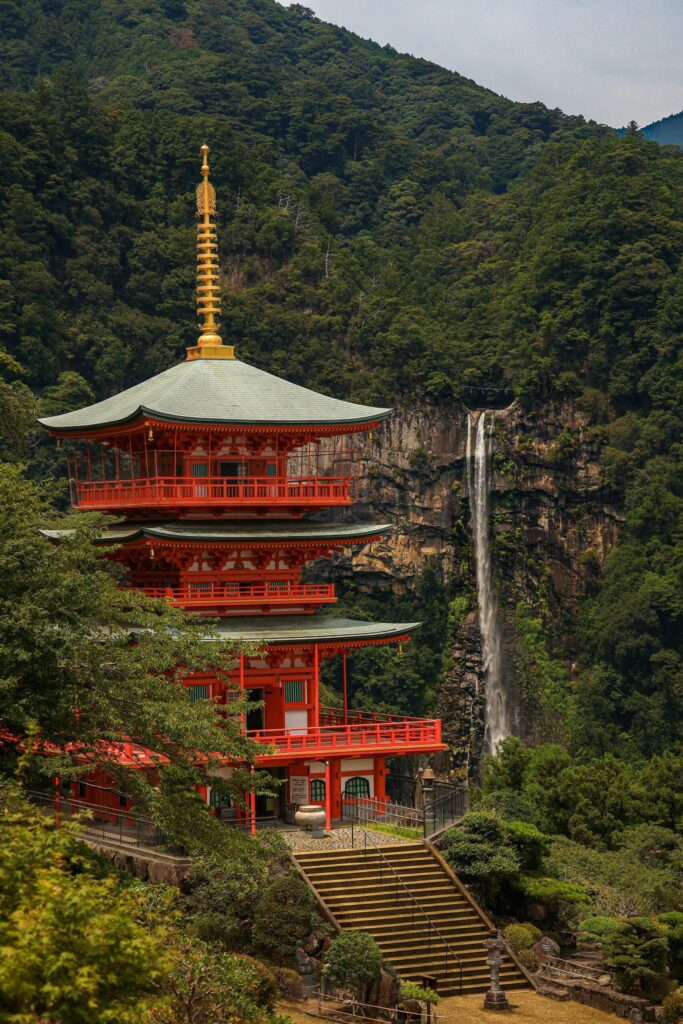
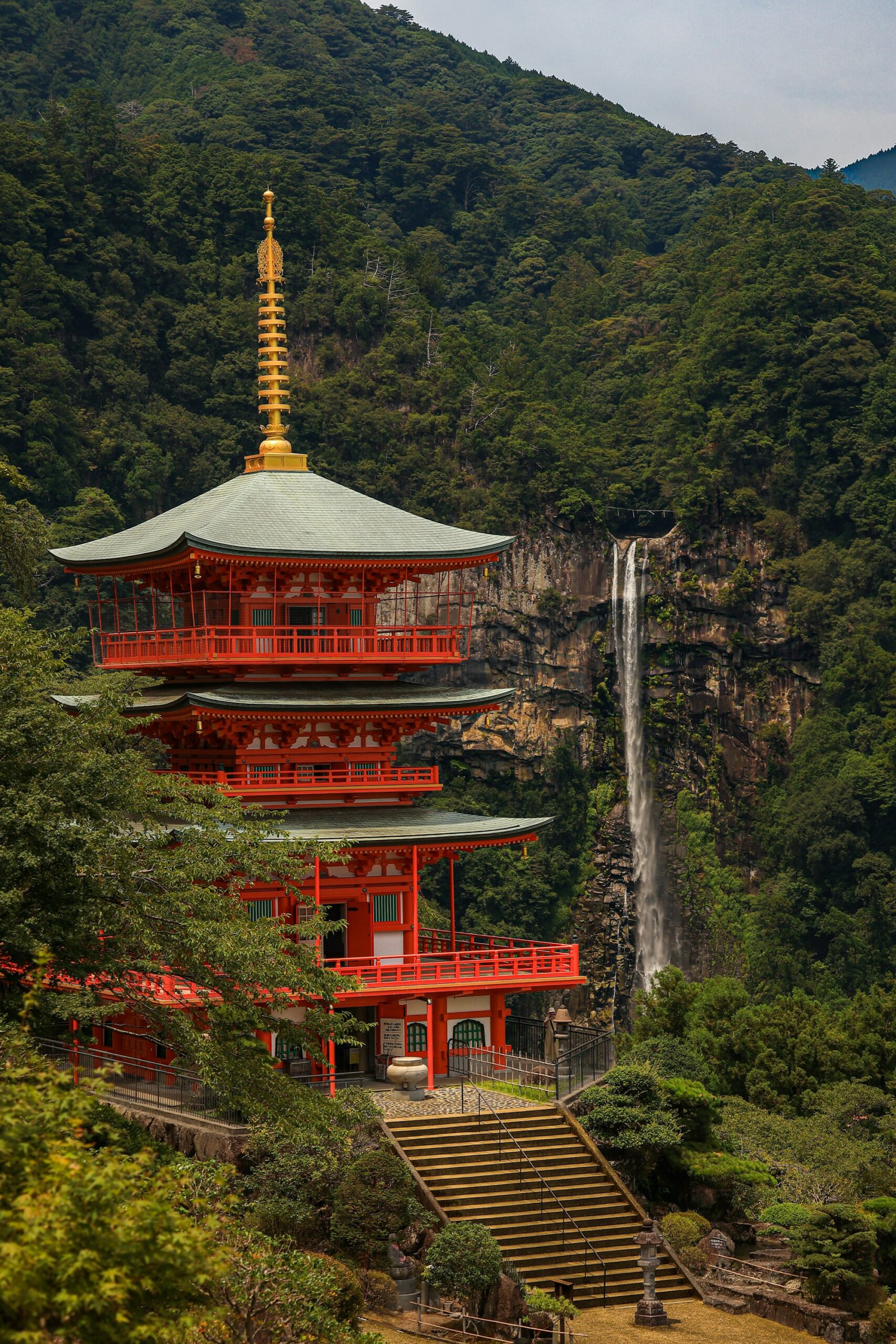
Nachi Falls drops 133 meters in a single plunge, making it the tallest single-drop waterfall in Japan, and it has been worshiped as a deity in its own right since ancient times. The classic view is from the grounds of Seigantoji, a Tendai Buddhist temple that is the first stop on the Saigoku Kannon pilgrimage, where the vermilion three-story pagoda stands in front of the falls with forested mountains behind. You can climb the pagoda for 300 yen. Next door, Kumano Nachi Taisha, one of the three grand shrines of Kumano, sits about 350 meters up the mountain; its grounds are free, and the shrine office is open 6:00 to 16:30. Then walk down to Hiro Shrine at the base of the falls, where a viewing platform right beside the spray costs 300 yen for adults (7:00 to 17:00). Buses from JR Kii-Katsuura Station reach the Nachisan stop in about 30 minutes. Morning light is best for photos of the pagoda and falls together.
2. Daimonzaka Slope
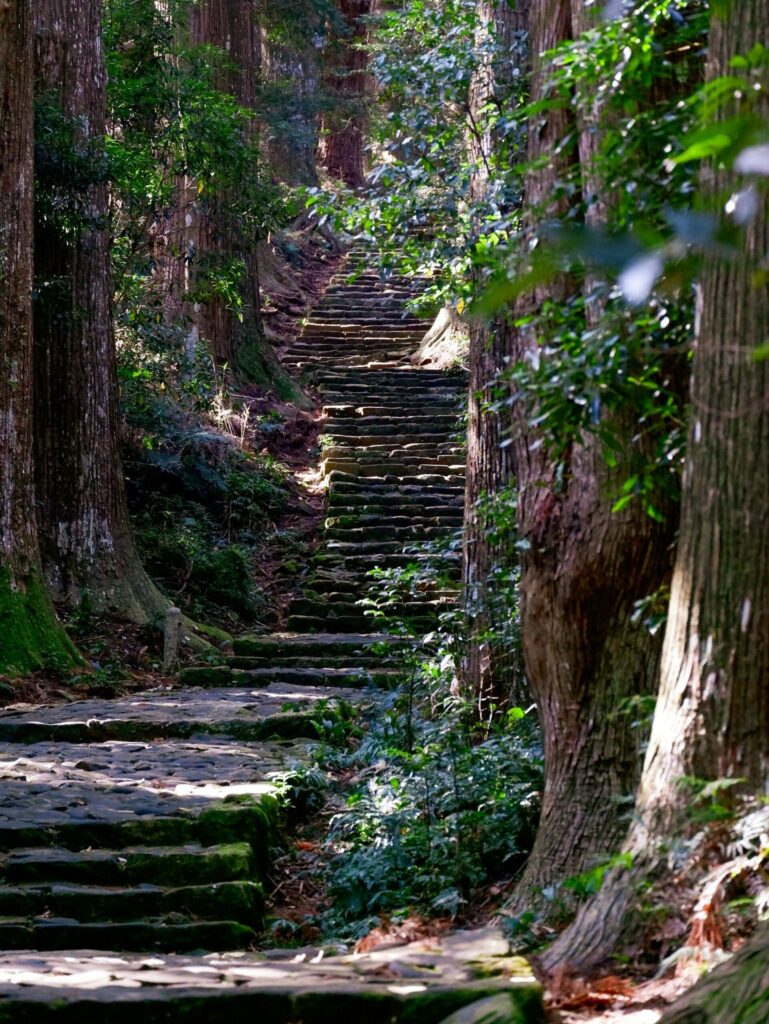
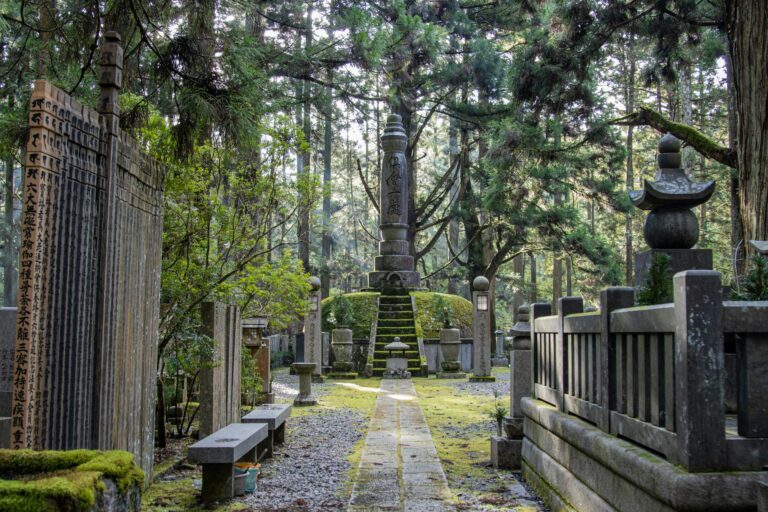
Daimonzaka is the most beautiful short section of the Kumano Kodo and the perfect taste of the trail if you only have an hour. This stone-paved stairway of 267 steps climbs about 600 meters through towering, centuries-old cedar trees to Kumano Nachi Taisha and Seigantoji, and it takes about 20 minutes to walk up at a steady pace. The moss-covered stones, filtered light and silence make it feel like stepping back into the Heian period, when court nobles made the pilgrimage. A popular plan is to take the bus from Kii-Katsuura to the Daimonzaka stop, walk up to the shrine and temple, then continue down to the falls and catch the bus back from the Nachi-no-Taki-mae stop. The stones can be very slippery after rain, which is common in this region, so wear shoes with good grip and take your time on the way down. Go early in the morning to have the path almost to yourself.
3. Kumano Hongu Taisha & Oyunohara
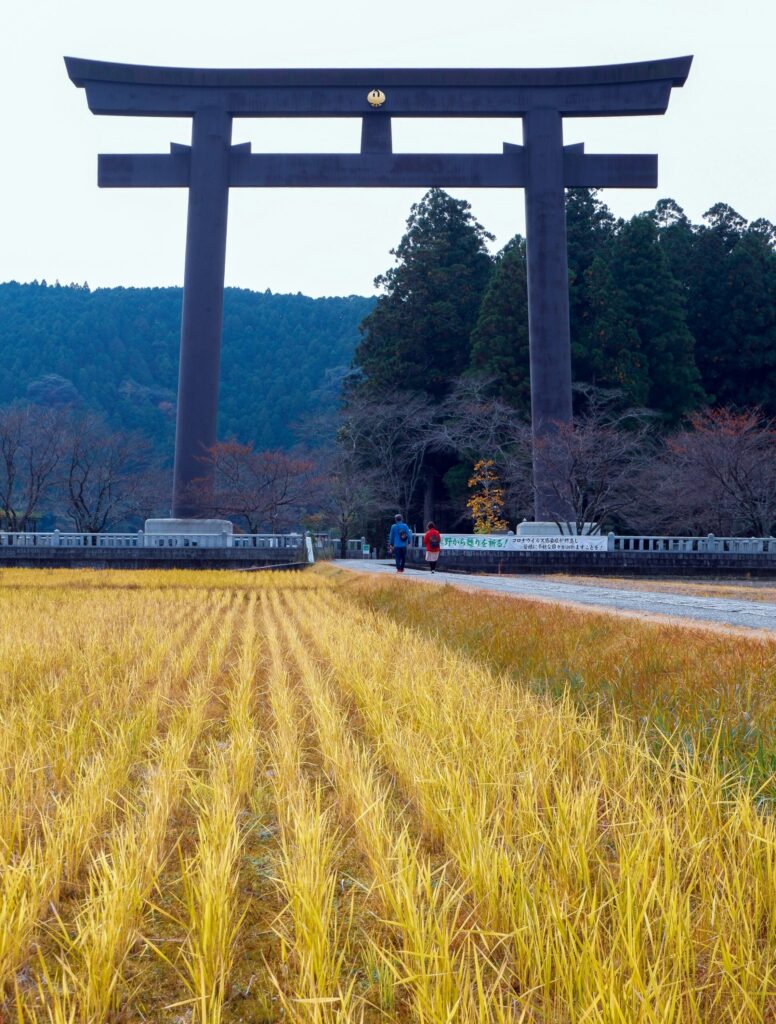
Kumano Hongu Taisha is the head of the more than 3,000 Kumano shrines across Japan and the main goal of pilgrims on the Nakahechi route, the most popular Kumano Kodo trail. Its dark wooden halls with cypress bark roofs stand at the top of a stone staircase lined with banners, and the shrine’s symbol is Yatagarasu, a three-legged crow that you will see on flags, amulets and even Japan’s national soccer team crest. The shrine originally stood on Oyunohara, a sandbank where two rivers meet, until a flood in 1889 destroyed it; the surviving buildings were moved to the current site. Today Oyunohara is marked by the Otorii, a giant steel torii gate 33.9 meters tall and 42 meters wide, built in 2000, that rises above the rice fields. The shrine grounds are free, and the shrine office is open 8:00 to 17:00. Buses take about 2 hours from Kii-Tanabe Station or about 1 hour 20 minutes from Shingu. Nearby hot spring villages such as Kawayu Onsen and Yunomine Onsen make a relaxing overnight stop.
Where to Stay Near Nachi-Katsuura
 Where to stay: Nachi-Katsuura
Hotel links in this section go to Orbitz. If you book through them, we may earn a commission at no extra cost to you.
The fishing port of Kii-Katsuura in Nachikatsuura town is the most practical base for Nachi Falls and Daimonzaka: it has the train station, frequent buses to Nachisan, hot spring hotels and some of the best fresh tuna in Japan. If you plan to visit Kumano Hongu Taisha as well, consider adding a night at a hot spring village near Hongu such as Kawayu Onsen.
Luxury
Kumano-bettei Nakanoshima is a hot spring hotel on a small island in Katsuura Bay, reached by the hotel’s boat from the port, with ocean-view baths and seafood dinners.
Hot spring hotel on its own island in the bay.
Mid-Range
Hotel Urashima is a large hot spring resort hotel in Katsuura with several baths, a classic choice for a relaxing night before or after visiting Nachi.
Large hot spring resort hotel in Katsuura.
Budget-Friendly
Guesthouse Daimonzaka is a small inn near the foot of the Daimonzaka slope, so you can walk the stone steps early in the morning before the tour buses arrive.
Small inn right by the Kumano Kodo.
Compare prices before you book
Hotels in Nachi-Katsuura on Orbitz
Stay in Kii-Katsuura for easy buses to Nachi Falls and Daimonzaka, hot spring baths and fresh tuna.
Check Nachi-Katsuura hotel prices →
Affiliate link — if you book through Orbitz, we may earn a commission at no extra cost to you.
Quick Tips for Visiting
- Wear shoes with good grip: the stone steps of Daimonzaka and the shrine staircases are slippery when wet.
- Buses in the Kumano area run infrequently, so check return times before you set off; extra autumn buses run from September 19 to December 10, 2026.
- Carry cash for bus fares, entry fees and small shops.
- If you plan to hike, check the Tanabe City Kumano Tourism Bureau for trail closures; part of the coastal Ohechi route is closed until about April 2027.
- Ship your large luggage ahead with a luggage delivery service and travel with a small bag.
Getting there by train: From Osaka, JR Limited Express Kuroshio trains run from Shin-Osaka and Tennoji along the Kii Peninsula coast. They reach Kii-Tanabe, the gateway for buses to Kumano Hongu Taisha, in about 2 hours, and some trains continue past Shirahama to Shingu and Kii-Katsuura for Nachi. All seats are reserved, and the Japan Rail Pass is valid if you reserve a seat; not every Kuroshio goes beyond Shirahama, so check the timetable. Read our guide to riding trains in Japan, learn how to ride the Shinkansen to reach Shin-Osaka, and check whether the JR Pass is worth it.
Frequently Asked Questions
How tall is Nachi Falls?
Nachi Falls is 133 meters tall and about 13 meters wide, the tallest single-drop waterfall in Japan.
How much does it cost to see Nachi Falls?
You can see Nachi Falls for free from the area around Seigantoji. The viewing platform at Hiro Shrine at the base of the falls costs 300 yen for adults, and climbing the Seigantoji pagoda costs 300 yen.
How do I get to Kumano Hongu Taisha?
Take a bus from JR Kii-Tanabe Station (about 2 hours) or from Shingu Station (about 1 hour 20 minutes). Hikers usually arrive on foot on the Nakahechi route of the Kumano Kodo.
Can I visit Nachi Falls and Hongu Taisha in one day?
It is possible by car, but by public transportation it makes for a very long day. Most visitors spend a night in Kii-Katsuura for Nachi and another in a hot spring village near Hongu such as Kawayu Onsen.