Last checked: September 2026 · Part of our Japan rental car guide
Street parking barely exists in Japan, so most drivers use small, unstaffed paid lots called coin parking (コインパーキング). They are everywhere: a handful of spaces squeezed between houses, a lot behind a convenience store, a corner by the station. There’s no attendant, no app to download, and the payment machine speaks Japanese. Here’s how the three types work and how to pay without getting stuck behind a metal flap.
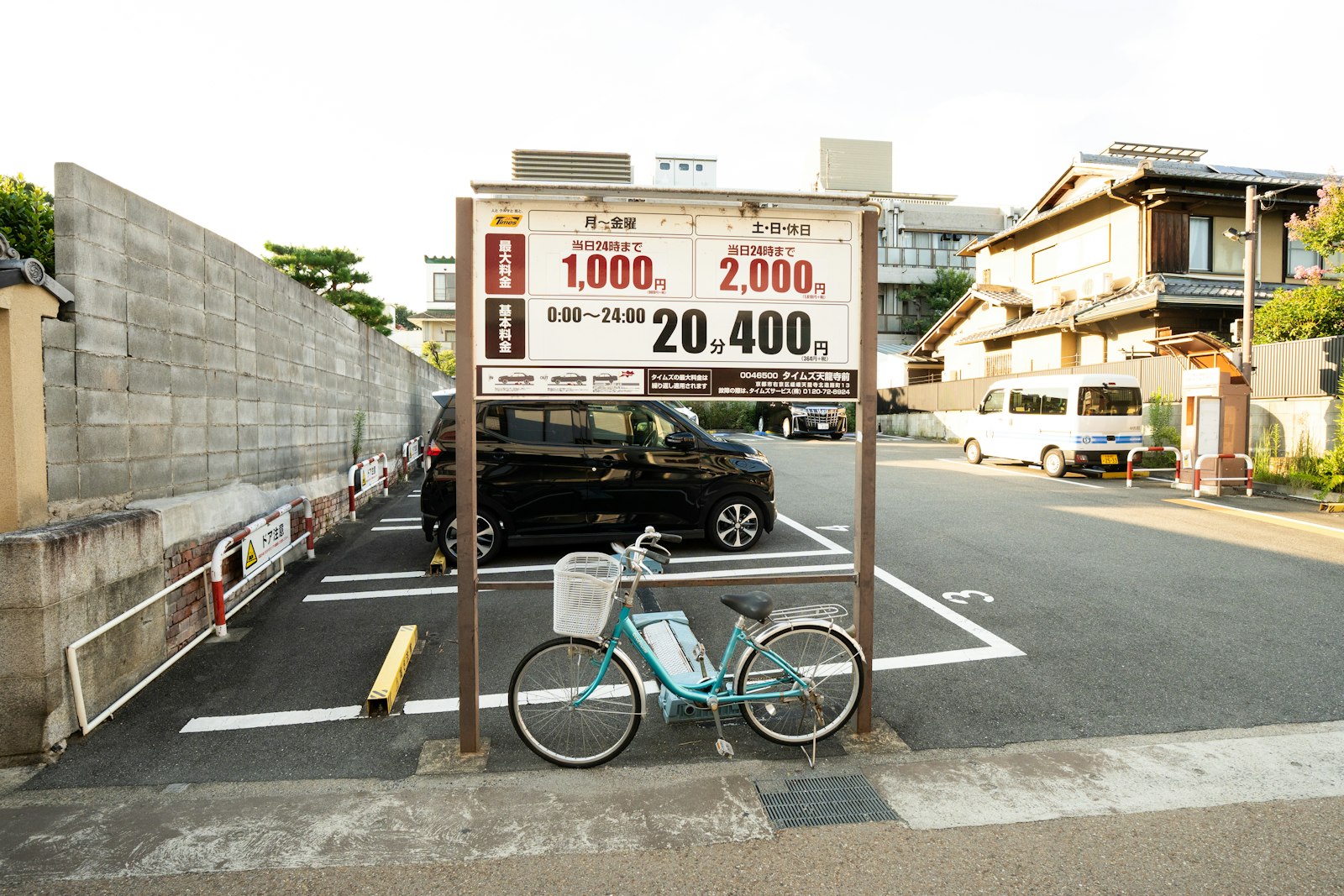
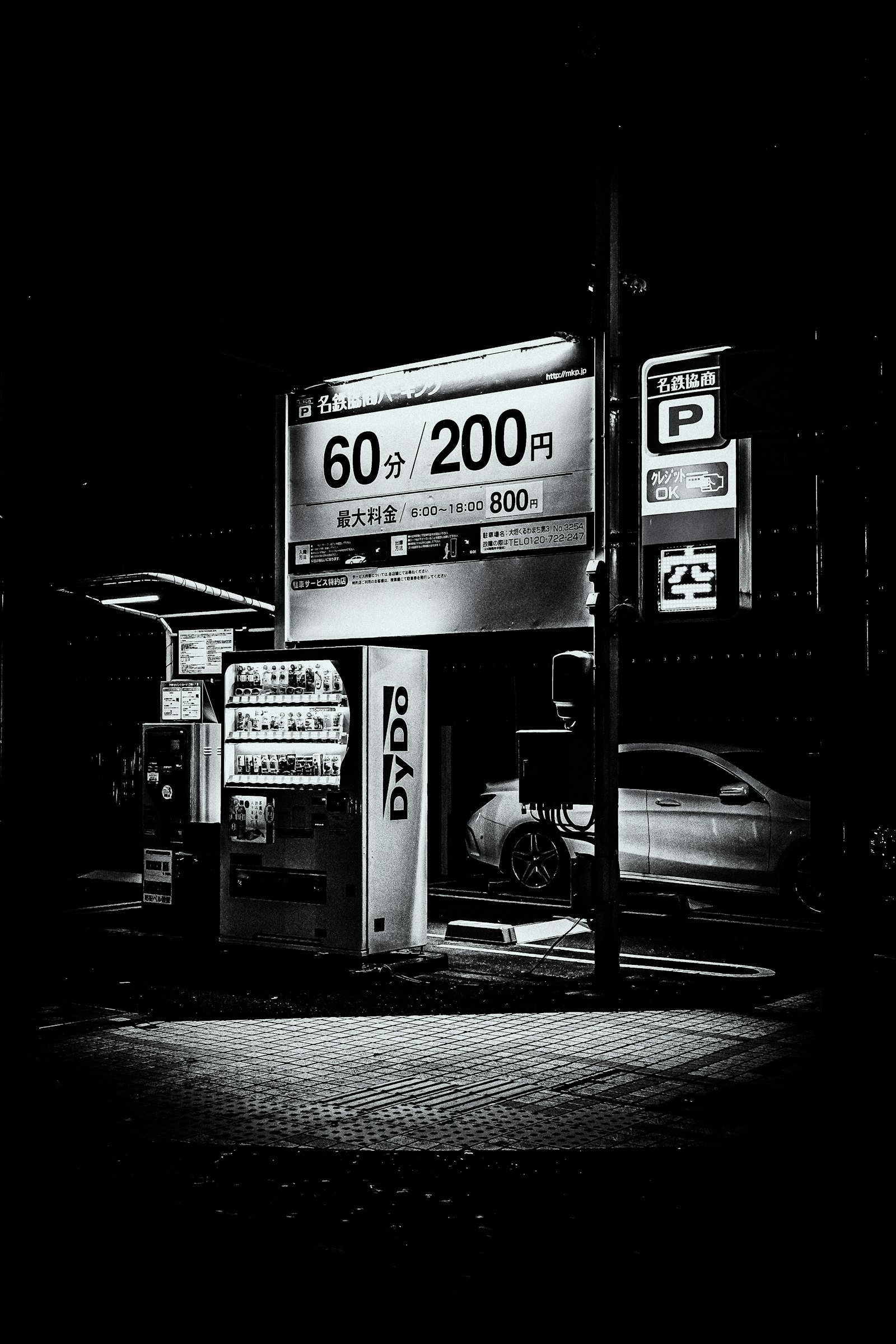
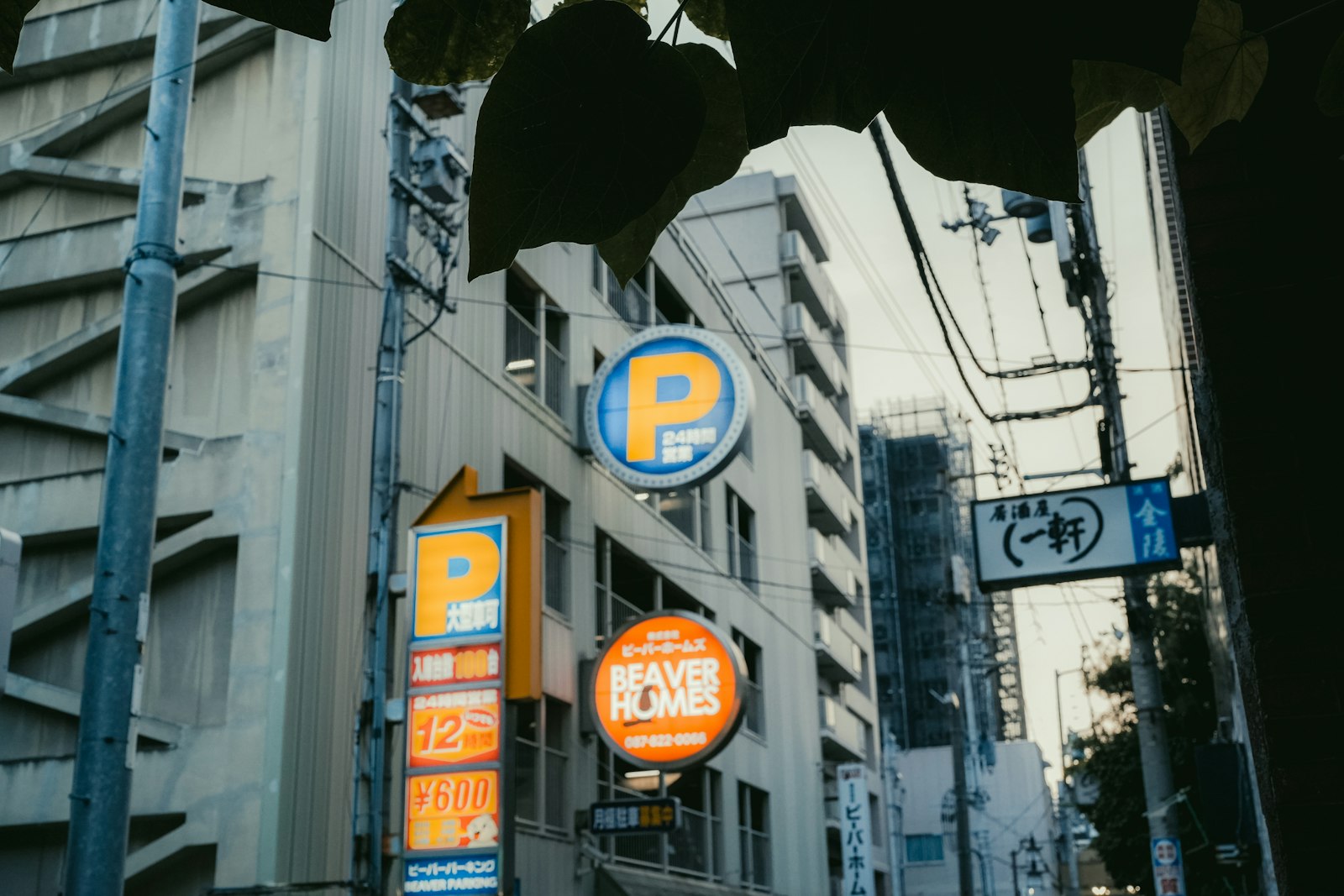
- Check the price sign first: a rate like ¥200 / 30 min plus a 最大料金 (maximum charge), which often applies only to certain hours.
- Look for 空 (vacant) or 満 (full) on the sign at the entrance.
- Flap-type lots: park, and a metal flap rises under your car after a few minutes. To leave, enter your space number at the machine, pay, and the flap drops. Drive off within about 3 minutes.
- Bring ¥1,000 bills and coins. Many machines don’t take ¥5,000 or ¥10,000 bills, though more and more accept credit cards and Suica.
Find coin parking near you
The map shows an example area. Tap a button to open Google Maps in English with the parking lots closest to you right now.
The three types of coin parking
A flap locks your car
The most common in cities. Each space has a flap in the middle that rises a few minutes after you park and drops when you pay.
Take a ticket, pay, exit
Like a US garage. Take a ticket (駐車券) at the entrance barrier, pay at the machine or exit gate, and the bar lifts.
Your number plate is the ticket
No flap or gate. Cameras read your plate. At the machine, enter your space number or the 4-digit number on your plate and pay.
Monthly lots · 月極
Signs saying 月極 (tsukigime) mean monthly contract parking. Don’t park there, even for a few minutes.
How to read the price sign
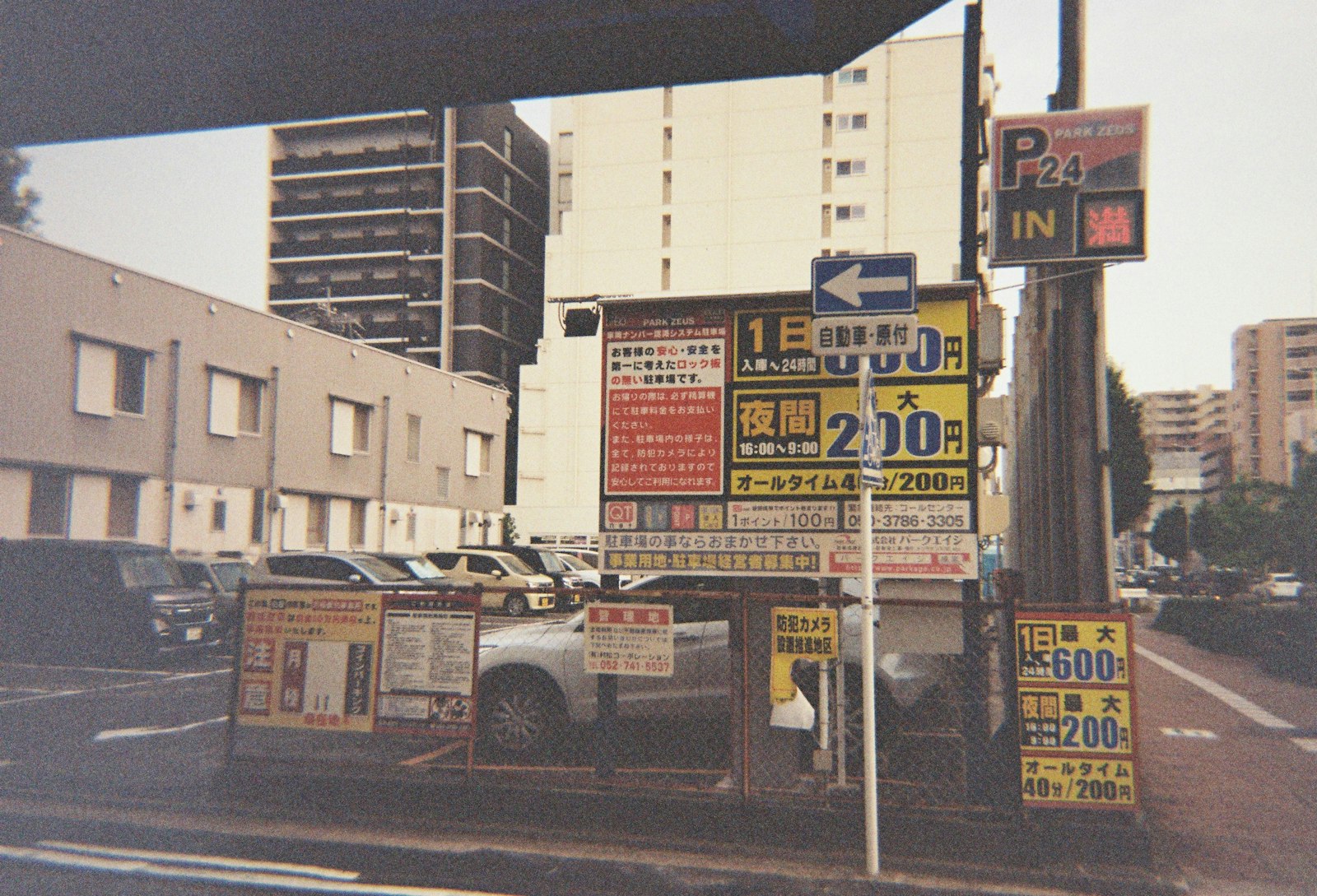
| Sign says | Meaning | Example |
|---|---|---|
| 30分 ¥200 | ¥200 for every 30 minutes (or part of it) | Parking 1 hour 10 min = ¥600 |
| 最大料金 / 打ち切り | Maximum charge (a daily cap) | 最大 ¥1,200: you never pay more than ¥1,200 in that window |
| 8:00〜20:00 最大 ¥900 | The cap only applies between those hours | Park at 7 pm and stay overnight: the cap stops at 8 pm and the base rate runs all night |
| 入庫後24時間 最大 | Cap for 24 hours after you enter | Best for overnight stays |
| 繰り返し適用 / 繰返し | The cap repeats each day | 2 days = 2 × the cap |
| 夜間 最大 | Night-time cap | 夜間 20:00〜8:00 最大 ¥400 |
| 空 / 満 | Spaces available / full | Shown on a lit sign at the entrance |
Step by step: flap-type coin parking
- Park fully inside the linesDrive in so the flap sits under the middle of your car. Note the space number painted on the ground or on a plate in front of you.
- Wait for the flap (or don’t)After about 3–5 minutes the flap (ロック板) rises. You don’t need to do anything. Just don’t drive off after it rises.
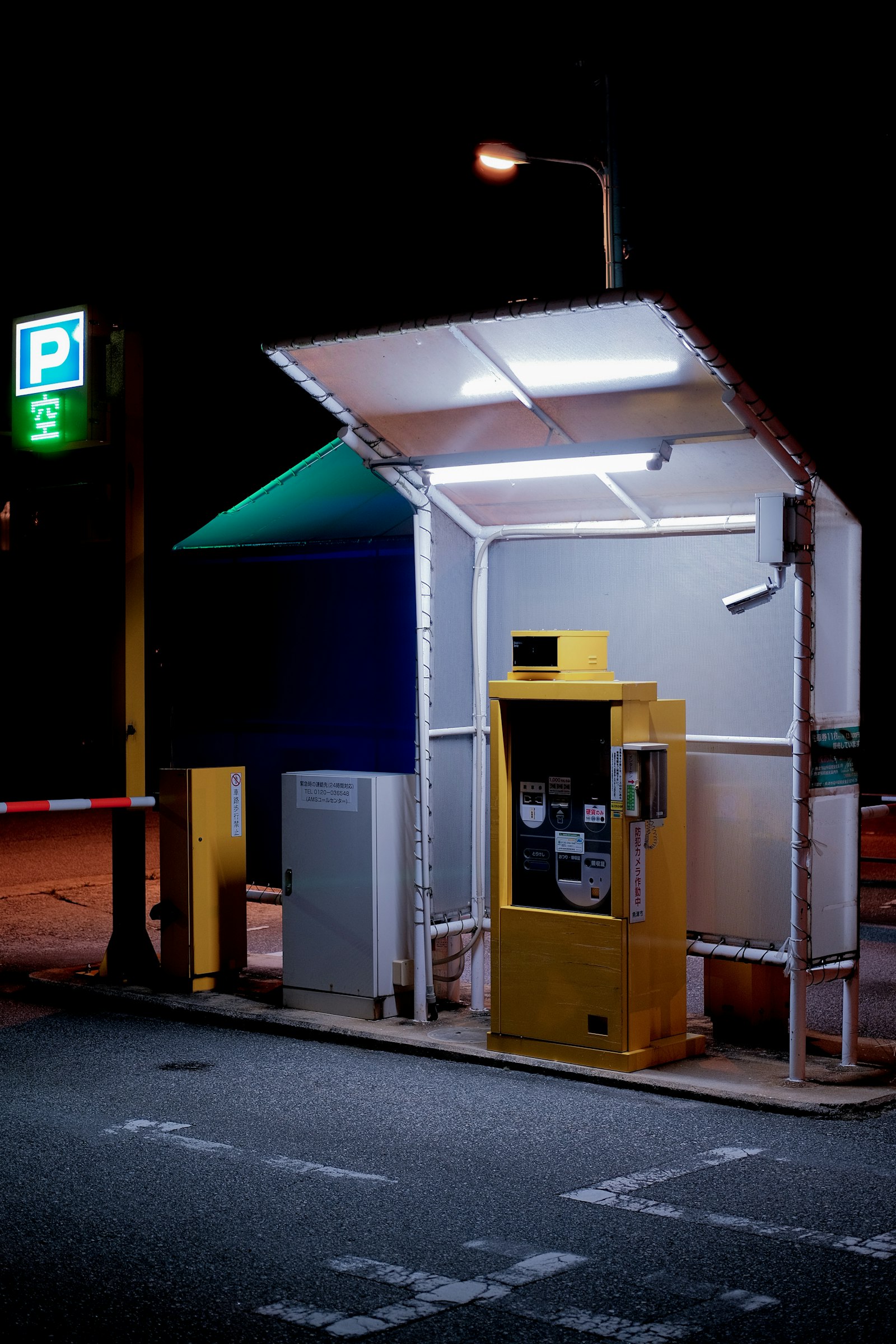
- When you come back, go to the machineFind the payment machine (精算機). One machine serves the whole lot.
- Enter your space numberType the number and press 確認 (confirm) or 精算 (pay). The screen shows your space and the fee.
- PayInsert coins and ¥1,000 bills, or choose card or IC if the machine takes them. Press 領収書 if you want a receipt.
- Drive out right awayThe flap lowers within seconds. Leave within about 3 minutes, or it may rise again and charge you more.
Screen guide: the payment machine, translated
Machines from Times, Repark, NPC24H and other operators look different, but they ask for the same things. The keys you press are highlighted.
Illustration of a typical coin parking payment machine. Wording and layout vary by operator.
Stuck? Common problems and fixes
I only have a ¥10,000 bill
Many machines accept only ¥1,000 bills (千円札のみ). Break it at a convenience store first. Newer machines show which bills they take on the front.
I forgot my space number
Walk back to the car and check the number on the ground or on the plate in front of the space. Paying for the wrong space won’t lower your flap.
The flap didn’t go down
Check that you paid for the right number. Otherwise press the intercom (呼出 / インターホン) on the machine. Operators handle it remotely, often in simple English.
My card was rejected
Choose クレジット before inserting the card, and try the chip. If it still fails, pay in cash. Foreign cards are not accepted everywhere.
Cheat sheet: words on parking signs and machines
| Japanese | Reading | Meaning |
|---|---|---|
| 駐車場 / P | chūshajō | Parking lot |
| 空 / 満 | kū / man | Vacant / full |
| 駐車番号 / 車室番号 | chūsha bangō / shashitsu bangō | Space number |
| 精算 / 精算機 | seisan / seisanki | Payment / payment machine |
| 最大料金 | saidai ryōkin | Maximum charge |
| 入庫 / 出庫 | nyūko / shukko | Entering / leaving the lot |
| 駐車券 | chūshaken | Parking ticket |
| 千円札のみ | sen-en satsu nomi | ¥1,000 bills only |
| 月極 | tsukigime | Monthly contract parking (not for visitors) |
| 領収書 | ryōshūsho | Receipt |
Parking rules to know
- Don’t park on the street unless there’s a marked meter bay. Illegal parking brings a fine, and your rental company will pass on any charges.
- No parking within 5 meters of an intersection or crosswalk, and never in front of garages or fire hydrants.
- If you get a parking ticket (a yellow tag on the car), tell the rental company when you return the car. They will explain how to pay it.
Planning a road trip? Our complete guide to renting a car in Japan covers everything else.
Useful phrases
FAQ
How do you pay for coin parking in Japan?
Go to the lot’s payment machine, enter the number of the space you parked in, check the fee and pay with coins, ¥1,000 bills, or a card or IC card if accepted. The flap under your car lowers, and you should drive out within about 3 minutes.
How much is coin parking in Japan?
In big city centers it is often ¥200–¥400 per 15–30 minutes, with daily maximums around ¥1,000–¥3,000. Suburban and rural lots are much cheaper. Always check the hours the maximum charge applies to.
What does 最大料金 mean on a parking sign?
最大料金 (saidai ryōkin) is the maximum charge, a cap on what you pay. Check the small print: it may apply only during certain hours, only once, or for 24 hours after you enter.
Do coin parking machines accept credit cards?
Many newer machines accept credit cards and transit IC cards such as Suica, but not all, and some reject foreign cards. Carry coins and ¥1,000 bills as a backup; many machines don’t take ¥5,000 or ¥10,000 bills.
What happens if I leave coin parking without paying?
With flap-type lots you physically can’t drive out without damaging the car. Camera-type lots record your number plate, and unpaid fees are pursued through the car’s owner, which for a rental means the rental company.