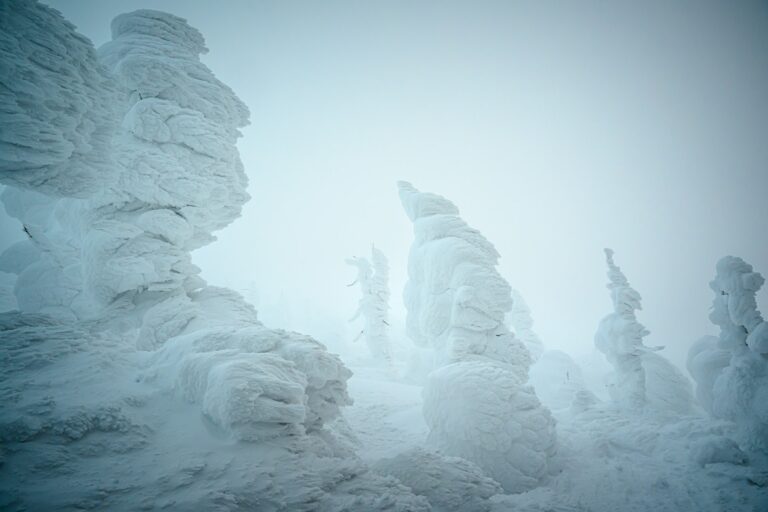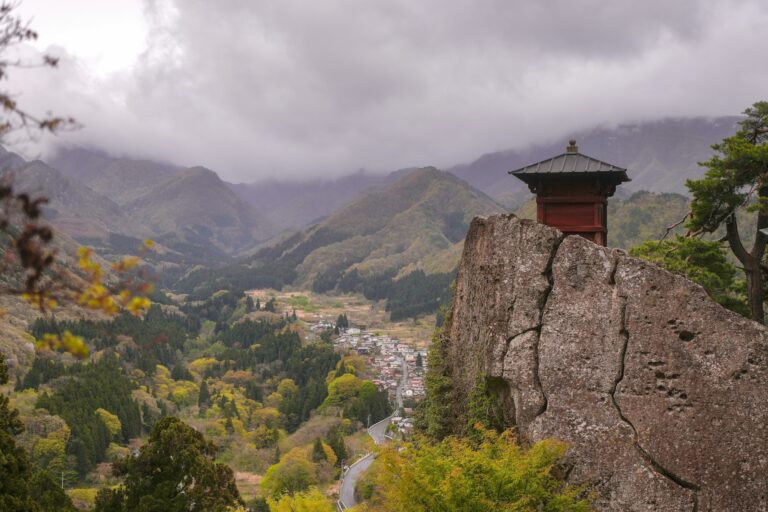
Mount Haguro’s Five-Story Pagoda, the stone-step pilgrimage to the summit shrine of the Dewa Sanzan, and the jellyfish of Kamo Aquarium are the highlights of Tsuruoka and the Shonai region on Yamagata’s Sea of Japan coast. The Dewa Sanzan, the three sacred mountains of Haguro, Gassan and Yudono, have drawn pilgrims and mountain ascetics called yamabushi for more than a thousand years, and their vegetarian cuisine helped Tsuruoka become Japan’s first UNESCO Creative City of Gastronomy in 2014. This guide covers the three highlights, practical access tips and where to stay in and around Tsuruoka.
1. Mount Haguro Five-Story Pagoda
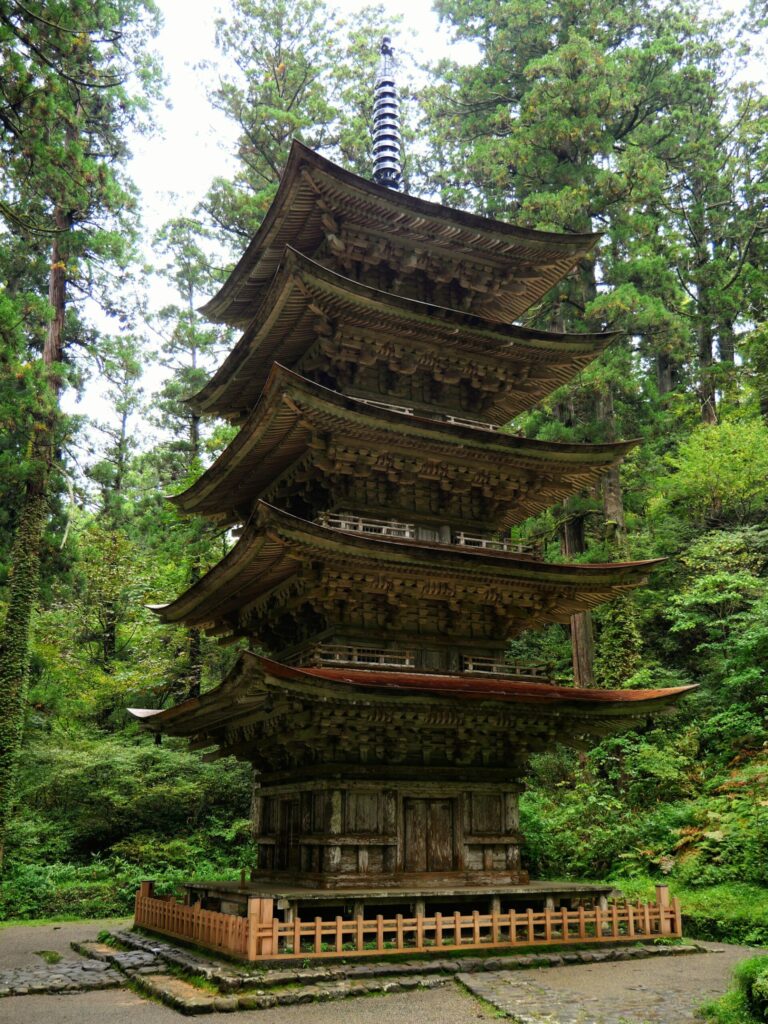
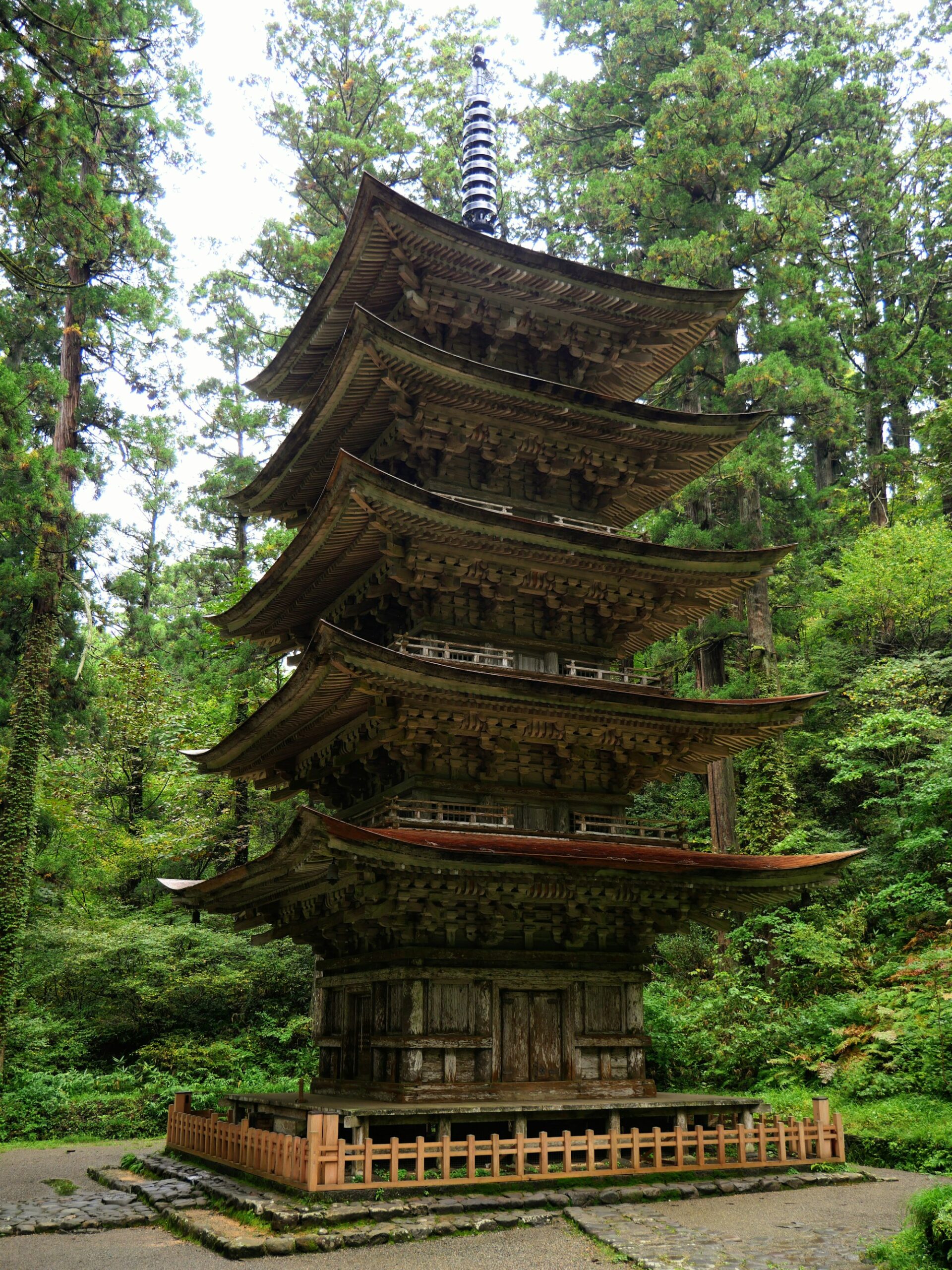
Hidden in a forest of giant cedars near the foot of Mount Haguro, the Five-Story Pagoda is one of the most atmospheric sights in northern Japan. Its plain, unpainted wood blends into the trees, and it is a National Treasure; a pagoda is said to have stood here since the 10th century, and the current structure dates from 1372. Its roof was re-covered in 2023 and 2024, and the scaffolding has since been removed. To reach it, enter through the Zuishinmon gate and walk down a short stretch of stone steps, crossing a small red bridge near Suga Falls. Along the way you pass the Jiji-sugi, or “Grandpa Cedar,” a tree more than 1,000 years old and about 43 meters tall. The pagoda is free to view from outside and is beautiful in fresh green, autumn colors or snow. Mornings are quiet, and light filtering through the cedars makes for great photos.
2. The 2,446 Stone Steps to the Summit Shrine
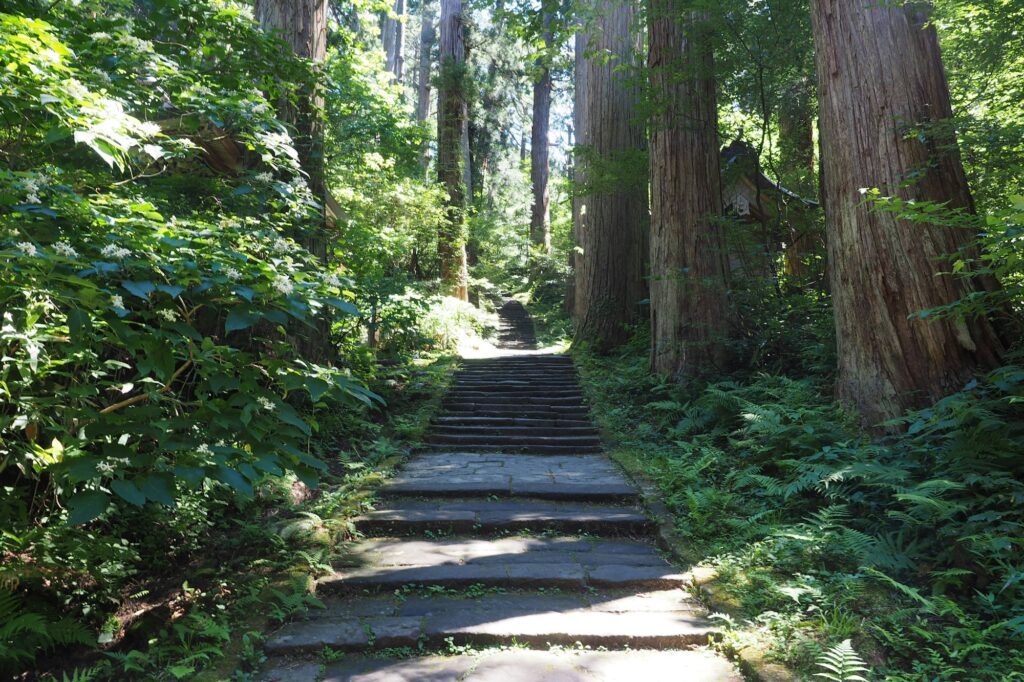
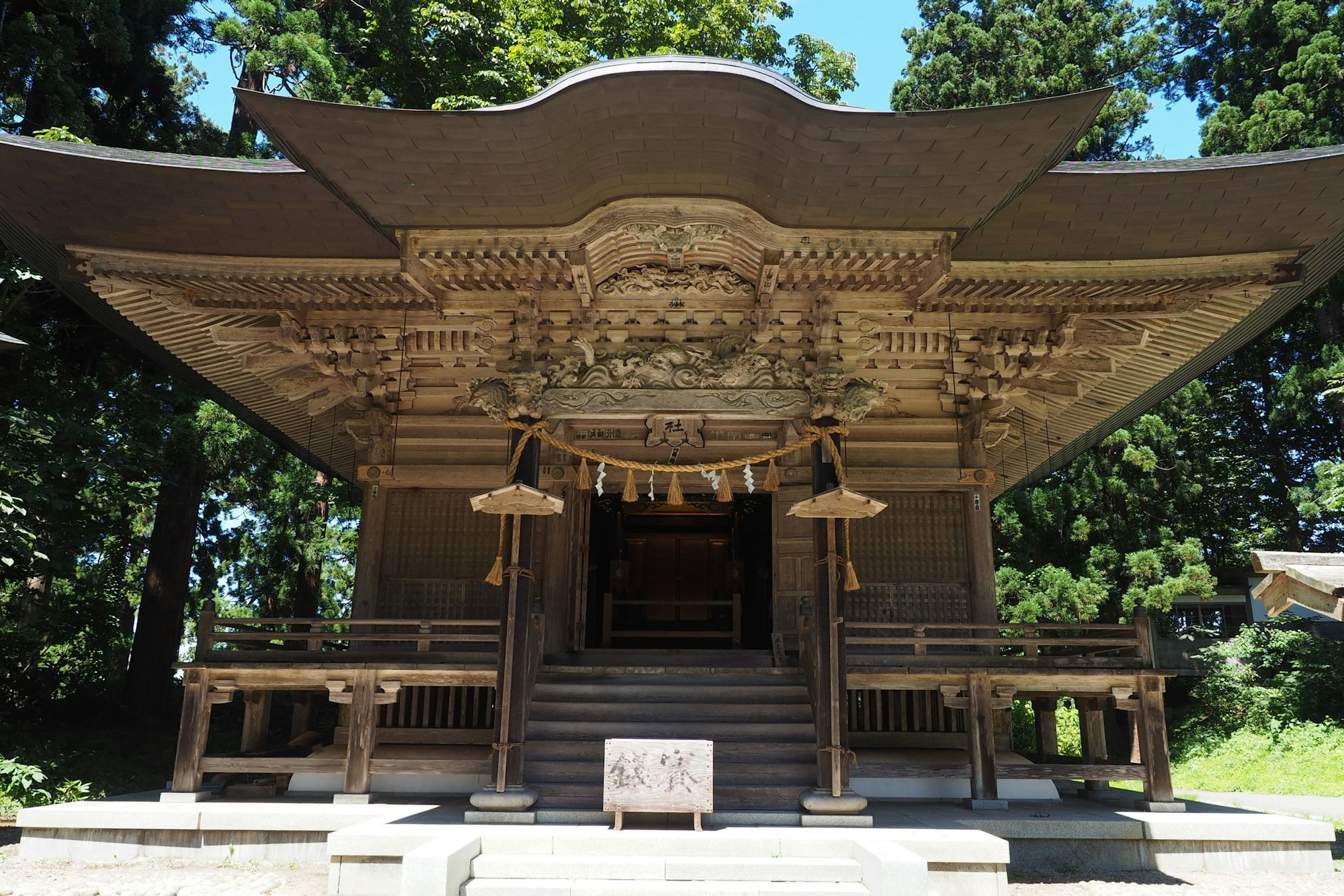
Beyond the pagoda, the old pilgrim route climbs 2,446 stone steps through a cedar avenue that is a Natural Monument and holds three stars in the Michelin Green Guide. It is about 1.7 kilometers from the Zuishinmon gate to the summit, and most people take around an hour, resting at a teahouse about halfway that serves tea and sweets. Look out for 33 small carvings hidden in the steps, said to bring good luck if you find them all. At the top stands the Sanjin Gosaiden, built in 1818, a vast hall with one of the thickest thatched roofs in Japan, about 2.1 meters, which enshrines the deities of all three Dewa Sanzan mountains. The summit area also has the Ideha Museum (400 yen) on the history of the mountains and the yamabushi. If you prefer to walk downhill, take the bus to the summit first and descend the steps to the pagoda.
3. Kamo Aquarium
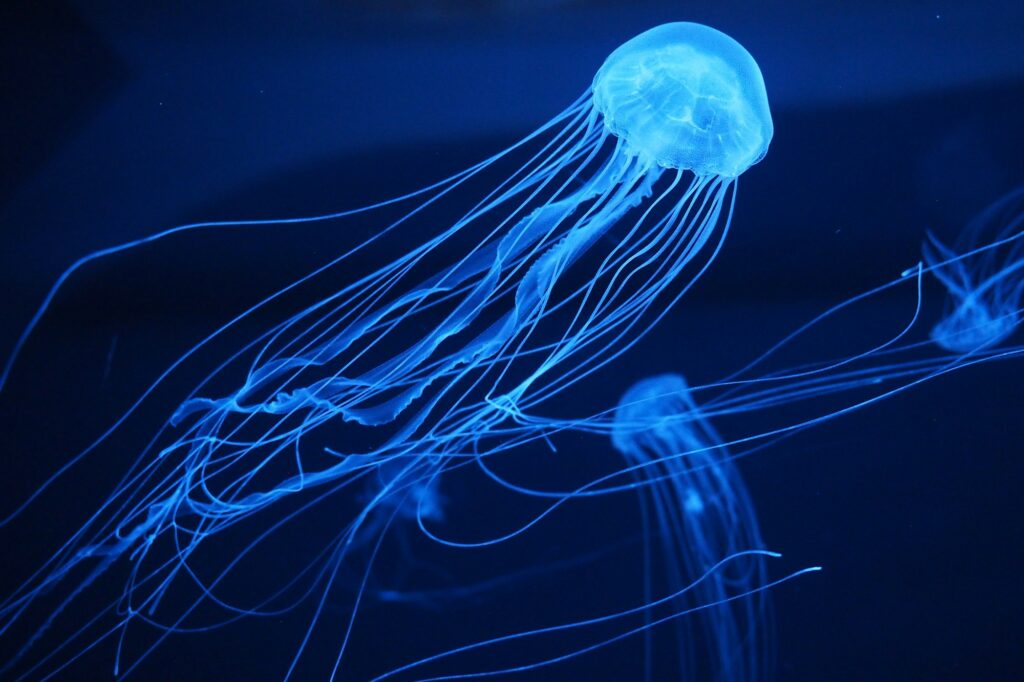
Kamo Aquarium, on the coast west of central Tsuruoka, is famous for having the world’s largest collection of jellyfish species, a record recognized by Guinness World Records. After renovation, it reopened in spring 2026 with about 100 species on display, from tiny glowing jellies to large drifting moon jellyfish in a huge circular tank. The dimly lit galleries are mesmerizing for adults and kids alike, and the aquarium also shows fish and marine life from the local Sea of Japan coast. Admission is 1,500 yen for high school students and adults and 500 yen for elementary and junior high students, and it opens 9:00 to 17:00 (last entry 16:00). Buses from Tsuruoka Station bound for Yunohama Onsen via Kamo take about 30 to 40 minutes. Pair a visit with an evening at Yunohama Onsen, a seaside hot spring town known for sunsets over the Sea of Japan.
Where to Stay Near Tsuruoka
 Where to stay: Tsuruoka
Hotel links in this section go to Booking.com. If you book through them, we may earn a commission at no extra cost to you.
Tsuruoka is the base for Mount Haguro, Kamo Aquarium and the Shonai coast. Stay near Tsuruoka Station for bus connections, at Yunohama Onsen for a seaside hot spring night, or in one of the traditional shukubo pilgrim lodges in the village at the foot of Mount Haguro for the full Dewa Sanzan experience.
Luxury
Shonai Hotel Suiden Terrasse is a striking design hotel set among rice paddies on the edge of Tsuruoka, with wooden architecture, large baths and calm rural views, the most memorable stay in the region.
Design hotel among the rice paddies near Tsuruoka.
Mid-Range
Kameya Hotel is a hot spring hotel at Yunohama Onsen with sea-view rooms and open-air baths, close to Kamo Aquarium and great for watching the sunset.
Seaside hot spring hotel with open-air baths.
Budget-Friendly
Hotel Route-Inn Tsuruoka Ekimae is a reliable chain hotel by Tsuruoka Station, convenient for buses to Mount Haguro and Kamo Aquarium.
Hotel Route-Inn Tsuruoka Ekimae
Reliable chain hotel by Tsuruoka Station.
Compare prices before you book
Hotels in Tsuruoka on Booking.com
Compare hotels, ryokan and lodges in Tsuruoka, Yunohama Onsen and around Mount Haguro.
Affiliate link — if you book through Booking.com, we may earn a commission at no extra cost to you.
Quick Tips for Visiting
- Take the bus from Tsuruoka Station to the summit (about 53 minutes, 1,400 yen) and walk down the 2,446 steps to the pagoda.
- The stone steps can be slippery after rain or snow, so wear shoes with good grip.
- Try shojin ryori, the vegetarian temple cuisine of the Dewa Sanzan, at a shukubo lodge or in Tsuruoka.
- Gassan and Yudono, the other two sacred mountains, are reachable only in the warmer months.
- Allow at least half a day for Mount Haguro and two hours for Kamo Aquarium.
Getting there by train: From Tokyo, take the Joetsu Shinkansen to Niigata and transfer to the Inaho limited express up the Sea of Japan coast to Tsuruoka. Alternatively, fly from Haneda to Shonai Airport in about an hour and take the airport bus to Tsuruoka Station. Read our guide to riding trains in Japan, learn how to ride the Shinkansen, and check whether the JR Pass is worth it for your route.
Frequently Asked Questions
How many steps are there on Mount Haguro?
There are 2,446 stone steps along the 1.7-kilometer route from the Zuishinmon gate to the summit. Most people take about an hour to climb.
Is the Mount Haguro Five-Story Pagoda free?
There is no fee to view the pagoda from outside. It stands in the cedar forest a short walk from the Zuishinmon gate.
How much is Kamo Aquarium?
Admission is 1,500 yen for high school students and adults and 500 yen for elementary and junior high students. It opens 9:00 to 17:00.
How do you get to Mount Haguro?
Take a Shonai Kotsu bus from Tsuruoka Station. The ride to the summit takes about 53 minutes, with stops near the Zuishinmon gate on the way.